What Is a Bore Brush?
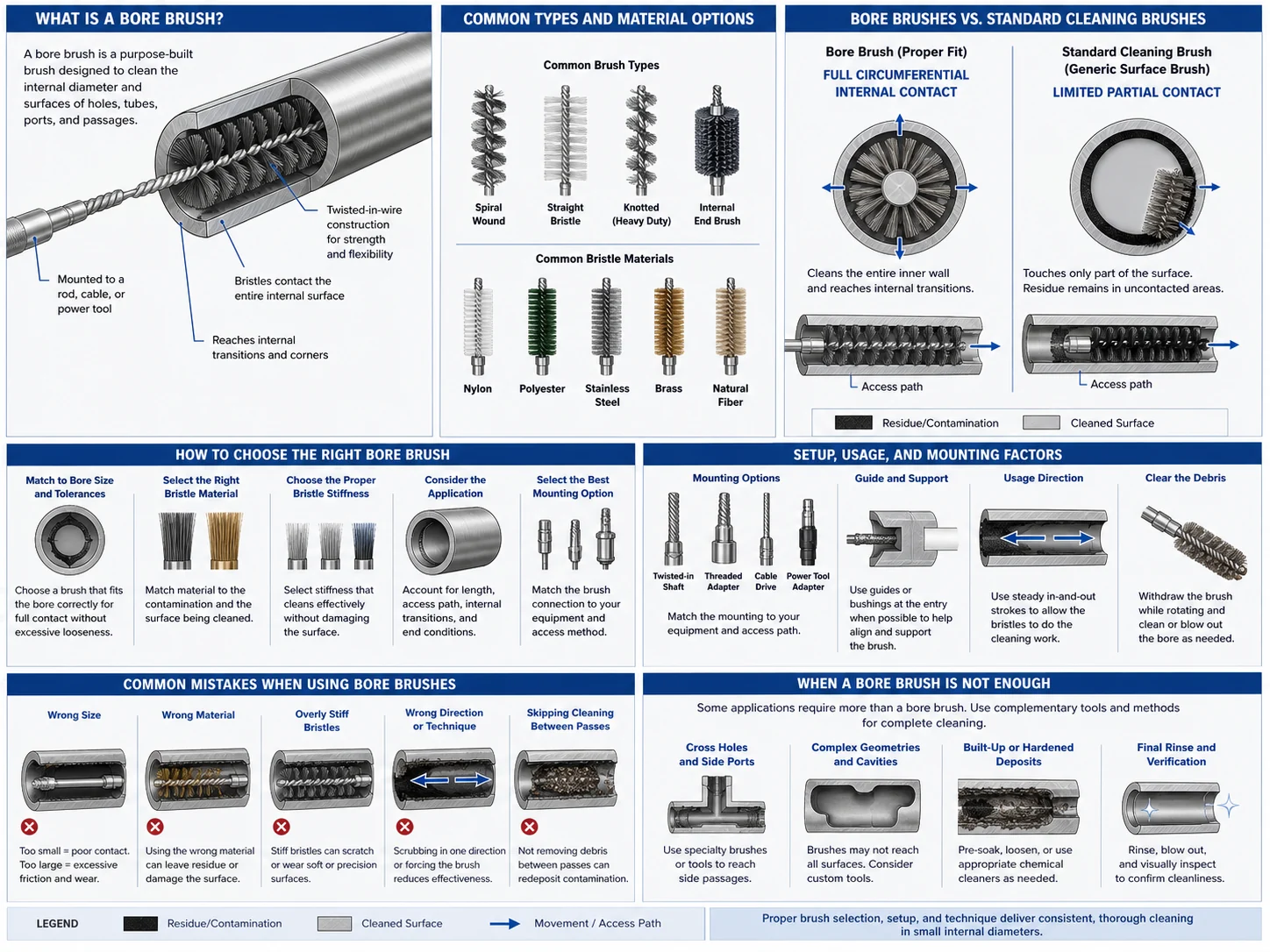
A bore brush is a cylindrical brush engineered to clean the inner walls of tubes and bores. The bristles extend outward from a central wire or rod, allowing the brush to make full circumferential contact as it is pushed or rotated through a pipe. Bore brushes are available in multiple materials, diameters, and stiffness levels, making them suitable for everything from light residue removal to heavy-duty scrubbing in food-grade applications.
How Bore Brushes Differ from Standard Cleaning Brushes
For food-service sanitation language, the FDA — Food Code is the reference point for food safety terminology rather than a brush manufacturer’s preference.
For the material or regulatory boundary in this section, the supporting reference is eCFR — 21 CFR 177.1500 Nylon Resins.
For the material or regulatory boundary in this section, the supporting reference is eCFR — 21 CFR 177.1520 Olefin Polymers.
For the material or regulatory boundary in this section, the supporting reference is eCFR — 21 CFR 177.1630 Polyethylene Phthalate Polymers.
For brush terminology and construction language, this section references American Brush Manufacturers Association — Brush Lingo.
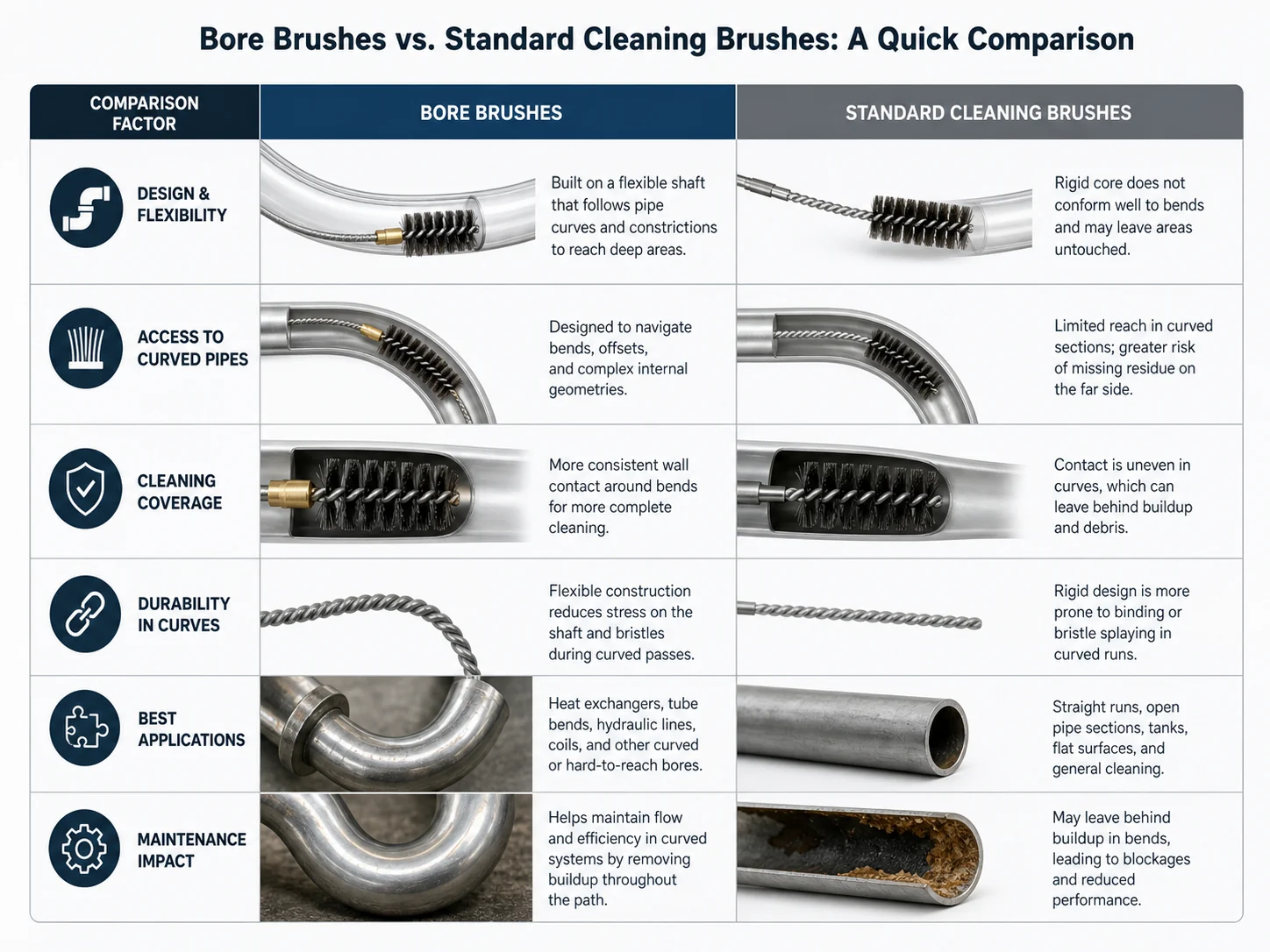
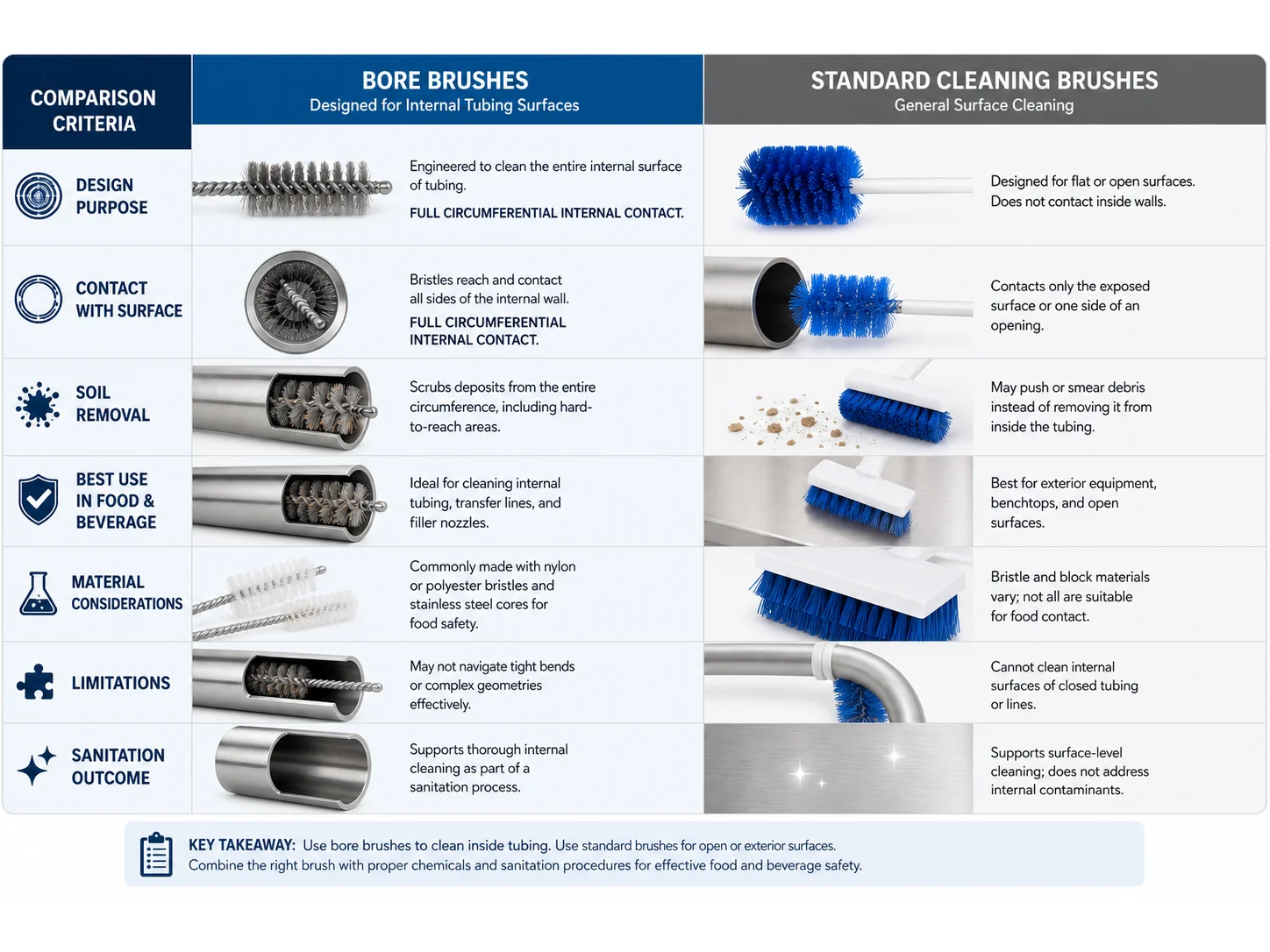
Standard cleaning brushes—such as bottle brushes, scrub brushes, or general-purpose pipe brushes—are typically designed for wide openings or external surfaces. In contrast, bore brushes offer deeper reach, uniform radial contact, and compatibility with powered rotation. Their design ensures consistent cleaning pressure around the entire tube circumference, which is critical for removing biofilm, dried product buildup, or chemical residues in narrow food and beverage lines.
Common Types of Bore Brushes for Food and Beverage Tubing
Selecting the right bore brush starts with understanding the material and construction options. Common types include:
- Nylon Bore Brushes: Soft, chemically resistant, and safe for stainless steel and plastic tubing. Ideal for general cleaning where scratching is a concern.
- Stainless Steel Bore Brushes: Aggressive cleaning power for removing stubborn, baked-on residues. Often used in stainless steel pipes but must be matched to surface hardness to avoid scratching.
- Brass or Bronze Bore Brushes: Softer than steel, reducing spark risk and providing moderate scrubbing action. Sometimes used for non-food contact metal components, but material compatibility with food surfaces must be verified.
- Twisted Wire Bore Brushes: Crimped bristles secured in a twisted wire stem, offering durability and the ability to withstand high-speed rotation when used with a drill or automated system.
Bore Brush vs Standard Brush: Comparison Table
| Feature | Bore Brushes | Standard Cleaning Brushes |
|---|---|---|
| Primary Use | Interior tube and pipe cleaning | Open surfaces, wide containers, or external cleaning |
| Bristle Orientation | Radial, full 360‑degree contact | Often linear or clustered; may miss interior wall sections |
| Reach | Designed for deep insertion; lengths up to several feet | Limited reach; handle length may restrict access |
| Flexibility | Can conform to bends if constructed with flexible cores | Usually rigid or semi‑rigid; little ability to follow tube bends |
| Typical Materials | Nylon, stainless steel, brass, abrasive filaments | Natural fibers, polyester, polypropylene, mixed bristles |
| Cleaning Mechanism | Rotational scrubbing with even pressure | Linear scrubbing, often requiring multiple passes |
| Best for Residue Type | Biofilm, dried organics, light scale inside tubes | Loose debris, external dirt, wide-opening residues |
| Hygiene Considerations | Can be made with FDA‑compliant materials for food contact | Not always designed for sanitary environments |
| Cost/Complexity | Wider range of custom sizes and materials; moderately higher cost | Off‑the‑shelf; generally lower cost but less specialized |
How to Choose the Right Bore Brush for Your Tubing
Making the right selection involves evaluating your specific cleaning challenge. Consider these factors:
- Residue Type: Soft, sticky residues (like sugar syrups) may wash away with a soft nylon brush and mild chemical. Hard, dried deposits often require a stiffer bristle, such as stainless steel or a high‑crimp filament.
- Surface Sensitivity: Polished stainless steel or soft metal tubing demands non‑abrasive materials to prevent micro‑scratches where bacteria can hide. Plastic tubing may need a brush with a softer or non‑metallic core.
- Tubing Diameter and Length: The brush must match the tube’s inner diameter (ID) for effective contact. Oversized brushes may jam; undersized ones leave residue. Length must reach the entire section to be cleaned.
- Equipment Interface: Determine if the brush will be used manually or with a drill, automated arm, or cleaning‑in‑place (CIP) coupling. Twisted‑wire bore brushes are often preferred for powered rotation.
- Chemical Exposure: In CIP or COP (clean‑out‑of‑place) environments, the brush material must withstand the cleaning chemicals and temperatures used. Nylon and certain plastics offer good resistance to common food‑grade sanitizers.
- Hygiene Expectations: For direct food contact, look for brush materials compliant with FDA 21 CFR or similar regulations. The brush design should be easy to clean and dry to prevent bacterial growth.
- Maintenance Frequency: A brush used multiple times per shift must be durable and easy to sanitize. Spare brushes and a regular replacement schedule help maintain consistent cleaning performance.
- Custom Size Requirements: If your tubing has unique dimensions, bends, or fittings, a standard catalog brush may not work. In such cases, a custom bore brush designed from a detailed tubing drawing may be required. Always work with a knowledgeable supplier to specify material, diameter, and overall length correctly.
Common Mistakes When Using Bore Brushes in Food Processing
- Using the Wrong Bristle Material: Hard metal bristles can scratch soft stainless steel or plastic, creating harborage points for bacteria. Always match the bristle hardness to the tubing material.
- Incorrect Diameter Fit: A brush that is too small fails to clean thoroughly; one that is too large can damage tubing or get stuck. Measure the tubing ID accurately and confirm the brush’s actual working diameter, which may differ slightly from its nominal size.
- Neglecting Cleaning Validation: Assuming a visual check is enough can lead to hidden residues. Swab testing or ATP monitoring after cleaning verifies that the brush method is effective.
- Applying Excessive Force: Forcing a brush through a tight bend or narrow opening can break the brush core or leave broken bristles inside the tube – a serious contamination risk.
- Ignoring Brush Maintenance: Bore brushes themselves must be cleaned, sanitized, and dried after each use. Storing wet or soiled brushes can spread contamination rather than remove it.
- Overlooking Core Compatibility: Some twisted‑wire stems can react with acidic cleaning chemicals. Verify chemical compatibility before use.
When a Bore Brush Is Not Enough
While bore brushes are very effective for many food and beverage tubing applications, there are limits to what they can achieve alone:
- Complex Internal Geometry: Tubing with sharp 90‑degree bends, internal threads, or abrupt diameter changes may prevent a brush from reaching all surfaces. In these cases, a more flexible tool or a chemical soak may be required.
- Hard, Tenacious Scale: If mineral scale or burned‑on carbon cannot be removed mechanically, a chemical descaler or pump‑assisted cleaning might be necessary before or in place of brushing.
- Ultra‑Sensitive Surfaces: Electropolished or passivated surfaces that must remain flaw‑free may need non‑contact cleaning methods like ultrasonic baths, high‑pressure water jets, or clean‑in‑place (CIP) circulation systems.
- Automated High‑Volume Lines: Manual brushing is inefficient for hundreds of tube sections per shift. Integrated CIP systems or automated brush stations are better suited for high‑volume production environments.
- Need for Verifiable Consistency: If your quality system demands documented cleaning consistency (e.g., pharmaceutical or infant formula manufacturing), a mechanical brushing process may need to be paired with sensors, torque monitoring, or automated programmable cycles to ensure repeatability.
Always consider a pilot test with your actual residues and tubing before committing to a bore brush solution. A supplier can provide samples or technical drawings for review.
Final Takeaway: Making the Right Cleaning Choice
For cleaning the interior of food and beverage tubing, bore brushes generally outperform standard cleaning brushes by providing consistent, radial contact and deep reach. A standard brush may suffice for short, wide‑opening spouts or external surfaces, but once the task moves into narrow pipes, a properly selected bore brush is the reliable choice. Start by defining your residue, tubing material, and hygiene requirements, then choose a bore brush material and diameter that fit your conditions. When standard options fall short, consult with a brush manufacturer to explore custom designs or complementary cleaning methods.
Frequently Asked Questions
What makes bore brushes different from standard cleaning brushes?
Bore brushes are specifically designed for internal tube cleaning with radial bristles that contact the entire circumference. Standard brushes usually have flat or clustered bristles for open surfaces and cannot maintain uniform pressure deep inside a tube.
Are stainless steel bore brushes safe for food contact surfaces?
Stainless steel bristles can be safe for food equipment if used correctly, but they can scratch softer stainless grades. For direct food contact surfaces, many facilities prefer nylon or other non‑metallic filaments to avoid micro‑scratches that harbor bacteria. Always confirm that the brush material meets applicable FDA or 3‑A sanitary standards.
How do I choose the correct diameter for a bore brush?
Measure the tube’s inner diameter (ID) precisely. The brush’s working diameter should be slightly larger than the tube ID to ensure firm contact, but not so large that it requires excessive force. A common rule is to select a brush 0.5–1 mm oversize, but consult your brush supplier’s recommendations for the specific bristle type.
Can bore brushes be used with cleaning chemicals?
Yes, bore brushes are often used alongside detergents, sanitizers, and caustic cleaners. The brush material must be chemically compatible with the agents and temperatures in your process. Nylon and polypropylene generally handle a wide range of food‑grade chemicals, while some metal cores may corrode if exposed to acidic or high‑pH solutions.
How often should I replace bore brushes in food processing?
Replacement intervals depend on usage frequency, bristle wear, and sanitation requirements. Inspect brushes regularly for flattened bristles, bent cores, or trapped debris. In high‑volume operations, rotating brushes on a schedule and keeping a log can help maintain consistent cleaning before signs of wear appear.
What cleaning method works best after using a bore brush?
After use, rinse the bore brush thoroughly with water to remove residues, then soak or wash it in a suitable detergent. Sanitize according to your facility’s protocol, and allow the brush to dry completely before storage. Never leave a wet brush in contact with metal surfaces for long periods to prevent corrosion.
When would I need a custom bore brush instead of a standard one?
Custom bore brushes become necessary when your tubing has non‑standard diameters, unusual lengths, tight bends, or special material requirements that off‑the‑shelf brushes cannot meet. If you often clean multiple tube sizes, a set of standard brushes may suffice, but unique applications may require engineered solutions.
Can bore brushes remove biofilm from tubing?
Yes, when paired with appropriate cleaning chemicals and agitation, a properly sized bore brush can help break up and remove biofilm. However, biofilm removal may require multiple passes, extended contact time with cleansers, and verification through surface swabs to ensure complete elimination.