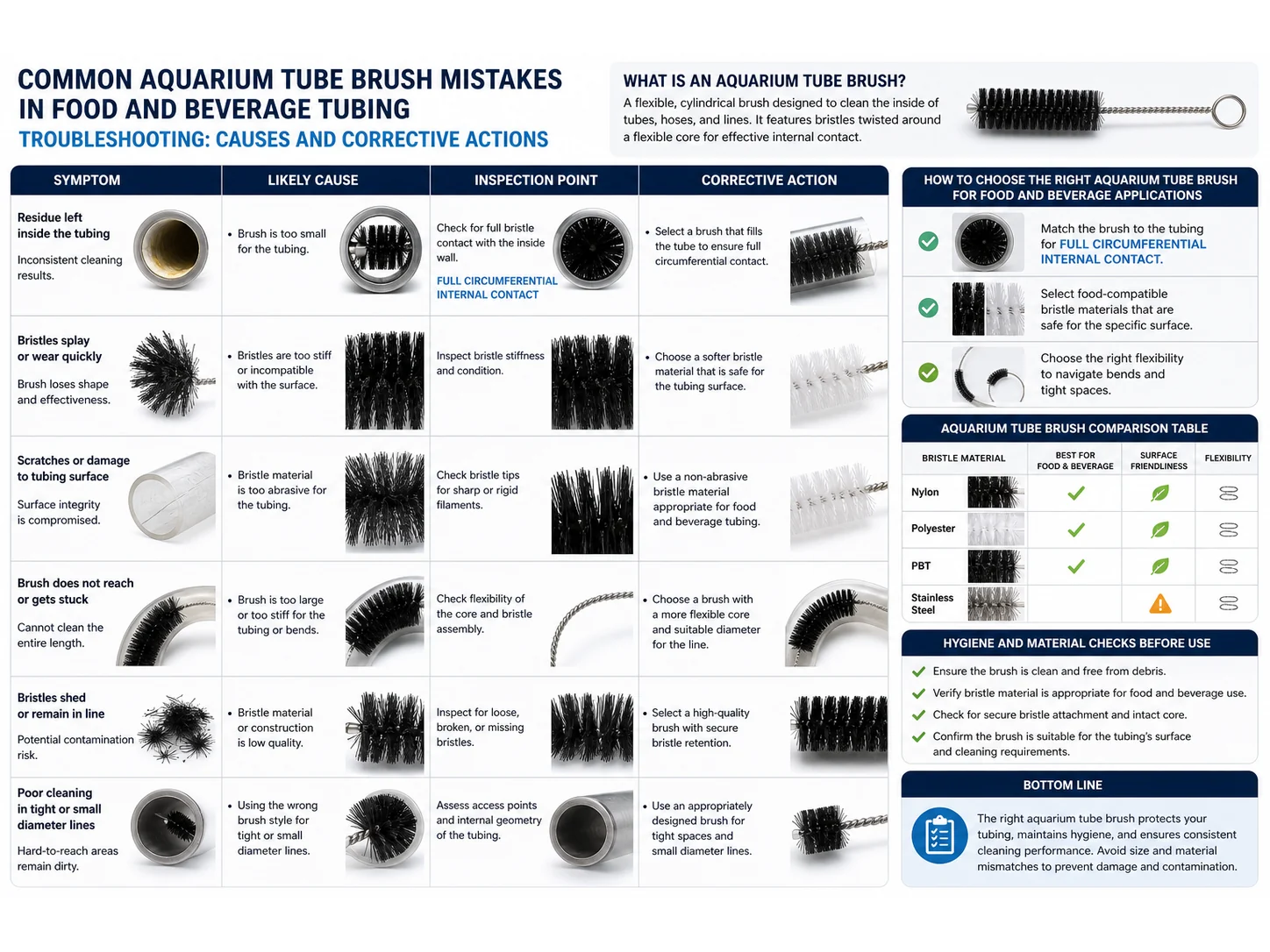
What Is an Aquarium Tube Brush?
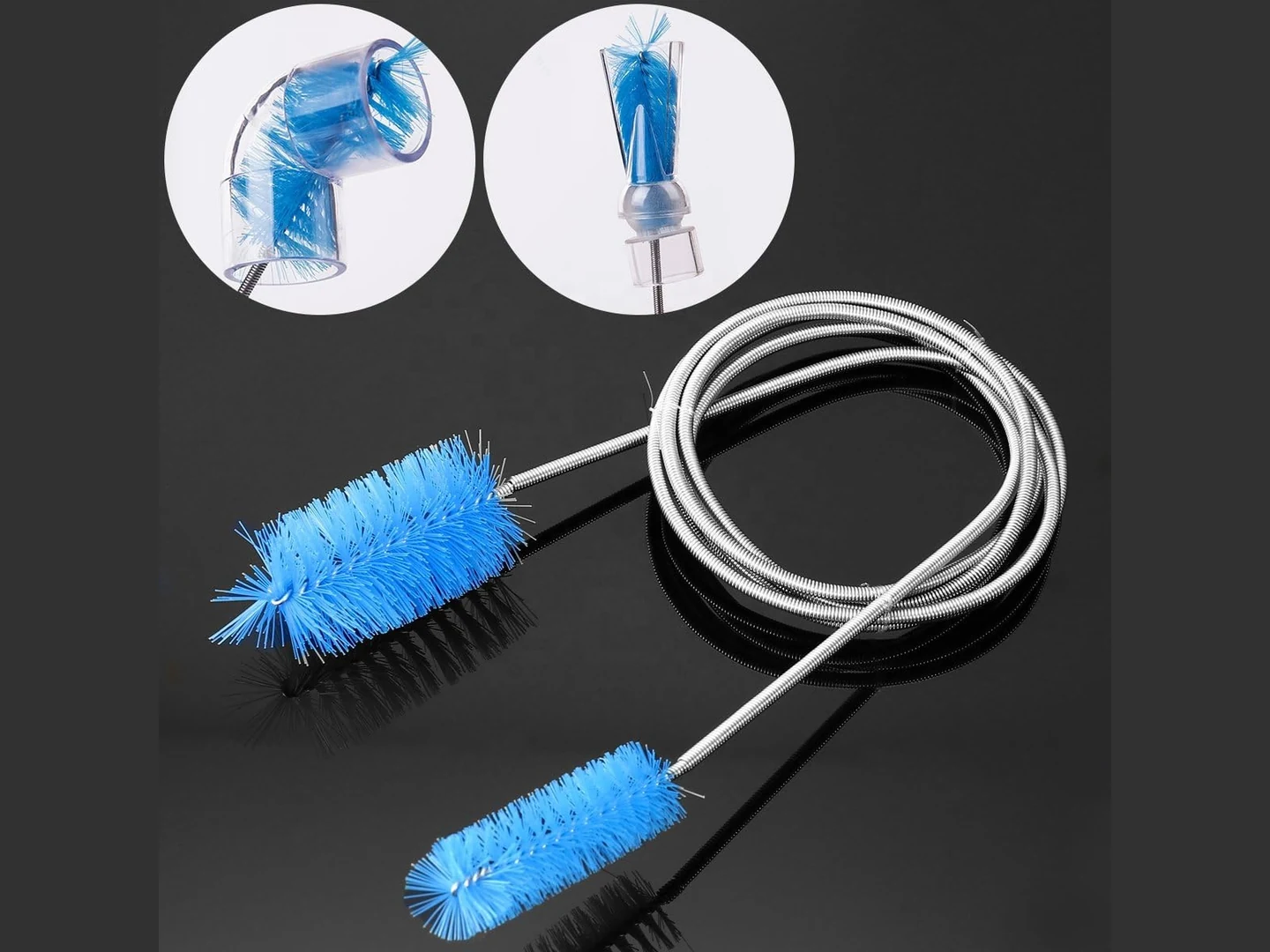
An aquarium tube brush is a brush with a flexible core—often twisted wire or plastic—and bristles arranged in a spiral or radial pattern along its length. It is pulled or pushed through aquarium hoses, return lines, and filter intake/outflow pipes to dislodge biofilm, algae, sediment, and organic buildup. The term covers everything from small nylon brushes for airline tubing to longer, larger-diameter brushes for canister filter hoses and PVC plumbing lines in sump-based systems.
For aquarium tank water, fish equipment, gloves, and handwashing hygiene context, this section references CDC — Fish: Healthy Pets, Healthy People.
For algae, nutrient pollution, pond/water-quality impact, and aquatic ecosystem context, this section references EPA — Nutrient Pollution Effects on the Environment.
For engineering drawing, dimensions, tolerance, thread, fit, and RFQ specification context, this section references ASME — Y14.5 Dimensioning and Tolerancing.
For lockout/tagout and maintenance isolation context, this section references OSHA — 1910.147 Control of Hazardous Energy.
For brush construction terminology, bristle/fill/backing/stem terms, this section references American Brush Manufacturers Association — Brush Lingo.
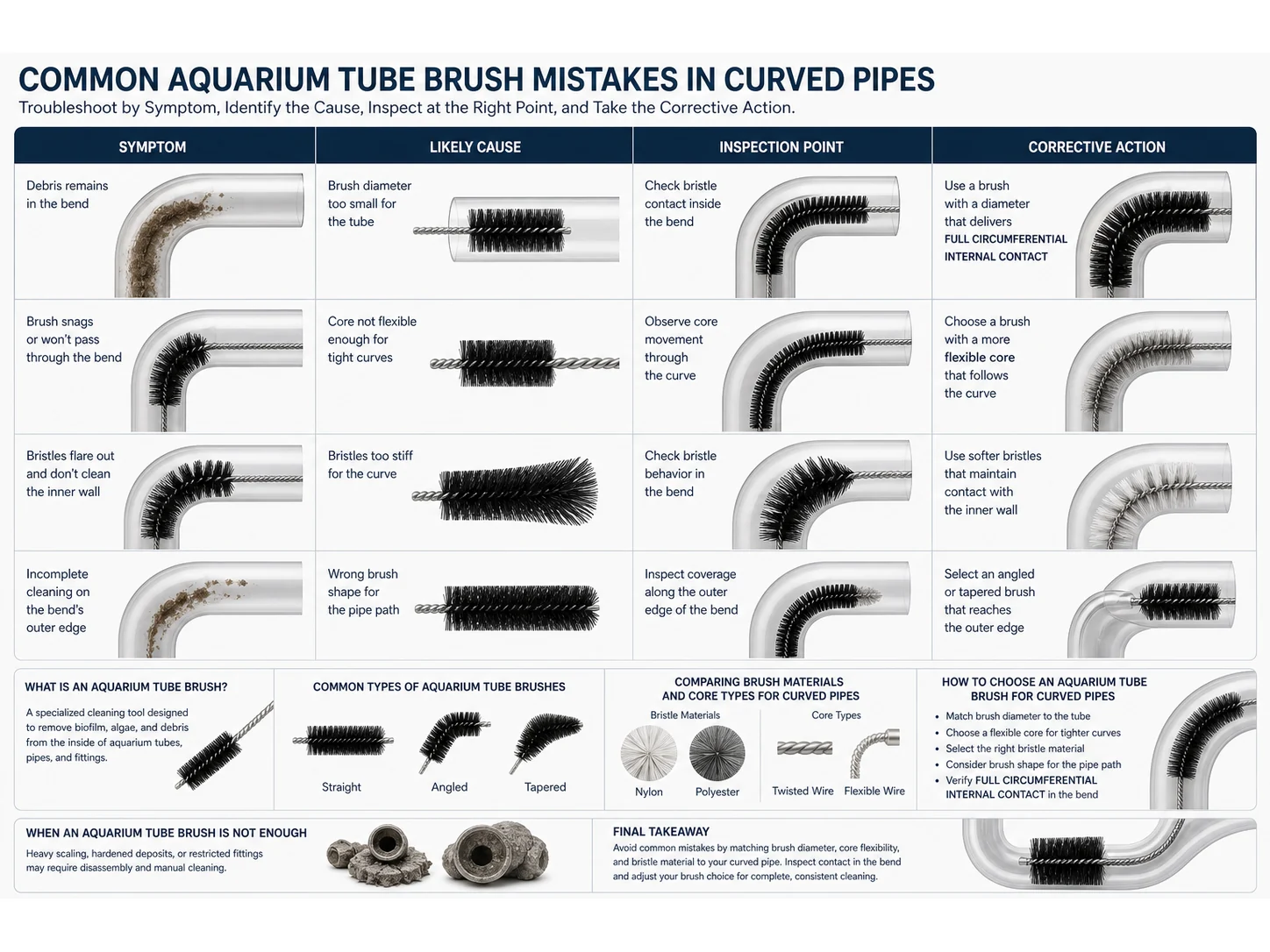
Common Types of Aquarium Tube Brushes
Selecting the wrong type for your curved pipe is one of the most frequent and costly mistakes. Understanding the basic options helps you match the brush to the bend radius and residue challenge.
- Single-spiral twisted-wire brushes: A metal stem with bristles captured between two twisted wires. Very flexible, good for tight bends, but bristle density can be lower, and the metal core may scratch acrylic tubing.
- Double-spiral or double-stem brushes: Two spiral sections in opposite directions or a twin-wire core. Better surface coverage, stiffer, and often used for persistent algae or mineral scale. Moderate flexibility.
- Full-fill “bottle brush” style: Bristles cover nearly 360° around the core. Best cleaning coverage, but less flexible and can bind in tight bends.
- Plastic-coated or nylon-core brushes: A non-metallic core eliminates the risk of rust and scratching. Ideal for acrylic or sensitive surfaces but may lack the stiffness to push through heavy blockages.
- Pull-through brushes: Often with a molded handle, loop, or string on one end. Helpful for cleaning pipes where you cannot access both ends easily, but can get stuck in sharp bends.
Comparing Brush Materials and Core Types for Curved Pipes
| Brush Feature | Best For | Watch Out For |
|---|---|---|
| Nylon bristles on twisted stainless steel wire | Flexible, inexpensive, good for light biofilm | Metal core can scratch acrylic; wire can kink and fail in tight bends |
| Nylon bristles on nylon or plastic core | Acrylic tubing, sensitive surfaces, saltwater use | May not be stiff enough to push through heavy sludge; can bend permanently |
| Stainless steel bristles on steel wire | Heavy mineral scale, tough deposits in glass or PVC | Will scratch acrylic and soft plastics; not for saltwater unless passivated; can damage silicone seals |
| Natural fiber bristles (tampico, horsehair) | Polishing, gentle cleaning of delicate tubing | Absorbs water, degrades faster, can shed fibers into the system |
| Double-spiral with mixed bristle fill | Medium to heavy biofilm in moderate bends | Stiffer than single-spiral; may not pass through sharp 90° elbows |
How to Choose an Aquarium Tube Brush for Curved Pipes
Ignore the “one brush fits all” mindset. Use these decision points to avoid the most common cleaning failures.
- Match diameter to the pipe ID, not OD: Measure the inside diameter of your tubing. The brush diameter should be 1–3 mm larger than the pipe ID for light biofilm, or up to 5 mm larger for heavy sludge, provided the pipe can flex slightly and the brush can still pass bends.
- Match bristle stiffness to residue type: Soft nylon for biofilm and detritus; medium nylon or polyester for dried-on slime; stainless steel only for hard mineral scale—and only in glass or hard PVC, never acrylic.
- Check core flexibility and bend radius: For 45° and 90° PVC elbows, a single-spiral twisted-wire brush with a diameter no larger than 60% of the pipe ID can usually pass. For silicone or vinyl tubing with a tight bend, a very flexible nylon-core brush or a pull-through design with a soft leader may be required.
- Consider wet or chemical exposure: In saltwater systems or acidic cleaning solutions, avoid plain steel cores. Choose stainless steel with corrosion resistance or all-plastic construction. For bleach or acid dips, verify bristle and epoxy compatibility.
- Length and access: The brush must be at least 30% longer than the pipe section you are cleaning if you plan to work from one end. For U-bends or return loops, a brush with a handle on both ends reduces the risk of getting stuck.
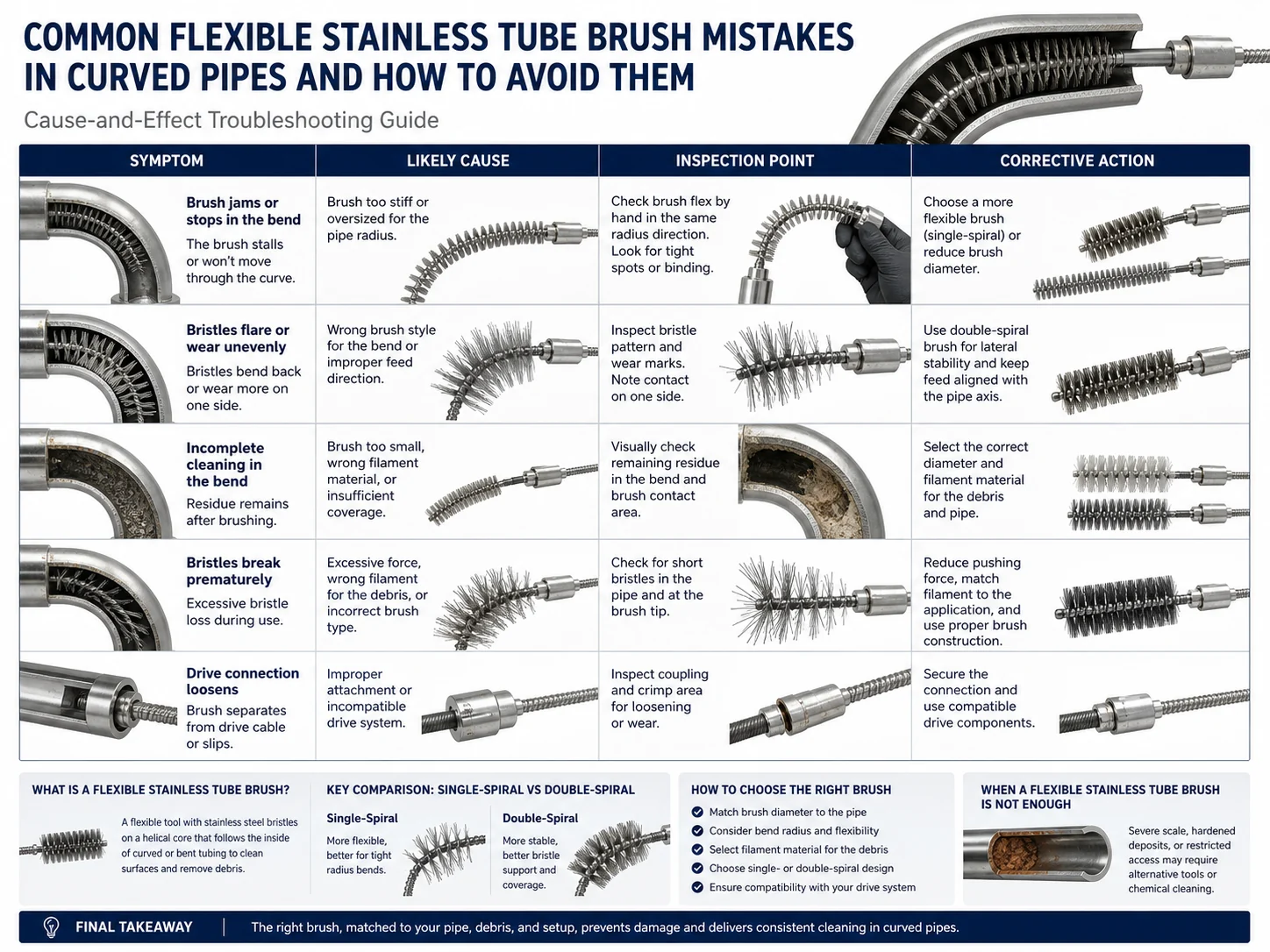
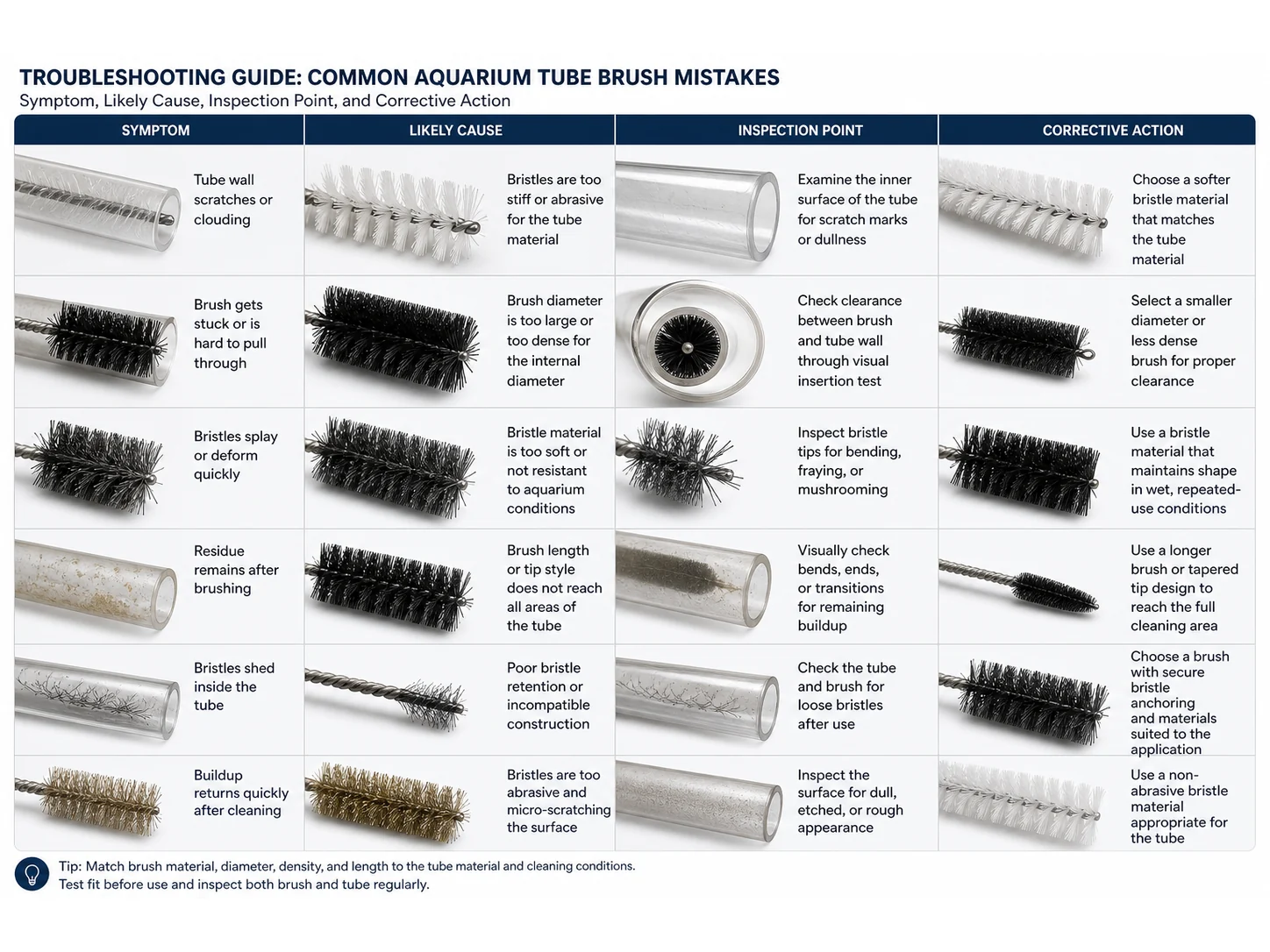
Common Aquarium Tube Brush Mistakes in Curved Pipes
These are the mistakes that cause poor cleaning, pipe damage, or equipment failure. Check your own process against this list.
- Using a brush that is too large in diameter for the bend: The brush passes straight sections but jams at the first elbow. This forces the user to apply excessive force, which can kink the wire core, snap the brush, or split the pipe.
- Ignoring bristle material and scratching acrylic: A stainless steel wire core or abrasive bristles will micro-scratch acrylic tubing. Over time, scratches harbor bacteria and algae, making future cleaning harder.
- Pushing a stiff brush into a soft silicone bend: The brush tip can pierce the tubing wall or stretch the bend permanently, creating a leak point.
- Not matching the brush to the residue type: Using a soft brush on hard mineral deposits simply doesn’t remove the scale. Using a stiff brush on light biofilm is overkill and increases wear on the pipe.
- Forcing a brush that has already kinked or frayed: A damaged wire core can scratch, and loose bristles can detach inside the pipe, creating a blockage or damaging pump impellers.
- Using the wrong handle or no handle at all: Holding the wire stem with pliers while twisting can deform the core and concentrate stress at a single point, causing a premature break.
- Skipping post-cleaning rinse and inspection: Debris and bristle fragments left in the system can quickly clog spray bars, needle wheels, or delicate filter media.
When an Aquarium Tube Brush Is Not Enough
There are times when a brush alone cannot solve the problem, and pushing harder creates damage or inefficiency. Recognize these boundaries.
- Advanced hard scaling (calcium carbonate or silicate deposits): If a stainless steel brush cannot remove the scale after three passes, you need a chemical cleaning stage (acid soak) or an enzymatic pipe cleaner before mechanical brushing.
- Sharp 90° elbows with a small radius: Some PVC fittings and bulkhead connectors have a very tight turn radius. No spiral brush of useful diameter will pass. Consider disassembling the joint for direct access or using a flexible pull-through sponge- or foam-pipe cleaner instead of a bristle brush.
- Very long pipe runs (over 3 meters / 10 feet): A hand brush loses effectiveness as friction builds. For multi-section plumbing, use a segmented pull-through brush, or consider flushing with a powered pipe-cleaning system.
- Risk of cross-contamination in sensitive systems: In quarantine or breeding systems, a brush that has been used in another tank can introduce pathogens. If a dedicated brush is not practical, disinfection between uses is mandatory, but even then, soft plastic brushes can retain spores in scratches. In such cases, single-use foam swabs or sacrificial brushes may be safer.
- Odd-shaped filter bodies or molded plastic channels: The brush may not contact all surfaces. A combination of soaking, flushing, and manual disassembly is often more effective than forcing an ill-fitting brush.
Final Takeaway
Cleaning curved aquarium pipes successfully depends on three checkpoints: the brush diameter must suit the pipe’s smallest inner bend radius, the bristle material must match your residue without damaging the pipe surface, and the core must flex enough to pass the bend without kinking or puncturing the wall. Before you buy or use an aquarium tube brush, measure the pipe ID, identify the tightest bend, define your residue (biofilm, mineral, or mixed), and select a brush that meets all three conditions. When the brush cannot do it alone, disassemble the joint or pair it with a chemical clean, not brute force.
Frequently Asked Questions
Can I use the same aquarium tube brush for saltwater and freshwater pipes?
It depends on the core material. Plain steel cores can rust in saltwater and introduce contaminants. Use a brush with a 304 or 316 stainless steel core (and confirm passivation) or a fully plastic-core brush. It’s also good practice to label brushes by use to avoid cross-contamination.
How do I know if the brush will pass a 90° PVC elbow?
Measure the elbow’s inside radius, not just the pipe diameter. A general rule: the brush diameter should be no more than about 60% of the pipe’s inner diameter for a standard schedule 40 PVC elbow. Test outside the system first by pushing the dry brush through a spare fitting of the same size and angle.
What is the best brush material for acrylic or clear PVC tubing?
Nylon bristles on a plastic or nylon core. Avoid metal cores and certainly avoid abrasive bristles. Even a twisted stainless wire core can leave fine scratches that reduce clarity and trap biofilm over time.
How often should I replace an aquarium tube brush?
Replace the brush when you see kinks in the core, flattened or missing bristle sections, rust spots, or if the brush no longer pulls smoothly through the pipe. In a heavily used system, inspect the brush monthly and replace every 3–6 months as a general guideline.
Can I straighten a kinked twisted-wire brush?
You can sometimes gently straighten a small bend, but once the wire has yielded, it is weakened. A kinked brush is more likely to scratch the pipe wall or snap during cleaning. For safety, replace it.
Should I use a lubricant when pushing a brush through a tight bend?
Water itself is usually enough. In dry pipes, a small amount of clean water will reduce friction. Do not use soap, oil, or silicone lubricants—they can leave residues that harm aquatic life or affect water surface tension.
Is a larger brush always better for cleaning?
No. An oversized brush can jam, require excessive force, scratch the pipe, and bend the core. It may also push debris forward into a tighter pack instead of removing it. A brush that is 1–3 mm larger than the pipe ID is usually sufficient for normal biofilm.
What if the brush simply cannot clean a curved pipe effectively?
Disassemble the joint for direct access, or use a chemical/enzymatic pipe cleaner first to soften deposits. In some cases, switching to a flexible pull-through scrubbing rope with a sponge section can conform better to curves than a bristle brush.