What Is a Flexible Stainless Tube Brush?
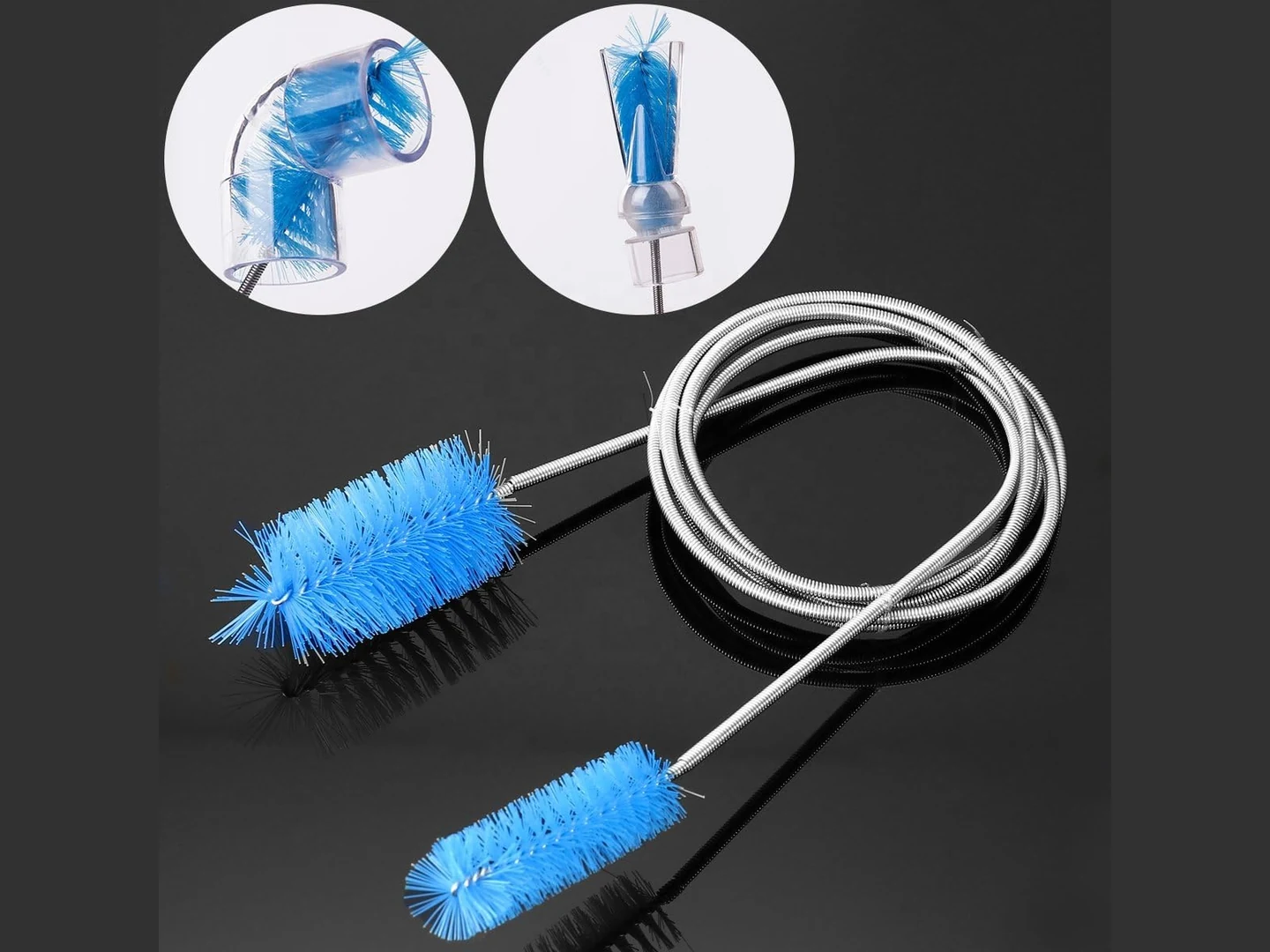
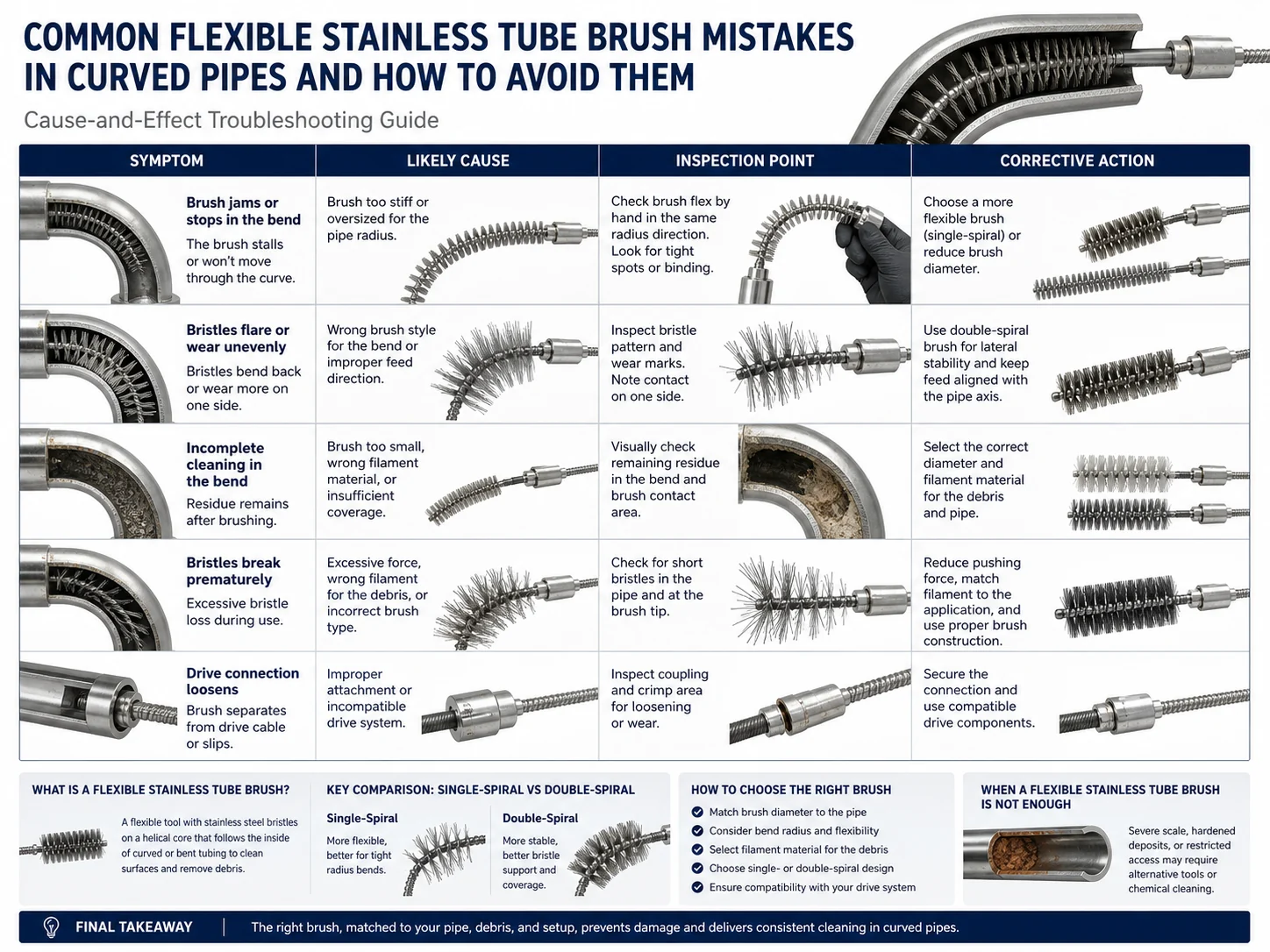
A flexible stainless tube brush is a tube cleaning tool constructed with stainless steel filaments attached to a flexible core. The core is typically made from spiral-wound wire, spring steel, or nylon, allowing the brush to follow curves and bends inside pipes. Stainless steel bristles offer corrosion resistance and moderate abrasion, making them suitable for removing light deposits, scale, dust, or grease in industrial, food-grade, and maintenance settings. In curved pipes, the brush must bend without kinking the core or breaking bristles, while still applying enough pressure to clean the interior surface.
Common Types and Material Options
For material-selection language, this section is supported by World Stainless — Corrosion Resistance of Stainless Steels.
For brush terminology and construction language, this section references American Brush Manufacturers Association — Brush Lingo.
Flexible stainless tube brushes vary mainly by core construction, bristle configuration, and stainless steel grade. The three most common core types are:
- Spiral-wound wire core: A single or double wire wound into a helix, offering good flexibility and moderate stiffness. Most versatile for curved pipes.
- Spring steel core: Provides strong spring-back and resistance to permanent bending. Suited for mild bends but may fatigue in tight curves.
- Nylon or plastic core: Maximum flexibility for very tight bends, but lower scrub force. Often used with lighter residues or delicate surfaces.
Bristle configurations include single-spiral (a single row of filaments wound around the core), double-spiral (two rows offset for denser cleaning), and tufted (small clusters of bristles for aggressive scrubbing). Stainless steel grades like 304 are common for general use, while 316 offers better resistance to acids and chlorides.
Key Comparison: Single-Spiral vs Double-Spiral Flexible Tube Brushes
| Factor | Single-Spiral Brush | Double-Spiral Brush |
|---|---|---|
| Debris removal efficiency | Moderate; works well on loose dust and light grease | Higher; more bristle density for stubborn deposits |
| Flexibility in tight bends | Excellent; core can twist to follow curves | Good, but slightly stiffer due to extra wire |
| Bristle shed risk | Lower; simpler construction | Slightly higher if overloaded; extra filaments may pull out |
| Lifespan under heavy use | Satisfactory; even wear pattern | Better coverage may extend usable life |
| Typical use case | Regular maintenance, light residue, frequent bending | Heavier residue, straighter sections, less frequent bending |
How to Choose the Right Flexible Stainless Tube Brush for Curved Pipes
Choosing correctly begins with the pipe’s inner diameter (ID) and the tightest bend radius. Other factors to weigh:
- Residue type: Loose powder needs less bristle density; baked scale or carbon may require a double-spiral or stiffer core.
- Surface sensitivity: Softer metals or polished surfaces can be marred by overly aggressive bristles. Stainless bristles are harder than copper or aluminum—verify compatibility.
- Equipment interface: Determine if the brush must connect to a drill, rotary tool, or manual handle. Confirm shank size and style (e.g., looped end, straight shank).
- Wet or chemical exposure: Stainless 316 is preferred if cleaning includes acids, chlorides, or steam. Nylon cores resist water but may swell in some solvents.
- Maintenance frequency: High-frequency cleaning demands a durable core that resists fatigue. Brushes used in automated systems may need thicker wire.
- Hygiene expectations: Food-grade applications often require seamless construction and no bristle loss. Some users specify full stainless construction for sanitation.
- Custom sizing: Off-the-shelf brushes may not match odd pipe IDs. A common mistake is forcing a near-correct size instead of requesting a custom diameter from a brush manufacturer.
Setup and Usage Factors That Prevent Damage
To avoid breakage or poor cleaning in curved pipes:
- Measure the bend radius: Compare against the brush manufacturer’s minimum bend radius specification. Always test with a sample if possible.
- Select the correct diameter: The brush diameter should be 10–20% larger than the pipe ID for good contact. Too large creates excessive friction; too small leaves residue.
- Use a guide or leading tip: In very tight bends, a short flexible nylon tip ahead of the brush can help steer without jamming.
- Control speed and feed: For power-driven brushes, use moderate RPM (500–1500 typically) and avoid pushing. Let the brush do the work.
- Rotate in the direction that tightens the core: Some spiral-wound cores can unwind if rotated backward. Follow the supplier’s recommended rotation.
- Clean and inspect after each use: Rinse off chemicals and debris; inspect for bent bristles or kinks. Store straight or loosely coiled.
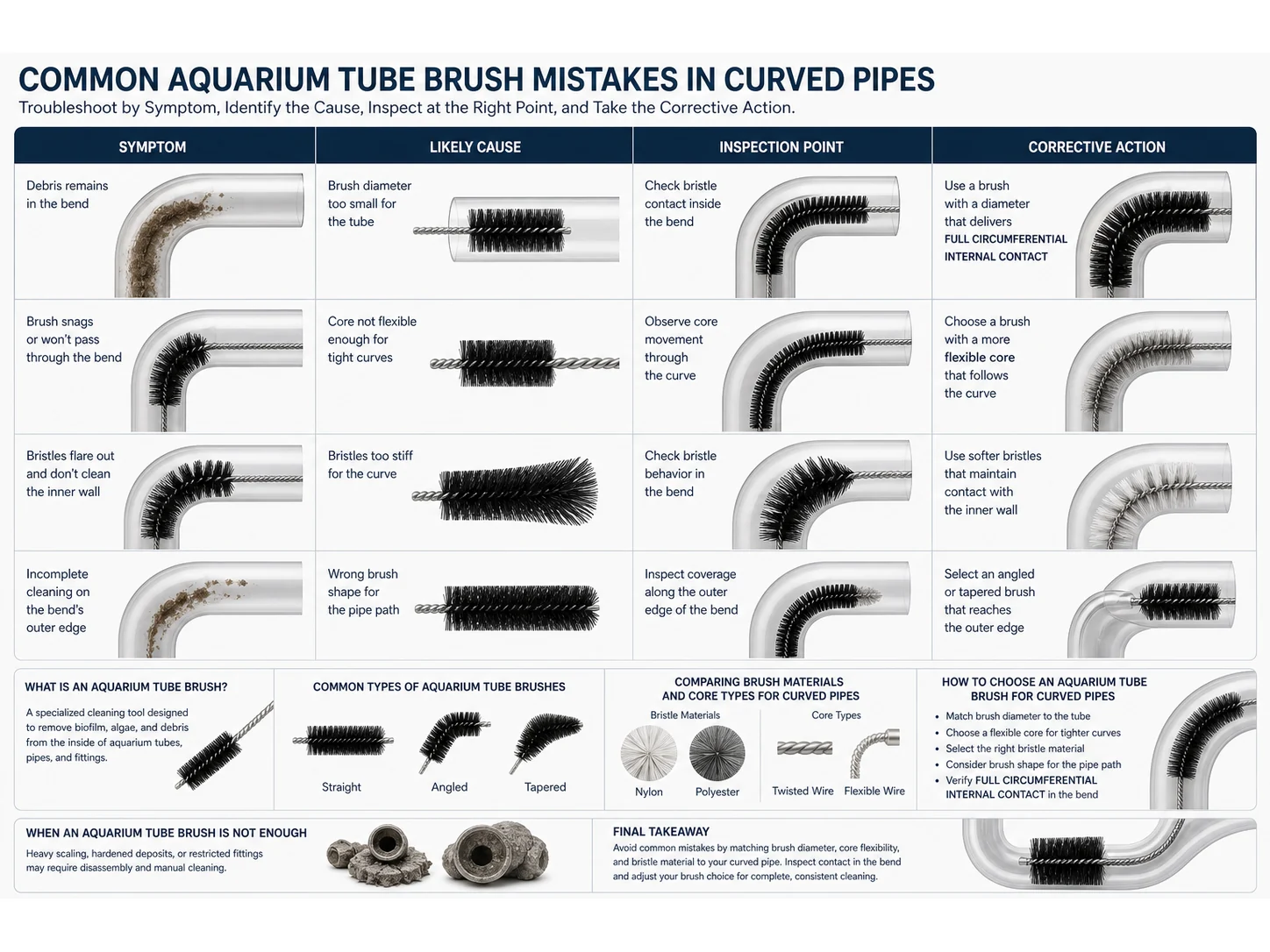
Common Mistakes When Using Flexible Tube Brushes in Curved Pipes
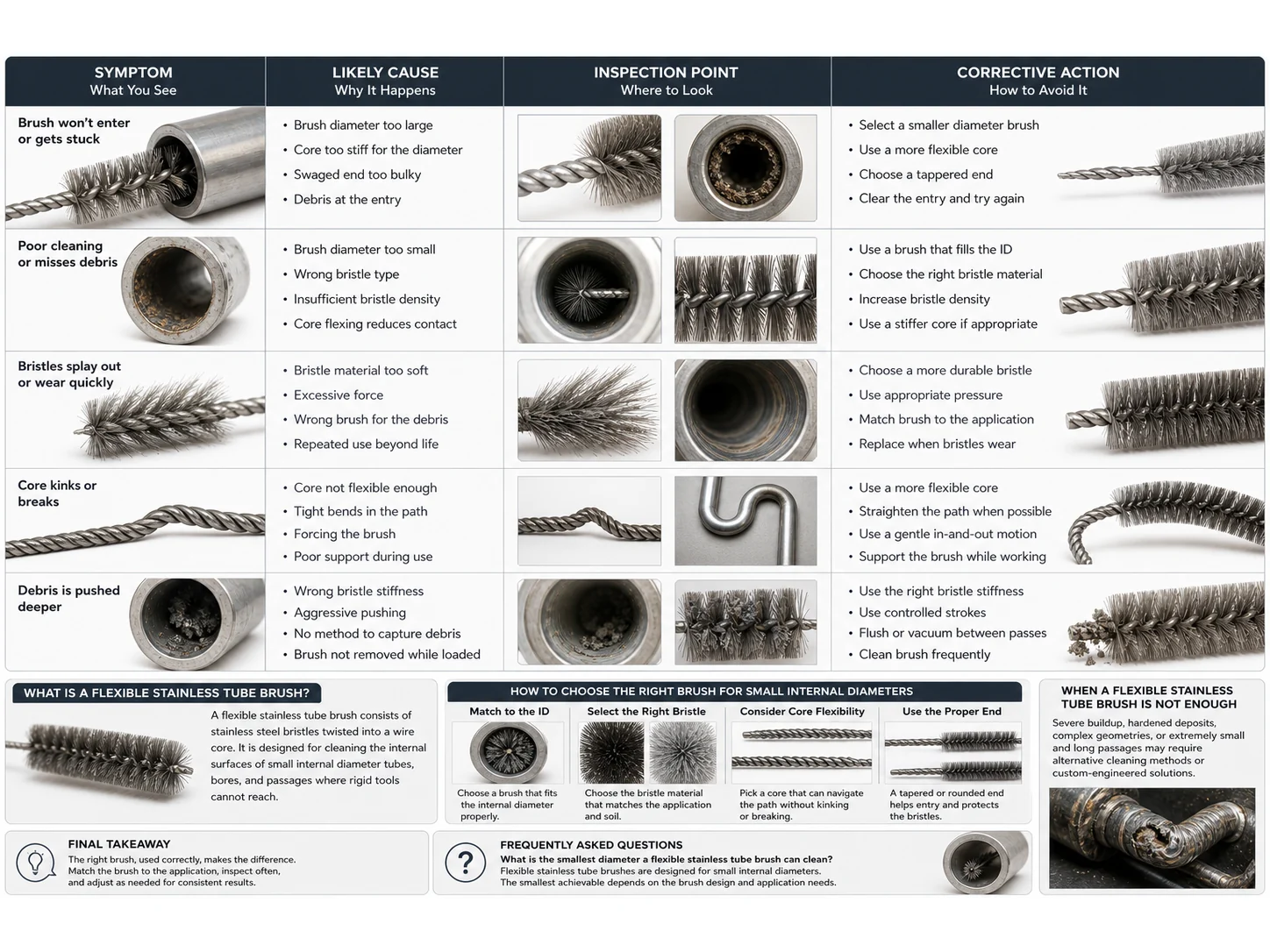
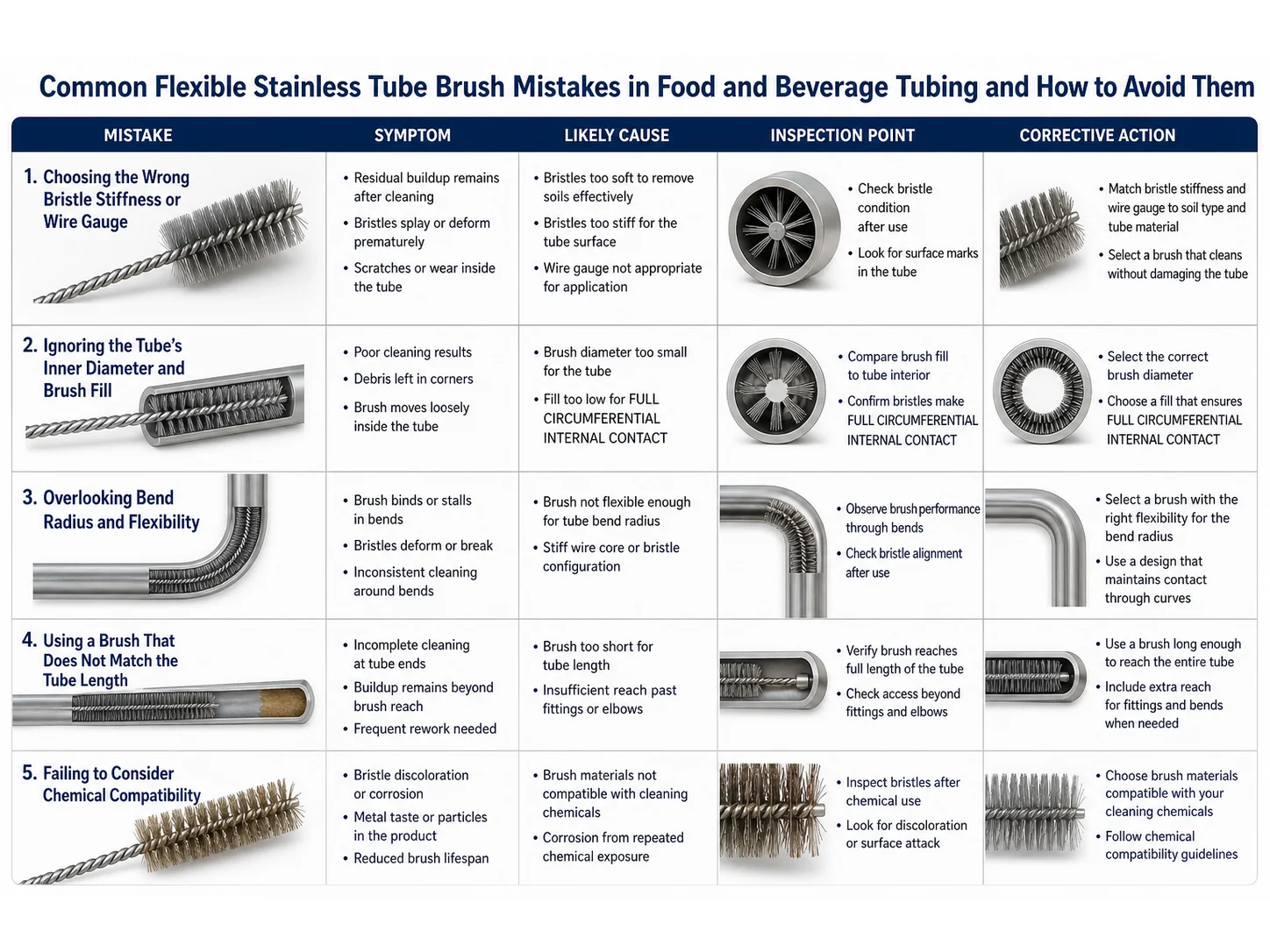
- Wrong diameter: Using a brush that’s too tight risks jamming and snapping the core; too loose means ineffective cleaning.
- Ignoring core flexibility: A spring steel core may seem robust but can kink permanently if bent too tightly, rendering the brush useless.
- Overlooking chemical compatibility: Stainless steel grade 304 can suffer pitting in chloride environments. Not checking the MSDS of the cleaning agent against the brush material.
- Forcing the brush through sharp elbows: Even flexible brushes have limits. Forcing can break bristles inside the pipe, creating a new contamination problem.
- Neglecting brush maintenance: A dirty, corroded brush can contaminate the next batch. Brushes stored wet can rust (even stainless can corrode if the passive layer is damaged).
- Assuming one brush works everywhere: A brush that works in a gentle 90° bend may fail in a tight U-bend. Different pipe sections often require different brush designs.
- Skipping a sample test: The largest mistake when ordering custom brushes is skipping a physical sample test. A drawing review with the supplier is essential for critical applications.
When a Flexible Stainless Tube Brush Is Not Enough
Flexible stainless tube brushes have limitations. They are not a substitute for:
- Ultra-high purity cleaning: In semiconductor or pharmaceutical cleanrooms, brushes may introduce particles. High-pressure solvent flush systems or ultrasonic cleaning might be required.
- Severe blockages or hard scale: If the deposit is harder than the stainless bristle (e.g., thick mineral scale), a more aggressive tool like a carbide-tipped scraper or chemical descaling may be needed first.
- Extremely tight bends: If the bend radius is smaller than roughly 1.5 times the pipe OD, even a flexible brush may not pass without a custom articulated design or alternative cleaning method.
- Variable inner diameters: Pipes with sudden ID changes can trap brushes. A brush with a spring-loaded radial adjustment or a multi-diameter cleaning tool may be required.
- Internal surface flaws: Rough welds, burrs, or dents can snatch bristles and break them off. Such defects should be reamed or smoothed before brush cleaning.
If standard brushes fail, consult a brush manufacturer with a detailed drawing of your pipe profile. A custom-designed brush with a defined tail, pilot tip, and bristle zone can often solve the problem without damaging the pipe.
Final Takeaway
Avoiding flexible stainless tube brush mistakes in curved pipes comes down to matching the brush to the actual bend radius, residue, and pipe material. Start with accurate measurements, select a core that bends without kinking, and always test a sample when the pipe geometry is complex. Maintenance is just as critical as selection—a poorly maintained brush becomes a contamination risk. When in doubt, involve a technical supplier early in the process to review your pipe drawing and recommend the right bristle, core, and diameter. The cost of a sample test is small compared to the cost of a broken brush lodged inside a critical pipe run.
Frequently Asked Questions
How do I measure the bend radius of my curved pipe for brush selection?
Measure the radius along the centerline of the bend. For an installed pipe, you can often approximate by measuring the chord length and the arc height, or you can use a flexible curve ruler. Communicate the tightest radius to the brush supplier, not the average radius.
Can flexible stainless tube brushes be used with chemical cleaners?
Yes, but check the stainless steel grade and core material against the chemical’s compatibility. Grade 304 may not withstand strong chlorides or acids; grade 316 offers better resistance. Nylon cores can be damaged by some solvents. Always rinse thoroughly after use.
What happens if the brush is too stiff for the curve?
Stiff cores can kink permanently, snap, or get stuck. If the core kinks, it creates a weak point that will fail quickly. In the worst case, the brush breaks inside the pipe and becomes a difficult-to-retrieve obstruction.
How often should I replace my flexible tube brush?
Replace when bristles become bent, worn, or start shedding. A rough rule is after 50–100 cleaning cycles for frequent use, but it depends on residue abrasiveness and chemical exposure. Inspect before each use for signs of core fatigue or bristle loss.
Can I use a flexible stainless tube brush in a pipe with varying diameters?
A single-diameter brush will only clean well in the section that matches its size. For stepped pipes, consider a brush with a multi-diameter design or use separate brushes sized for each ID section. Forcing a single brush through a reduction can jam.
Is stainless steel bristle safe for all metal pipe materials?
No. Stainless steel bristles are harder than copper, brass, and aluminum and can scratch or gall those surfaces. For soft metal pipes, consider brass or nylon bristle options. Also, stainless bristles can cause galvanic corrosion if debris is left in contact with dissimilar metals in the presence of moisture.
How do I clean and store a flexible tube brush between uses?
Rinse thoroughly with water or a compatible solvent to remove all debris and chemicals. Dry completely to prevent corrosion. Hang or store loosely coiled to avoid deforming the core. Keep in a clean, dry area away from contaminants.
Can I request a custom-sized flexible stainless tube brush for my equipment?
Yes, many brush manufacturers offer custom sizes. Provide a detailed drawing showing pipe ID, bend radius, material, and the type of residue. Request a sample for testing before ordering a full batch, especially for critical or high-volume cleaning applications.