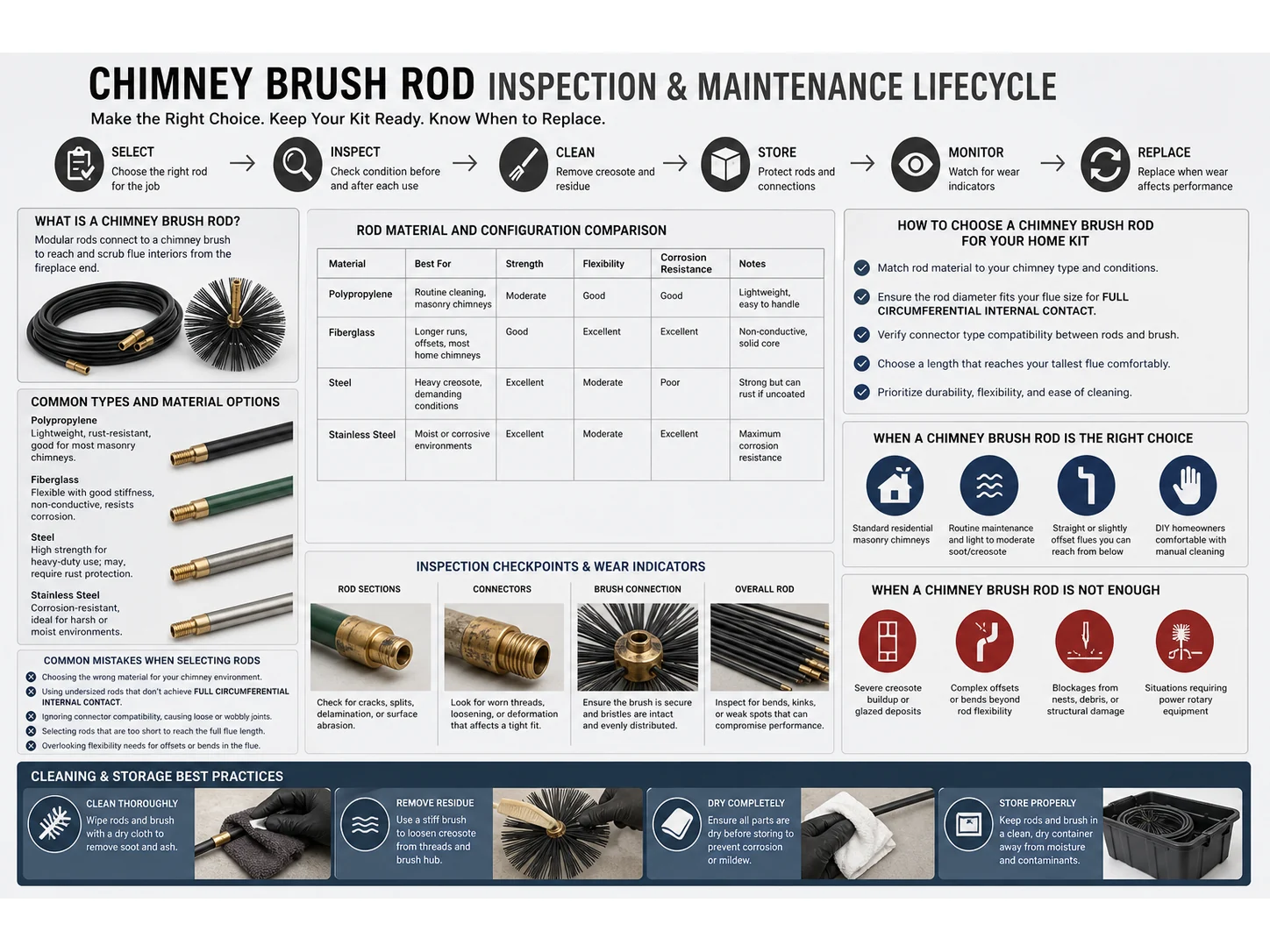
What Is a Chimney Brush Rod?
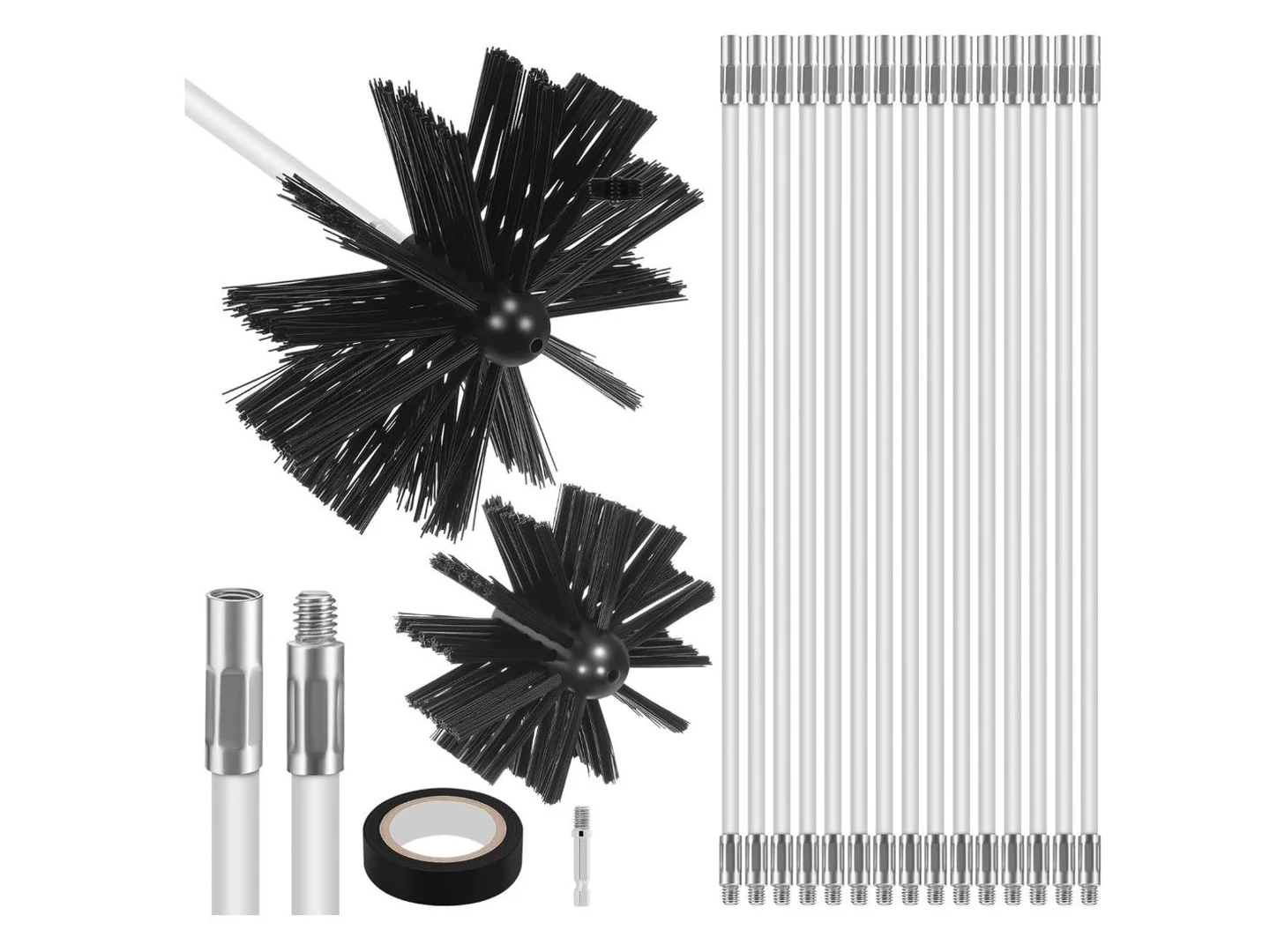
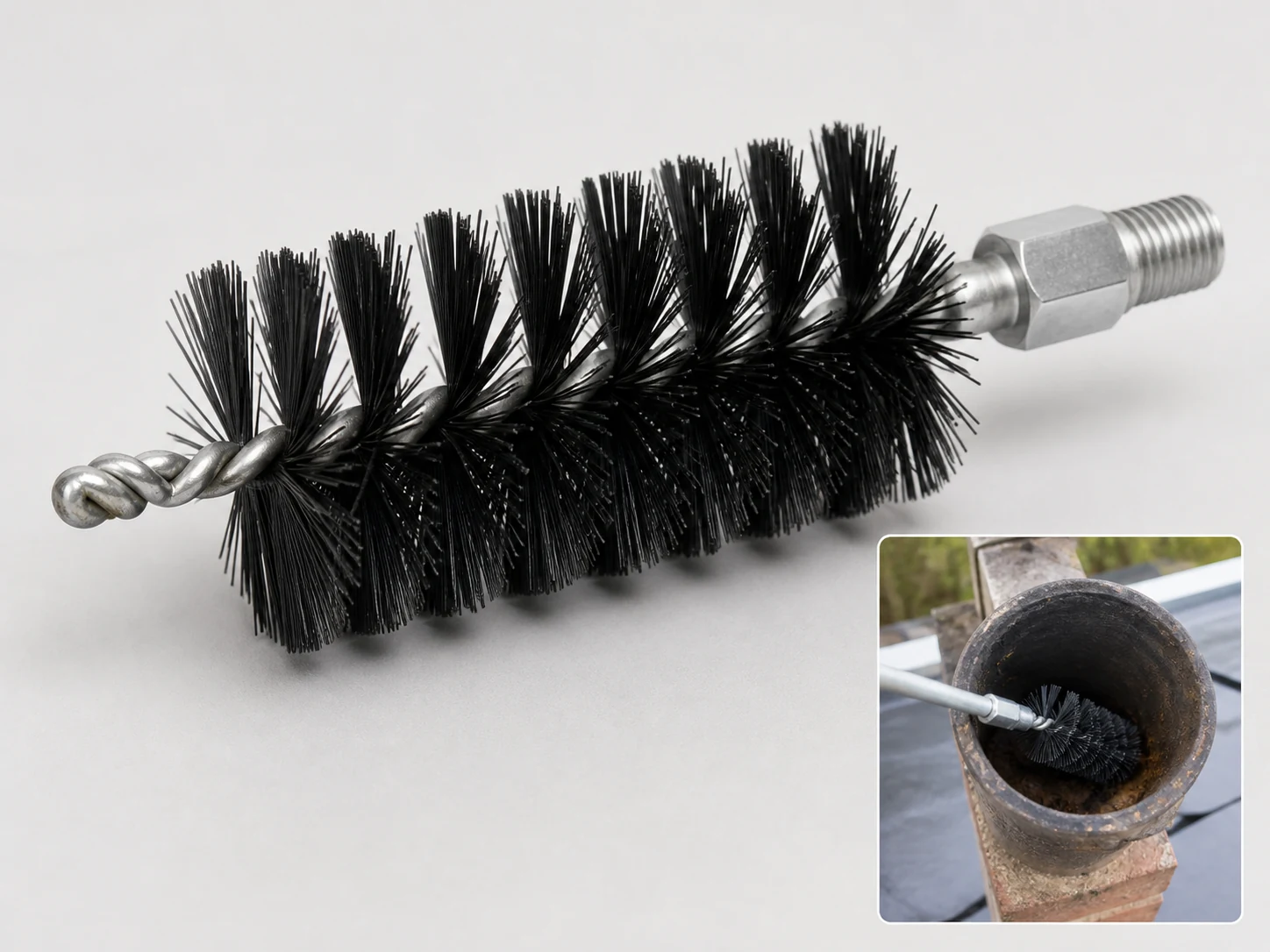
A chimney brush rod is a detachable pole section designed to join a brush head and a handle or power drill adapter. Rods are linked together to reach the full length of a chimney flue. They are sold individually or as part of a kit, and they determine how effectively you can scrub away combustion residues without damaging the liner.
Common Types and Material Options
For fire-safety language, this article uses USFA — Heating Fire Safety as the public-safety source.
For combustion-appliance and chimney-adjacent risk language, CPSC — Carbon Monoxide Information Center is used as a safety reference.
For fire-safety language, this article uses USFA — Clothes Dryer Fire Safety Flyer as the public-safety source.
For roof-access and work-at-height cautions, the supporting public-safety reference is HSE — Safe Working on Roofs.
For the safety point in this section, the relevant OSHA reference is OSHA — 1910.23 Ladders.
For the environmental or chemical-safety point in this section, the supporting reference is EPA — Nonpoint Source: Urban Areas.
Chimney brush rods vary by material, diameter, flexibility, and connector type. The most common materials include:
- Fiberglass — highly flexible, good for snaking through offsets and tight bends, often used with drill attachments.
- Nylon — moderate flexibility, chemical-resistant, and non-marring, making it safe for stainless steel liners.
- Polypropylene — lightweight and economical but less durable under heavy torque or chemical exposure.
- Metal (steel or aluminum) — rigid and strong, best for straight flues with heavy buildup but can scratch liners if not used carefully.
Rods also differ in connection styles: threaded ends, snap buttons, or quick‑connect systems. Some rods are designed exclusively for manual pushing and pulling, while others can be chucked into a corded or cordless drill.
Rod Material and Configuration Comparison
| Material | Flexibility | Typical Diameter | Best For | Limitations | Cost Level |
|---|---|---|---|---|---|
| Fiberglass | High | 1/4″ to 1/2″ | Tight bends, drill use, offsets | Can snap under high torque; avoid heavy glaze without care | $$ |
| Nylon | Moderate | 1/2″ to 5/8″ | Smooth liners, chemical resistance, non‑scratch | Less stiff; can warp in extreme heat | $$ |
| Polypropylene | Moderate | Various | Budget kits, light soot | Less durable; may degrade with harsh chemicals | $ |
| Metal/Steel | Low (rigid) | 1/4″ to 1/2″ | Straight flues, heavy buildup (commercial) | Can scratch liners; heavy; not for DIY flex liners | $$$ |
How to Choose a Chimney Brush Rod for Your Home Kit
Matching the rod to your cleaning conditions prevents damage and ensures effective sweeping. Key decision factors:
- Residue type — Light powdery soot needs only a flexible rod; thick, sticky creosote may require stiffer rods or a drill attachment.
- Surface sensitivity — Stainless steel liners demand non‑marring nylon rods. Masonry flues can tolerate stiffer rods but still require care to avoid mortar damage.
- Equipment interface — Check whether the rod end fits your handle thread or drill chuck (e.g., 3/8″ or 1/2″). Adapters are often needed.
- Wet or chemical exposure — If you use chemical cleaners, choose rods rated for chemical resistance (nylon often works well).
- Hygiene and maintenance frequency — Frequent use wears connectors; look for brass or metal‑reinforced couplers if cleaning multiple times per year.
- Custom size requirements — Rods come in standard lengths (e.g., 36″, 48″). Measure your flue height and ensure you have enough rods plus a slight overreach.
When a Chimney Brush Rod Is the Right Choice
A chimney brush rod system is the right choice for home maintenance when:
- You have a straight or mildly offset residential chimney flue.
- Cleaning is part of an annual or bi‑annual DIY routine.
- You want a low‑cost, long‑lasting tool that doesn’t require electricity.
- The flue liner is standard terracotta, masonry, or stainless steel (with appropriate rod material).
- You are comfortable assembling rods and working from the roof or base of the chimney.
Common Mistakes When Selecting Chimney Brush Rods
- Choosing diameter by guess — A rod must match the brush head’s socket and drill chuck. Mismatched threads cause stripping or wobble.
- Ignoring rod length — Buying too few rods means you can’t reach the full flue. Adding mismatched rods later can lead to poor connections.
- Using rigid rods in flexible liners — Rigid rods can gouge or deform flexible metal liners. Always use a more flexible option for flexible flues.
- Skipping the adapter — Not all rods come with a drill adapter. Verify compatibility before purchasing.
- Thinking one rod is enough — Chimney flues are tall; a single rod rarely exceeds 4 feet. You’ll need multiple rods joined together.
When a Chimney Brush Rod Is Not Enough
Chimney brush rods have limitations. Consider alternative methods or professional help when:
- Extreme buildup or glazed creosote — Stage‑3 creosote is hard and shiny. Manual rod sweeping may not remove it; rotary power brushes or chemical treatments are often required.
- Very tall, complex, or multi‑offset flues — Rods can bind, twist, or break in extremely tight offsets. A flexible rotary whip system fed from the top or bottom may be safer.
- Delicate historic chimneys — Older mortar and brick can be easily damaged by stiff rods. Professional inspection and gentle cleaning methods are advised.
- Rod breakage risk — If rods have been over‑torqued or are made of low‑grade plastic, a broken section inside the flue becomes a hazard requiring removal.
- No safe roof access — If you cannot safely reach the chimney top, a brush‑and‑rod kit cannot be used; a bottom‑up vacuum system or a professional sweep is needed.
Final Takeaway
Chimney brush rods are a practical, budget‑friendly choice for routine DIY chimney cleaning in standard residential settings. Choose rod material and flexibility based on your liner type, residue characteristics, and cleaning method. When contamination is heavy or the chimney is unusually configured, a rotary system or professional sweep is the safer path.
Practical Use Note
In daily use, the practical test is simple: check whether the brush reaches the full contact area, removes the target residue, and leaves the surface in the required condition. Record what changes when access length, bends, blockage type, fall or fire risk, and whether brushing can be done without forcing the tool changes, because many brush failures are caused by the working condition shifting rather than by the brush body alone.
Frequently Asked Questions
What is the difference between a chimney brush rod and a regular extension pole?
A chimney brush rod is built to connect to a brush head and usually has a threaded or locking connector that resists twisting during back‑and‑forth scrubbing. Extension poles like those used for painting are not designed for the torque or tight spaces inside a flue.
Can I use a chimney brush rod with a power drill?
Yes, many fiberglass and some nylon rods are designed to be chucked into a drill. Always confirm the rod has a reinforced end suitable for drill rotation, and use a low‑speed setting to avoid overheating or snapping the rod.
What rod material is safest for a stainless steel chimney liner?
Nylon rods are the safest and most commonly recommended because they are non‑marring and chemically resistant. Polypropylene may be acceptable for light soot, but avoid metal rods entirely on smooth stainless liners.
How do I know if my chimney brush rod is long enough?
Measure the flue length from the cleaning access point (roof or firebox) to the opposite end. Add the brush head length and a small extra buffer. Multiply the number of rods by their individual length to ensure they span the flue with a few inches of overlap at the end.
Is a flexible rod better than a rigid rod for all home chimneys?
Not necessarily. Flexible rods are better for chimneys with offsets or bends. Rigid rods give more scraping force in a straight flue with heavy buildup but can damage flexible liners. Match the rod to the flue geometry and liner material.
Can I add more rods to my existing kit?
Yes, as long as the new rods have the same connector style and thread size. Mixing brands can cause loose connections, so verify compatibility firsthand or purchase an adapter if needed.
What is the most common reason chimney brush rods break?
Over‑torquing with a drill, using a rigid rod in a tight bend, or applying excessive side pressure are leading causes. Always follow the manufacturer’s recommended speed and never force a rod past a stubborn obstruction.
Do I need a professional if I have a chimney brush rod kit?
A rod kit handles routine maintenance, but you should still have a professional inspection if you notice unusual odors, performance changes, or creosote chunks falling. A professional can identify hidden issues and clean areas a DIY rod might miss.