What Is a Medical Wire Cleaning Brush?
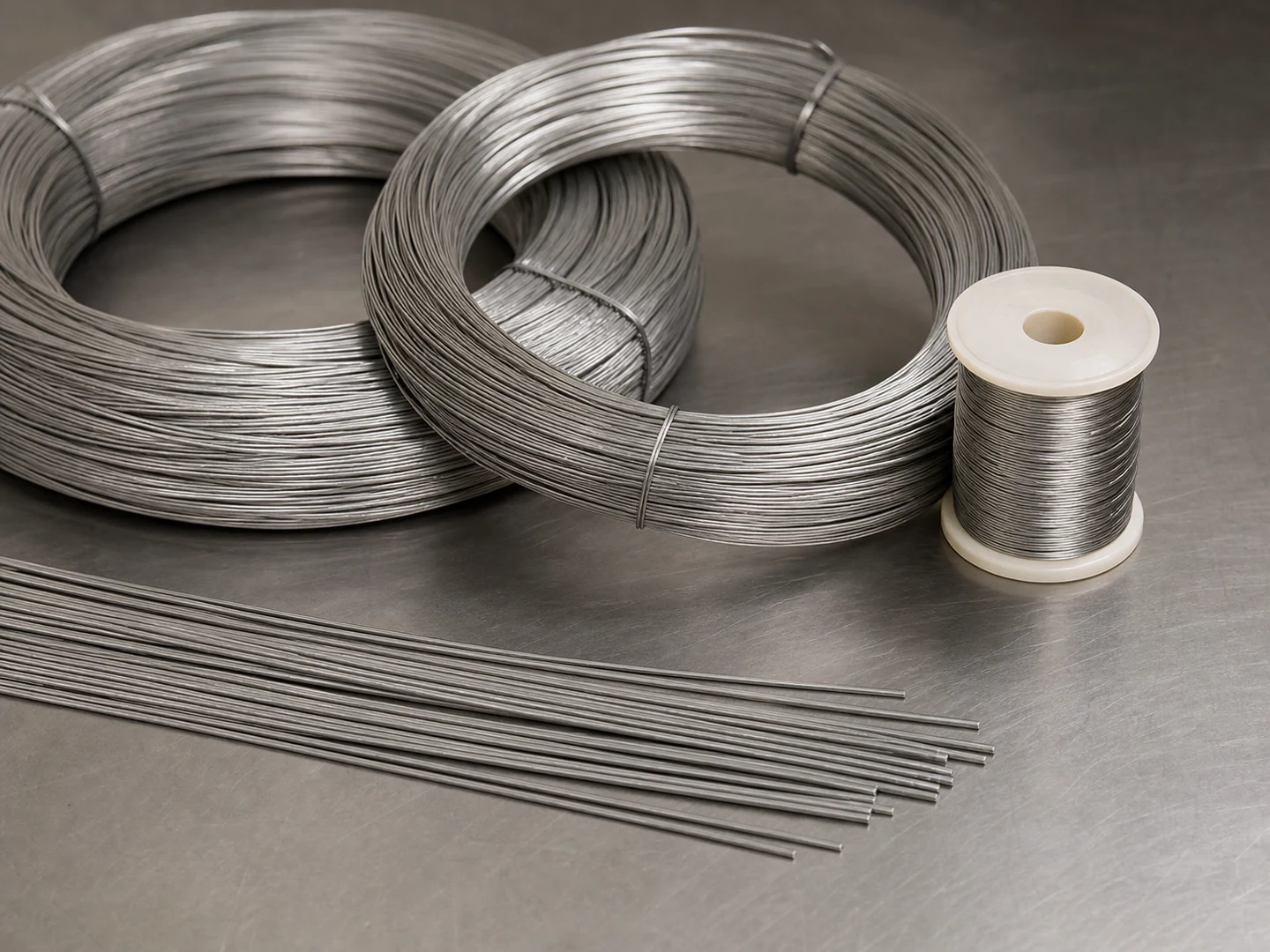
A medical wire cleaning brush is a cleaning device consisting of a twisted or coiled wire core with bristles fixed between the wire strands. The wire core provides flexibility and torque transmission, while the bristles deliver the mechanical scrubbing action inside narrow tubular passages. Unlike disposable pipe cleaners, these brushes are often reusable, autoclavable, and made from biocompatible materials that tolerate chemical sterilants and high temperatures.
For reusable medical-device cleaning claims, the practical boundary is the device maker’s validated instructions and the FDA — Reprocessing Medical Devices in Health Care Settings rather than a brush-only rule.
For healthcare cleaning language, this article keeps its claims within the general boundary of the CDC — Disinfection and Sterilization Guideline, which is written for disinfection and sterilization in healthcare facilities.
Where the article discusses healthcare settings rather than ordinary cleaning, the CDC — Core Infection Prevention and Control Practices is used as the general infection-control frame.
For brush terminology and construction language, this section references American Brush Manufacturers Association — Brush Lingo.
In narrow instrument channels—those under 3 mm in diameter—even small spec errors can cause poor cleaning, channel damage, or brush breakage. A well-defined custom brush order is not about buying a catalog part; it is about matching the brush to the exact geometry, residue type, and cleaning protocol of your device.
Common Material, Diameter, and Stiffness Options
Custom medical wire cleaning brushes vary across four primary dimensions: wire material, bristle material, overall diameter, and stiffness. The right combination depends on the residue you are removing, the channel material, and your cleaning process.
- Wire core materials: Stainless steel (most common for strength and autoclavability), nickel titanium/Nitinol (for extreme flexibility and kink resistance), or occasionally brass for softer, non-magnetic applications.
- Bristle materials: Nylon (general purpose, chemical resistant), polypropylene (stiffer, good for heavy debris), brass (for stubborn inorganic residues, but can scratch soft polymers), stainless steel (for very hard deposits in all-metal channels, high risk of scratching), and ultra-soft materials like goat hair or natural fibers (for lubrication or delicate surfaces).
- Diameter: Typically measured as the overall brush OD, which must be slightly larger than the channel ID to ensure bristle contact while still passing through without excessive force. Common sizes range from 0.5 mm to over 10 mm, but for narrow channels, diameters of 0.5–3 mm are critical.
- Stiffness: Controlled by wire gauge, twist tightness, and bristle density. A stiffer brush cleans more aggressively; a softer brush conforms to curves without scratching.
Comparing Brush Configurations: A Practical Selection Table
Use this table to narrow down your brush requirements before contacting a supplier. It maps common channel and residue scenarios to starting-point specifications.
| Channel Type | Residue | Recommended Wire Core | Bristle Material | Typical Diam. Range | Stiffness Note |
|---|---|---|---|---|---|
| Flexible endoscope working channel (polymer) | Organic biofilm, mucus | Stainless steel, twisted | Nylon | 1.8–3.4 mm | Medium; avoid scratching liner |
| Rigid suction tube (stainless steel) | Dried blood, saline residue | Stainless steel, twisted | Brass or stainless steel | 2.0–5.0 mm | High; channel tolerates aggressive cleaning |
| Arthroscopic cannula (polymer) | Tissue debris, synovial fluid | Nitinol (flexible) | Nylon | 2.5–4.0 mm | Low–medium; protect internal seals |
| Micro-lumen catheter (polyurethane) | Blood, contrast media | Stainless steel, fine wire | Ultra-soft nylon or goat hair | 0.5–1.5 mm | Very low; must not score wall |
| Biopsy channel with nooks | Tissue fragments | Stainless steel, tight twist | Nylon, high density | Match channel ID +0.3–0.5 mm | Medium; bristles reach crevices |
Key Factors to Check Before Ordering
Move from a vague need to a concrete purchase by answering these questions. Each factor directly affects cost drivers, lead time, and cleaning performance.
- Residue type and adhesion: Is the debris water-soluble (blood, saline), protein-based (biofilm, tissue), or inorganic (scale, dried media)? A water-soluble residue may need only a soft nylon brush; hardened scale may need brass or steel bristles. Identify the worst-case post-procedure residue you must remove.
- Channel material and surface sensitivity: Polymer channels (PTFE, polyurethane, silicone) scratch easily. Metal channels tolerate stiffer bristles. Always get the exact material specification from your instrument’s IFU or manufacturer. A scratch can create a biofilm harbor or cause a leak path.
- Channel geometry: Inner diameter, length, and curvature matter. A straight rigid tube can use a stiff brush; a long scope with tight bends needs a flexible core that will not kink. Provide the minimum bend radius and any transitions (reducers, side ports) to the brush supplier.
- Equipment interface and mounting: How will the brush be used—manually by hand, attached to a cleaning gun, or mounted in an automated reprocessing machine? The handle or connector must match. Options include loop handles, straight shanks, quick-connect fittings, and threaded ends. Specify if the brush must be used while the instrument is assembled or only during disassembly.
- Wet or chemical exposure: The brush will contact enzymatic cleaners, disinfectants (glutaraldehyde, OPA, peracetic acid), and possibly steam sterilization (134 °C). Confirm that all materials—wire, bristle, and any coating—are compatible with your full cleaning and sterilization cycle. Request chemical resistance data from the supplier.
- Hygiene and cleanliness expectations: Brushes that enter patient-contact instruments must be easily cleaned themselves. Can the brush be autoclaved? Does the core trap debris? A twisted wire core is easier to clean than a coiled wire core with empty spaces. Some facilities require a smooth, sealed handle to prevent microbial harbors.
- Maintenance frequency and brush life: A reusable brush must survive a defined number of cycles. A disposable brush may be used once and discarded. If reusable, ask for the expected number of uses before bristle loss or core fatigue. This determines total cost of ownership, not just unit cost drivers.
- Custom size requirements: Do you need an exact diameter, a specific brush length, or a two-diameter brush (e.g., a narrow tip for the distal end and a wider body for the proximal end)? Provide a dimensioned sketch with tolerances. For pre-production samples, specify acceptance criteria for bristle uniformity, core flexibility, and pull-through force.
Common Mistakes When Specifying a Medical Wire Cleaning Brush
Avoid these errors that lead to poor cleaning, equipment damage, or regulatory headaches.
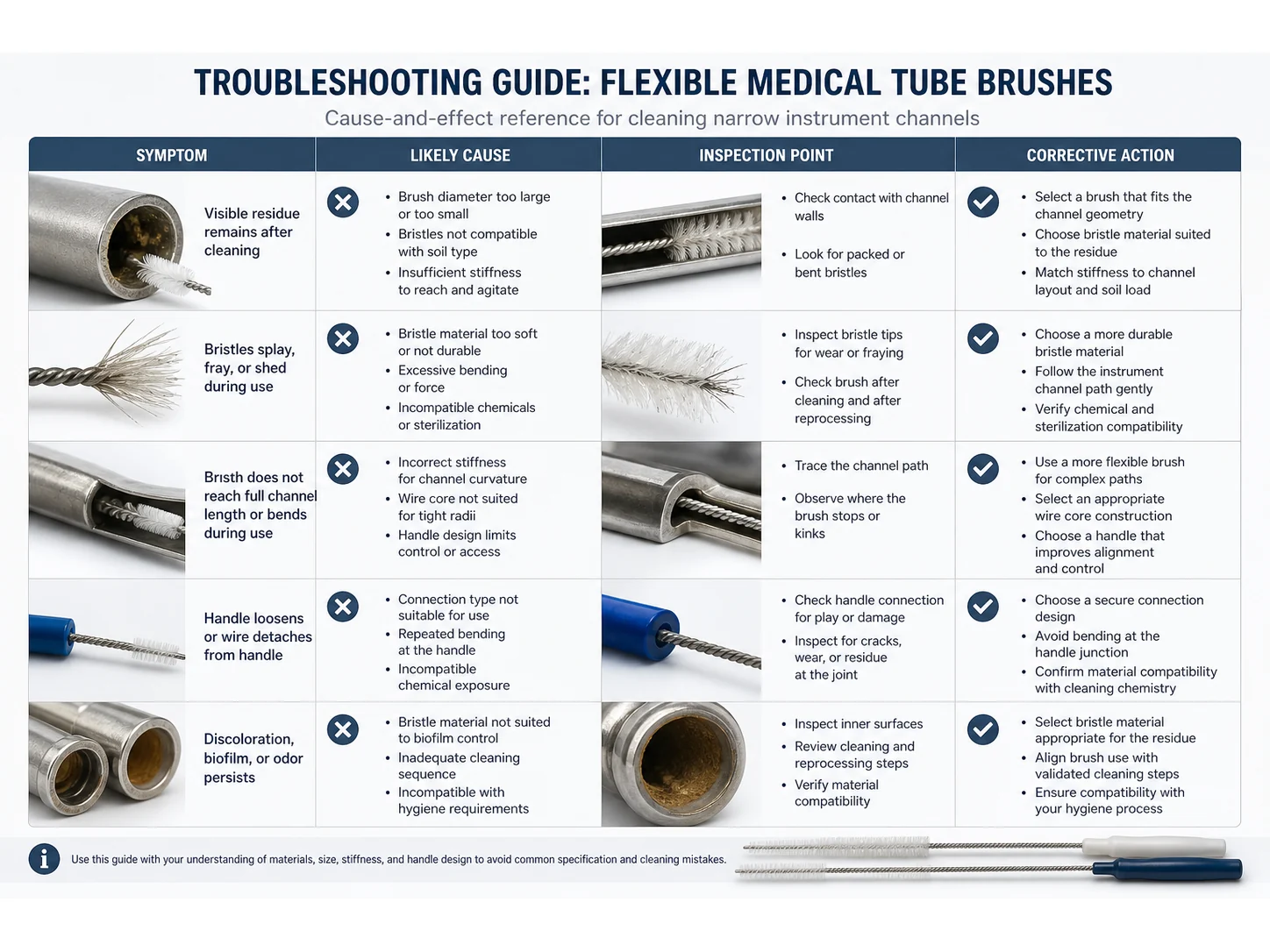
- Guessing the channel diameter: Measuring the outer diameter of the instrument or the nominal channel size is not the same as the actual inner diameter. Use a pin gage or calibrated scope to measure the ID accurately. Ordering a brush that is too large jams; too small misses residue.
- Overlooking bristle height and density: Diameter alone is insufficient. Bristle height (radial projection from the wire) and density determine how much mechanical action occurs. A brush with a few long bristles and a brush with many short bristles may have the same OD but vastly different cleaning effectiveness and risk of bristle breakage.
- Using a metal brush in a soft channel: The cost of a scratched endoscope channel far outweighs the savings of a brass brush. Always default to nylon or softer bristles unless you have engineering justification and the instrument manufacturer’s approval.
- Ignoring the cleaning protocol interface: A brush designed for manual use may not fit an automatic flushing device. Check the grip diameter, overall length, and connector style before ordering.
- Specifying only “medical grade” without details: “Medical grade” is vague. Ask for specific material certifications, such as ISO 10993 biocompatibility test reports for patient-contacting components, or resistance to the sterilant you use. Do not assume a generic brush meets your infection control requirements.
When a Standard Wire Brush Is Not Enough
Even a well-chosen medical wire cleaning brush has limits. Recognize when you need a different approach or expert guidance.
- Channels with blind holes or complex geometries: A brush may not fully contact all surfaces. Consider ultrasonic cleaning, flushing with chemical agents, or a custom brush with a shaped tip (e.g., a bottle brush profile) after consulting with a design engineer.
- Extremely delicate linings: If the channel has a proprietary coating or is smaller than 0.5 mm, even a soft brush may cause damage. Evaluate non-contact methods like high-pressure flushing with filtered water or enzymatic soaks.
- Validation requirements: In a regulated medical device facility, cleaning must be validated consistently. If you need proof that a brush removes a specific residue load, plan for a sample test program with your supplier. Ask for brush sample lots, cleaning test data, and support for your validation protocol. Do not expect a single brush off the shelf to meet strict validation criteria without testing.
- When the brush becomes a critical component: If the brush is used intraoperatively (e.g., to clear a cannula during surgery) rather than in reprocessing, it may be subject to more rigorous biocompatibility, sterility, and single-use requirements. In such cases, a consult with a quality engineer or regulatory specialist is advisable before placing an order.
Building Your RFQ: A Buyer’s Pre-Order Checklist
Use this checklist to prepare your request for quotation (RFQ) so that suppliers can provide accurate proposals without back-and-forth delays.
- Channel measured inner diameter (mm) and tolerance.
- Channel material (polymer type/stainless steel grade).
- Channel length and minimum bend radius.
- Description of worst-case residue and cleaning chemistry used.
- Required brush overall diameter, bristle length, and brush working length.
- Wire core material preference (e.g., 304 stainless, Nitinol).
- Bristle material preference and stiffness requirement.
- Handle or connector type, plus any interface dimensions.
- Sterilization method and number of reuse cycles expected.
- Quantity needed and acceptable lead time.
- Regulatory documentation required (e.g., biocompatibility, material certificates).
- Request for pre-production samples and test criteria.
Suppliers that can answer “yes” to this level of detail are more likely to deliver a brush that works reliably, reduces reprocessing failures, and protects your expensive instruments.
Bottom Line
The best result comes from matching medical wire cleaning brush for narrow instrument channels to the real cleaning task rather than forcing one brush to solve every condition. Confirm access, residue, surface limits, and replacement routine first; then use a small trial or inspection step before scaling the method into daily work.
Frequently Asked Questions
How do I accurately measure a very small channel diameter?
Use a set of pin gages or a calibrated optical comparator. Do not use calipers on the instrument’s outer surface or trust the nominal size printed in the manual; actual ID can vary due to manufacturing tolerances or swelling from use.
Can I use the same brush for cleaning and for applying lubricant?
It is possible, but the bristle material and saturation must be considered. A nylon brush can be used with a lubricant, but cross-contamination risk increases. Many facilities prefer dedicated brushes for cleaning and a separate applicator for lubrication to meet hygiene protocols.
What bristle material is safest for polyurethane channels?
Nylon is generally the safest starting point because it is softer than most metals and resists chemical attack. For polyurethane, confirm with the instrument manufacturer; some use ultra-soft goat hair or fine filament polyester. Avoid all metal bristles unless the manufacturer explicitly approves.
How can I test a custom brush before committing to a bulk order?
Request a small batch of prototype samples. Test for pull-through force (should be smooth, not excessive), bristle loss (visual inspection and particle count), and cleaning efficacy on a soiled test channel. Retain one sample for your validation records.
Is a twisted wire core always better than a coiled wire core?
Not always. Twisted wire is simpler, easier to clean, and transmits torque effectively. Coiled wire can provide more flexibility and a larger central lumen for fluid flow, but it can trap debris in the coil gaps. Choose based on cleanability requirements and channel complexity.
What documentation should I expect from a reputable brush supplier?
At minimum: material certification for wire and bristle, cleaning and sterilization resistance data, dimensional inspection report for the brush, and biocompatibility test references (ISO 10993) if the brush touches patient-contact surfaces. For regulated environments, also ask for a certificate of conformance and a statement on latex/phthalate content.
Can a brush damage my endoscope’s channel if the brush breaks?
Yes. A broken wire core or detached bristle can lodge in the channel, potentially requiring expensive repair or replacement. To minimize risk, set a maximum pull force in your SOP, inspect brushes before each use, and discard at the first sign of wear.
Do I need a separate brush for each endoscope, or can one brush clean multiple?
Ideally, use a dedicated brush for each scope or at minimum a brush that is thoroughly cleaned, disinfected, and dried between uses. Cross-contamination from a brush used on multiple scopes can transfer biofilm from one patient to another. Follow your facility’s infection prevention policy.