What Is a Long Handle Pipe Brush for Food and Beverage Tubing?
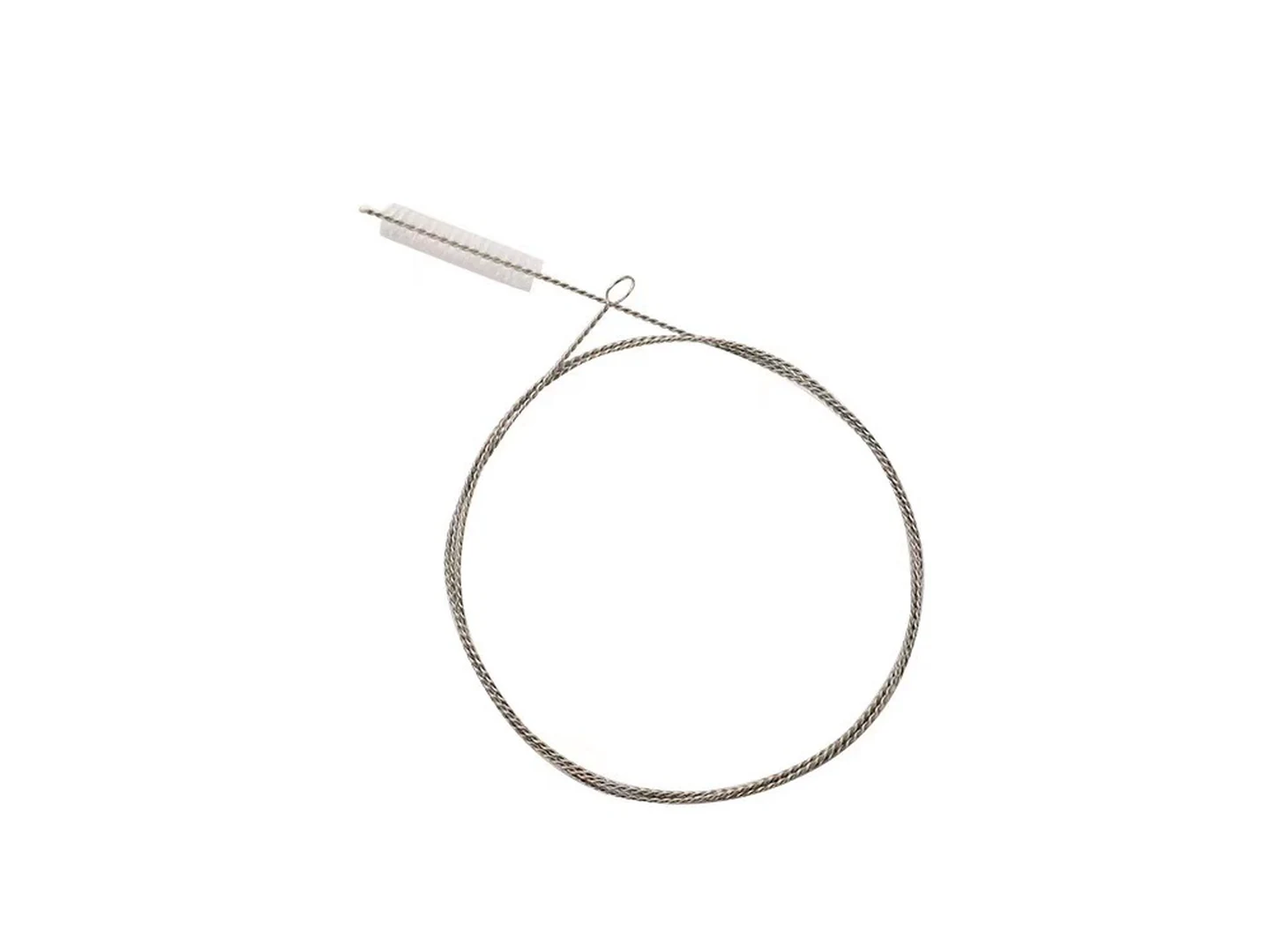
A long handle pipe brush features a bristled head attached to a long rod or flexible cable. The design allows operators to scrub the interior walls of pipes that are otherwise inaccessible. In the food industry, these brushes are used during manual clean-out-of-place (COP) procedures, often after product changeovers or before sanitation verification. Key attributes include handle length, brush diameter, filament material, and the method of bristle retention. For food applications, the emphasis is on non-shedding bristles, chemical-resistant handles, and materials that can be sanitized.
Why Custom Specifications Matter in Food and Beverage Applications
For food-service sanitation language, the FDA — Food Code is the reference point for food safety terminology rather than a brush manufacturer’s preference.
For the material or regulatory boundary in this section, the supporting reference is eCFR — 21 CFR 177.1500 Nylon Resins.
For the material or regulatory boundary in this section, the supporting reference is eCFR — 21 CFR 177.1520 Olefin Polymers.
For brush terminology and construction language, this section references American Brush Manufacturers Association — Brush Lingo.
Off-the-shelf brushes may not fit the exact inner diameter (I.D.), may leave gaps, or may use materials not approved for food contact. A custom brush ensures:
- Exact diameter to match tubing for complete surface contact.
- Correct filament stiffness to clean without scratching.
- Handle length and flexibility to navigate bends.
- Food-grade materials (often polypropylene, PTFE, or stainless steel for cores).
- Attachment options (e.g., threaded end for drill adaptation, ring handle for manual pulling).
Without these customizations, cleaning may be ineffective, could contaminate product, or could damage polished surfaces.
Common Brush Material and Configuration Options
| Component | Option | Typical Use in F&B | Advantages | Limitations / Cautions |
|---|---|---|---|---|
| Filament Material | Polypropylene (PP) | General purpose, wet environments | Good chemical resistance, low moisture absorption, FDA-compliant grades | Softens at high temperatures (above 80°C / 176°F) |
| PTFE | High-temperature, non-stick surfaces | Excellent chemical resistance, wide temperature range, non-shedding | Higher cost, requires correct filament anchoring | |
| Nylon | Standard cleaning, moderate chemicals | Good abrasion resistance, flexible | Absorbs moisture, can harbor bacteria if not dried properly; check for FDA-grade variants | |
| Horsehair | Polished stainless interiors, delicate surfaces | Very soft, won’t scratch fine finishes | Not for wet continuous use, difficult to sanitize; rarely used in high-hygiene zones | |
| Handle / Core Material | Polypropylene Rod | Light manual cleaning, chemical resistance | Inexpensive, widely accepted for food contact | Stiff; cannot navigate tight bends; may warp in high heat |
| Stainless Steel 304/316 | Heavy-duty, clean-in-place compatible, high-temperature | Durable, can be sanitized with steam/autoclave | Heavier; may require flexible joints for bends | |
| Flexible Cable (e.g., SS wire or nylon-coated) | Tubing with bends and elbows | Navigates curves while scrubbing | Less push force; may kink if not properly reinforced | |
| Bristle Stiffness | Soft (fine filament) | Polished, scratch-sensitive surfaces | Safe for delicate interiors | Less effective on stubborn residues |
| Medium | General food residues | Balanced cleaning and surface safety | May not remove baked-on carbon | |
| Stiff (coarse filament) | Hard deposits, carbonized buildup | Aggressive cleaning | Risk of scratching; not for electropolished tubing | |
| Handle Connection | Ring or T-handle | Manual operation | Simple, operator-friendly | Limited force application |
| Threaded end (e.g., 1/4 in.) | Drill-powered cleaning | Higher torque, faster cleaning | Must ensure brush rotation matches pipe direction; increased wear |
Key Factors to Evaluate Before Requesting a Quote
- Residue Type: Identify the main residue (wet, sticky, powdery, baked-on). This determines filament material and stiffness. For example, sugary syrups may rinse well with a medium polypropylene brush; carbonized beer stone may require PTFE or a stiffer bristle.
- Surface Sensitivity: Check your tubing’s interior finish (Ra value). Electropolished or glass-lined surfaces require soft or medium bristles to prevent micro-scratches where bacteria can hide.
- Equipment Interface: How will the brush be used? Manual push-pull? Drill operation? Pull-through with a swab? Specify the handle connection and whether the core must accept a drill chuck or quick-connect fitting.
- Wet or Chemical Exposure: Know your cleaning chemicals (acids, caustics, chlorine) and sanitizing methods (steam, autoclave). Ensure all materials—bristles, core, adhesive—are compatible to prevent degradation.
- Hygiene Expectations: Brush must shed zero bristles into the product stream. Ask about the bristle retention method: stapled, twisted-in wire, or molded. Molded or twisted-in designs are often preferred for food. Also consider how the brush itself will be cleaned and dried between uses.
- Maintenance and Storage: Before ordering, consider how the brush will be cleaned, dried, and stored between uses to prevent bacterial growth. Brushes with stainless steel cores can be autoclaved, but brushes with polypropylene handles must withstand the cleaning chemicals used on-site. Ensure the brush design allows it to drain and dry completely; trapped moisture can lead to microbial growth. Ask the manufacturer about cleaning recommendations and whether the brush can be disassembled for sanitation.
By verifying these specifications upfront, you can ensure your custom long handle pipe brush delivers reliable cleaning performance, reduces contamination risks, and extends the life of your food processing equipment.
Practical Use Note
In daily use, the practical test is simple: check whether the brush reaches the full contact area, removes the target residue, and leaves the surface in the required condition. Record what changes when residue type, food-contact area, cleanability, storage, and cross-contamination risk changes, because many brush failures are caused by the working condition shifting rather than by the brush body alone.
Common Mistakes to Avoid
- Choosing only by product name instead of access, residue, and surface limits.
- Using a brush that is too aggressive because the first trial looks faster.
- Ignoring where loosened debris will go after brushing.
- Keeping the brush in service after bristles bend, shed, load with residue, or stop reaching the target area.
- Treating brushing as the whole cleaning method when inspection, flushing, vacuuming, machine adjustment, or sanitation controls are also needed.
How to Check the Result
After brushing, inspect both the cleaned area and the brush. A good result removes the target soil while leaving the surface, bristles, mounting, and nearby components in acceptable condition. If cleaning improves only when pressure is increased sharply, the brush specification or the surrounding process should be reviewed.
Bottom Line
The best result comes from matching long handle pipe brush for food and beverage tubing to the real cleaning task rather than forcing one brush to solve every condition. Confirm access, residue, surface limits, and replacement routine first; then use a small trial or inspection step before scaling the method into daily work.
Frequently Asked Questions
What is the typical lead time for a custom long handle pipe brush?
Lead times vary by manufacturer but generally range from 2–6 weeks depending on complexity, material availability, and order volume. Rush orders may be available for an additional fee.
Are there minimum order quantities (MOQs) for custom brushes?
Yes, custom brushes typically have MOQs that can range from 10 to 100 units, depending on the manufacturer. For very specialized designs, setup costs may be amortized over larger runs.
Can I get a prototype or sample before bulk production?
Many brush manufacturers offer a single prototype or a small sample run for evaluation. This allows you to test fit, filament stiffness, and handle configuration before committing to a full order. Expect to pay a setup charge for prototypes.
How do I specify the correct brush diameter for my tubing?
Measure the inner diameter (I.D.) precisely and provide this to the manufacturer. The brush diameter should be 1–3 mm larger than the I.D. for adequate compression and full contact, but not so large that it causes excessive friction or damage. Consult your brush supplier for recommended oversize based on filament type.
What documentation should I request for food safety compliance?
Request certificates of conformance (CoC) for FDA-compliant materials, any relevant 3A sanitary standards documentation, and a statement regarding BSE/TSE-free status if animal-derived materials are used. Also ask about chemical resistance and temperature rating datasheets.