What Is a Copper Strip Cleaning Brush?
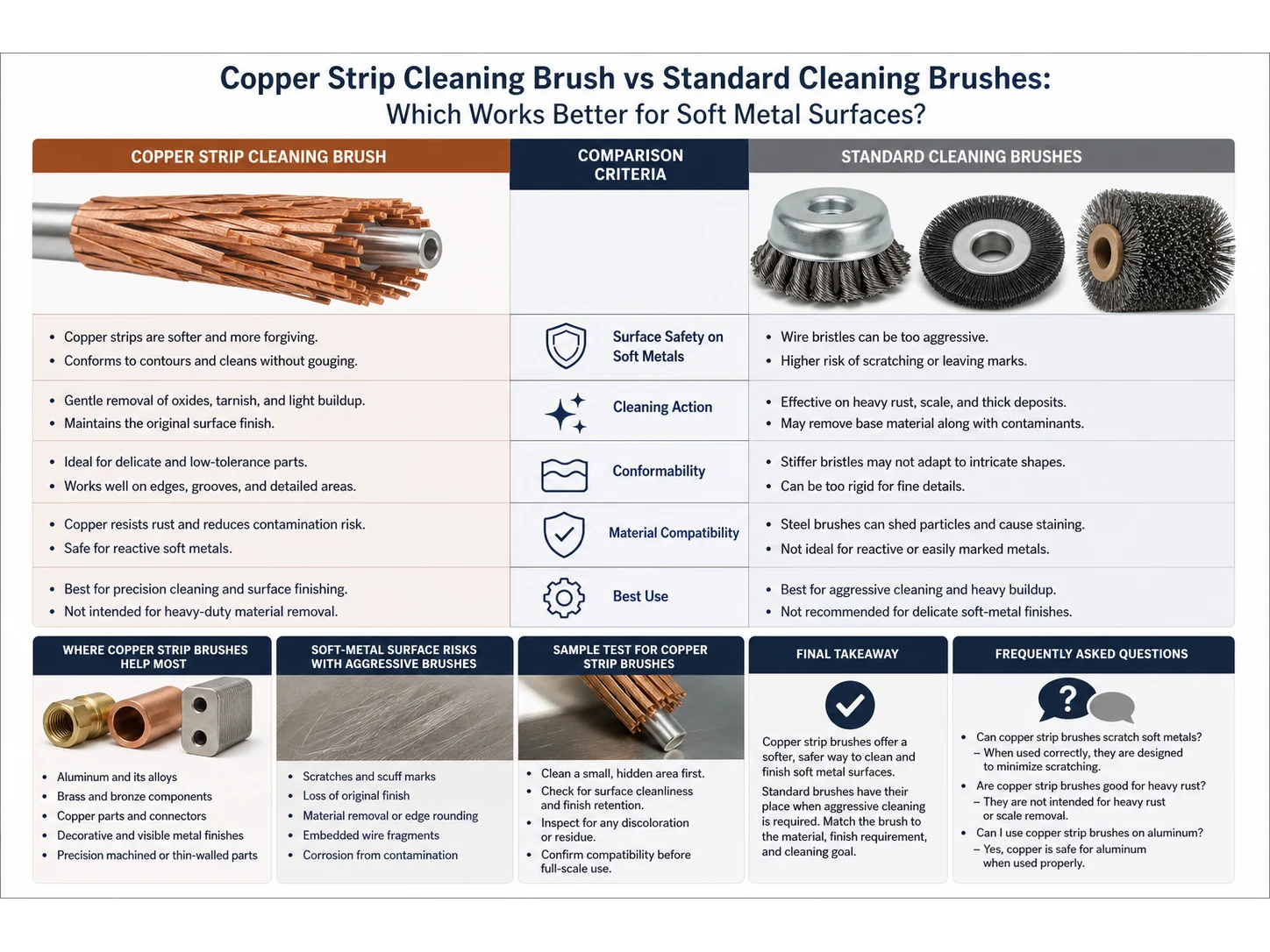
A copper strip cleaning brush is a cleaning tool that uses copper wire bristles fixed into a rigid strip, handle, or core. The bristles are designed to remove oxidation, corrosion, old sealant, and debris from threaded connections. Because copper is softer than steel yet harder than many other non-ferrous metals, it cleans effectively while minimizing the risk of scratching or gouging threads on copper, brass, aluminum, and even stainless steel. The strip format allows the brush to follow the thread profile, making it especially suitable for cleaning both male and female threads on pipes, bolts, and fasteners.
Common Types of Thread Cleaning Brushes
For material-selection language, this section is supported by Copper Development Association — Electrical Conductivity of Copper.
For material-selection language, this section is supported by World Stainless — Corrosion Resistance of Stainless Steels.
For brush terminology and construction language, this section references American Brush Manufacturers Association — Brush Lingo.
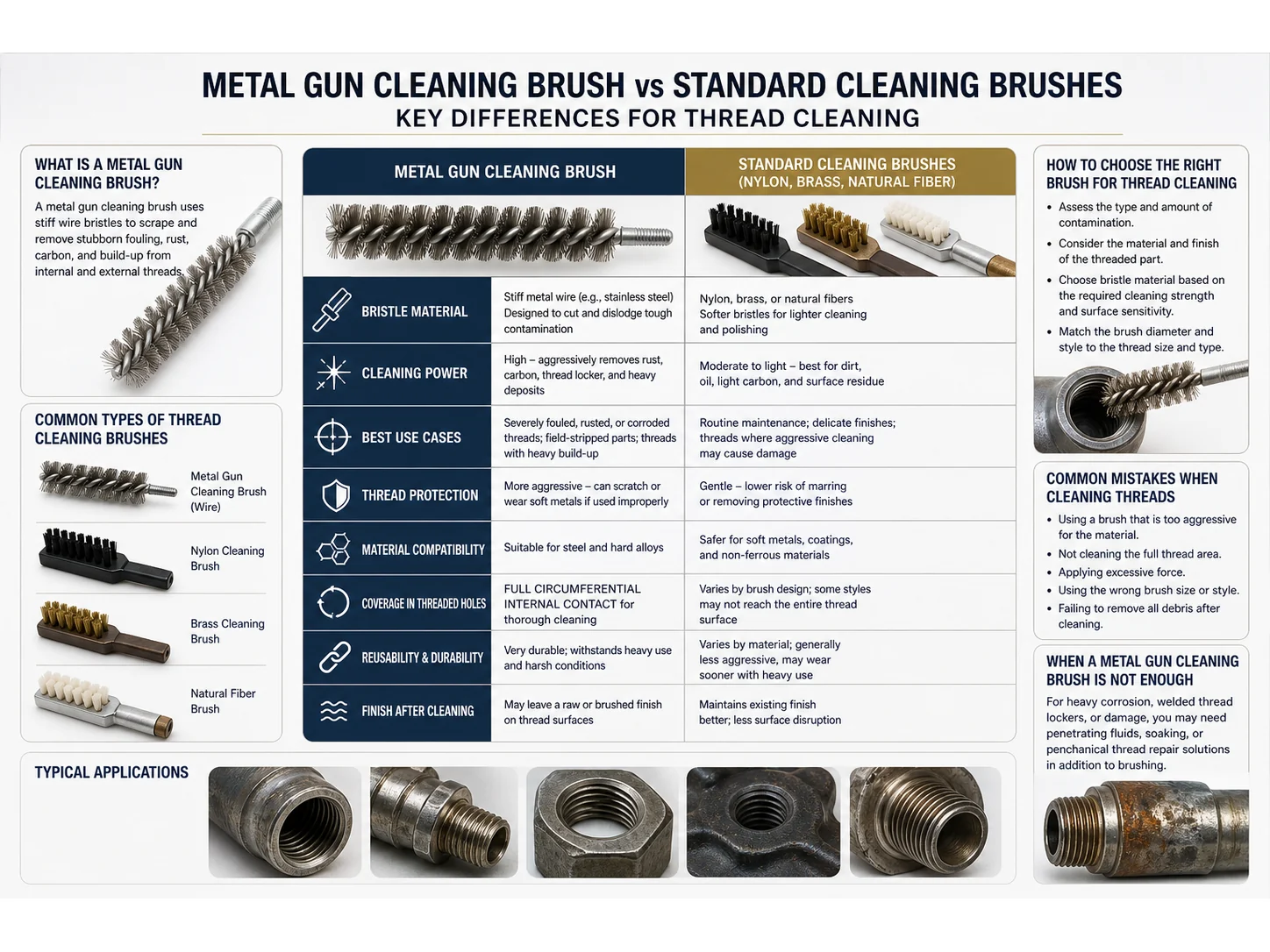
To understand where a copper strip brush fits, it helps to know the main categories of thread cleaning brushes:
- Standard Wire Brushes (Steel/Stainless Steel): Highly aggressive; durable; can remove heavy rust but may scratch softer metals.
- Brass Wire Brushes: Softer than steel; non-sparking; less likely to damage surfaces but bristles wear faster and may leave traces.
- Nylon/Abrasive Filament Brushes: Non-metallic; chemically resistant; good for light cleaning or sensitive surfaces but less effective on stubborn deposits.
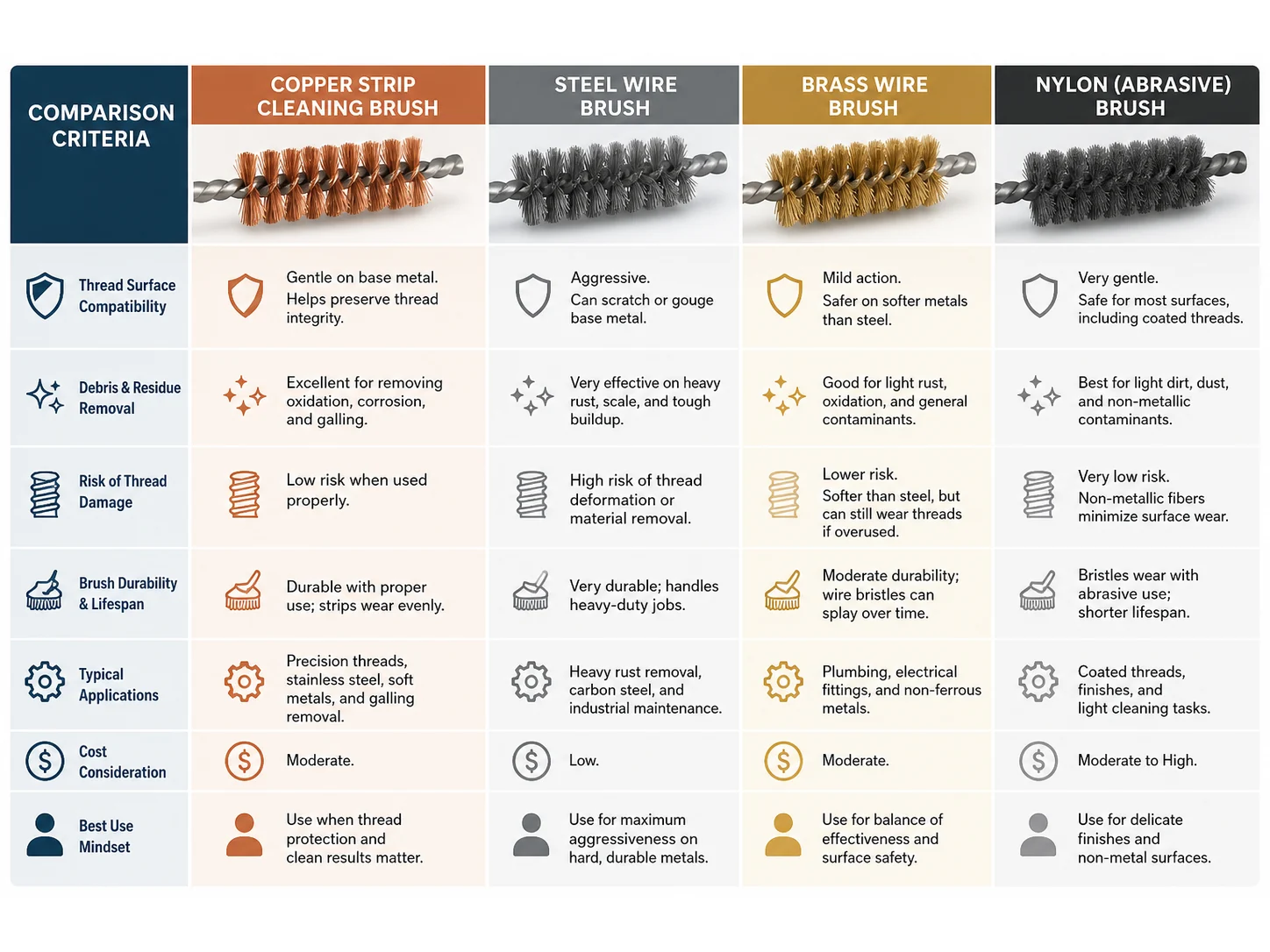
- Copper Strip Brushes: Purpose-made for thread work; copper bristles are gentle yet effective; corrosion-resistant; safe for most common thread materials; often available in widths and profiles that match standard thread forms.
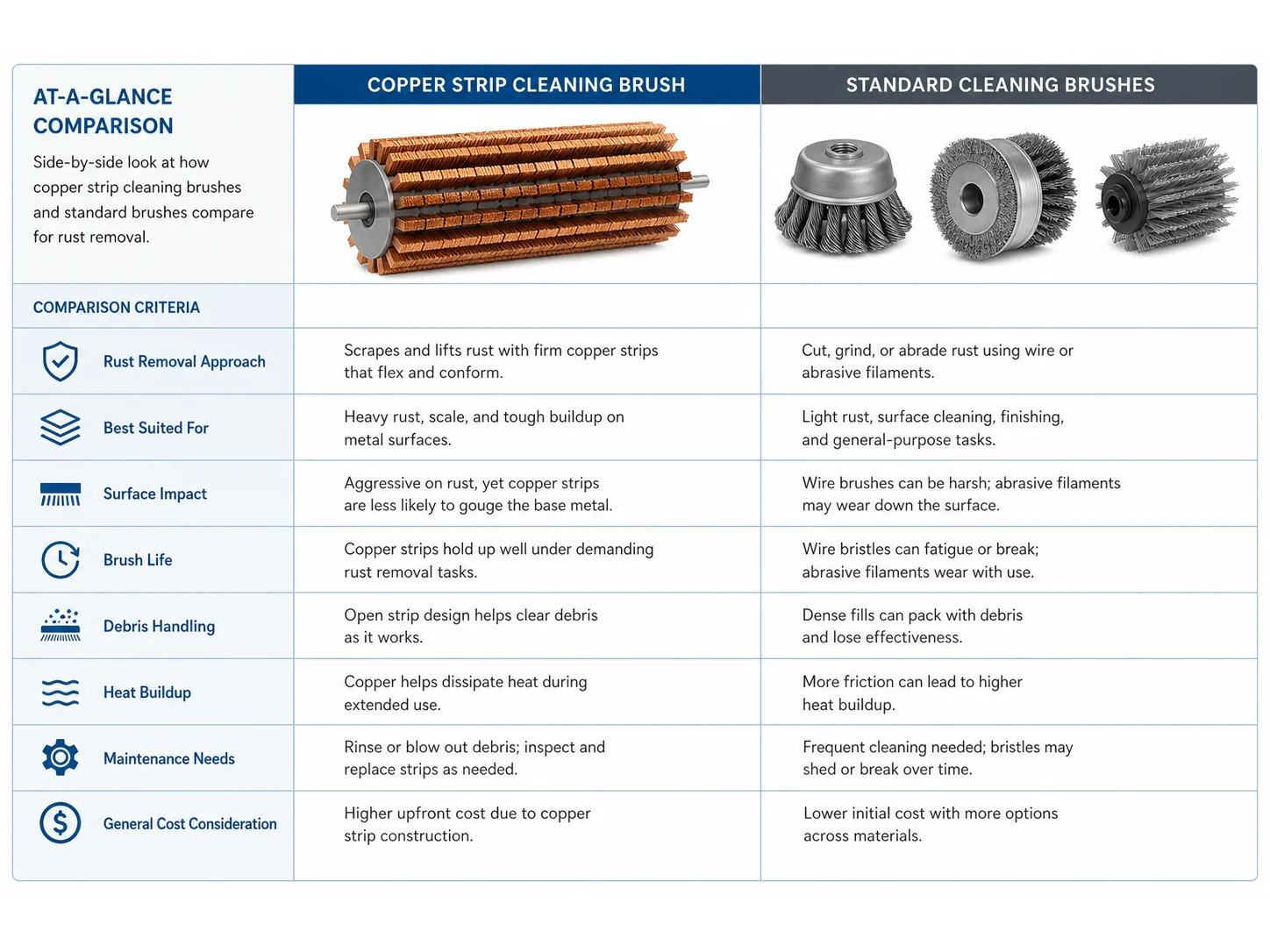
Copper Strip Brush vs Standard Brushes: Key Comparison
| Feature | Copper Strip Cleaning Brush | Standard Steel Wire Brush | Standard Brass Wire Brush | Nylon Brush |
|---|---|---|---|---|
| Bristle Material | Copper or copper alloy | Carbon steel or stainless steel | Brass | Nylon, sometimes with abrasive grit |
| Hardness (Relative) | Moderate (softer than steel, harder than brass) | High | Low–moderate | Low to moderate (abrasive types higher) |
| Surface Risk | Low; unlikely to scratch threads | High; can gall or scratch softer metals | Moderate; may leave brass smears | Very low |
| Best for Residue Type | Moderate corrosion, old sealant, light rust | Heavy rust, scale, carbon build-up | Light oxidation, dirt | Loose dirt, dust, soft deposits |
| Chemical Resistance | Good with oils and mild solvents; reacts with strong acids | Good; stainless grades resist many chemicals | Good; resistant to many solvents but can tarnish | Excellent; wide chemical compatibility |
| Typical Lifespan | Moderate; bristles can deform under high pressure | Long; bristles retain stiffness | Short to moderate; bristles wear quickly | Moderate; can fray or break with abrasive use |
| Cost Factor | Moderate | Low | Moderate | Low to moderate |
| Thread Cleaning Fit | Excellent; strip profile follows threads | Acceptable on steel threads only | Fair; wears out quickly on sharp threads | Poor to fair; cannot remove heavy debris |
How to Choose the Right Brush for Thread Cleaning
The correct brush depends on six practical factors:
- Thread Material: Use copper strip brushes for copper, brass, or aluminum threads to avoid damage. Steel brushes can be used on heavy steel threads where surface finish is less critical.
- Residue Type: Soft deposits and old sealant respond well to copper or brass. Hard carbon or rust may require a steel brush, but proceed with caution on threads.
- Thread Size and Access: Copper strip brushes are available in widths that match common thread pitches; standard wire brushes may not fit into fine-pitch or deep internal threads.
- Chemical Exposure: If cleaning involves aggressive solvents or acids, verify compatibility. Copper can be attacked by strong acids; nylon is often a safer chemical choice.
- Hygiene Requirements: In food or medical equipment, copper has antimicrobial properties, but nylon may be specified to eliminate any risk of bristle loss. Check relevant standards.
- Maintenance Frequency: For daily use, consider brush longevity. Copper offers a good balance between cleaning performance and surface safety for frequent maintenance routines.
Setup and Usage Factors for Thread Cleaning
How you use the brush matters as much as the brush itself:
- Brush Direction: Copper strip brushes work best when drawn across the threads at a slight angle, allowing bristles to reach the root. Rotary brushes need care to avoid cross-threading damage.
- Lubrication: Using a light oil or penetrating fluid with a copper brush can lift debris without causing galling. Avoid using heavy grease that can trap particles.
- Pressure Control: Excessive force with any brush can deform threads; copper brushes provide natural feedback because the bristles flex before the metal yields.
- Cross-Contamination: If one brush is used on different metals, clean it thoroughly between jobs to prevent galvanic corrosion or particle transfer.
Common Mistakes When Cleaning Threads
- Using a steel wire brush on copper or aluminum threads, causing scratches that lead to leakage or galling during assembly.
- Selecting a brush only by cost drivers or availability without checking bristle compatibility with the thread material.
- Ignoring brush shape: a round brush for internal threads, a strip brush for external threads. Using the wrong form can miss debris or damage the thread crests.
- Overlooking chemical reactions between cleaning agents and the brush material—for example, acidic cleaners eroding copper bristles.
- Reusing a worn brush with flattened bristles, which reduces cleaning efficiency and requires more passes.
When a Copper Strip Cleaning Brush Is Not Enough
Copper strip brushes are highly effective for regular thread maintenance, but there are limits:
- Heavily Corroded or Damaged Threads: If threads are seized, pitted, or have broken crests, a copper brush alone will not restore the profile. A thread file, chaser, or re-tapping may be required.
- High-Volume Automated Cleaning: In production lines, power-driven brushes with abrasive nylon or stainless steel may be faster and necessary to meet throughput demands.
- Unique Thread Geometries: Non-standard thread forms, very fine pitches, or tapered threads may require a custom brush profile. A sample test or supplier drawing review is often worthwhile before ordering.
- Critical Cleanliness Environments: In cleanrooms or food-grade lines where bristle shedding is unacceptable, alternative techniques like ultrasonic cleaning, high-pressure washing, or detergent immersion may replace brush use entirely.
Final Takeaway
For most routine thread cleaning tasks on copper, brass, aluminum, and stainless steel components, a copper strip cleaning brush offers the best balance of effective debris removal and surface protection. Standard steel brushes are best kept for heavy steel threads where surface marking is acceptable. Brass and nylon brushes serve niche roles but cannot match the thread-specific profile and longevity of a copper strip brush for general maintenance. Always match the brush to the thread material, debris load, and chemical environment, and remember that no single brush solves every cleaning challenge.
Practical Use Note
In daily use, the practical test is simple: check whether the brush reaches the full contact area, removes the target residue, and leaves the surface in the required condition. Record what changes when ESD control, slot access, particle type, contact pressure, and component sensitivity changes, because many brush failures are caused by the working condition shifting rather than by the brush body alone.
Frequently Asked Questions
Can a copper strip brush be used on stainless steel threads?
Yes, copper is softer than stainless steel, so it cleans without scratching the threads while removing surface corrosion. It is a good choice when spark-free or non-damaging cleaning is required.
What solvents are safe to use with copper bristles?
Most mild solvents, penetrating oils, and alkaline degreasers are safe. Avoid strong acids (e.g., hydrochloric or sulfuric acid) as they can attack copper. Always check the solvent manufacturer’s compatibility chart.
How do I know if a copper strip brush is the right size for my thread?
Measure the thread’s outer diameter and pitch. Select a brush whose bristle length and strip width can engage the crest and root without bottoming out or missing contact. Many suppliers list recommended thread size ranges for each brush.
Will copper brushes leave residue behind?
Under normal use, copper transfer is minimal. However, excessive pressure may leave faint copper marks on soft metals. A final wipe with a clean cloth or solvent rinse removes any loose particles.
Can copper strip brushes be used in food processing equipment?
Copper has natural antimicrobial properties, but food-grade standards often prohibit materials that can shed particles or react with foods. Check local regulations. Nylon brushes are frequently preferred for direct food-contact threads.
How often should I replace a copper strip brush?
Replace when bristles become permanently bent, flattened, or begin to shed. Regular inspection is key; in heavy use, a brush may last several weeks, while in light maintenance it can serve for many months.
Is a copper strip brush better than a brass brush for thread cleaning?
Generally, yes. Copper bristles are slightly harder than brass, so they clean more effectively and last longer. Brass brushes wear down quickly on sharp threads and may leave brass smears, while copper resists wear and discoloration.
Can I use a copper strip brush with an electric drill?
Some copper strip brushes come with a shank for power tools, but standard strip handles are not designed for high RPM. For powered thread cleaning, use a dedicated rotary brush with a suitable core and speed rating to prevent bristle breakage or thread damage.