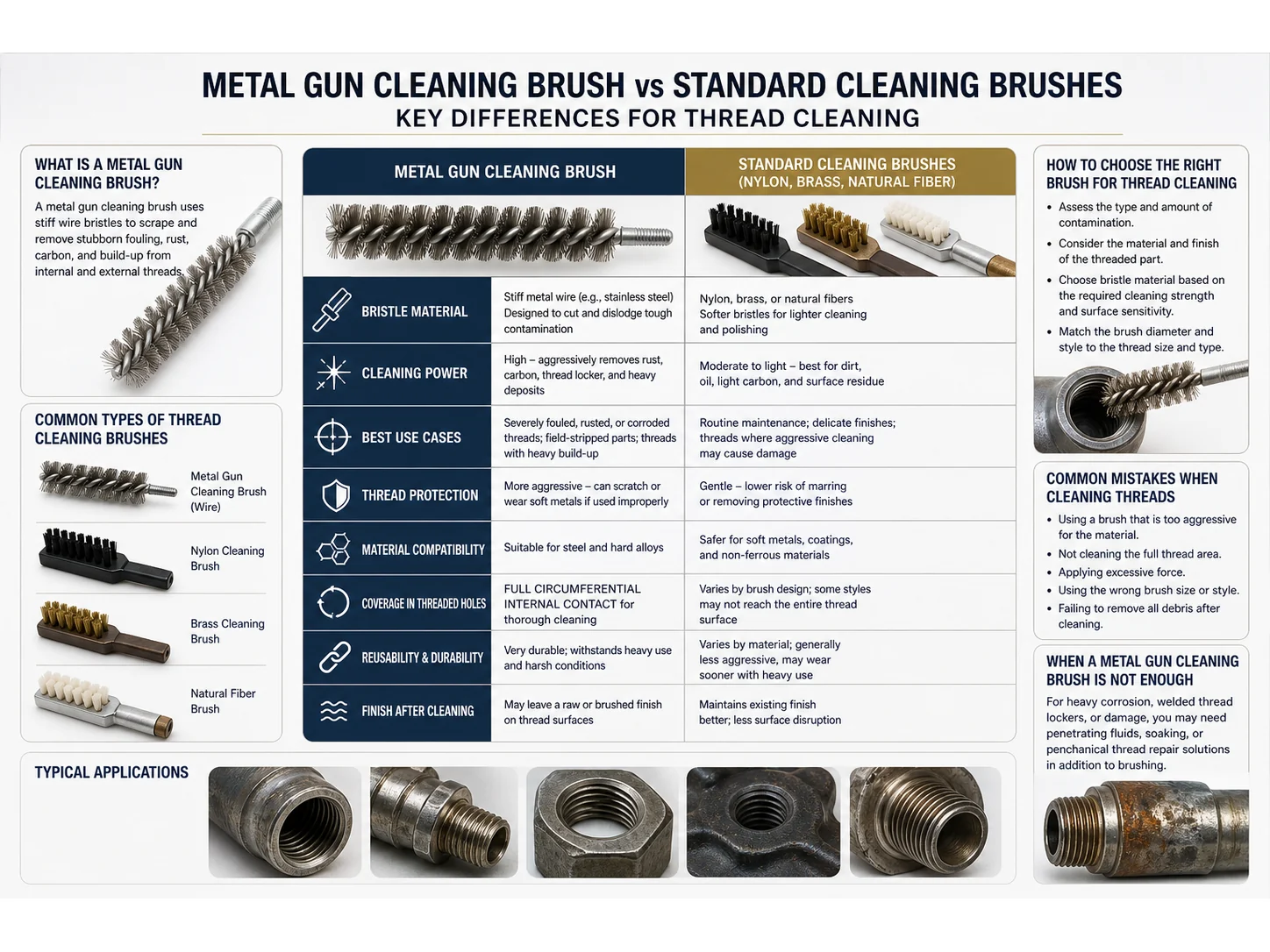
What Is a Metal Gun Cleaning Brush?
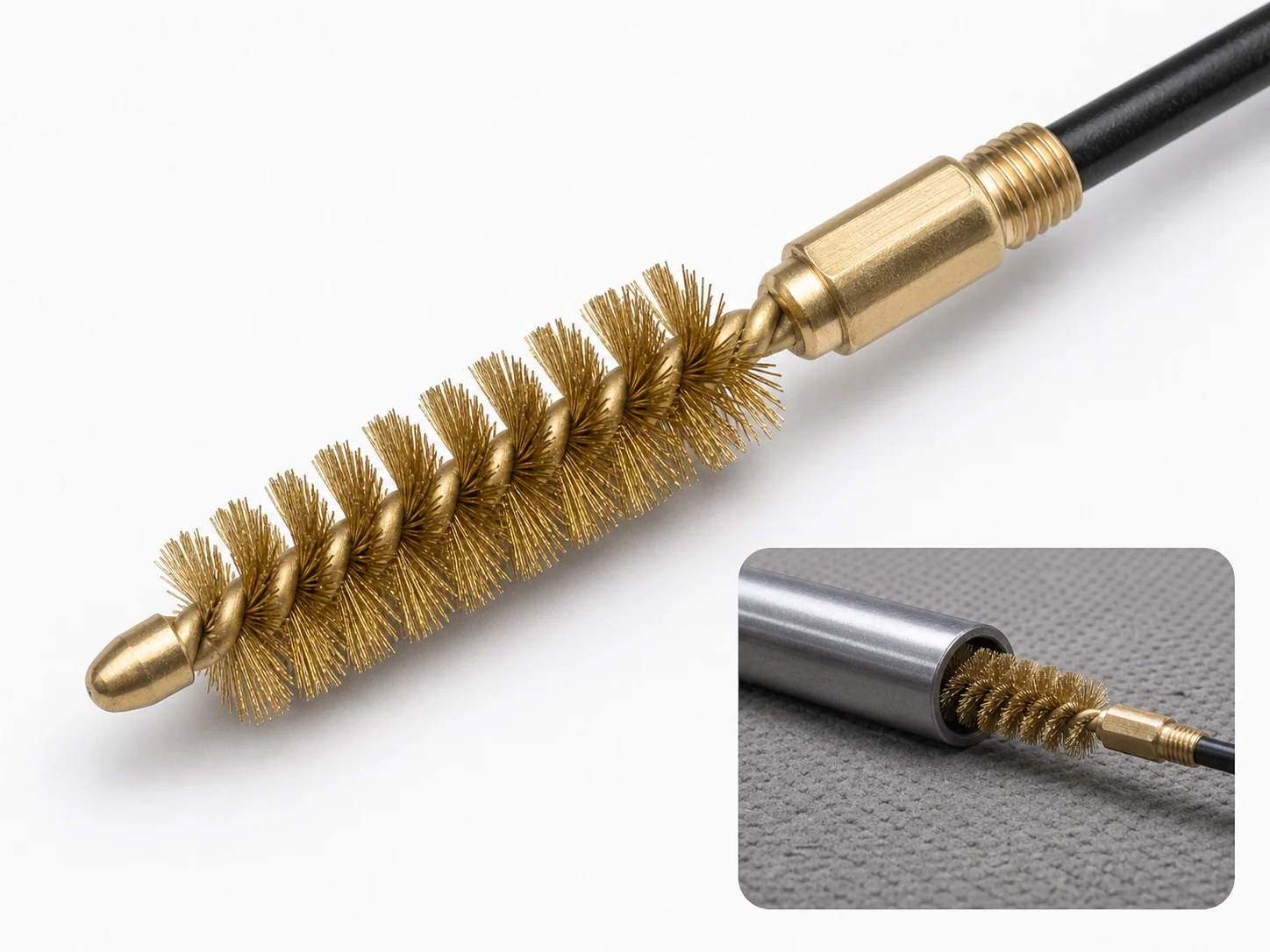
A metal gun cleaning brush is a small, often hand-held brush whose active cleaning element is made of metal wire bristles. Unlike a standard nylon or plastic brush, its bristles are engineered to deliver higher abrasion and stiffness, making it ideal for breaking up hard carbon deposits, lead fouling, and light surface rust inside firearm chambers, bolt carriers, and threaded areas. The bristle material can be brass (gold-colored, softer than steel), bronze (similar to brass but slightly harder), or stainless steel (silver, most aggressive). The brush core is typically a twisted wire stem that can be attached to a cleaning rod, or it may have a compact metal or plastic handle for direct manual use.
Common Types of Thread Cleaning Brushes
For material-selection language, this section is supported by World Stainless — Corrosion Resistance of Stainless Steels.
For firearm-handling safety boundaries, the article uses NSSF — Firearm Safety Rules and does not treat cleaning as a substitute for safe handling.
For firearms-related regulatory context, the supporting agency page is ATF — Firearms.
For the safety point in this section, the relevant OSHA reference is OSHA — Personal Protective Equipment.
For brush terminology and construction language, this section references American Brush Manufacturers Association — Brush Lingo.
When threads need cleaning, users encounter several distinct brush families. The three most relevant are:
- Metal gun cleaning brushes (brass, bronze, or stainless bristles, small profile, often twisted-wire core).
- Standard nylon or plastic brushes (general-purpose, molded handles, non-abrasive, used with solvents).
- Stiff fiber or abrasive-impregnated brushes (e.g., ceramic-filled nylon, carbon steel wire brushes for heavy industrial use).
In addition, specialized designs like a thread cleaning wire brush may use a conical or cylindrical shape to fit exactly into threaded holes or nuts. Understanding these categories clarifies where a metal gun cleaning brush fits.
Metal Gun Cleaning Brush vs Standard Cleaning Brushes: Key Differences
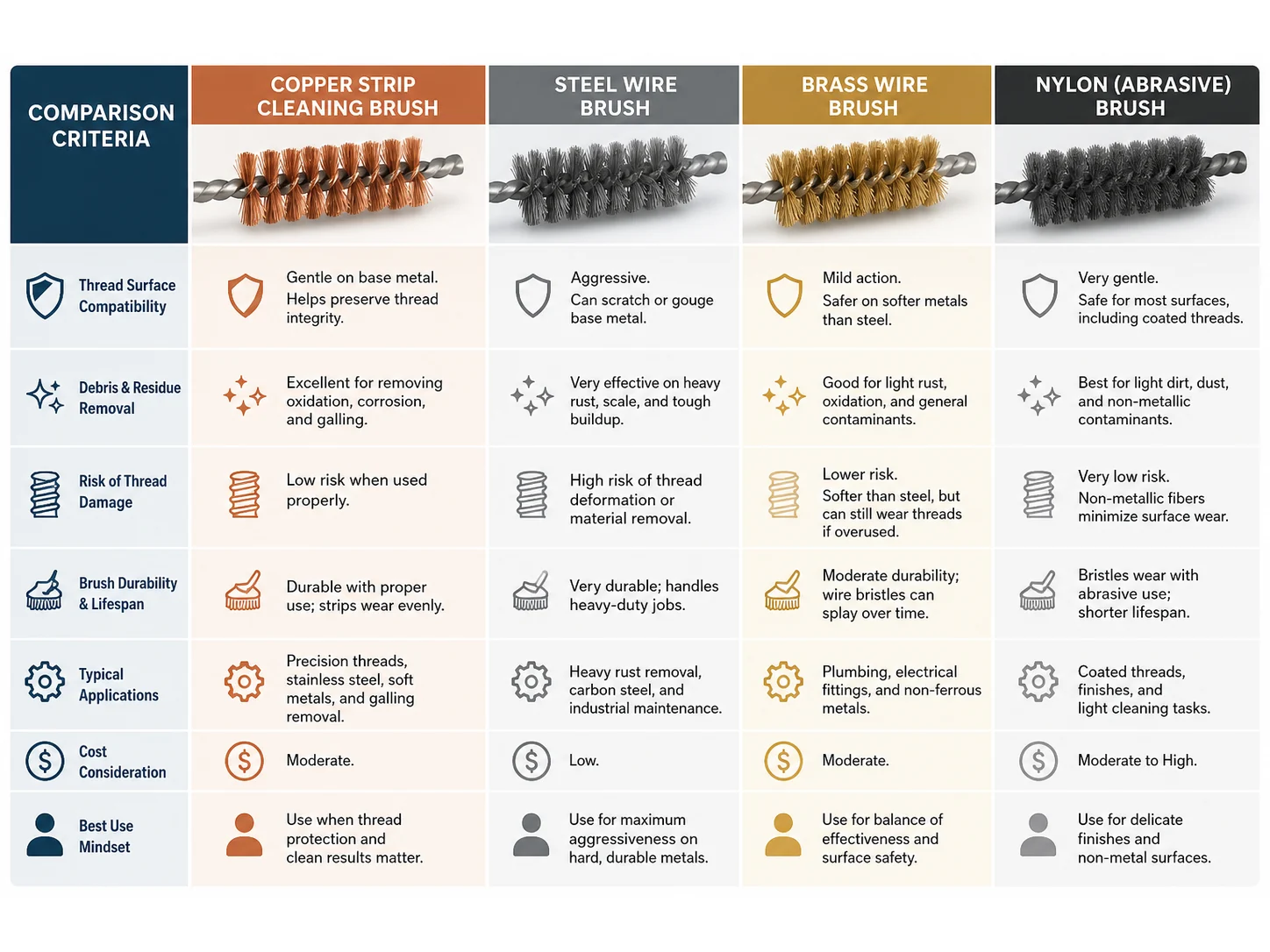
The table below compares the most critical factors that affect thread cleaning performance and safety.
| Factor | Metal Gun Cleaning Brush | Standard Cleaning Brush (Nylon/Plastic) |
|---|---|---|
| Bristle Material | Brass, bronze, or stainless steel | Nylon, polyester, or natural fiber |
| Abrasion Level | Moderate to high; removes carbon, rust, lead | Low; removes loose dirt, light oil, powder residue |
| Risk of Surface Damage | Can scratch soft metals if wrong grade is used | Very low; safe for most materials |
| Chemical Compatibility | Resistant to most solvents; brass can react with ammonia-based cleaners | May degrade with strong solvents; nylon is generally resistant |
| Typical Applications | Bores, chambers, bolt threads, breech plugs | General surface cleaning, plastic parts, optics rails |
| Handle / Mounting | Often no handle, designed for cleaning rod or short manual grip | Ergonomic molded handle, sometimes with brush on one end |
| Cost & Availability | Specialized; may require specific diameter for bore/thread | Widely available, low cost, multi-purpose |
How to Choose the Right Brush for Thread Cleaning
Selection should be driven by the type of residue and the sensitivity of the metal being cleaned. Consider these decision factors:
- Residue type: Hard, baked-on carbon or corrosion requires a metal gun cleaning brush. Light powder fouling or dust can be handled by a standard brush.
- Thread material and hardness: Aluminum or alloy threads (common in pistol frames) are easily scratched by stainless steel; use brass or a stiff nylon brush instead. Steel threads can tolerate bronze or brass.
- Thread profile and reach: Fine, deep threads (like a muzzle brake) need a correctly sized brush that can reach the bottom of the thread without bending. A twisted-wire metal brush can conform better than a rigid-handled standard brush.
- Chemical exposure: If using aggressive carbon removers or copper solvents, verify that the bristle material is compatible. Brass brushes can react with some copper solvents, leaving false color indications.
- Cleaning frequency: High-volume maintenance environments may favor reusable metal brushes, but they must be inspected regularly for deformed bristles that could damage threads.
Common Mistakes When Cleaning Threads
Even experienced operators make these avoidable errors:
- Using a stainless steel brush on soft metals: Steel bristles can gouge aluminum threads, leading to galling and eventual failure.
- Selecting the wrong brush diameter: A brush that is too small won’t clean effectively; one that is too large can bind and snap inside a bore or thread.
- Neglecting brush condition: Worn or bent metal bristles can break off inside the thread, causing jams or requiring extraction tools.
- Relying exclusively on bristle action: No brush can replace a proper solvent soak for heavily fouled threads. Use a brush to agitate, not to scrape dry carbon.
- Cross-contamination: Using the same brush for different metals can embed hard particles and transfer them to softer surfaces.
When a Metal Gun Cleaning Brush Is Not Enough
There are clear limits to what a metal gun cleaning brush can achieve. If the thread damage includes peened edges, severe pitting, or cross-threading, no brush will restore proper function. In such cases, a thread chaser, tap, or replacement of the part is required. Additionally, for very delicate threads like those on precision sensor housings or miniature optics, even a soft brass brush may alter surface finish and affect torque values. In these situations, ultrasonic cleaning or solvent-only methods with a soft nylon brush are safer. Finally, if the residue is not carbon-based but includes hardened adhesives or paint, a wire brush for cleaning metal might be needed, but it should be tested on a non-critical area first.
Final Takeaway: Making the Right Choice
A metal gun cleaning brush excels at removing stubborn, baked-on fouling from steel and iron threads where a standard nylon brush simply polishes the surface. But its extra abrasion demands careful material matching. For titanium, stainless steel, or hard-chromed bores, brass or bronze bristles strike the best balance of clean and safe. When working with aluminum, polymer, or thin-walled parts, a stiff nylon brush or a dedicated solvent system is the smarter path. Always match the brush material to the thread metal, check diameter fit, and inspect bristles before each use. The goal is clean, undamaged threads that maintain tolerance and reliability over time.
Practical Use Note
In daily use, the practical test is simple: check whether the brush reaches the full contact area, removes the target residue, and leaves the surface in the required condition. Record what changes when bore size, brush material, solvent handling, and firearm-maker guidance changes, because many brush failures are caused by the working condition shifting rather than by the brush body alone.
Frequently Asked Questions
Can I use a metal gun cleaning brush on polymer frames?
No. Metal bristles can scratch, gouge, or embed into polymer, compromising both appearance and function. Use a nylon brush designed for plastics.
What’s the difference between a brass and a bronze gun cleaning brush?
Brass is softer and less likely to scratch steel; bronze is slightly harder and more wear-resistant. Both are non-sparking and safe for steel, but bronze lasts longer in aggressive scrubbing.
How do I know what brush diameter fits my thread?
Measure the minor diameter of the thread (the smallest diameter) and choose a brush with a nominal diameter slightly smaller than that. A brush that is too tight will bind; one slightly loose will still agitate effectively.
Can a standard nylon brush remove carbon if I soak it in solvent first?
It can remove softened carbon after a good solvent soak, but hardened deposits often require the mechanical bite of a metal brush. For routine maintenance, a nylon brush with solvent is a gentler, safe choice.
Is a metal handle wire brush the same as a metal gun cleaning brush?
Not exactly. A metal handle wire brush is typically a larger, general-purpose tool for automotive or industrial use. A gun cleaning brush is smaller, with a specific bore-diameter fit and often a twisted wire stem for rod attachment.
How often should I replace a metal gun cleaning brush?
Inspect before each use. Replace when bristles become flattened, permanently bent, or start to shed. In high-volume professional armory use, brushes might last days or weeks; for occasional maintenance, they can last months.
What’s the best way to clean the brush itself after use?
Rinse with the same solvent you used on the firearm, then dry thoroughly to prevent rusting of steel bristles or discoloration of brass. Store in a dry place away from moisture.