What Is a Nylon Gun Cleaning Brush?
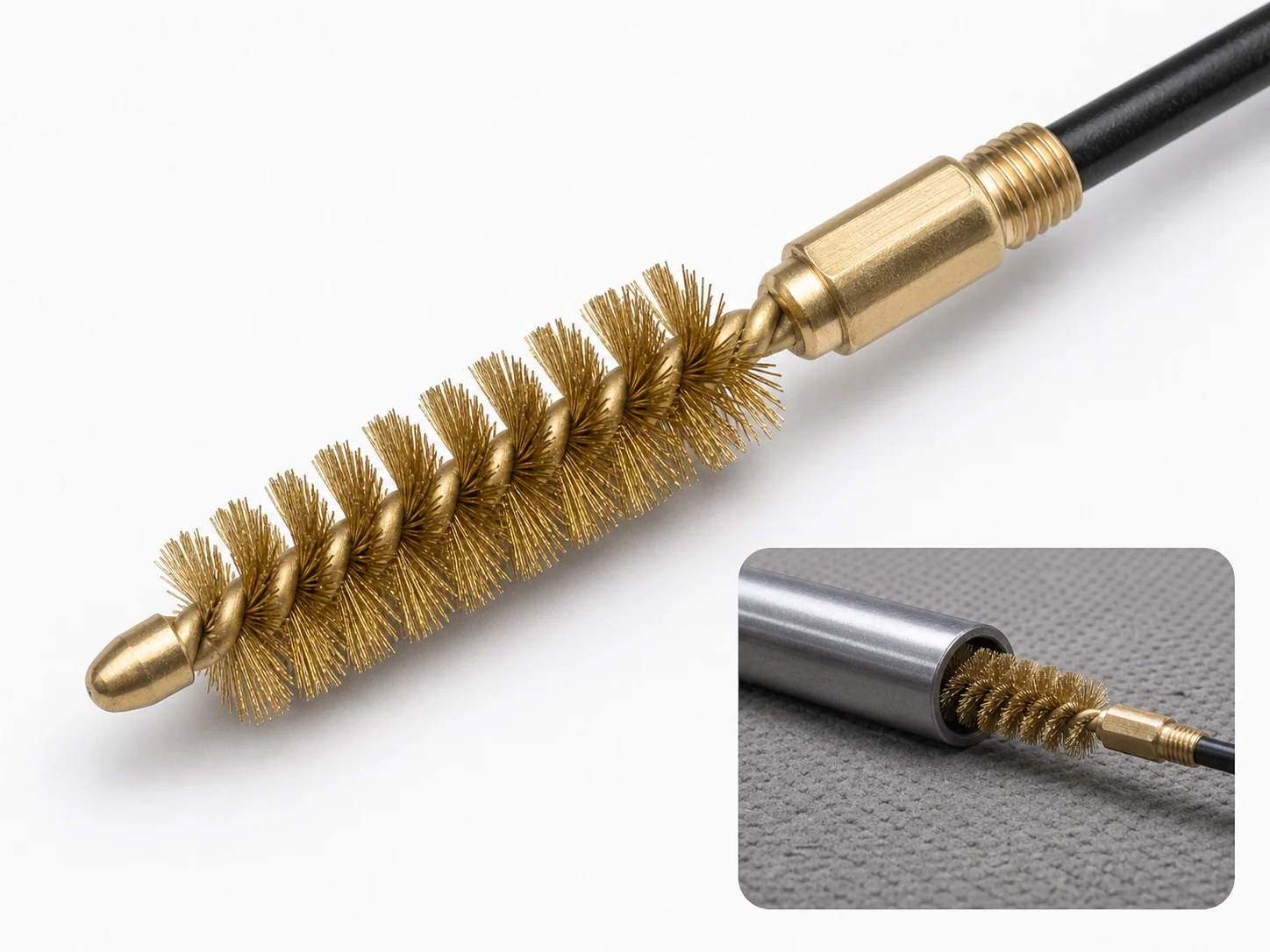
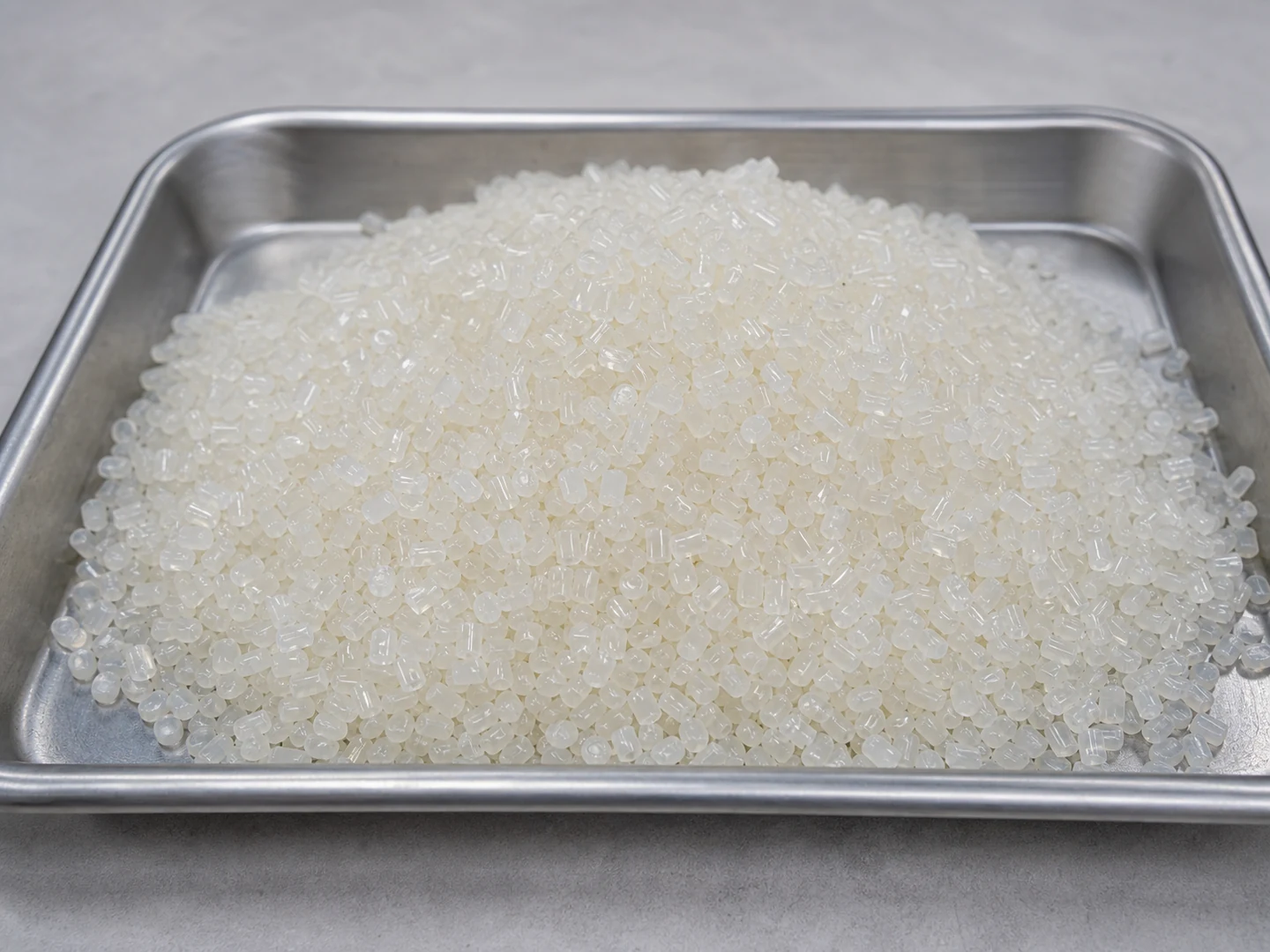
A nylon gun cleaning brush is a cylindrical or shaped cleaning implement with bristles made of nylon polymer, attached to a core or handle, used to scrub the interior walls of small-diameter metal channels—typically in firearms, instrument tubing, or similar precision equipment. Its primary role is to remove carbon, copper, lead, powder residue, and light surface contamination without scratching or abrading the base metal. Nylon filaments are chosen for their combination of stiffness, chemical resistance, and reduced risk of surface damage compared to metal bristles.
Common Types and Configurations
For material-selection language, this section is supported by World Stainless — Corrosion Resistance of Stainless Steels.
For firearm-handling safety boundaries, the article uses NSSF — Firearm Safety Rules and does not treat cleaning as a substitute for safe handling.
For firearms-related regulatory context, the supporting agency page is ATF — Firearms.
For the safety point in this section, the relevant OSHA reference is OSHA — Personal Protective Equipment.
For material-selection language, this section is supported by British Plastics Federation — Thermoplastics.
For brush terminology and construction language, this section references American Brush Manufacturers Association — Brush Lingo.
While nylon is the bristle material of choice, brushes vary greatly by design. Understanding the available configurations helps narrow down options for a specific channel cleaning task:
- Standard twist-in-wire core: Nylon bristles are twisted between two wire strands, forming a spiral brush head. Common in bore cleaning kits.
- Loop or tufted brush: Bristles are set into a plastic or metal base in a loop arrangement; often used for wider channels or irregular shapes.
- Wrapped-on-handle core: Filaments are wrapped and glued onto a rigid handle; typical of small test tube or pipe brushes.
- Inserted into a holder or rod adapter: Brush head has a threaded end or quick-connect to attach to a cleaning rod or power tool.
- Pull-through style: A brush with a flexible cord or cable attached for pulling the brush through the entire length of a channel.
Nylon Brush Options Comparison Table
| Feature | Soft Nylon (low stiffness) | Medium Nylon (general purpose) | Stiff/Heavy-Duty Nylon |
|---|---|---|---|
| Typical Filament Diameter | 0.10–0.20 mm | 0.20–0.35 mm | 0.35–0.50 mm |
| Surface Sensitivity | Highly sensitive metals, polished surfaces, soft alloys | Standard carbon steel, stainless steel, hard anodized surfaces | Stubborn residues on robust surfaces, when minimal abrasion is acceptable |
| Residue Removal | Light powder, dust, loose carbon | Moderate carbon, light copper deposition, oil residues | Tightly adhered carbon rings, hardened deposits |
| Chemical Compatibility | Good; check solvent compatibility | Good; works with most gun solvents and mild detergents | Good; but stiffer filaments may retain less solvent |
| Common Handle/Core | Plastic, twisted wire, flexible cable | Twisted brass wire, plastic handle, rod adapter | Twisted steel wire, reinforced shank, power tool mount |
| Typical Channel Size Range | 4–12 mm | 5–20 mm | 8–25 mm |
| Risk of Surface Scratches | Very low | Low if used properly | Low but higher than softer grades |
How to Choose the Right Nylon Gun Cleaning Brush
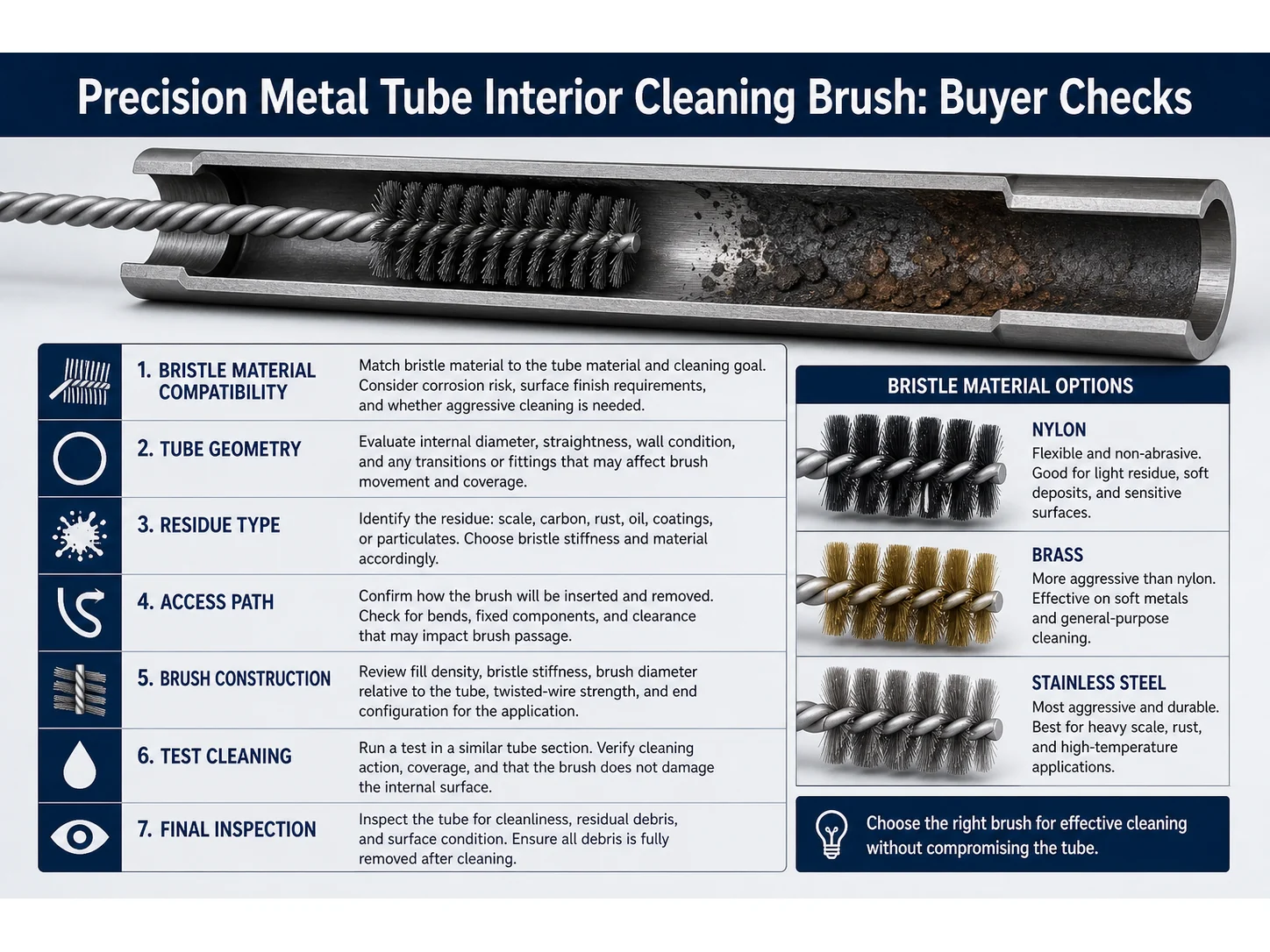
Selection should be driven by the cleaning task and channel characteristics, not by generic diameter alone. Evaluate these factors before contacting a supplier:
- Residue type and adhesion: Soft carbon or powder can be handled by medium nylon; hard, baked-on carbon may require stiffer filaments or a hybrid approach (e.g., nylon brush followed by a solvent soak).
- Base metal sensitivity: If the channel is made of soft steel, brass, or has a delicate plating, start with soft nylon to avoid micro-scratches. Hard, corrosion-resistant alloys can tolerate medium or stiff filaments.
- Channel diameter and length: The brush must be slightly larger than the channel ID for effective contact. Account for the full channel length and any bends—some brush styles cannot navigate tight curves.
- Mounting interface: Determine whether you need a female-threaded end for a cleaning rod, a male-threaded tip for an extension, a plain stem for a drill chuck, or a pull-through design.
- Wet or chemical exposure: Confirm that the nylon grade and bonding adhesive are resistant to the solvents, oils, or acids used in your cleaning protocol. Some nylon types can swell or degrade.
- Hygiene and maintenance frequency: In high-use environments, brushes must withstand frequent cycles. Look for corrosion-resistant wire cores (brass or stainless) and secure bristle retention.
- Custom size requirements: Off-the-shelf brushes may not fit unique channel dimensions. Custom diameter, bristle length, or overall brush length may be needed—be prepared to share a drawing with the supplier.
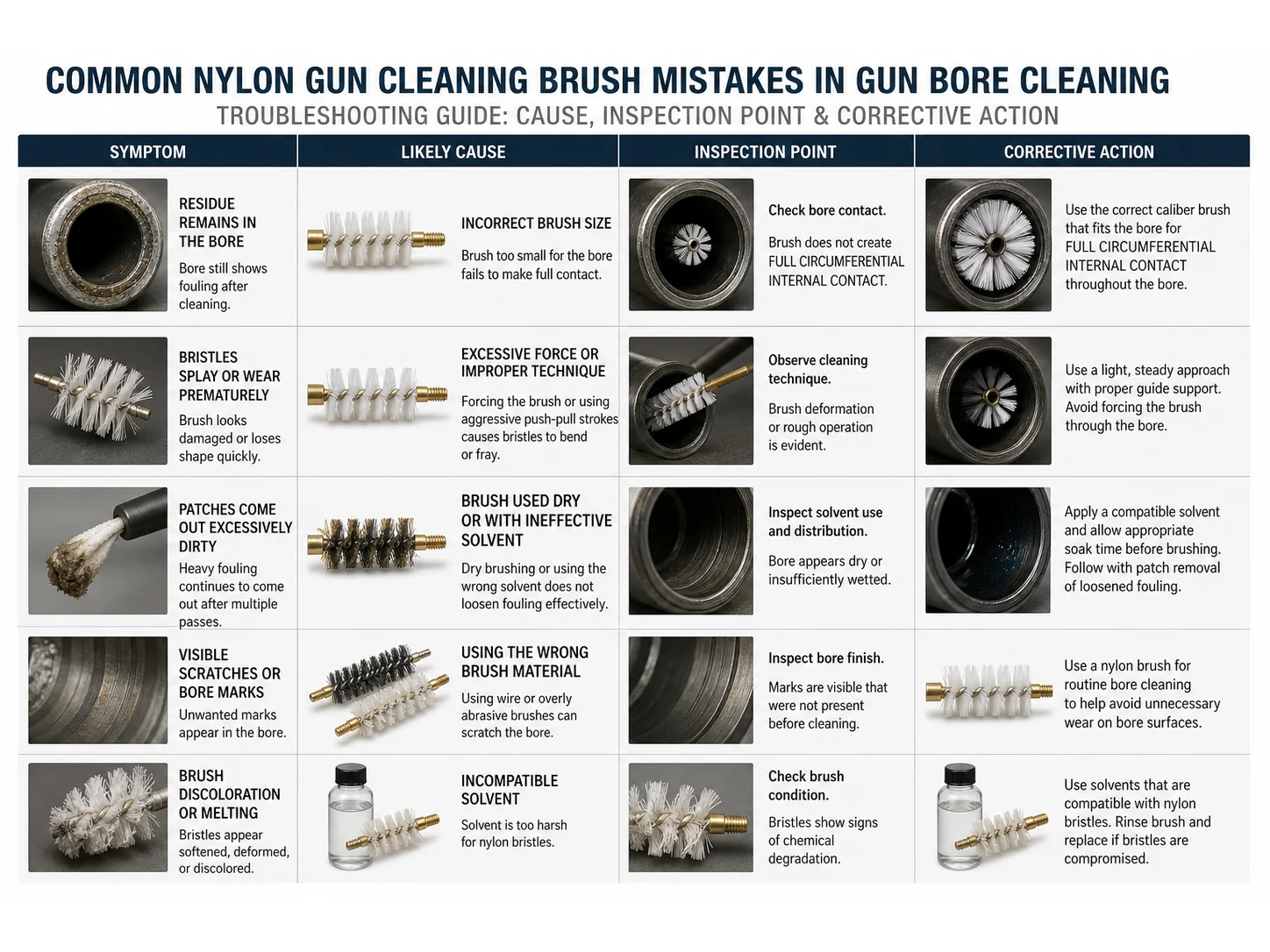
Common Mistakes When Selecting a Nylon Gun Cleaning Brush
Avoid these frequent pitfalls that lead to poor cleaning performance or equipment damage:
- Judging by cost drivers alone: Low-cost brushes may use inferior nylon that wears quickly or sheds bristles inside the channel.
- Ignoring filament stiffness: Assuming all nylon brushes are the same stiffness can result in inefficient cleaning or surface harm.
- Using the wrong diameter: Too small, and the brush will not contact the walls effectively. Too large, and it may jam or cause excessive friction.
- Overlooking chemical compatibility: Certain solvents can attack nylon or the adhesive binding the bristles, leading to premature failure.
- Assuming one brush fits all channels: Different firearms or tube sets often require a range of brush sizes and stiffness levels—a single brush is rarely adequate for multiple calibers.
- Neglecting handle or mounting fit: A brush that won’t securely attach to the cleaning rod or pull-through cable is useless. Always verify thread size and type.
When a Nylon Gun Cleaning Brush Is Not Enough
Nylon brushes excel at gentle to moderate cleaning, but they have clear limits. Consider other options or supplementary steps when:
- Heavy metallic fouling is present: Thick copper or lead deposits often require a bronze or stainless-steel brush to break up the material before nylon can finish the job.
- Surface preparation is the goal: If you need to abrade a surface for re-coating or inspection, a nylon brush is generally too mild—abrasive nylon (impregnated with grit) or wire brushes may be necessary.
- The channel has sharp edges or burrs: Nylon filaments can catch and tear on internal burrs; deburring should be performed first.
- Operation involves high-temperature or exotic chemicals: Standard nylon has temperature limits; verify material grade for extreme conditions.
- Custom brush design is requested without a sample test: When ordering custom sizes, always request a test sample or review a detailed drawing with the supplier to ensure filament length, core material, and overall geometry match the channel profile.
Final Takeaway
Selecting a nylon gun cleaning brush for small metal channels is a decision that hinges on matching bristle stiffness, diameter, and mounting interface to the specific fouling, metal sensitivity, and operational workflow. Relying on a single selection factor, such as channel diameter or cost drivers, often leads to subpar results. Start by defining the residue type and surface tolerance, confirm chemical compatibility, and verify physical fit before ordering. When in doubt, consult a supplier for a sample or drawing review, especially for custom applications.
Frequently Asked Questions
Can I use the same nylon brush for different calibers?
Generally no. Each caliber has a specific bore diameter; using an oversized brush can cause jamming, while an undersized brush cleans poorly. A set of matched brushes is recommended.
How do I know if nylon stiffness is too aggressive for my barrel?
Start with a soft or medium brush. If residues remain after proper solvent soaking, gradually increase stiffness. Inspect the barrel with a borescope if possible to check for micro-scratches.
What cleaning solvents are safe with nylon brushes?
Most common gun solvents (alcohol-based, mineral spirits, CLP formulations) are compatible with nylon, but avoid prolonged immersion in strong acids, acetone, or high-pH solutions unless the brush is specifically rated for such chemicals.
How often should I replace a nylon gun cleaning brush?
Replace when bristles become permanently deformed, show excessive wear, or fail to contact the walls effectively. High-frequency cleaning environments may require replacement after every few hundred cycles.
Can I use a nylon brush in a power tool?
Yes, if the brush has a reinforced shank and is rated for the RPM of the tool. Low-cost brushes with plastic cores may fail under power. Always match the mounting interface.
Is a nylon brush suitable for removing rust inside a metal channel?
No, nylon alone cannot remove rust. Use a stainless-steel brush for rust removal, then follow with a nylon brush and solvent to clean loosened debris.
What if off-the-shelf diameters don’t match my channel?
Contact a supplier about custom brush dimensions. Provide an exact internal diameter measurement and, if possible, a channel drawing to ensure proper bristle length and core design.
Does color or bristle shape indicate stiffness?
Not reliably among manufacturers. Stiffness is determined by filament diameter and material grade, not color. Always request technical data rather than relying on visual cues.