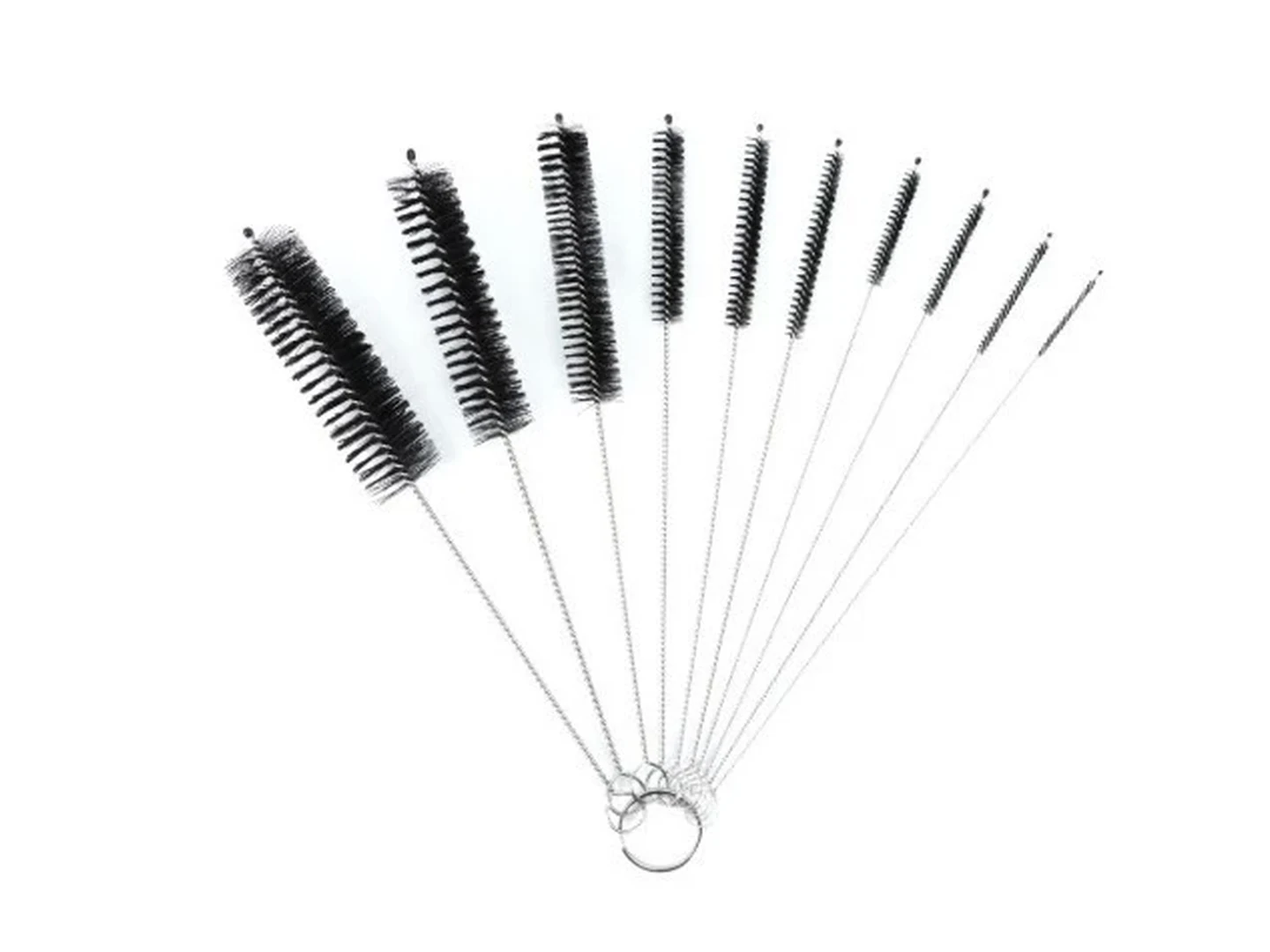
What Is a Vent Hole Cleaning Brush?
A vent hole cleaning brush is a small-diameter brush with bristles arranged around a central core or twisted wire stem. It is designed to clean bores, ports, and vent holes typically ranging from 1 mm to 10 mm in diameter. In laboratory settings, these brushes remove dried reagents, salt deposits, polymer residues, and biological films from hard-to-reach channels without damaging the glass surface.
For laboratory chemical hygiene and safe work-practice context, this section references OSHA — 1910.1450 Occupational Exposure to Hazardous Chemicals in Laboratories.
For engineering drawing, dimensions, tolerance, thread, fit, and RFQ specification context, this section references ASME — Y14.5 Dimensioning and Tolerancing.
For lockout/tagout and maintenance isolation context, this section references OSHA — 1910.147 Control of Hazardous Energy.
For SI measurement and unit specification context, this section references NIST — Metric SI.
Common Types of Vent Hole Cleaning Brushes
Vent hole brushes come in several designs to match different cleaning tasks. The most common variations include:
- Nylon bristle brushes: Soft to medium stiffness, good chemical resistance, suitable for general lab residue and delicate glass.
- Natural Tampico fiber brushes: Soft and absorbent, ideal for organic residue and applications requiring high water absorption.
- Stainless steel wire brushes: Stiff and abrasive, used for stubborn inorganic deposits but must be used carefully to avoid scratching glass.
- Brass wire brushes: Softer than steel wire, less likely to spark or scratch, often used in non-sparking environments.
- Sponge or foam-tipped brushes: Non-abrasive, replaceable tips for sensitive surfaces or one-time sterile applications.
- Flexible twisted-wire stem brushes: Allow access to curved or angled vent holes.
Comparison Table: Material and Design Factors
| Brush Type | Typical Diameter Range | Stiffness / Abrasiveness | Chemical Resistance | Best For | Cautions |
|---|---|---|---|---|---|
| Nylon Bristle | 2–10 mm | Soft to medium | Good acids, bases, most solvents; avoid strong oxidizing acids | General lab residue, biological films, delicate glass | Can melt if exposed to high heat; check solvent compatibility |
| Natural Tampico | 3–10 mm | Soft | Limited; avoid harsh chemicals | Organic residue, gentle scrubbing, absorbent cleaning | Can degrade in strong acids/alkalies; may shed fibers |
| Stainless Steel Wire | 1–8 mm | Very stiff, abrasive | Excellent resistance to most lab chemicals | Hard mineral deposits, baked-on residues, tough contamination | Can scratch or crack glass; avoid on precision ground glass joints |
| Brass Wire | 1.5–10 mm | Medium stiff | Good; avoid strong acids and ammonia-based cleaners | Non-sparking cleaning, soft metal compatibility | Can leave trace metal contamination; reactive with certain reagents |
| Sponge/Foam Tip | 2–10 mm | Very soft, non-abrasive | Depends on foam material; generally limited | Sterile single-use, delicate optics, final clean step | Not for heavy deposits; may require solvent-specific foam |
How to Choose the Right Brush Based on Your Cleaning Task
Selecting a vent hole brush requires matching the tool to the specific cleaning problem. Follow these decision points:
- Measure the hole diameter accurately. Use a caliper or pin gauge. A brush that is too large can crack the glass; too small will be ineffective.
- Identify the residue type. Organic films (proteins, oils) often respond to softer brushes and enzymatic cleaners. Inorganic scale (salts, mineral deposits) may need wire brushes or acid pre-treatment.
- Check glassware sensitivity. For precision ground surfaces or thin-walled capillaries, always start with nylon or natural bristle to avoid scratching.
- Consider chemical exposure. If the brush will contact strong acids, bases, or solvents, verify the brush material’s resistance. Nylon resists many chemicals but not all; stainless steel is broadly resistant but may corrode in prolonged chloride exposure.
- Evaluate hygiene requirements. In microbiology or tissue culture labs, brushes that can be autoclaved or sterilized are essential. Metal brushes typically withstand steam sterilization, while nylon may distort at high temperatures.
- Factor in hole geometry. For blind holes (one end closed), a brush with bristles only at the tip works best to avoid packing debris deeper. For curved or irregular passages, a flexible stem is necessary.
- Maintenance frequency. High-throughput labs may prefer durable stainless steel or replaceable-tip brushes to reduce consumable costs.
Common Mistakes When Selecting a Vent Hole Brush
- Guessing the hole size instead of measuring. Even a 0.5 mm mismatch can render a brush useless or dangerous. Always measure first.
- Ignoring chemical compatibility. Using a brass brush with acidic cleaners can leach copper into the labware, contaminating experiments.
- Assuming stiffer is always better. Stiff wire brushes can permanently scratch glass, creating rough surfaces that trap future contamination.
- Reusing a contaminated brush. Without proper cleaning between uses, a brush can cross-contaminate other glassware. Designate brushes for specific residues or protocols.
- Forcing an oversized brush. This can crack thin-walled glass or damage stopcock bores. If resistance is felt, stop and recheck diameter.
- Neglecting the stem/handle. A handle that is too short or uncomfortable may lead to poor cleaning technique or hand fatigue during batch cleaning.
When a Standard Vent Hole Brush Is Not Enough
Vent hole brushes are effective for routine manual cleaning, but certain situations demand alternative or supplementary methods:
- Holes smaller than 1 mm. Standard brushes cannot physically access such dimensions. Ultrasonic cleaning or fine wire probes may be necessary.
- Non-cylindrical or extremely irregular holes. Custom-shaped brushes or flexible mandrels with conformable tips are required. Consult with a brush manufacturer about custom designs if off-the-shelf options fail.
- High-purity applications. In semiconductor or pharmaceutical labs, where particulate shedding from bristles is unacceptable, single-use cleanroom swabs or automated non-contact cleaning may be mandated.
- Sterile single-use requirements. When a vent hole must remain sterile and cannot be autoclaved post-cleaning, pre-sterilized disposable cleaning tools are safer than reusable brushes.
- Heavy, baked-on carbon deposits. For equipment like combustion tubes, chemical pre-soaking followed by ultrasonic cleaning often outperforms manual brushing.
- Large-volume industrial glassware. Long bores (>30 cm) may require brushes with extended shafts and power-drive options that a simple manual brush cannot provide.
If you find that no standard vent hole brush meets your needs, consider requesting a supplier drawing review to confirm critical dimensions and material compliance before ordering a custom solution.
Final Takeaway
Choosing a vent hole cleaning brush starts with accurately measuring the hole’s inner diameter and understanding the residue. Match the brush material to both the glassware sensitivity and the cleaning chemistry. When in doubt, start with the softest effective bristle to protect your glassware investment. A methodical approach saves time, reduces breakage, and ensures reliable lab results.
Practical Use Note
In daily use, the practical test is simple: check whether the brush reaches the full contact area, removes the target residue, and leaves the surface in the required condition. Record what changes when access shape, residue type, manufacturer instructions, and whether the task is general cleaning or validated reprocessing changes, because many brush failures are caused by the working condition shifting rather than by the brush body alone.
Frequently Asked Questions
What is the smallest vent hole diameter a typical brush can clean?
Most standard brushes work in holes as small as 1 mm. For diameters below 1 mm, you may need a fine wire or a custom micro-brush.
Can I use a test tube brush for vent holes?
Test tube brushes are generally too large and have bristles designed for wider openings. A dedicated vent hole brush has a smaller core diameter and shorter bristles to prevent jamming. Using a test tube brush in a narrow vent hole often leads to poor cleaning and potential glass damage.
How do I know if I need a wire brush or a soft bristle brush?
Examine the residue. Soft nylon or tampico brushes work on greasy or biological films. If you feel a gritty, hard deposit that doesn’t soften with solvent, a wire brush may be necessary. Always protect the glass by using the least abrasive option that gets the job done.
For chemical exposure and occupational safety reference context, this section references NIOSH — Pocket Guide to Chemical Hazards.
Are vent hole cleaning brushes autoclavable?
Metal brushes (stainless steel, brass) are generally autoclavable. Nylon and natural bristle brushes may deform or degrade at typical autoclave temperatures (121–134°C). Check the manufacturer’s specifications for the exact material temperature limits if sterilization is required.
How often should I replace a vent hole brush?
Replace the brush when bristles become permanently bent, worn, or break off. A damaged brush loses cleaning efficiency and can scratch glass. In high-use labs, inspection should occur weekly; replace as soon as signs of wear appear.
Can I clean a blind vent hole with a standard brush?
Standard brushes with bristles along the full length may push debris to the bottom of a blind hole. Look for brushes with bristles only at the tip, or use a brush with a tapered end that matches the hole profile, to pull debris outward.
What cleaning solution is safe to use with nylon brushes?
Nylon resists many common lab cleaners, including diluted acids and alkaline detergents. Avoid strong oxidizing acids like concentrated nitric or perchloric acid, which can degrade nylon. Always rinse the brush thoroughly with distilled water after cleaning to prevent chemical carryover.
How do I prevent damaging glass when using a wire brush?
Use light pressure and a twisting motion rather than forceful insertion. Pre-soak the glassware to soften deposits. Choose brass wire when possible, as it is less abrasive than steel. If the glass has a ground surface or optical finish, avoid wire altogether and use a soft bristle brush with chemical pre-cleaning.