What Is a Vent Hole Cleaning Brush?
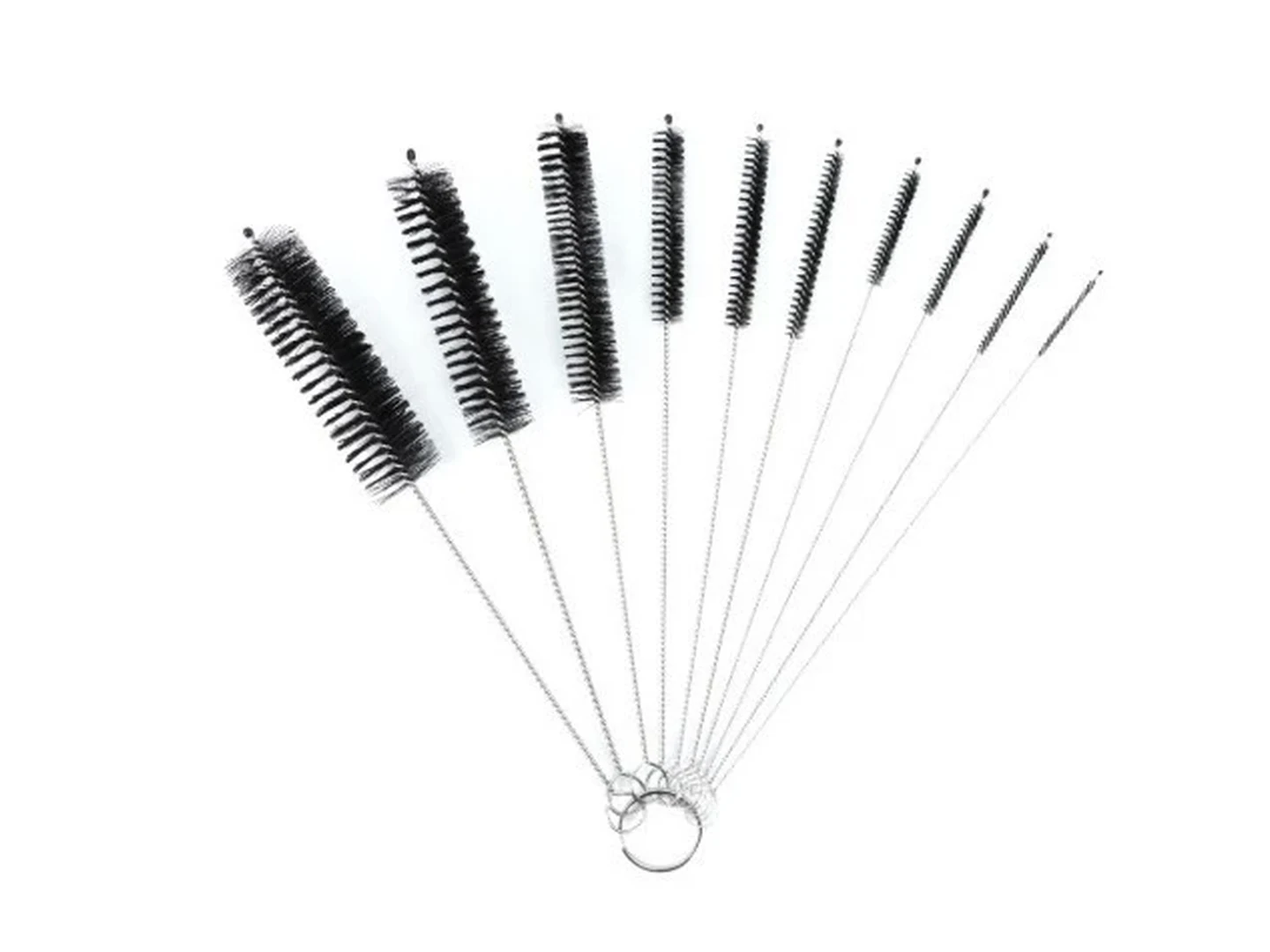
In the simplest terms, a vent hole cleaning brush is any brush engineered to clean the inside of a hollow passage. Unlike general pipe brushes, a true vent hole brush typically has a compact head and a flexible stem or twisted-wire core that allows it to navigate curves and bends while maintaining bristle contact with the inner wall. These brushes are used in HVAC systems, automotive components, laboratory glassware, heat exchangers, food processing equipment, and countless other industrial and commercial settings.
For engineering drawings, GD&T, dimensions, tolerances, model/drawing requirements, and RFQ dimension control, this article references ASME — Y14.5 Dimensioning and Tolerancing.
For measurement units and dimensional specification context, this article references NIST — Metric SI.
For industrial parts-cleaning process selection, contaminant classes, mechanical cleaning systems, and residue removal, this article cites ASM International — Choosing a Cleaning Process, ASM International, 1996; contaminant classes and mechanical cleaning process selection.
For brush construction terminology, filament/backing/stem terms, this article references American Brush Manufacturers Association — Brush Lingo.
Common Types and Materials for Curved Pipe Cleaning
Selecting the right vent hole cleaning brush starts with understanding the main construction styles and bristle materials, each suited to different residues and curve radii:
- Twisted-in-wire brushes – Bristles are captured between twisted wire stems. Excellent flexibility and available in nylon, brass, stainless steel, or abrasive nylon. The twisted stem itself acts as a flexible shaft, ideal for gentle to moderate curves.
- Stem-mounted brushes – Bristles are set into a rigid or semi-rigid core (metal or plastic) with a fixed shank. Better for straight or slightly curved sections; may require a pre-bent handle for tight bends.
- Spiral wound brushes – A continuous bristle strip wound around a flexible core. Provide 360° coverage and even pressure, good for light cleaning or polishing in curved tubes.
- Ball-end or bottle brushes – Feature a rounded tuft at the tip and flexible wire stem. Designed for blind holes or vessels with curved entry paths.
- Abrasive filament brushes – Nylon filaments embedded with abrasive grit (silicon carbide, aluminum oxide). Can deburr or remove scale while conforming to curves when used with a flexible shaft.
- Chain cleaning brushes – A chain with bristles or teeth that rotates inside the pipe; reserved for very tight bends or heavy deposits where a conventional brush cannot reach.
Each design handles curves differently, and no single brush is universal. The table below compares the most practical options for curved vent holes.
Comparing Brush Options for Curved Pipes
| Brush Type / Material | Best For | Flexibility | Abrasiveness | Wet or Chemical Exposure | Surface Sensitivity | Typical Diameter Range |
|---|---|---|---|---|---|---|
| Twisted-wire, nylon bristle | Light dust, powder, light oil; delicate surfaces | High | Low | Good with water, mild chemicals | Safe for coatings, aluminum, plastic | 0.25–4 in. |
| Twisted-wire, brass wire | Carbon, light rust, soft scale; non-sparking applications | Medium-high | Medium | Good with solvents, avoid strong acids | Not for aluminum or stainless (galling risk) | 0.5–4 in. |
| Twisted-wire, stainless steel wire | Rust, heat scale, paint, heavy carbon | Medium | High | Excellent chemical resistance | Avoid coated or soft metal surfaces | 0.5–6 in. |
| Abrasive nylon, stem‑mounted | Deburring, edge blending, light scale | Low‑medium | Medium‑high | Works wet or dry | Can wear coatings, test on sample | 0.5–3 in. |
| Flexible shaft, crimped wire | Light‑medium rust, weld cleanup in tubes | High | High | Wet or dry | Similar to stainless steel wire | 0.5–8 in. |
| Spiral wound, polypropylene | Polishing, light wiping, food‑contact (with appropriate resin) | High | Very low | Chemical‑resistant options available | Extremely safe for all surfaces | 0.5–6 in. |
When evaluating a brush for curved pipes, the key is not only material but also how the brush transfers motion—a twisted-wire core or a flexible shaft will follow the bend better than a rigid stem.
How to Choose: Matching the Brush to Your Residue and Surface
Use this decision path:
- Define the residue. Is it loose dust, sticky oil, light rust, baked-on carbon, or chemical scale? Nylon and polypropylene handle loose particles; wire or abrasive filament is needed for adhered deposits.
- Check the base material. Is the pipe made of soft metal (aluminum, copper), coated steel, glass, or plastic? Brass and stainless steel bristles can scratch soft substrates. Nylon or polypropylene is safer.
- Determine the operating environment. Will the brush be used with water, solvents, or food‑grade sanitizers? Stainless steel and certain synthetics excel; brass can tarnish or corrode. If hygiene is critical, choose materials that resist bacterial growth and are easy to sanitize.
- Assess the curve. Tight bends demand a fully flexible core (twisted wire or flexible shaft). For gentle sweeps, a stem‑mounted brush may work if the handle is pre‑bent.
- Confirm the required cleanliness level. Is a simple wipe enough, or must the surface be free of all embedded contaminants? Abrasive brushes can alter surface finish; verify if that is acceptable.
If your application requires frequent cleaning, prioritize brush longevity and chemical compatibility over lowest initial cost.
Setup and Usage Factors: Access, Motion, and Equipment Interface
Even the best brush fails if you cannot drive it. Answer these practical questions before ordering:
- Power source. Will the brush be rotated by hand, a variable‑speed drill, or a fixed‑speed motor? Twisted‑wire brushes often have looped ends for manual use; others need a shank that fits a chuck or collet.
- Access depth and reach. How far into the pipe must the brush travel? Add the curve length to the extension requirement. A flexible shaft can be extended with a long‑reach adapter.
- Extension and guiding. For deep or complex curves, you may need a guide tube or sleeve to prevent the brush from buckling. Some vent hole cleaning brushes are designed as part of a powered snake system.
- Mounting configuration. Common terminations are: loop, threaded end, hex shank, or quick‑change fitting. Ensure your drive system matches the brush’s mount.
- Direction of rotation. Some twisted‑wire brushes are directional. Run the brush in the same direction as the wire twist to avoid unwinding the stem.
When Custom Vent Hole Brushes Become Necessary
Standard brush catalogs cover many diameters and lengths, but when a curved pipe has an unusual ID, a non‑standard bend radius, or requires a specific bristle density at a critical point, an off‑the‑shelf vent hole cleaning brush may not perform reliably. In such cases, you should consider working with a brush manufacturer to produce a custom design.
Typical triggers for a custom brush include:
- Odd‑size diameters not available in standard tooling.
- A very short brush head required to clear a tight bend.
- A dual‑diameter tube where one brush must clean two different IDs.
- A need for a certified food‑grade material with full traceability.
- Special bristle patterns for directional cleaning or fluid flow.
To get an accurate quote, be prepared to provide a dimensioned drawing or a sample of the pipe that shows the curve, length, and ID. Manufacturers will often work from a simple “test tube brush drawing” concept to back‑calculate the brush geometry. Communicating your residue type, chemical exposure, and operating speed helps them select the right filament and core.
Common Mistakes When Selecting a Vent Hole Cleaning Brush
Avoid these frequent pitfalls:
- Choosing by diameter alone. Two brushes with the same OD can have entirely different stiffness, bristle material, and core flexibility—making one useless for curves.
- Assuming all wire brushes are the same. Brass, carbon steel, and stainless steel each have distinct abrasiveness and chemical compatibility; using the wrong wire can damage the pipe or contaminate the process.
- Forcing a straight brush into a curve. A rigid stem will bind or fail to contact the inner wall uniformly, leaving patches of residue.
- Ignoring rotational speed limits. A twisted‑wire brush operated at excessive RPM can flare out, break, or unwind, creating a safety hazard.
- Overlooking hygiene requirements. In food or pharmaceutical applications, even traces of metallic bristle particles can cause a recall. Always verify material certifications and cleanability.
- Buying the lowest-cost option. A low‑cost brush that wears quickly or sheds bristles can cost more in downtime and rework than a purpose‑engineered brush.
When a Vent Hole Cleaning Brush Is Not Enough
A vent hole cleaning brush is a mechanical cleaning tool; it has limits. If you encounter these situations, consider other methods or expert consultation:
- Heavy, hardened scale. Brushes seldom remove thick mill scale or baked‑on epoxy alone. Pre‑treat with chemical softeners or consider abrasive blasting before final brushing.
- Extremely tight bends (centerline radius less than 1.5× tube ID). Standard flexible brushes may buckle or break. A chain‑type cleaning brush or a specialized “pipe pig” might be needed.
- High‑purity or sterile environments. Where any brush debris is unacceptable, look into non‑shedding, sealed‑bristle designs or consider ultrasonic cleaning.
- Irregular internal geometries. Cross‑holes, sudden diameter changes, or internal threads often require multiple brush profiles or a multi‑step process.
- When the application demands a documented cleaning specification. For example, aerospace tube cleaning often references standards that go beyond a simple brush. Consult your quality engineer before substituting an unvalidated brush.
In any of these cases, do not rely solely on a brush catalog. Request a sample test with your actual pipe and residue, and if needed, ask the manufacturer to review your drawing or a “drawing of test tube brush” cross‑section to confirm fit.
Final Takeaway
Start by clearly identifying your residue type, the base material of your pipe, the tightest bend radius, and how the brush will be driven. Then choose a vent hole cleaning brush with a flexible core (twisted‑wire or flexible shaft), bristle material matched to the contamination and surface sensitivity, and a drive end that fits your equipment. If nothing in the standard range fits or if hygiene/contamination risks are high, move to a custom brush with a dimensioned drawing. Test on a scrap section before full production use.
Frequently Asked Questions
Can I use a straight vent hole cleaning brush for a curved pipe?
Generally, no. A straight brush stem will not follow the curve and will leave unwiped sections. Choose a brush specifically designed with a flexible wire core or a pre‑bent handle.
What material should I choose if the pipe has a sensitive coating?
Nylon or polypropylene bristles are the safest because they are non‑abrasive. Even brass can scratch powder coating or anodized surfaces. Always test on a non‑critical area first.
How do I determine the correct diameter for my vent hole cleaning brush?
Measure the inside diameter of the pipe at its smallest point. The brush OD should be slightly larger than the pipe ID to ensure bristle contact, but not so large that it cannot enter. A rule of thumb is 1–2 mm oversize for light wiping, up to 5% oversize for more aggressive cleaning.
What’s the difference between a twisted-wire brush and a stem-mounted brush?
In a twisted-wire brush, bristles are clamped between twisted wires, and the remaining wire acts as a flexible stem. A stem-mounted brush has bristles embedded in a solid or tubular core with a separate shank. Twisted-wire brushes flex easily; stem brushes are stiffer and better for straight runs or gentle sweeps.
Can I use a wire brush for cleaning pipes in food processing areas?
Stainless steel wire brushes are sometimes used, but they must be designated as food‑grade and ideally be detectable (e.g., with a metal‑detectable handle or bristle) to prevent contamination. In many cases, abrasive nylon or sealed polypropylene brushes are preferred because they eliminate the risk of wire fragments.
How often should I replace my vent hole cleaning brush?
Replace the brush when bristles show wear, the core kinks permanently, or it no longer cleans effectively. In high‑volume production, track the number of cycles and set a preventive replacement interval. Lost bristles can damage downstream components.
My pipe has a very tight bend—what alternative brush types can I consider?
For bends with a centerline radius less than about 1.5× the pipe ID, a flexible wire brush may still work if the diameter is small. Otherwise, look into chain cleaning brushes, brush pigs with flexible media, or segmented bend‑specific brushes.
Do I need to send a drawing to the manufacturer for a custom brush?
Not always, but it is strongly recommended. A simple drawing showing the pipe ID, bend radius, overall length, and the area to be cleaned helps the manufacturer engineer the right bristle fill and core design. If you don’t have a drawing, sending a sample section of the pipe is often sufficient.