
Material
Felt
Felt is selected from its stiffness, recovery, wear, wet-service, chemical, and temperature behavior. For a usable stiffness specification, provide the material, filament diameter, free trim, density, grade, and operating conditions.
Material Overview
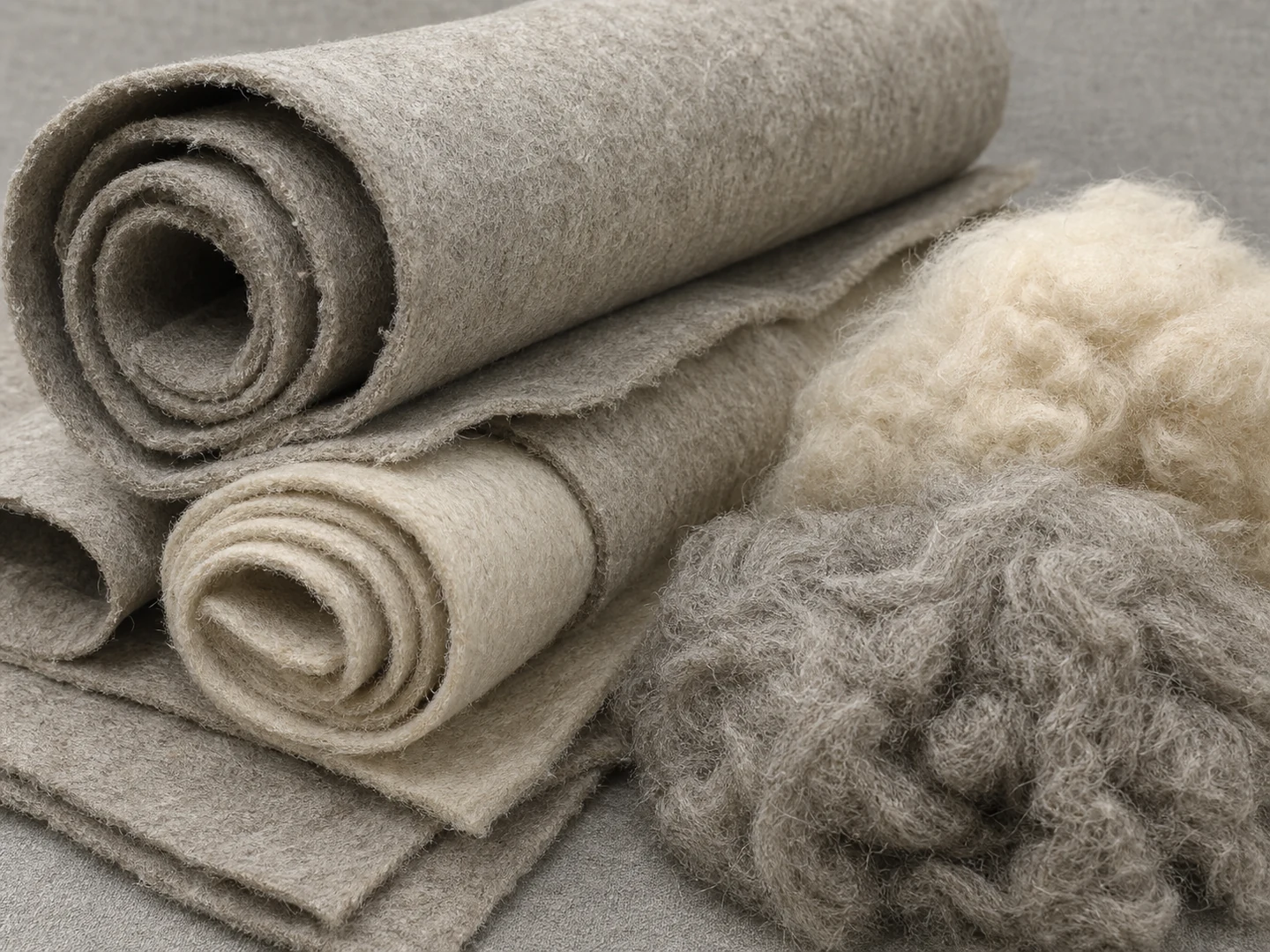
Felt is a consolidated nonwoven material supplied in sheets, rolls, wheels, pads, and shaped parts using wool, part-wool, or synthetic fiber.
In a finished brush, Felt does not create a fixed stiffness by itself. Contact performance comes from the filament geometry and installed setting; grade, moisture, heat, and chemistry determine how it performs over time.
Material Properties
| Density | 0.15–0.70 g/cm³ |
|---|---|
| Thickness | 1–25 mm |
| Hardness | soft to hard felt grades |
| Use temperature | up to 100–150°C by fiber |
| Compound retention | high |
Brush Applications
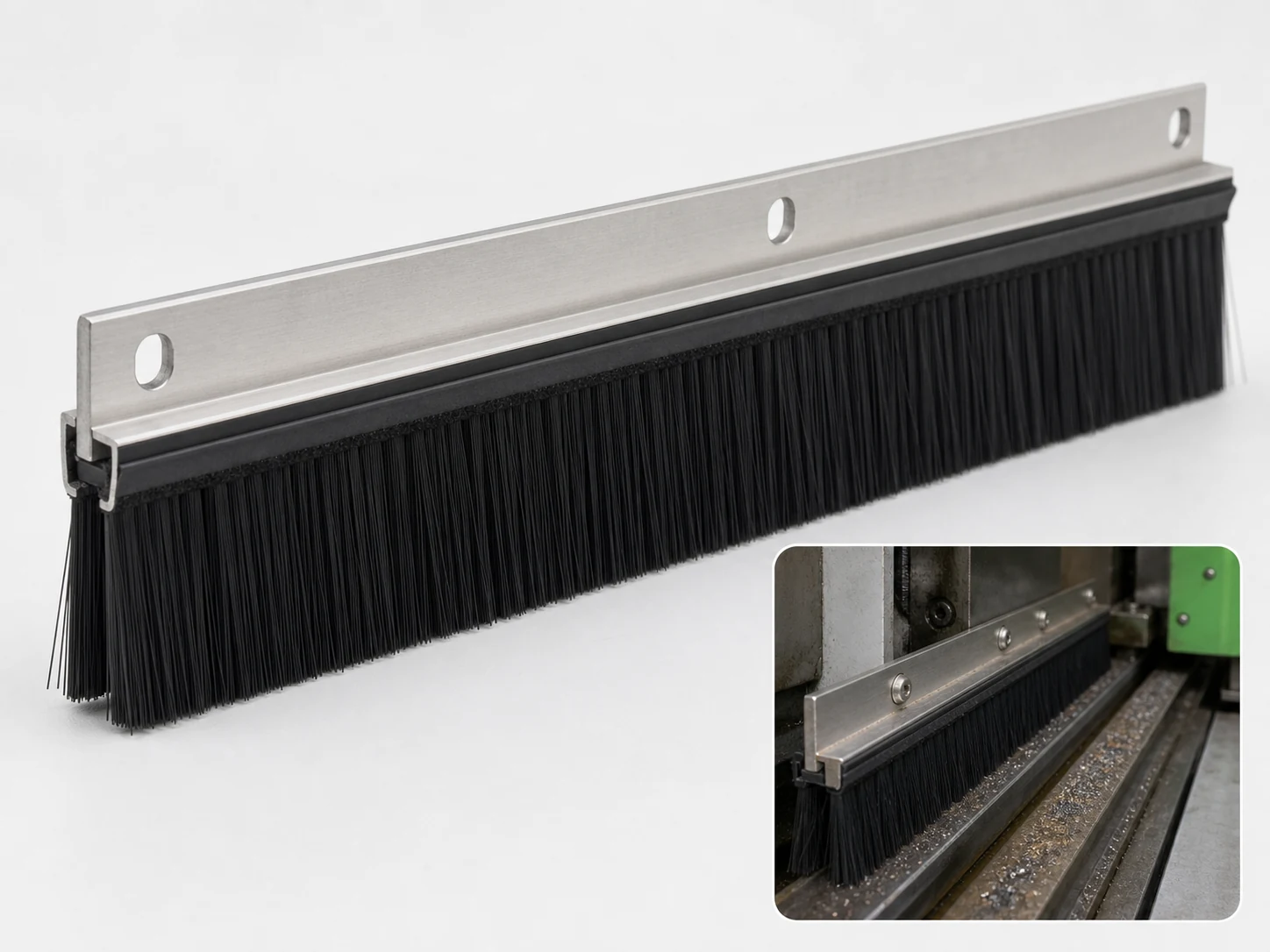
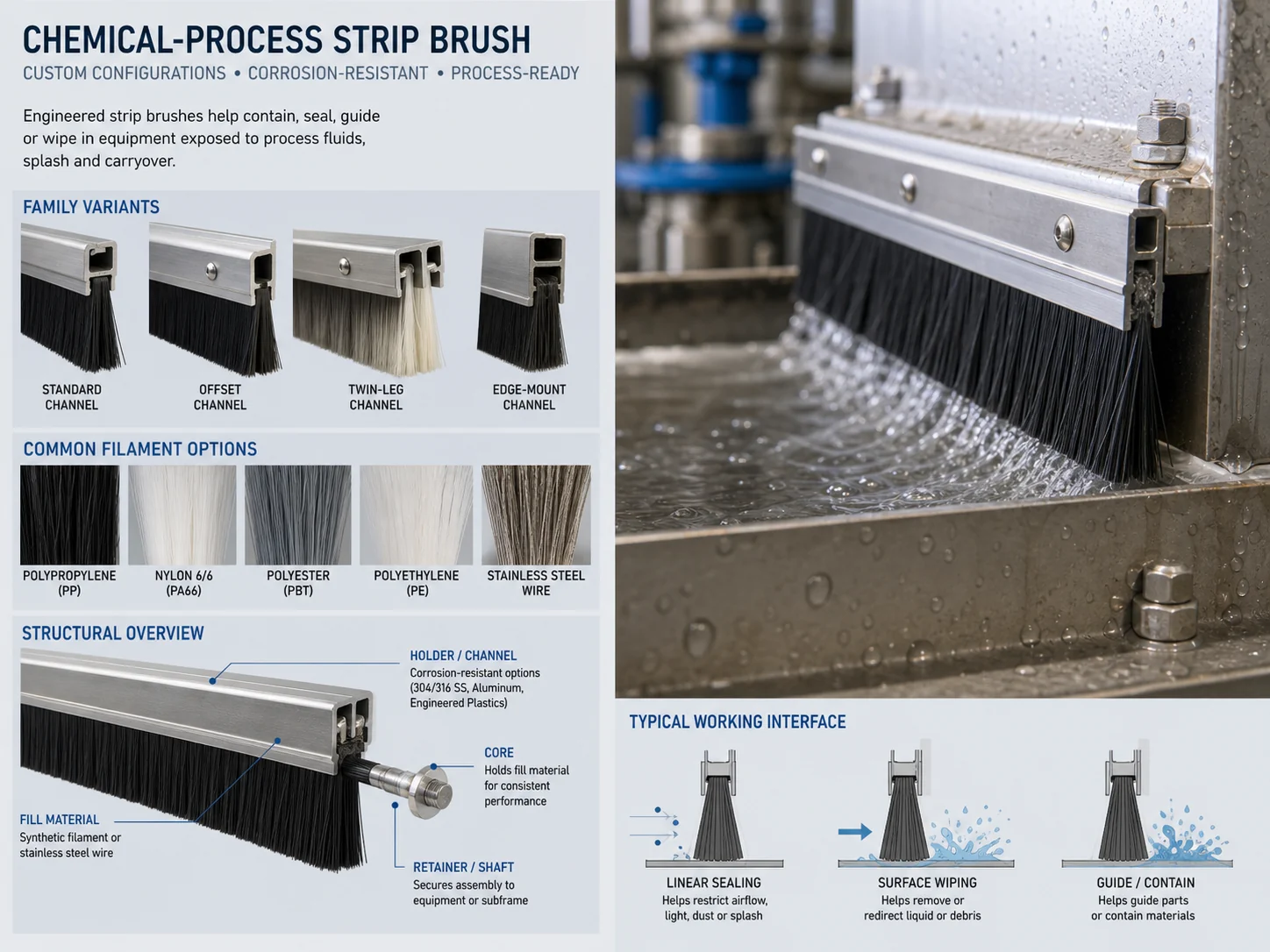
For Felt, directly related brush structures include Strip Seal Brushes.
Specification and Customization
Material form
Felt Sheet / Pad / Wheel
Common forms
Wool felt sheet; part-wool felt; synthetic felt; wheel, pad, strip or shaped insert.
Grade
Density and fiber composition specified separately
Reference standard
ISO 139; ISO 5079; ISO 20743
Limitations and Alternatives
Unspecified felt density or fiber content produces unpredictable pressure, absorption, wear and chemical response.
Frequently Asked Questions
What are the key properties of Felt brush material?
Felt is a consolidated nonwoven material supplied in sheets, rolls, wheels, pads, and shaped parts using wool, part-wool, or synthetic fiber. Direct data: Density: 0.15–0.70 g/cm³; Thickness: 1–25 mm; Hardness: soft to hard felt grades; Use temperature: up to 100–150°C by fiber; Compound retention: high.
Where is Felt used in cleaning brushes?
Controlled polishing, wiping, liquid transfer and sealing where a continuous compliant surface is preferred.
How does filament geometry change Felt brush stiffness?
Felt changes brush stiffness through filament diameter, free trim, density, crimp, and contact. Use finer filament and longer trim for conformable contact; use coarser filament, shorter trim, or higher density for stronger displacement or cutting.
When should Felt be replaced by another material?
Compare Felt with Wool, microfiber, cotton yarn, nonwoven abrasive. Change material when wet stiffness, temperature, chemical resistance, conductivity, particle shedding, or surface marking becomes the limiting factor.
Continue Exploring
Recommended Reading & Related Brush Resources
Custom Manufacturing RFQ
Discuss This Material
Share the working surface, residue, dimensions, material direction, interface, quantity and drawing or sample photo.
Custom Brush RFQ
Request a Custom Cleaning Brush Quote
Upload a drawing, product photo, or sample photo and provide the core dimensions and cleaning conditions.