
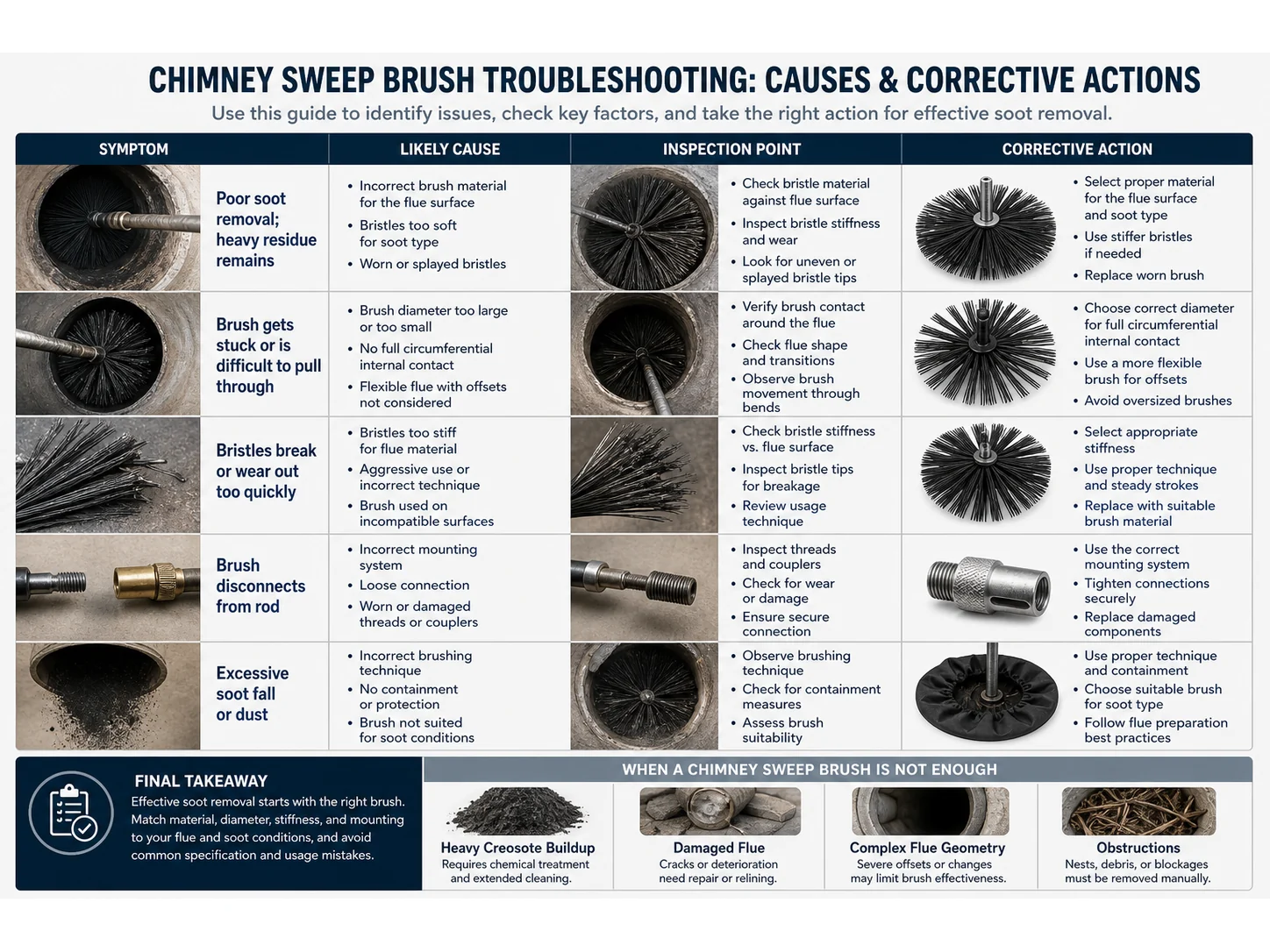
What Is a Chimney Sweep Brush?
A chimney sweep brush is a brush head with stiff bristles, designed to be pushed or pulled through a chimney flue to scrape off soot, creosote deposits, and other combustion byproducts. It is typically attached to flexible rods, a rope, or a drill‑driven shaft. The bristle material and diameter are the two most critical factors that determine cleaning efficiency and liner safety.
Common Types of Chimney Sweep Brushes
Most chimney sweep brushes fall into a few categories based on bristle material and intended use:
- Round wire brushes – steel bristles for aggressive creosote removal in masonry chimneys.
- Flat wire brushes – designed for rectangular or odd‑shaped flues.
- Polypropylene brushes – softer synthetic bristles safe for stainless steel liners.
- Oil‑tempered steel brushes – extra‑stiff wire for glazed creosote; highly abrasive.
- Hybrid brushes – combine wire and poly bristles for mixed deposits.
- Drill‑driven brushes – spin‑type heads for faster cleaning, often with nylon or mixed bristles.
These brushes are produced in diameters from 4 inches up to 12 inches and beyond, with many standard sizes matching common flue dimensions.
Chimney Sweep Brush Comparison Table
| Material | Typical Diameters | Stiffness | Best For | Compatible Liners | Mounting Options |
|---|---|---|---|---|---|
| Wire (steel) | 4–12 in | High | Heavy creosote, open fireplaces | Masonry (clay tile) | Rod threads (1/2″ or 3/4″ NPT) |
| Polypropylene | 5–12 in | Medium | Stainless steel liners, light soot | Metal, insulated liners | Rod threads, loop‑pull |
| Oil‑tempered steel | 4–12 in | Very High | Stubborn glazed creosote | Masonry only (abrasive) | Rod threads |
| Hybrid (wire+poly) | 6–12 in | Medium‑high | Mixed flue types | Masonry and stainless | Rod threads, drill adapters |
| Flat wire | Custom | Medium | Rectangular flues | Masonry | Rod connections |
Note: Always choose a brush diameter at least ¼″ larger than the flue’s inside dimension. For round flues, select the next standard size up. For example, a 6‑inch flue typically needs a 6¼‑ or 6½‑inch brush.
How to Choose the Right Chimney Sweep Brush
Use these five decision factors to narrow down your options:
- Flue liner material: Masonry fireplaces (clay tile, brick) can handle stiff wire bristles. Stainless steel liners and prefab metal chimneys require non‑abrasive polypropylene or hybrid brushes to prevent scratching, which can lead to corrosion.
- Residue type: Light fluffy soot is easy; hardened or glazed creosote (Stage 2 or 3) calls for aggressive wire or oil‑tempered steel brushes. If you frequently burn wood that produces low‑temperature fires, expect heavier creosote buildup.
- Flue shape and size: Measure the inside diameter (or cross‑section) of your flue. Use a round brush for round flues; rectangular flues may require flat wire brushes. Custom sizes are available for unusual dimensions.
- Operating method: Manual rods need a brush with a threaded socket (usually ½″ or ¾″ NPT). Drill‑driven systems require an adapter and a brush rated for higher RPMs. Pull‑loop brushes work with ropes and are common for top‑down cleaning.
- Cleaning frequency and wet/chemical exposure: If you use water‑based creosote removers or chemical treatments, the brush must resist rust and chemical degradation. Polypropylene is naturally immune; wire brushes should be dried promptly after wet cleaning.
When comparing brushes, also check rod compatibility. A mismatched thread can make the brush unusable without adapters. For professional use, consider how many chimneys the brush must clean annually—a more durable oil‑tempered steel head pays off in high‑volume work.
Common Mistakes When Specifying or Using a Chimney Sweep Brush
- Choosing the wrong diameter: A brush too small won’t contact the walls; too large jams and can bend rods or damage the liner. Always measure the flue carefully and add the recommended oversize.
- Using wire brushes on stainless steel liners: Metal‑on‑metal scratching creates micro‑grooves where corrosive acids collect, drastically shortening liner life. Stick to poly or designated hybrid brushes.
- Ignoring thread type and size: Rods with ⅜″ threads will not fit a brush with ½″ NPT. Confirm before ordering.
- Cross‑contaminating liners: A brush used on a masonry chimney can pick up grit that later scratches a stainless liner. Have separate brushes or thoroughly clean and inspect between uses.
- Skipping a flue inspection: Without looking inside, you cannot know the true condition or exact size. A camera inspection reveals hidden damage and precise dimensions.
- Assuming one brush fits all shapes: Even if the flue is nominally round, out‑of‑round or corbeled sections may need a slightly softer brush to conform without sticking.
When a Chimney Sweep Brush Is the Wrong Choice
A chimney sweep brush handles routine maintenance, but it has limits:
- Glazed creosote > ¼″ thick: Hard, tar‑like deposits may require chemical treatment (e.g., ACS, PCR) or a rotary chain whip before brushing. Forcing a brush through can break rods or the brush itself.
- Structural defects: Cracked flue tiles, missing mortar, or corroded metal liners are safety hazards that a brush cannot fix. Stop cleaning and call a certified chimney sweep for repair.
- Severe blockages: Animal nests, collapsed masonry, or debris jams may need specialized removal tools or a professional camera‑guided extraction.
- Unknown flue dimensions: If you cannot safely measure, guessing puts your liner at risk. Have a sweep measure and possibly fabricate a custom brush if needed.
- High‑rise or industrial venting: Factory chimneys, commercial grease ducts, or corrosive fume vents demand brushes meeting strict codes—off‑the‑shelf consumer brushes are not suitable.
In these situations, viewing a sample brush or requesting a supplier’s drawing review before ordering can prevent costly mistakes. Some manufacturers will produce custom‑diameter brushes based on your measured drawing.
Final Takeaway
Match bristle material to your liner, measure the flue carefully, select the correct oversize, and verify thread compatibility. A well‑chosen chimney sweep brush makes the job safer and faster by doing the real work of scraping soot rather than just pushing it around. When the job falls outside the scope of a standard brush, involve a professional and don’t force a tool beyond its limits.
Frequently Asked Questions
What size chimney sweep brush do I need?
Measure the inside diameter of your flue in several places and add ¼″ to ½″. For instance, a 6‑inch flue typically uses a 6¼″ or 6½″ brush. If the flue is oval or out‑of‑round, go with the larger measurement to ensure contact on all sides.
Can I use a wire brush on a stainless steel liner?
It is not recommended. Wire bristles scratch the protective oxide layer of stainless steel, creating corrosion sites. Use a polypropylene or hybrid brush labeled safe for stainless liners.
What’s the difference between a drill‑driven brush and a rod‑attached brush?
A drill‑driven brush mounts to a flexible shaft that spins with a power drill, often providing faster cleaning with less physical effort. Rod‑attached brushes are pushed and pulled by hand or with a rope. Drill brushes require an appropriate adapter and must be rated for the drill’s RPM.
How do I prevent the brush from getting stuck in the chimney?
Choose the correct diameter—too large a brush jams. Use smooth, even strokes and avoid forcing the brush through tight spots. If working from the top, a rope with a pull‑loop and a steady downward motion helps. If a brush does get stuck, resist yanking; a professional extraction may be safer.
Are there brushes for rectangular flues?
Yes, flat wire brushes are designed for rectangular or square flues. They have two parallel bristle blades that scrape all four walls. Custom made‑to‑measure brushes are also available from some manufacturers.
How often should I replace my chimney sweep brush?
With proper care, a quality brush can last 5–10 years of regular use. Replace it when bristles show excessive wear, deform permanently, or no longer spring back to shape. Inspect the brush before each use.
Can I use the same brush for a wood stove and an open fireplace?
Only if both flues have the same liner material and diameter. However, cross‑use between masonry and metal liners is risky due to abrasive grit transfer. Dedicate separate brushes for each liner type to extend the life of stainless steel components.
What does NPT mean on a chimney sweep brush?
NPT stands for National Pipe Thread, a standard tapered thread used in North America. Most chimney sweep rods and brushes use ½″ or ¾″ NPT connections. Always confirm your rods and brush share the same thread specification.
Technical References
- USFA — Heating Fire Safety
- USFA — Clothes Dryer Fire Safety Flyer
- OSHA — 1910.23 Ladders
- CPSC — Carbon Monoxide Information Center
- HSE — Safe Working on Roofs
Which steel wire grade fits this job — AISI 304 Stainless Steel Wire, AISI 316 Stainless Steel Wire or Carbon Steel Wire?
| Wire grade | Continuous temperature (°C) | Peak temperature (°C) | Water absorption | Hardness |
|---|---|---|---|---|
| AISI 304 Stainless Steel Wire | 400 | 500 | 0% | Rockwell B 70–95 depending on temper and cold work |
| AISI 316 Stainless Steel Wire | 400 | 500 | 0% | Rockwell B 70–95 depending on temper and cold work |
| Carbon Steel Wire | 200–300 | 350–450 | 0% | Rockwell C 40–60 |
| Galvanized Steel Wire | 150–200 | 250–300 | 0% | Rockwell B 70–100 |
Figures as published by Alleima; Material manufacturer TDS / ISO / ASTM / industry reference. Confirm the exact grade against the supplier datasheet before ordering.
What should replace AISI 304 Stainless Steel Wire for chimney soot?
- AISI 304 Stainless Steel Wire — Use AISI 316 stainless steel wire for chloride, marine, dairy, beverage, chemical washdown, or higher pitting-resistance requirements. Use carbon steel for dry aggressive cutting and brass or abrasive nylon for lower marking risk.
- Nylon PA — Compare Nylon PA with PP, PBT, PET. Change material when wet stiffness, temperature, chemical resistance, conductivity, particle shedding, or surface marking becomes the limiting factor.