What Is a Colonoscope Tube Brush?
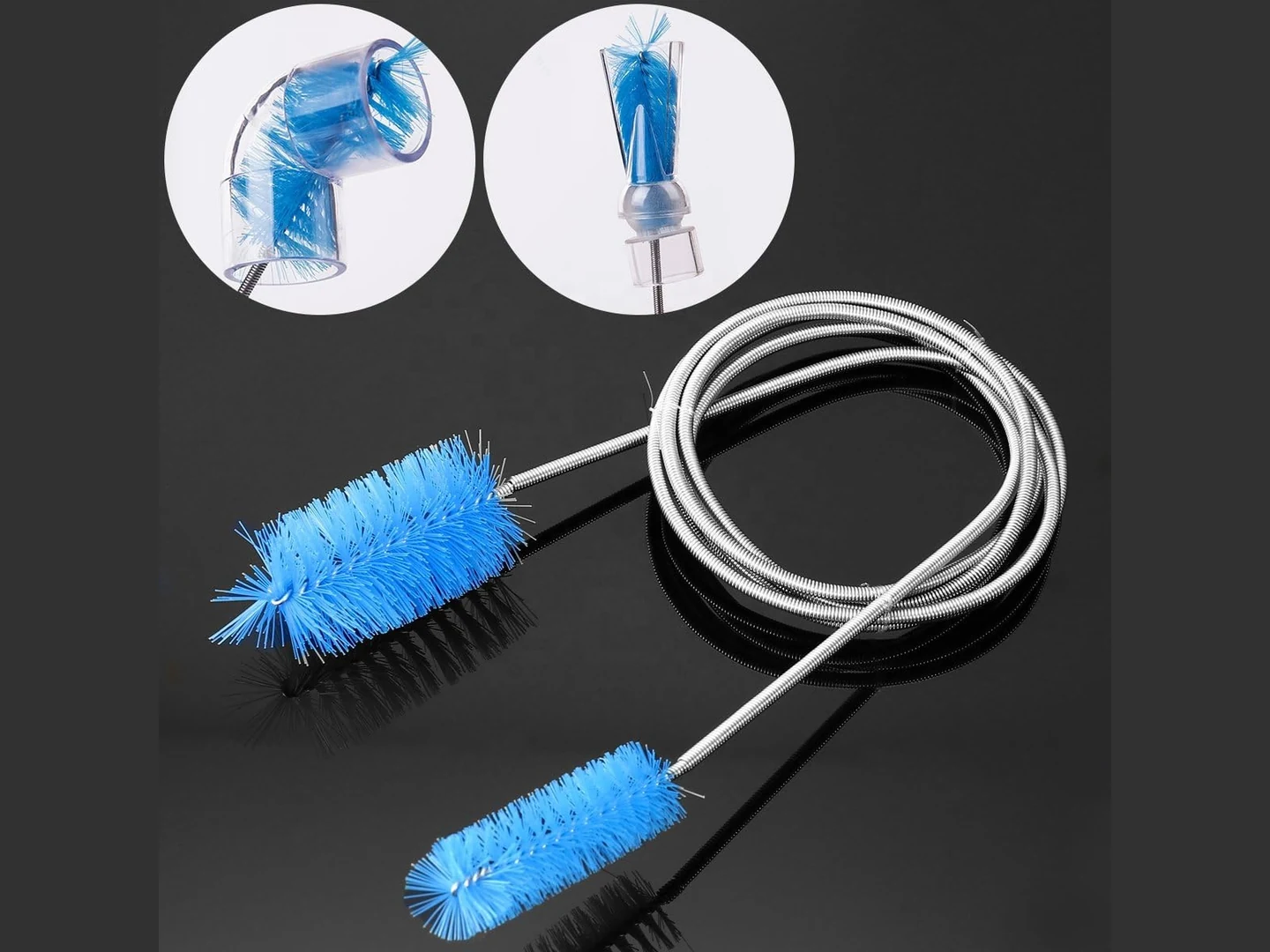
A colonoscope tube brush is a specialized instrument consisting of a long, narrow core (typically wire-wound or plastic-coated) with bristles along a distal portion, sized to fit within the colonoscope’s biopsy channel—commonly 2.8 mm to 4.2 mm in diameter. Its sole purpose is mechanical cleaning: the bristles scrub the inner lumen to remove adherent organic matter that manual flushing alone cannot reliably clear. Unlike general-purpose test tube brushes, this brush must meet strict materials and design requirements to protect delicate scope channels while achieving thorough soil removal.
Why Biopsy Channel Cleaning Matters
For reusable medical-device cleaning claims, the practical boundary is the device maker’s validated instructions and the FDA — Reprocessing Medical Devices in Health Care Settings rather than a brush-only rule.
For healthcare cleaning language, this article keeps its claims within the general boundary of the CDC — Disinfection and Sterilization Guideline, which is written for disinfection and sterilization in healthcare facilities.
Where the article discusses healthcare settings rather than ordinary cleaning, the CDC — Core Infection Prevention and Control Practices is used as the general infection-control frame.
For brush terminology and construction language, this section references American Brush Manufacturers Association — Brush Lingo.
Colonoscope biopsy channels accumulate blood, mucus, feces, and tissue fragments during procedures. If not removed completely, these residues form biofilm—a matrix of microorganisms that resists subsequent high‑level disinfection or sterilization. Inadequate cleaning is a leading cause of endoscopy‑related infections. Guidelines from bodies like AAMI, SGNA, and the FDA emphasize that manual brushing is a mandatory step before automated reprocessing. The brush must physically contact all inner surfaces to dislodge debris, making its design a direct patient‑safety concern.
Key Features to Compare When Selecting a Colonoscope Tube Brush
The table below breaks down the major variables that affect cleaning performance, channel protection, and workflow compatibility.
| Feature | Options | Best for… | Considerations |
|---|---|---|---|
| Bristle Material | Nylon, Stainless Steel, Polypropylene | Nylon: soft, for delicate linings; Stainless steel: stubborn, calcified residues; Polypropylene: general bioburden | Nylon may not remove hardened deposits; Stainless steel can scratch if not fully encapsulated or if bristles splay; Polypropylene offers a middle ground. |
| Core/Bristle Stiffness | Flexible, Semi‑rigid, Rigid | Flexible: tortuous channels; Semi‑rigid: moderate buildup; Rigid: straight sections with heavy soil | Too flexible may not apply enough pressure; too rigid can kink or traumatize the channel lining. |
| Tip Design | Open end, Looped, Covered tip | Covered tip: prevents channel trauma; Open end: allows flush‑through; Looped: for retrieval or targeted scrubbing | Must not have sharp edges; covered tip reduces risk of puncture. |
| Diameter | Match biopsy channel inner diameter (e.g., 2.8 mm, 3.2 mm, 4.2 mm) | Slightly larger than channel ID to ensure bristle contact, but not so large that it jams | Always reference the specific colonoscope model’s technical specifications; a 0.1‑0.3 mm oversize is common. |
| Length | Must exceed channel length + working length | Standard colonoscope channels are ~1680 mm; a brush >1800 mm is typical | Too short leaves distal channel uncleaned; too long can be unwieldy and may kink. |
| Handle/Core Construction | Wire‑wound, plastic‑coated wire, solid core | Wire‑wound: excellent flexibility; Coated: resists kinking and chemical attack; Solid: maximum durability | Handle must allow a firm grip even when wet; core must withstand repeated flexing and chemical exposure. |
| Reusability | Single‑use vs. Reusable | Single‑use: eliminates cross‑contamination risk, no reprocessing validation needed; Reusable: lower cost per procedure if validated | Reusable brushes require validated cleaning and sterilization; bristles can bend, splay, or fall out over time, potentially damaging the channel. |
| AER Compatibility | Yes / No | If using an automated endoscope reprocessor, the brush must fit the cleaning port and not shed bristles | Bristle loss can clog AER fluidics; some AERs require specific brush dimensions. |
How to Choose Based on Your Cleaning Problem
Start by defining the actual soiling challenge, then map it to brush attributes:
- Residue type: Sticky biofilm or soft tissue → nylon bristles with dense packing. Hardened, dried, or calcified deposits → stainless steel with a covered tip for safety. General bioburden → polypropylene.
- Scope channel specifications: Obtain the exact inner diameter and working length from the colonoscope manufacturer’s instructions for use (IFU). The brush diameter must be a controlled oversize (typically +0.2 mm) to help maintain wall contact without jamming.
- Cleaning method: Manual brushing in a sink → reusable brushes may be acceptable if the department has validated brush reprocessing. For AER systems → choose a brush that is documented as compatible with the specific AER connector, and consider single‑use to eliminate brush‑reprocessing variability.
- Channel condition: Older scopes with microscopic scratches or wear may benefit from softer nylon bristles to avoid further damage. Scopes with known biofilm issues require a brush with dense, resilient bristles and possibly a pre‑soak step.
- Frequency: High‑volume centers often prefer single‑use brushes to save time and ensure a fresh, undamaged tool for every case.
Common Mistakes When Selecting a Colonoscope Tube Brush
- Choosing by cost drivers alone: A cheaper brush that fails to clean thoroughly can lead to infection outbreaks and costly scope repairs, negating any upfront savings.
- Using the wrong diameter: A brush that is too small leaves biofilm in the channel; a brush that is too large can jam, kink, or scratch the lining.
- Ignoring material compatibility with disinfectants: Some bristle or core materials may degrade when exposed to glutaraldehyde, peracetic acid, or other high‑level disinfectants, leading to bristle loss or embrittlement.
- Skipping AER fit verification: A brush that does not lock securely into the AER port may be pushed back, resulting in inadequate cleaning or fluid leakage.
- Using worn‑out reusable brushes: Bent, splayed, or missing bristles reduce cleaning efficacy and can damage the channel. Reusable brushes must be inspected under magnification after each use and replaced on a defined schedule.
- Assuming one brush fits all scopes: Colonoscopes have different channel diameters (pediatric vs. adult models); a brush matched to a 3.2 mm channel may be unsafe for a 2.8 mm channel.
- Neglecting manufacturer IFU recommendations: Always follow the scope manufacturer’s validated cleaning protocol; using an unapproved brush may void warranty or compromise reprocessing outcomes.
When a Colonoscope Tube Brush Is Not Enough
Mechanical brushing with a correctly chosen colonoscope tube brush is essential, but it has limits:
- Severe obstruction or kinked channels: If the brush cannot pass freely, do not force it. This indicates a potential channel defect requiring scope manufacturer evaluation.
- Mature, multilayer biofilm: Even the best brush may not fully eradicate thick, established biofilm without an extended enzymatic soak or ultrasonic bath prior to brushing.
- Specialized channel coatings: Some newer scopes have hydrophobic or anti‑biofilm coatings; verify with the scope manufacturer that the chosen brush material is compatible.
- Areas beyond brush reach: The very distal tip or sharp bends may require additional cleaning with flexible pull‑through devices or flush‑only protocols as specified in the IFU.
- Validation gaps: If internal validation tests (e.g., protein or carbohydrate residue tests) continue to fail after brushing, the entire reprocessing workflow—not just the brush—must be reviewed.
In all cases, the brush is one component of a multi‑step reprocessing cycle. It cannot substitute for proper detergent soaking, flushing, high‑level disinfection, drying, and transport.
Final Takeaway
Choosing a colonoscope tube brush starts with the colonoscope’s channel dimensions and the type of residue you typically encounter. Prioritize a brush that offers the right balance of bristle aggressiveness, channel protection, and compatibility with your manual or AER‑based workflow. Where feasible, adopt single‑use brushes to eliminate reprocessing uncertainty and ensure every patient begins with a verifiably clean scope. Always validate your selection against the scope manufacturer’s IFU and your facility’s infection‑control policies.
Frequently Asked Questions
What is the standard biopsy channel diameter for a colonoscope?
Most adult colonoscopes have a biopsy channel between 2.8 mm and 4.2 mm. Pediatric or slim colonoscopes may have smaller channels. Always check the exact ID in the device’s technical documentation.
Can I use the same brush for a gastroscope and a colonoscope?
Only if the channel diameters are identical and the brush length is sufficient for both. However, many facilities use separate brushes—or at least dedicate reusable brushes to a single scope type—to avoid cross‑patient contamination risks and to simplify validation.
How often should reusable channel brushes be replaced?
Inspection before and after each use is mandatory. Replace immediately if any bristles are bent, splayed, or missing, or if the core shows kinks or coating damage. As a general rule, many departments set a maximum number of uses (e.g., 30–50 cycles) or a time‑based limit (e.g., 3 months) to preempt brush degradation.
Do single‑use brushes eliminate the need for manual cleaning?
No. Manual brushing remains a required step even with single‑use devices. The brush physically removes debris; the subsequent cleaning of external surfaces, flushing, and automated reprocessing must still be performed per protocol.
What bristle material is safest for colonoscope channels?
Nylon is generally considered the safest because it is soft and non‑abrasive. Medical‑grade stainless steel brushes can be safe when the tips are fully encapsulated or covered, but they require strict attention to potential scratching. Always seek data from the brush manufacturer on channel‑material compatibility.
How do I confirm compatibility with our automated endoscope reprocessor?
Review the AER manufacturer’s cleaning‑accessory guidelines. The brush must fit the designated cleaning port and not interfere with fluid dynamics. Some AERs require a specific brush diameter or a connector adapter; testing with a small initial batch is recommended.
What if the brush gets stuck in the channel?
Never pull forcefully. Apply gentle, steady traction. If it does not release, contact the scope manufacturer’s service department immediately. Forcing a stuck brush can severely kink or tear the channel, leading to expensive repair.
Are there brushes that can also clean the suction channel?
Some colonoscope brushes are long enough to clean both biopsy and suction channels, but the channels may have different diameters. Using a brush sized for the biopsy channel in a larger suction channel may leave residue. Verify the manufacturer’s recommendation; often, separate brushes are required for each channel type.