What Is a Chiller Tube Brush?
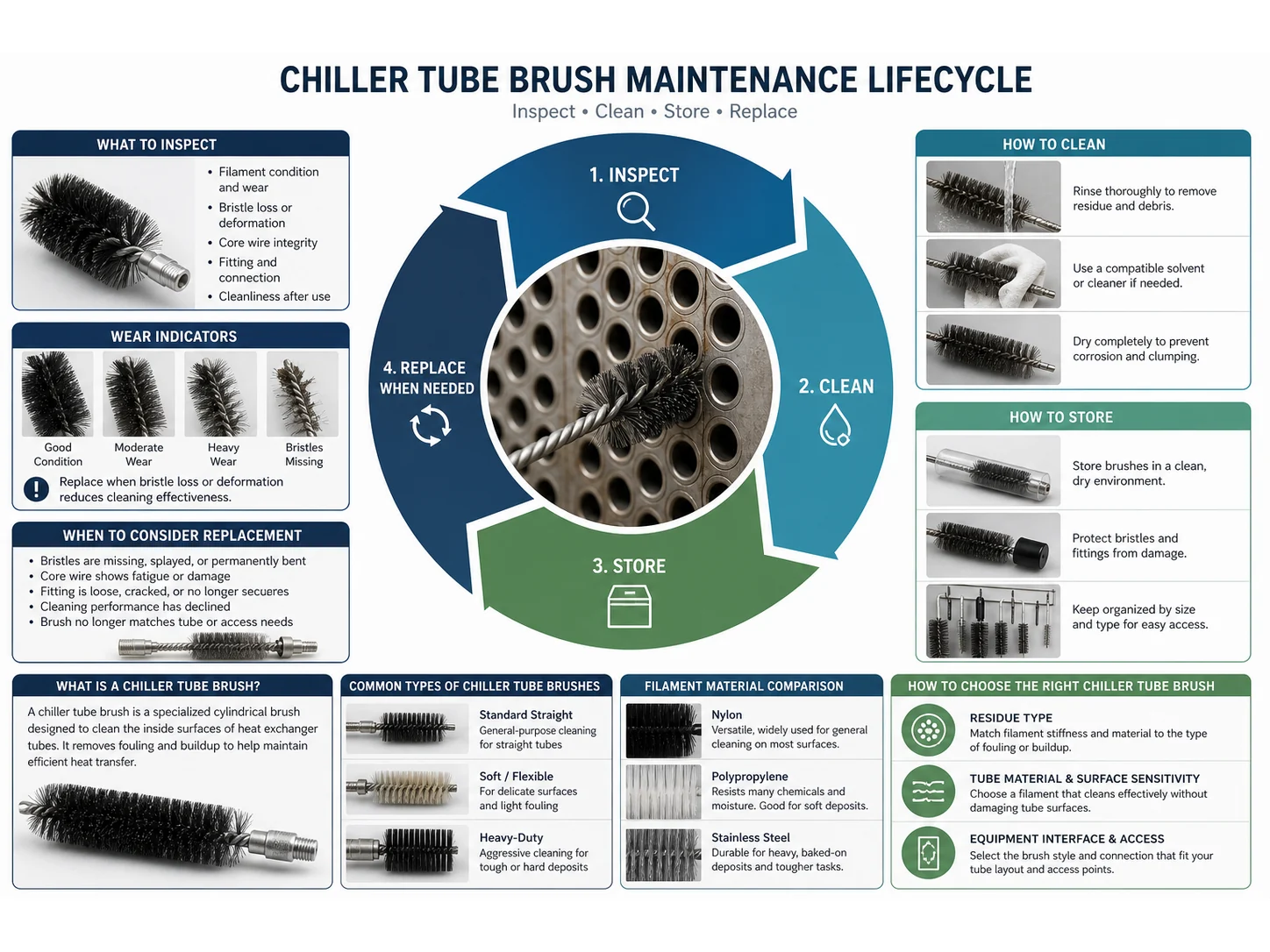
A chiller tube brush typically consists of a central wire core or flexible shaft with bristle filaments wound or twisted into place. It is fed through the tube—manually or with a rotary machine—to scrub internal surfaces. For small internal diameters, the brush must be slim enough to pass through without jamming, yet fill the cross-section adequately to contact the walls. The bristle material and stiffness directly affect cleaning aggressiveness and compatibility with tube materials like copper, stainless steel, or titanium.
For boilers, chillers, cooling towers, condenser systems, heat-exchanger maintenance, and O&M practices, this article cites U.S. Department of Energy FEMP — Operations & Maintenance Best Practices: A Guide to Achieving Operational Efficiency, Release 3.0; boiler, chiller, cooling tower, and heat-exchanger maintenance chapters.
For HVAC filters, coils, fins, condenser coils, condensate drains, and AC maintenance, this article references U.S. Department of Energy — Air Conditioner Maintenance.
For engineering drawings, GD&T, dimensions, tolerances, model/drawing requirements, and RFQ dimension control, this article references ASME — Y14.5 Dimensioning and Tolerancing.
For lockout/tagout standard during machine servicing, this article references OSHA — 1910.147 Control of Hazardous Energy.
For brush construction terminology, filament/backing/stem terms, this article references American Brush Manufacturers Association — Brush Lingo.
Common Types and Configurations for Small IDs
Small-diameter chiller tube brushes come in several forms:
- Spiral-wound brushes: Single or double spiral of filament around a wire core; offers consistent cleaning along the length.
- Twisted-in-wire brushes: Bristles are twisted between two wires; typically more flexible and compact, good for very small IDs.
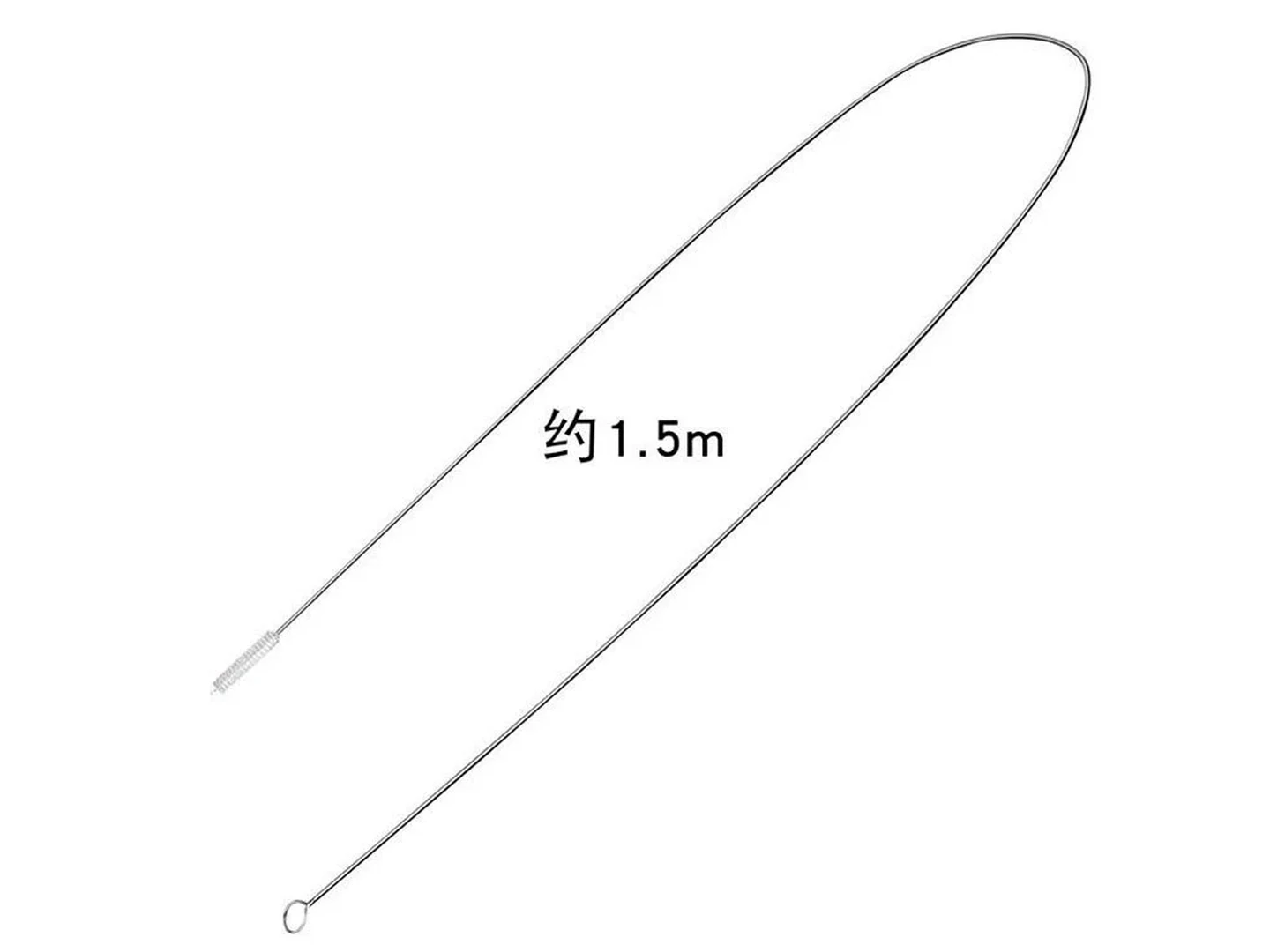
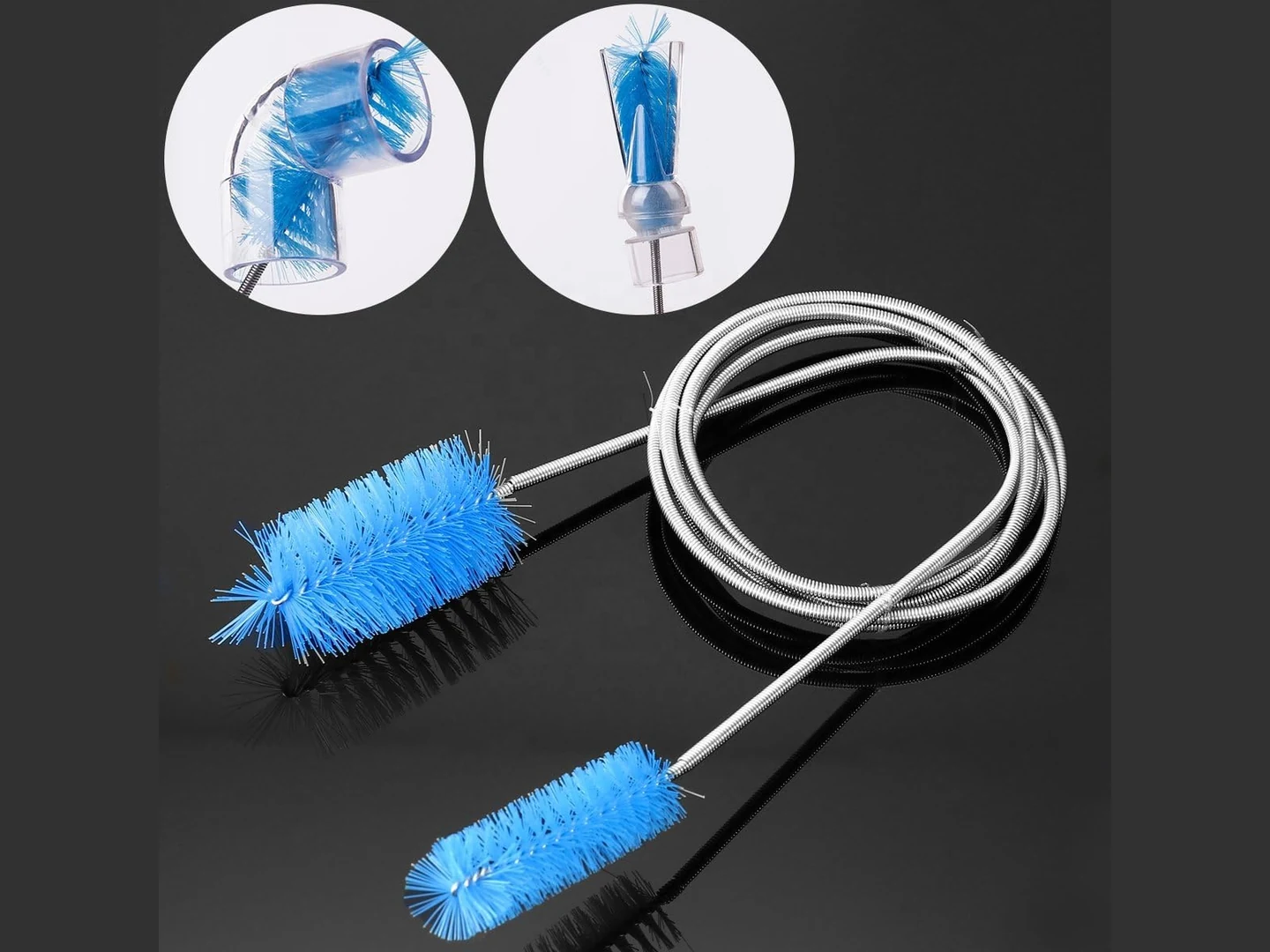
- Flexible shaft brushes: Mounted on a nylon or metal flexible shaft for navigating bends or long tube runs.
- Machine-mount brushes: Designed with a specific shank or quick-connect to fit rotary tube cleaners; common for repetitive maintenance.
Material, Stiffness and Handle Options: A Comparison
| Configuration | Bristle Material Options | Stiffness | Handle/Core Types | Best For |
|---|---|---|---|---|
| Nylon (solid, crimped) | Nylon 6, 6.6, 6.12 | Medium to stiff | Loop handle, wire core, machine mount | General cleaning, biofouling, soft scale, copper tubes |
| Brass wire | Brass | Stiff | Wire core, machine mount | Moderate scale, oxidized deposits, stainless steel tubes (not for copper) |
| Stainless steel wire | 304 or 316 stainless | Very stiff | Wire core, machine mount | Hard scale, rust, heavy deposits; abrasive, risk of scratching softer metals |
| Tampico (natural fiber) | Tampico | Soft to medium | Loop handle, twisted wire | Polishing, sensitive surfaces, light dusting |
| Polypropylene | Polypropylene | Soft to medium | Loop handle, wire core | Chemical resistance, wet applications, biofilm removal |
For small IDs, densely filled twisted-in-wire brushes with fine bristles often provide the best combination of cleaning contact and jam-free passage. Loop handles allow manual pulling; machine mounts suit automated rotary systems.
How to Choose the Right Chiller Tube Brush for Your Small ID Application
Match the brush to these factors:
- Residue type: Soft biofilm or mud—nylon/polypropylene; light scale—brass; hard crystalline scale—stainless steel, but only if the tube material can tolerate it.
- Tube material sensitivity: Copper and copper alloys are easily scratched. Use only non-metallic bristles (nylon, Tampico, polypropylene). Stainless steel or titanium tubes can handle metal bristles if corrosion is not a concern.
- Wet or chemical exposure: When acids or alkaline cleaners are used, ensure the brush materials are chemically compatible. Nylon absorbs water and swells slightly; polypropylene has better chemical resistance.
- Equipment interface: Manual pull-through with a loop handle suits infrequent maintenance. Rotary machines require a machine-mount brush with the correct shank size. For very small IDs, the torque and speed must be controlled to prevent brush breakage.
- Hygiene requirements: In food-grade or pharmaceutical chillers, non-metallic bristles and FDA-compliant materials may be required; Tampico or specialized nylon can be options.
- Maintenance frequency: Frequent light cleaning can use softer brushes; occasional heavy descaling may need stiffer bristles or alternating chemical treatment.
- Custom sizes: Many small-ID chiller tube brushes are built to order. Accurate measurement of the tube ID (over any fouling) is critical. A brush diameter typically ranges from 0.002–0.010 inch larger than the tube ID to ensure wall contact without excessive friction.
Common Mistakes When Selecting a Small ID Tube Brush
- Using the wrong bristle material for the tube metal: Applying stainless steel wire on copper tubes causes deep scoring and eventual tube failure.
- Ignoring the fill density and diameter tolerance: A brush that is too loose will not clean adequately; one that is too tight can jam or break, leaving bristles lodged in the tube.
- Assuming any brush fits any rotary machine: Incorrect shank dimensions or weak attachment points cause slippage or brush detachment inside the tube.
- Neglecting chemical compatibility: Some brush filaments degrade in strong acids or solvents, contaminating the system.
- Overlooking the need for a flexible core: Straight brushes cannot navigate bends; a flexible shaft or inspection may be needed for U-tube bundles.
- Skipping a sample clean: For first-time applications or unusual deposits, testing a brush on a single tube before full-scale cleaning avoids costly mistakes.
When a Chiller Tube Brush Is Not Enough
A chiller tube brush alone may be insufficient or risky when:
- Hard, thick scale (CaCO₃) exceeds the bristle’s cutting ability: Chemical descaling or hydroblasting may be required first.
- Tube integrity is compromised: Pitted or thin-walled tubes can be further damaged by brushing.
- Contaminants are deeply embedded or require verification: Brushing cannot replace eddy current testing or boroscope inspection.
- The tube ID changes diameter along its length: A single brush size won’t clean uniformly; a different tool or multi-step process is needed.
- Custom brush design is uncertain: When off-the-shelf brushes don’t match the tube profile, request a supplier drawing review or a small sample batch before ordering production quantities.
Final Takeaway
For small internal diameters, a chiller tube brush is the right choice when you need targeted mechanical cleaning that reaches deep into tubes without causing damage. Prioritize brush material for tube compatibility, select the correct diameter and fill density, and verify the attachment method fits your cleaning system. When scale is too hard, tube condition is questionable, or a one-size-fits-all approach fails, supplement brushing with chemical cleaning, inspection, or custom tooling.
Practical Use Note
In daily use, the practical test is simple: check whether the brush reaches the full contact area, removes the target residue, and leaves the surface in the required condition. Record what changes when bore size, brush material, solvent handling, and firearm-maker guidance changes, because many brush failures are caused by the working condition shifting rather than by the brush body alone.
Frequently Asked Questions
Can I use the same brush for different tube diameters?
No. A brush sized for one ID will be too loose or too tight in another diameter, leading to poor cleaning or damage. Measure each tube size individually.
How often should chiller tubes be brushed?
Frequency depends on water quality, tube material, and operating load. Many plants schedule tube brushing quarterly or semi-annually as part of preventive maintenance, but online brush systems (automatic) may run daily.
What brush material is safest for copper tubes?
Nylon, polypropylene, or Tampico are non-abrasive and safe for copper. Avoid any metal bristles, including brass, which can still score soft copper over time.
Do I need a machine-mounted brush for small IDs?
Not necessarily. Manual loop-handle brushes work well for small IDs in short tubes. Rotary machines help with longer runs or heavier fouling but require careful speed control to avoid brush breakage.
How do I measure the small internal diameter correctly?
Use a calibrated caliper or plug gauge at both ends of the tube, accounting for any existing deposits. If fouling is present, note both fouled and expected clean ID to avoid selecting an overly tight brush.
Can a chiller tube brush remove hard calcium scale?
Light to moderate scale may be removed with stiff stainless steel or brass brushes on compatible tube metals, but thick, hard scale often requires chemical descaling or high-pressure water jetting first.
What length brush can I use in a small ID tube?
Brush length is limited by the tube’s straight run and the flexibility of the core. For small IDs, brushes are typically short (a few inches to a foot) to prevent buckling, especially in manual applications.