Quick Answer
These surfaces are finished, thin, or both, and the contamination on them is usually held by static rather than by adhesion. So the brush is specified by three negatives — it must not scratch, must not shed, must not leave the part charged — and the cleaning action is almost incidental by comparison.
What Makes a Surface Delicate
- The finish is the function — an optical surface, a plated contact, a polished ferrule. A scratch is not cosmetic; it is a failed part.
- The part deforms — foils, fins, thin-wall carriers and prepreg bend under a fill that a casting would not notice.
- Static holds the contamination — the particle is on the surface because of charge, so a brush that only sweeps redistributes it and a brush that charges the part makes it worse.
- Shedding is the defect — in cleanroom-adjacent work the brush is a consumable with its own lot record, not shop-floor stock.
- The instrument’s own instructions govern — for medical and laboratory items, what the device maker allows comes before any brush property.
Filament by Risk
| What the risk is | Where to start | Why |
|---|---|---|
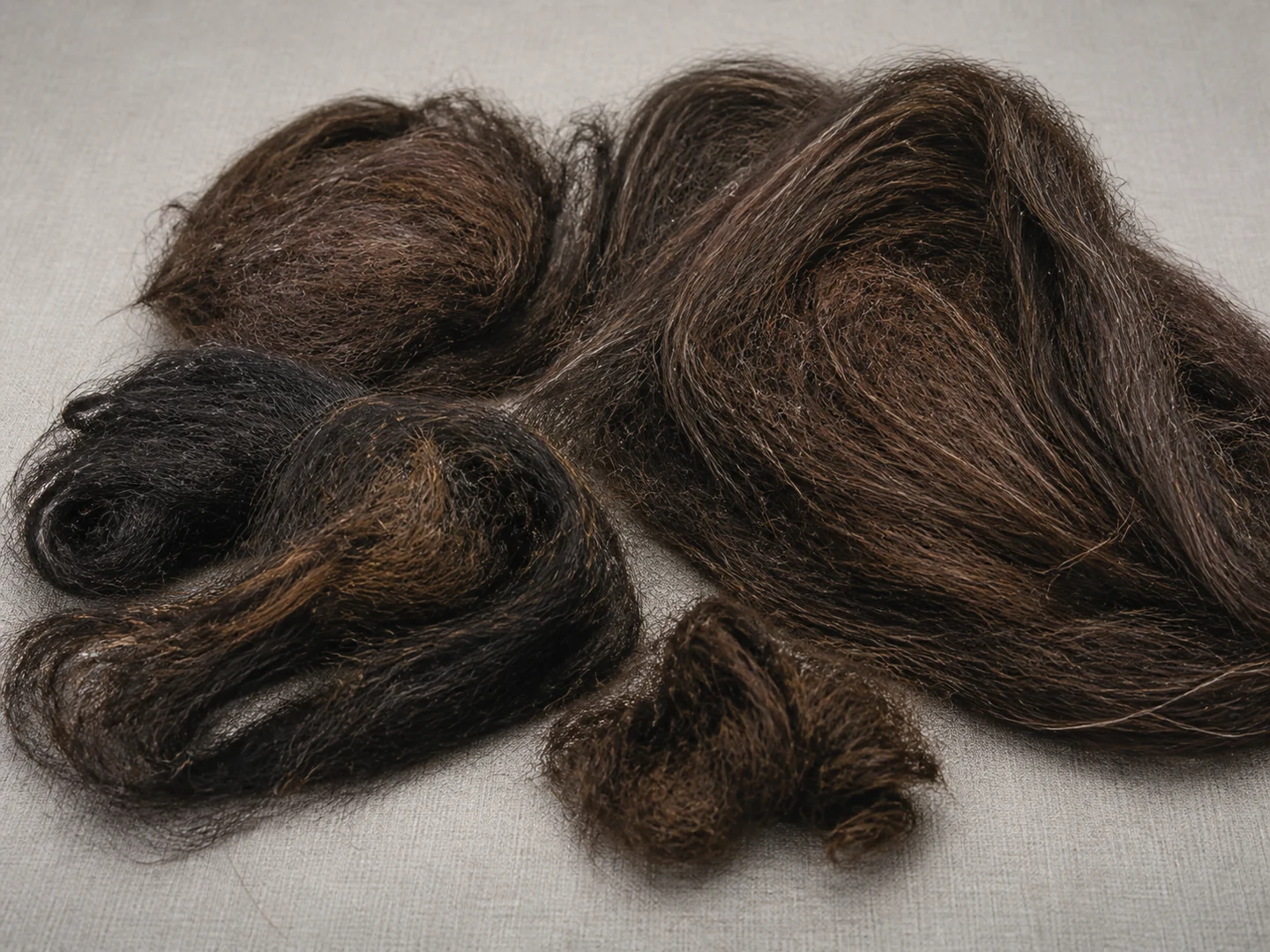
| Scratching a finished or coated surface | Goat Hair or Horsehair | lifts the particle instead of dragging it across the surface |
| Charge holding the contamination | Conductive Nylon or Carbon Fiber | gives the charge a path away rather than merely resisting it |
| Shedding into the process | Carbon Fiber | sheds almost nothing and carries no ionic load into the tool |
| Fine particles that must not re-deposit | Microfiber | holds the particle rather than sweeping it along |
| A thin part that deforms | Very soft Nylon PA | flexes before it loads the part |
| A documented reprocessing cycle | PBT, documented grade | survives enzymatic cleaner and disinfection without swelling out of size |
Construction and Mounting
Nearly all of it is hand work, held over the surface rather than rested on it, and where static matters the brush is bonded to the same ground as the bench — the brush is part of the ESD system, not a tool brought to it. Stems are protected so no metal reaches the surface, and the brush is stored capped so it collects nothing between uses.
Where It Goes Wrong
- Treating antistatic as conductive. Only one of the two can be measured at the bond, and only one of them discharges a part.
- Cleaning a charged surface with an unbonded brush. The dust comes off and returns before the operator has finished the stroke.
- Using shop-floor stock in a cleanroom-adjacent step. The brush has no lot record and the step has no traceability.
- Overriding the device maker’s instructions because a stiffer brush works better. On a regulated instrument that is the whole specification gone.
What to Send for a Quote
What the surface is and how it is finished, whether static is part of the problem, the particle or shedding limits that apply, whether a grounding path exists, the chemistry the brush will meet, and any documentation the process requires with the part.
Which bristle material fits this job — Goat Hair, Horsehair or Conductive Nylon?
| Material | Continuous temperature (°C) | Peak temperature (°C) | Water absorption |
|---|---|---|---|
| Goat Hair | 50–70 | 90–110 | 12–20% |
| Horsehair | 60–80 | 100–120 | 8–15% |
| Conductive Nylon | 80–110 | 130–160 | 0.5–2.5% |
| Carbon Fiber | 200–350 | 400–500 | ≤0.10% |
| Microfiber | 80–120 | 140–170 | 0.2–1.0%Material Itself ; Structure Can Absorb 3–7 Times Its Own Weight |
When are Handheld Detail Brushes the wrong choice?
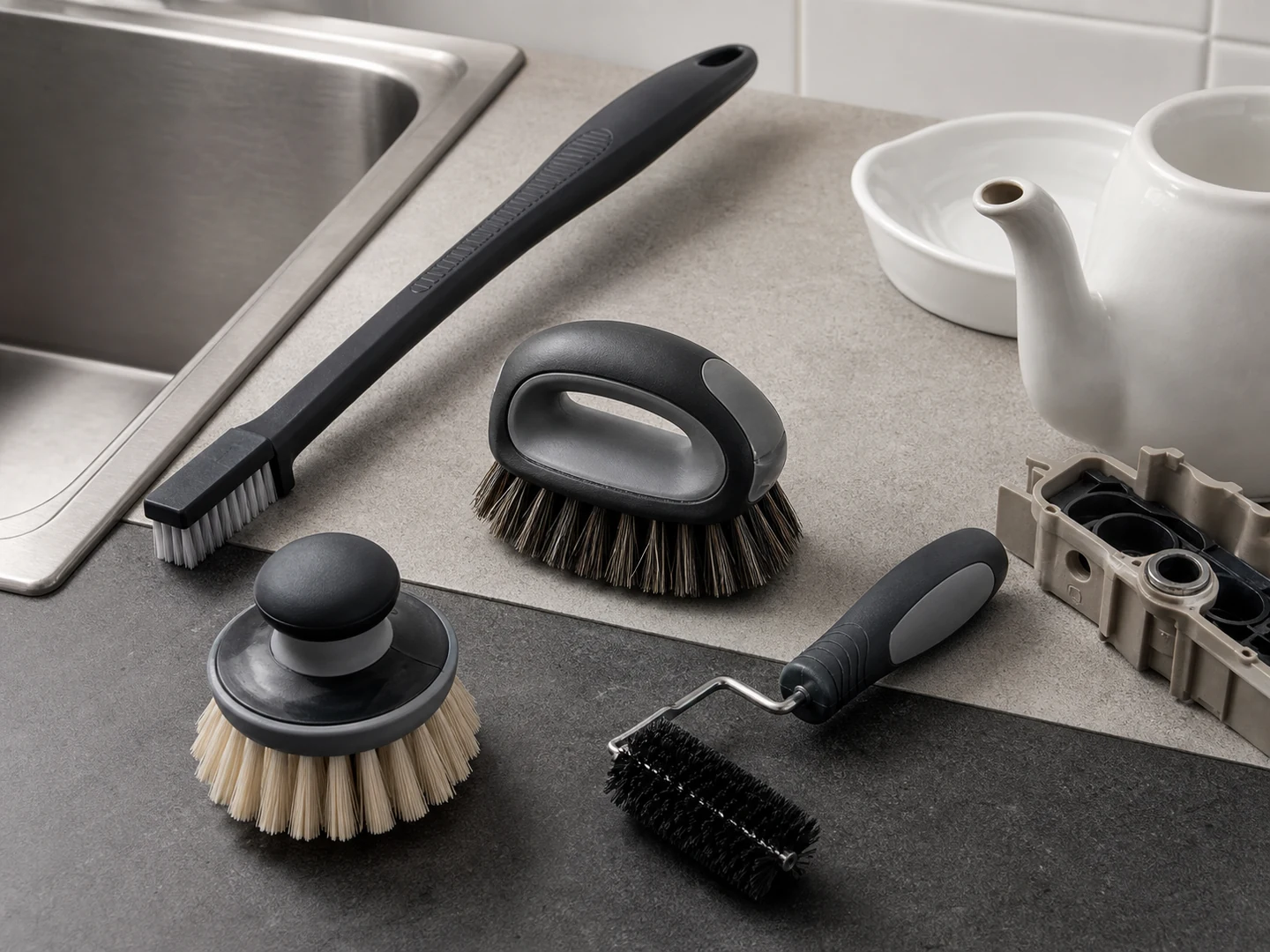
- Handheld Detail Brushes — Use a tube brush, powered brush, scraper, wipe, sponge, or vacuum when the target is internal, heavily bonded, or highly delicate.
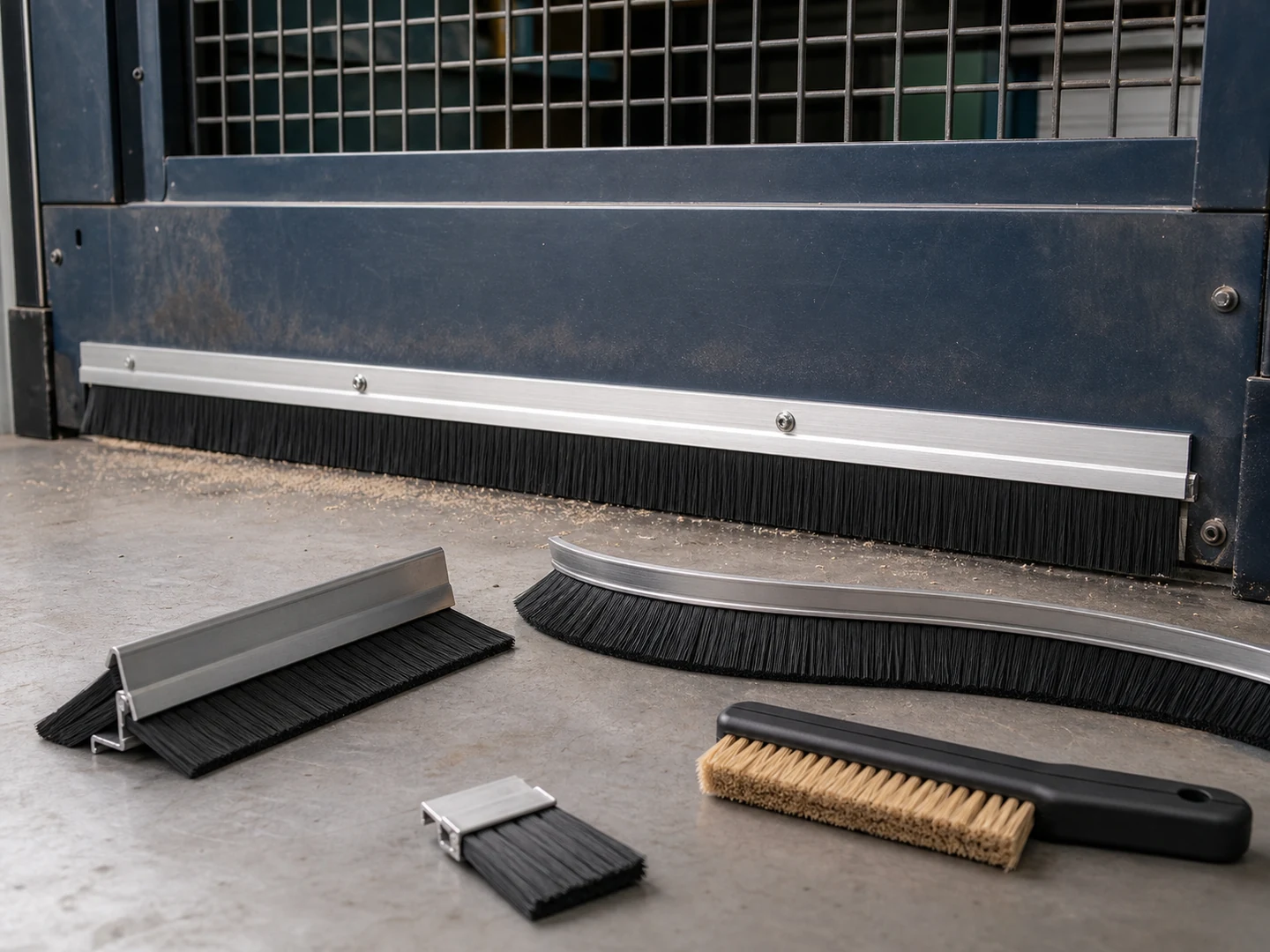
- Strip Seal Brushes — Use rubber lips, foam, labyrinth seals, air curtains, or rigid scrapers when pressure sealing or liquid containment is required.
- Roller and Conveyor Brushes — Use a stationary strip brush for a fixed linear seal or wipe, or another process when rotating line contact interferes with the product or cannot discharge the residue safely.
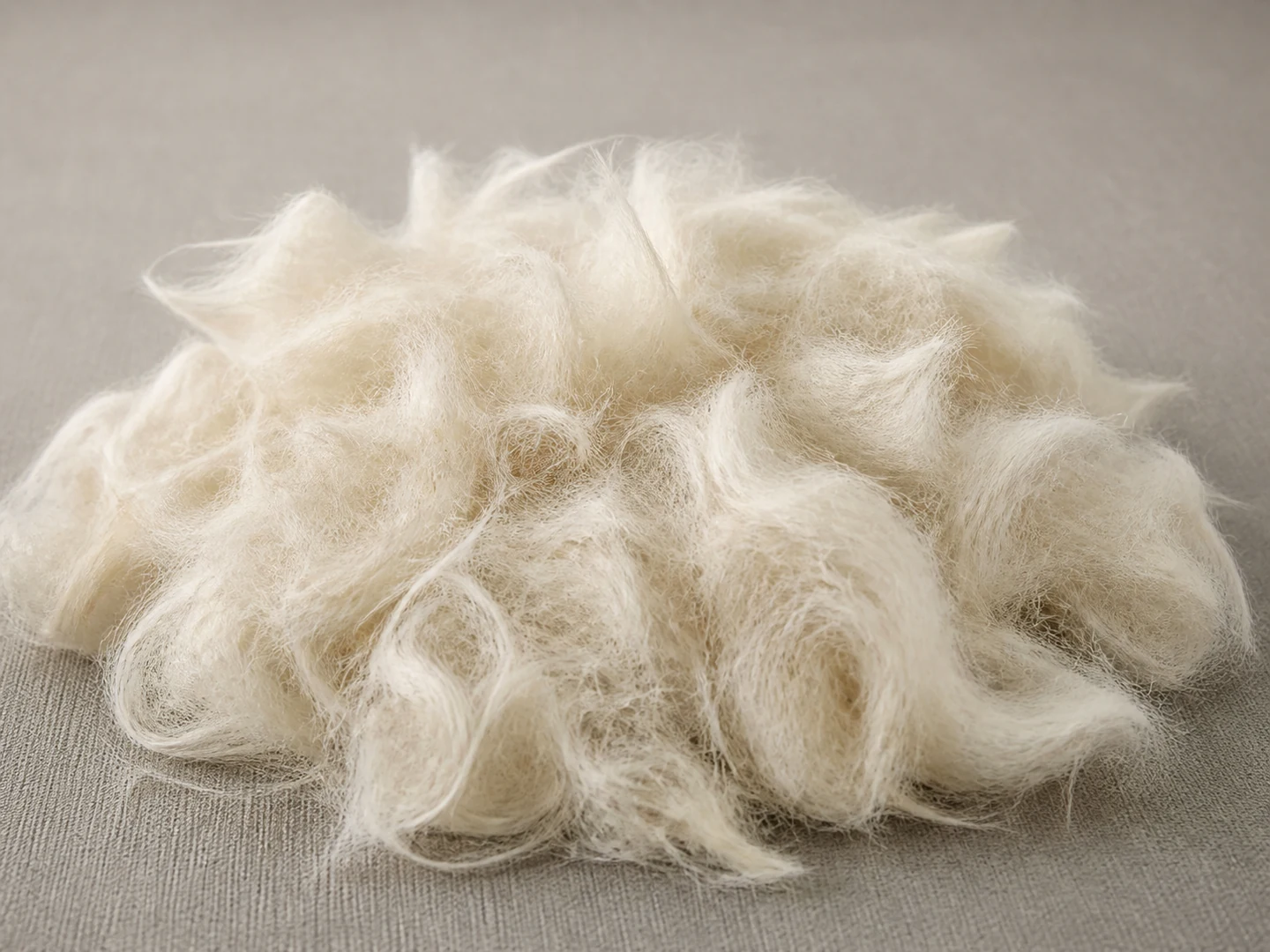
- Goat Hair — Best suited to soft dusting, polishing, and sensitive-surface contact; not a substitute for aggressive scrubbing or a validated wet chemical-process fill.
What should replace Handheld Detail Brushes when they stop working?
- Handheld Detail Brushes — Handheld detail brushes cover general precision cleaning; auto-detailing brushes impose tighter controls for painted, polished, leather, display, and trim surfaces.
- Strip Seal Brushes — Strip brushes create a linear barrier or guide; machine-table brush plates distribute load and support products over a broad area. Closest alternative: Machine Table Brush Plates.
- Roller and Conveyor Brushes — Roller and conveyor brushes hold cylindrical line contact across a working width, including helix-wound builds where the filament path is set to move loosened material toward one side; a strip brush holds the same line without rotating, so it seals or wipes but cannot carry residue along the width.
- Goat Hair — Compare Goat Hair with Boar bristle, goat hair, microfiber. Change material when wet stiffness, temperature, chemical resistance, conductivity, particle shedding, or surface marking becomes the limiting factor.