
Custom Cleaning Brush
Brush Roller Dust Removal Solar Panel
Custom brush roller for dust removal on solar panels. Nylon filament, 300–4500 mm working width, low-pressure contact to protect anti-reflective glass.
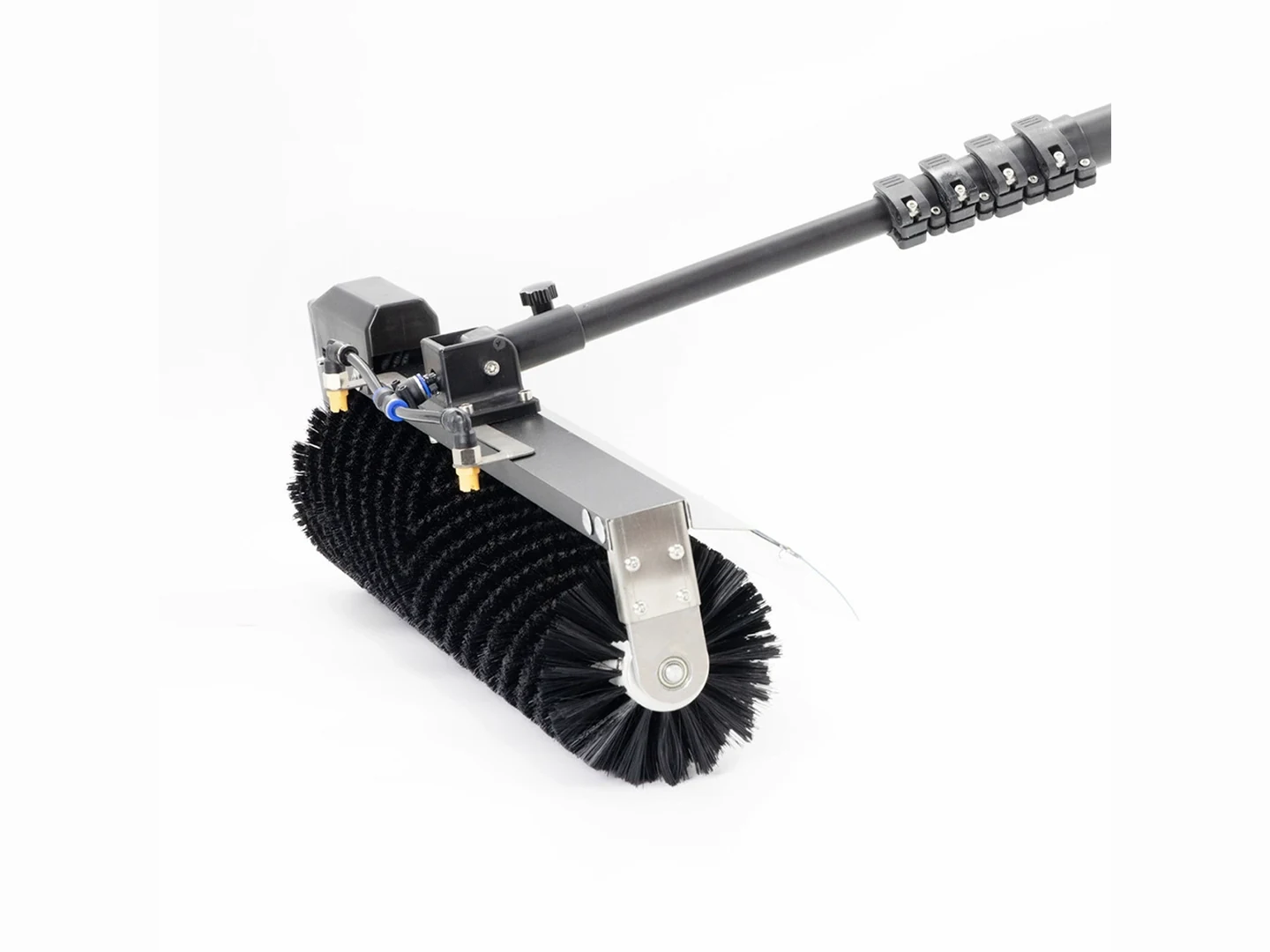
Large-format brush
100 pcs
Minimum order
Built one at a time on a core or channel: full-width rollers, sweeper brooms and long strip.
Production lead time, once the specification is confirmed
- Up to 100 pcsWithin 20 days
- 101–1,000 pcsWithin 30 days
- Over 1,000 pcsConfirmed with your quotation
Peak season can extend these times; the shipping date is confirmed in writing with your quotation. Sampling and shipping are quoted separately.
A rotating nylon brush roller for dry dust removal on photovoltaic module glass, sized to full panel width and matched to the contact pressure, shaft, and drive interface of your cleaning machine.
What can this brush do for you?
Dry dust removal without water or chemicals
The nylon filament, including anti-static nylon where required, sweeps fine dust, pollen, sand, and loose salt film from the panel surface without using water. This extends cleaning cycles in water-scarce and high-soiling locations and reduces operating cost per cleaning pass.
Contact tuned to protect anti-reflective coated glass
Filament diameter, trim length, and fill density are selected so the filament tips work at 1–4 mm deflection with a low surface load, typically below 2 N/cm² on coated module faces. This reduces the risk of micro-scratching, haze, and coating damage on premium module glass.
Full-row coverage in one pass
A working width from 300 mm up to 4500 mm lets one roller span an entire module row or cleaning-section width. Fewer passes per array mean shorter cleaning cycles, less wear on the cleaning machine, and higher throughput for automated cleaning robots.
Direct integration with your cleaning machine
The shaft bore, keyway, end journals, and bearing seats are matched to your robot or carriage. The roller becomes a field-replaceable wear part that drops into your existing drive system without redesigning the machine.
Handles the typical PV soiling mix
Loose dust, pollen, sand, light bird residue, and atmospheric film are swept from the module face and moved toward the panel edge. The roller does not push debris into frame gaps when the fill pattern and edge profile are set correctly.
What is a Brush Roller Dust Removal Solar Panel?
A brush roller for solar panel dust removal is a rotating cylindrical cleaning element that mounts onto a robotic or manually driven cleaning unit and removes loose particulate from the front glass of photovoltaic modules. The roller consists of nylon filaments anchored in a metal core and mounted on a central shaft. As the cleaning machine moves across the array, the roller rotates and the filament tips lightly contact the glass, dislodging dust and moving it off the module face.
In most installations this is a dry-cleaning component. No water, detergent, or wiper pressure is required for routine dust clearing. On heavily soiled panels or when moisture is available, the same roller can be used in a lightly wetted pass, but its core function is mechanical removal of dry debris.
The critical operating parameters are not just diameter and width. Contact angle, filament deflection, surface pressure, rotation speed, and travel speed all determine whether the roller cleans effectively without damaging the module glass or its anti-reflective coating. These parameters are set together with the cleaning machine manufacturer during the design phase.
This roller is not a heavy scrub tool. It is not intended for hardened bird droppings, baked-on mud, or oily residues, because those require water, detergent, or aggressive abrasion that would risk the glass.
Technical Specifications
We adjust the parameters below to your module size, cleaning machine, and site conditions.
| Parameter | Available Range / Notes |
|---|---|
| Working width | 300–4500 mm, sized to your panel row or cleaning section |
| Brush outside diameter | 80–350 mm |
| Trim length (filament length) | 30–100 mm |
| Filament diameter | 0.15–0.35 mm; finer for coated glass, coarser for heavier dust |
| Filament material | Nylon PA; anti-static nylon PA available for dry-dust control |
| Core construction | Steel, stainless steel, or aluminum tube, project-specific |
| Shaft / bore | 20–80 mm, plain or keyed, end journals matched to your bearings and drive |
| Recommended contact deflection | 1–4 mm at the filament tip on coated module glass |
| Working surface load | 0.5–3 N/cm²; below about 2 N/cm² for AR-coated surfaces |
| Rotation and travel speed | Matched to your cleaning unit; confirmed from machine data |
| Brush type | Custom Roller and Conveyor Brushes |
| How it is driven | Machine-driven, mounted in the equipment |
| Cleaning target | utility-scale ground-mounted pv plant, commercial and industrial rooftop array, and high-soiling region cleaning |
| Surface or part | roller, glass, panels, bores, edges, gaps, and metal |
| Residue or debris | dust, pollen, salt, bird droppings, sand, mud, bird residue, and dry debris |
| Mounting / connection | Matched to your cleaning unit; confirmed from machine data |
All dimensions are configurable. We recommend confirming contact pressure with a test on a spare or non-production panel before full deployment.
Where does this brush work best?
- Utility-scale ground-mounted PV plants where automated dry-cleaning robots run routine dust-removal passes.
- Commercial and industrial rooftop arrays cleaned by rail-mounted machines, tractors, or manually guided roller units.
- High-soiling regions: arid and desert zones, agricultural areas with pollen, coastal sites with loose salt film, and dusty construction environments.
- Dry cleaning between scheduled water washes, extending the interval and reducing water usage.
- Arrays where preserving the anti-reflective coating matters, so a low-pressure nylon roller is preferable to hard scrapers or aggressive brushes.
How do I choose the right one?
Start with the cleaning width. Measure the glass surface your machine covers in one pass — one module, a row of modules, or a whole table section. Choose a working width equal to that dimension plus a small overlap allowance so the roller does not miss the panel edges.
Set diameter and trim length for contact geometry. Larger brush diameters give a smoother rolling contact over panel seams and glass edges. Longer trim lengths follow minor surface unevenness, while shorter trim lengths provide firmer sweeping action. For most coated modules, a medium trim length with a soft filament diameter works best.
Choose filament for the surface and dust. Use 0.15–0.20 mm filament on AR-coated or sensitive glass. Use 0.25–0.35 mm filament when heavy sand or abrasive dust requires more stiffness, but only after confirming coating tolerance. Select anti-static nylon when dry static charge causes dust to re-adhere after a pass. Standard nylon is sufficient when the roller runs wet or when site humidity is high.
Confirm the shaft interface. Provide the cleaning machine’s shaft drawings, bore tolerance, keyway size, bearing journal dimensions, and end positions. The roller must be a drop-in replacement for the existing spool or sleeve on the machine.
Verify contact pressure before sign-off. Set the roller height so filament tips deflect 1–4 mm and the total surface load stays within 0.5–3 N/cm². Run a test on a spare panel or a non-critical area for several cycles, then inspect for haze, micro-scratches, or burnishing. If you see any of these, reduce pressure or use finer filament.
When to consider a different approach. If the panels carry hardened bird droppings, tree sap, oily film, or snow and ice, a brush roller alone is not the complete answer. Use water-assisted cleaning, detergent, or pre-soak first, then follow with the roller. For extreme soiling with caked mud, consider a wider trim or segmented roller, but validate on a test panel first.
Can I customize this brush?
Yes. Solar panel brush rollers are project-specific because panel widths, robot interfaces, and site conditions vary. To define the right configuration, send us:
- Module dimensions and layout (portrait or landscape, gap size between modules)
- Cleaning machine shaft drawings or CAD files
- Travel speed, rotation speed, and available motor torque
- Surface type: AR-coated, standard tempered glass, or bifacial modules with backside cleaning
- Typical soiling: dust, pollen, sand, salt, bird residue
- Cleaning frequency and whether water is used
We can adjust:
- Working width and brush outer diameter
- Trim length and filament diameter
- Filament material: PA6 or PA66, anti-static, colored, or blended
- Fill pattern: straight, spiral, wave, or chevron, with custom fill density
- Core material and shaft bore: steel, stainless steel, aluminum, keyed or plain
- End construction: molded, clamped, or removable for filament replacement
- Marking: laser marking, stamped ID, or color-coded segments
- Packaging: bulk, individually sleeved, or reusable shipping tubes
We can also support project-specific material declarations, third-party coating wear testing, inspection reports, and documentation when your procurement or EPC process requires them.
Which filament lasts longest on a brush roller dust removal solar panel?
How do I check that the contact pressure is safe for my panels?
Measure the filament tip deflection while the roller is loaded against the glass. It should stay within 1–4 mm. After a test run, inspect the panel under strong light for any haze, micro-scratches, or polished lines. If you see surface changes, reduce the load or switch to a finer filament diameter.
Can this brush remove bird droppings?
Loose, fresh droppings will often be swept away. Dried, hardened, or sticky droppings usually remain attached and may smear. In those cases, pre-wet or apply a soft-cleaning agent first, then run the dry roller for final dust removal. The roller is not a substitute for water-assisted cleaning of heavy organic residue.
What is the difference between anti-static and standard nylon filament for solar applications?
Anti-static nylon dissipates the static charge that builds up during dry brushing, so fine dust is released from the filament and does not re-attach to the glass. Standard nylon is less expensive and works well when water or moisture is present or when site humidity keeps static low. Choose anti-static for long dry-cleaning runs in arid locations.
How do I know when to replace the roller?
Inspect the filament tips for flattening, breakage, or uneven wear. If the trim length has shortened so deflection drops below 1 mm, or if the roller leaves visible dust trails on the glass, it is time to replace or re-trim. Also check the shaft for runout and the core for corrosion.
Can one roller handle both portrait and landscape module orientations?
Yes, provided the working width spans the longer edge of the module in each orientation. If your array mixes orientations or has large gaps between modules, a spiral or segmented fill pattern can help maintain even contact across the discontinuities. Send us the array layout so we can confirm.
What if the roller is used in rain or high humidity?
Nylon absorbs a small amount of moisture and becomes slightly softer, which is acceptable. If the roller will be consistently wet, specify moisture-stabilized nylon and a corrosion-resistant core, and confirm that your cleaning machine’s drive seals are compatible. Dry cleaning remains the preferred mode for maximum filament life.
Guides that go deeper on this
Custom Manufacturing RFQ
Describe Your Application
Please share the brush dimensions, working area, residue type, material direction, quantity, and a drawing or photo for quotation.
Drawing or photo optional — it speeds things up, it does not gate the enquiry.
Custom Brush RFQ
Send Your Brush Project
Upload a drawing, product photo, or sample photo and provide the core dimensions and cleaning conditions.
“We need a brush to remove wet residue from a stainless steel conveyor, about 800mm wide. The current brush wears quickly. We can send photos.”
“We sell drinkware and need a cleaning brush to include with the product. Quantity around 5,000 pieces.”