
Custom Cleaning Brush
120x1200mm PBT Solar Panel Roller Brush
Custom 120x1200mm PBT solar panel roller brush with 6061 aluminum core and quick-change coupling. For robotic and tractor-towed solar cleaning systems.
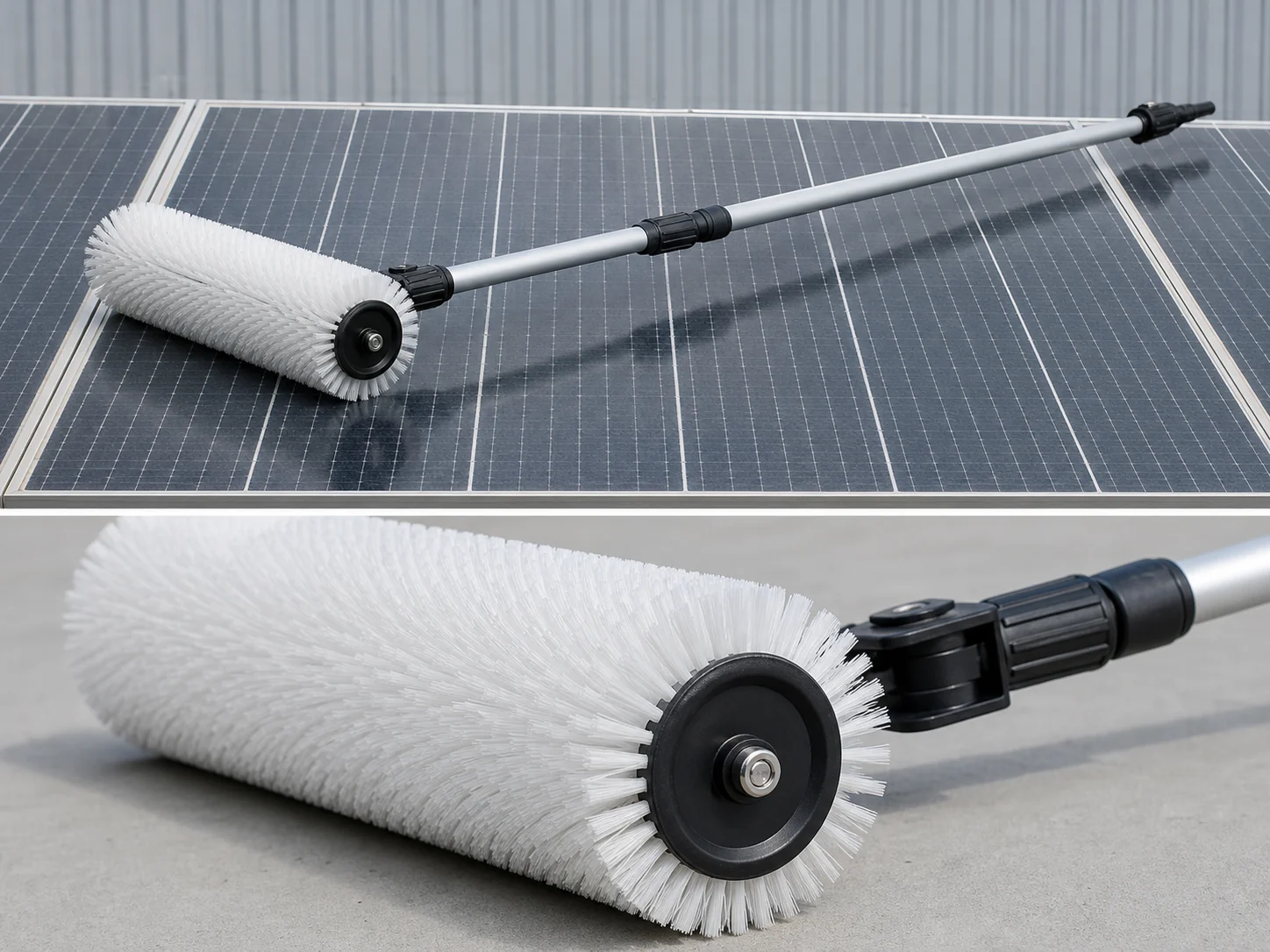
Large-format brush
100 pcs
Minimum order
Built one at a time on a core or channel: full-width rollers, sweeper brooms and long strip.
Production lead time, once the specification is confirmed
- Up to 100 pcsWithin 20 days
- 101–1,000 pcsWithin 30 days
- Over 1,000 pcsConfirmed with your quotation
Peak season can extend these times; the shipping date is confirmed in writing with your quotation. Sampling and shipping are quoted separately.
A 120 mm diameter, 1200 mm working-length roller brush with PBT bristles on a 6061 aluminum core, engineered for automated and semi-automated solar panel cleaning systems that remove dust, sand, pollen, salt, bird droppings, and atmospheric film from tempered glass and coated module surfaces without scratching or leaving streaks.
What can this brush do for you?
Clean a full module row in one continuous pass
The 1200 mm working length matches common panel-row widths and lets a cleaning machine sweep the entire surface of one or multiple modules without stopping. This reduces cycle time on utility-scale and rooftop arrays because the brush does not need to make multiple overlapping passes to cover the same width.
Remove fine and adhered debris without damaging the glass or anti-reflective coating
PBT bristles are stiff enough to dislodge sand, pollen, and dried bird droppings, but the filament tips are rounded and non-abrasive. Unlike wire or aggressive nylon brushes, this roller does not micro-scratch tempered glass or degrade the anti-reflective coating that panel manufacturers apply to improve light transmission.
Keep its cleaning performance when wet
PBT absorbs very little water compared with nylon, so the bristles hold their shape and stiffness when the cleaning system sprays water or detergent. This matters on solar farms that clean with water-fed systems or in humid coastal environments where panels collect salt film.
Mount and replace quickly in the field
The quick-change coupling on the core lets maintenance crews swap a worn brush in minutes without disassembling the drive shaft or adjusting alignment. For large fleets of cleaning robots or tractor-towed cleaners, that directly reduces downtime per panel row.
Run at the speed your cleaning equipment requires
The 6061 aluminum core is lightweight and stiff, and the brush can be dynamically balanced for the operating RPM of the cleaning head. This prevents vibration and uneven bristle wear when the roller spins at the speeds typical of solar cleaning machines.
What is a 120x1200mm PBT Solar Panel Roller Brush?
A 120x1200mm PBT Solar Panel Roller Brush is a cylindrical brush that mounts onto the rotating drive of a solar panel cleaning system — a robotic cleaner, a gantry-style washer, or a tractor-towed brush unit. The brush contacts the panel surface along its full 1200 mm length and uses the rotation of the machine drive to sweep contaminants off the glass and frames.
During operation, the roller spins against the module face while the cleaning machine moves along the panel row. The PBT bristles flex on contact, allowing the brush to follow slight variations in panel height and glass curvature without losing pressure. Water, detergent, or dry operation can be used depending on the system design; the brush supports all three because PBT retains its mechanical properties in wet and dry conditions.
This is not a hand brush and it is not a brush for scrubbing heavy caked-on soil. It is designed for continuous, low-to-medium pressure contact with solar module surfaces in high-cycle cleaning operations. The brush is a consumable component: it is expected to wear over time and be replaced as part of normal maintenance. The quick-change coupling is there to make that replacement fast and tool-free where possible.
Technical Specifications
The table below shows the standard configuration. Most dimensions and materials can be adjusted for a specific cleaning machine or panel layout.
| Parameter | Standard Value / Range |
|---|---|
| Overall diameter | 120 mm (including bristle tips) |
| Working brush length | 1200 mm |
| Core length | 1200 mm + end fittings, matched to machine mounting |
| Bristle material | PBT (polybutylene terephthalate) |
| Core material | 6061 aluminum alloy, hollow or solid as required |
| Connection | Quick-change coupling (type specified per project) |
| Bristle trim length | Typically 20–40 mm, dependent on desired contact pressure |
| Filament diameter | 0.15–0.50 mm, selected by residue type |
| Fill density | Configurable; standard is medium density for glass contact |
| Operating environment | Wet, chemical-assisted, or dry cleaning; outdoor solar arrays |
| Maximum service temperature | Around 120 °C continuous for PBT; actual limit depends on duration and load |
| Surface compatibility | Tempered glass, anti-reflective coated glass, anodized aluminum frames |
| Weight | Approximately 3.5–5.5 kg depending on core and fill configuration |
| Brush type | Custom Roller and Conveyor Brushes |
| How it is driven | Machine-driven, mounted in the equipment |
| Cleaning target | utility-scale solar farm, commercial rooftop array, and coastal and desert installation cleaning |
| Surface or part | panels, roller, glass, aluminum, tempered glass, panel surfaces, and frames |
| Residue or debris | salt, sand, pollen, dust, atmospheric film, and bird droppings |
| Mounting / connection | Quick-change coupling (type specified per project) |
The quick-change coupling can be a spline, keyed hub, bolt-on flange, or another interface that matches your existing drive. If you already have a cleaning robot or gantry, provide the drive-shaft drawing so the coupling is machined to fit without adapters.
Where does this brush work best?
- Utility-scale solar farms where dust, sand, and pollen accumulate on module faces and reduce energy output. The 1200 mm roller covers a full panel width in one pass when mounted on a tractor-towed or automated cleaning unit.
- Commercial rooftop arrays with long rows of flat or slightly tilted panels. The brush works with robotic cleaners that travel along the module row and rely on a consistent bristle contact pressure to avoid missed streaks.
- Coastal and desert installations where salt film, fine sand, and atmospheric film build up quickly. PBT resists the chemicals in demineralized water and mild detergents used for salt removal, and it does not soften or deform from short-term water exposure.
- Solar panel cleaning service providers that operate multiple cleaning machines and need a replaceable brush with a quick-change interface to minimize machine downtime between jobs.
- Gantry or fixed washing systems in large solar fields or panel manufacturing plants where a rotating brush needs to match a specific panel width and pass height.
How do I choose the right one?
Start with the cleaning swath and machine clearance
Measure the width of the panel row your cleaning machine covers in one pass, plus the clearance height between the drive shaft and the glass surface. The 120 mm diameter and 1200 mm length give a specific contact patch: a larger diameter increases bristle contact area and reduces unit pressure, while a smaller diameter concentrates pressure. If your machine has fixed mounting geometry, confirm that the 120 mm diameter rolls without bottoming out on the module frame.
Match the bristle stiffness to the residue, not just the surface
PBT filament diameter and trim length control scrubbing aggressiveness. For fine dust and pollen, a softer configuration — thinner filaments, longer trim, lower density — removes the layer without pressing debris into the glass. For dried bird droppings, salt crust, or sand that has bonded to the surface, increase filament diameter or shorten trim for a firmer contact. Never use an aggressive configuration unless you have tested it on a sample coated module, because an overly stiff brush can leave micro-scratches that reduce panel efficiency permanently.
Check the coupling and core interface before ordering
This brush is designed to mount into a machine, not to be held by hand. The quick-change coupling must match your drive shaft diameter, keyway, spline, or flange pattern. If the coupling is wrong, the brush will not center properly, causing vibration, uneven wear, and possible damage to the drive bearings. Send us the drive-shaft drawing from the cleaning robot or gantry so we can machine the core ends to fit.
Decide between wet, chemical-assisted, and dry operation
PBT works in all three modes, but the cleaning result depends on the system. Dry sweeping removes loose dust and sand efficiently, but it can leave a fine film behind. Water-assisted cleaning lifts salt and atmospheric film. Chemical-assisted cleaning with a pH-neutral panel detergent removes organic residue faster. If you run chemical-assisted cleaning, specify the chemical family and concentration so we can confirm PBT compatibility and select a core coating if needed, even though aluminum is naturally resistant to many detergents.
When this brush is not the right tool
If the panel surface has heavy caked-on mud, thick bird-dropping buildup, or carbonized stains that require aggressive scrubbing, a PBT roller with gentle contact may not remove it in one pass. In that case, use a pre-wetting stage or switch to a stiffer nylon or abrasive roller for the first pass, then follow with this PBT brush for final cleaning. If the panel width is significantly less than 1200 mm, a shorter roller may be more efficient and reduce bristle waste. If the cleaning machine operates at very high RPM with poor balance control, request a dynamically balanced core before installation.
Can I customize this brush?
Yes. Solar panel roller brushes are built to the cleaning machine and the panel geometry, so the standard 120x1200mm configuration is a starting point, not a fixed product. For a custom project, provide the following:
- Panel width and module layout for the cleaning row
- Drive-shaft drawing or coupling specification (diameter, keyway, spline, flange pattern)
- Cleaning machine speed and roller RPM
- Water pressure and detergent type, if used
- Main residue types to be removed
- Operating temperature range and UV exposure
- Any required surface sensitivity limits (e.g., anti-reflective coating type)
We can adjust these parameters:
- Roller geometry — diameter (e.g., 100 mm to 160 mm), working length, end treatment (sealed, capped, flanged), and core wall thickness for weight reduction or added stiffness
- Bristle configuration — filament diameter, trim length, fill pattern (straight, spiral, segmented), bristle density zones, and end-of-row bristle wear indicators
- Materials — PBT filament in different colors for wear indication, 6061 or 7075 aluminum core, optional anodized or powder-coated core, stainless steel end fittings if required
- Connection — quick-change coupling style, keyed hub, spline, flange, or custom machined interface to match your drive
- Color and marking — custom bristle colors for batch identification, laser-marked part number or serial on the core, custom end-cap color
- Packaging — individual tube packaging to protect bristles during shipping, bulk crating for fleet orders, or kitting with spare couplings
If your project requires material documentation, inspection reports, dimensional CMM data, or third-party testing for the cleaning system certification, we can support those requirements during the customization process.
What pressure keeps a 120x1200mm PBT solar panel roller brush clean without wearing it early?
How do I know when to replace the roller brush?
Check the bristle length regularly. When the trim length has worn down by 30–40% from the original measurement, the contact pressure decreases and cleaning results degrade. Also look for splayed or bent bristles that no longer spring back after passing over the panel. If you see visible streaks or residue left behind after a cleaning pass at the same machine speed and water flow, the brush is likely due for replacement.
Will this brush scratch the anti-reflective coating on my panels?
With the correct PBT filament diameter and trim length, no. PBT is a non-abrasive thermoplastic, and rounded bristle tips spread pressure over a larger area than cut-filament ends. However, if the brush picks up embedded sand or grit and continues to run dry, that grit can act as an abrasive between the bristle tips and the glass. Always inspect the brush for trapped debris before each cleaning session, and if possible, rinse the brush after use on heavily soiled panels.
Can this brush run continuously on a wet cleaning system?
Yes. PBT has very low water absorption, so the bristles do not swell, soften, or lose their shape when continuously wetted. The 6061 aluminum core is corrosion-resistant in fresh water and mild detergent solutions. If the system uses saltwater or highly alkaline cleaning chemicals, specify that in the project details so we can apply a protective core coating and confirm chemical compatibility.
What is the maximum RPM for this roller brush?
The safe operating RPM depends on the core construction, balance quality, and bristle length. In a standard 120 mm diameter, 1200 mm length configuration with medium-density PBT bristles and a hollow 6061 core, the brush is typically balanced for operation up to 800–1000 RPM. For higher speeds, the core must be dynamically balanced and possibly made solid or with a thicker wall. Provide your machine’s maximum RPM so we can confirm or adjust the build.
Does this brush also clean the panel frames and edges?
The primary contact surface is the flat module face or slightly tilted glass area. The 120 mm diameter covers a wide swath, but the brush may not fully reach into the narrow gap between the frame and the glass edge, especially if the frame is raised. For complete frame and edge cleaning, a separate side brush or a brush with a longer trim at the ends can be designed. Tell us if your cleaning goal includes frame surfaces, and we can recommend a configuration.
How should I store spare brushes when not installed?
Store the roller brush horizontally or vertically on its end caps, away from direct sunlight for long-term storage, because UV exposure gradually embrittles PBT over many months. Keep it dry and covered to prevent dust from settling into the bristles. If the brush was used with chemicals, rinse it with clean water and let it air dry before storage. Do not stack heavy objects on the bristle surface.
Guides that go deeper on this
Abrasive Nylon Grit and Filament Selection
Read this guideGuideBrush Speed, Engagement, and Heat
Read this guideGuideConveyor Belt Cleaning Brush Design
Read this guideGuideSolar Panel and Glass Cleaning Brush Design
Read this guideGuideSolar Panel Cleaning Brushes: Soft Bristles for Coated Glass
Read this guideCustom Manufacturing RFQ
Describe Your Application
Please include the main sizes, application, residue, preferred material, interface, quantity, and any drawing or sample available.
Drawing or photo optional — it speeds things up, it does not gate the enquiry.
Custom Brush RFQ
Send Your Brush Project
Upload a drawing, product photo, or sample photo and provide the core dimensions and cleaning conditions.
“We need a brush to remove wet residue from a stainless steel conveyor, about 800mm wide. The current brush wears quickly. We can send photos.”
“We sell drinkware and need a cleaning brush to include with the product. Quantity around 5,000 pieces.”