
Custom Cleaning Brush
Abrasive Brush Glass
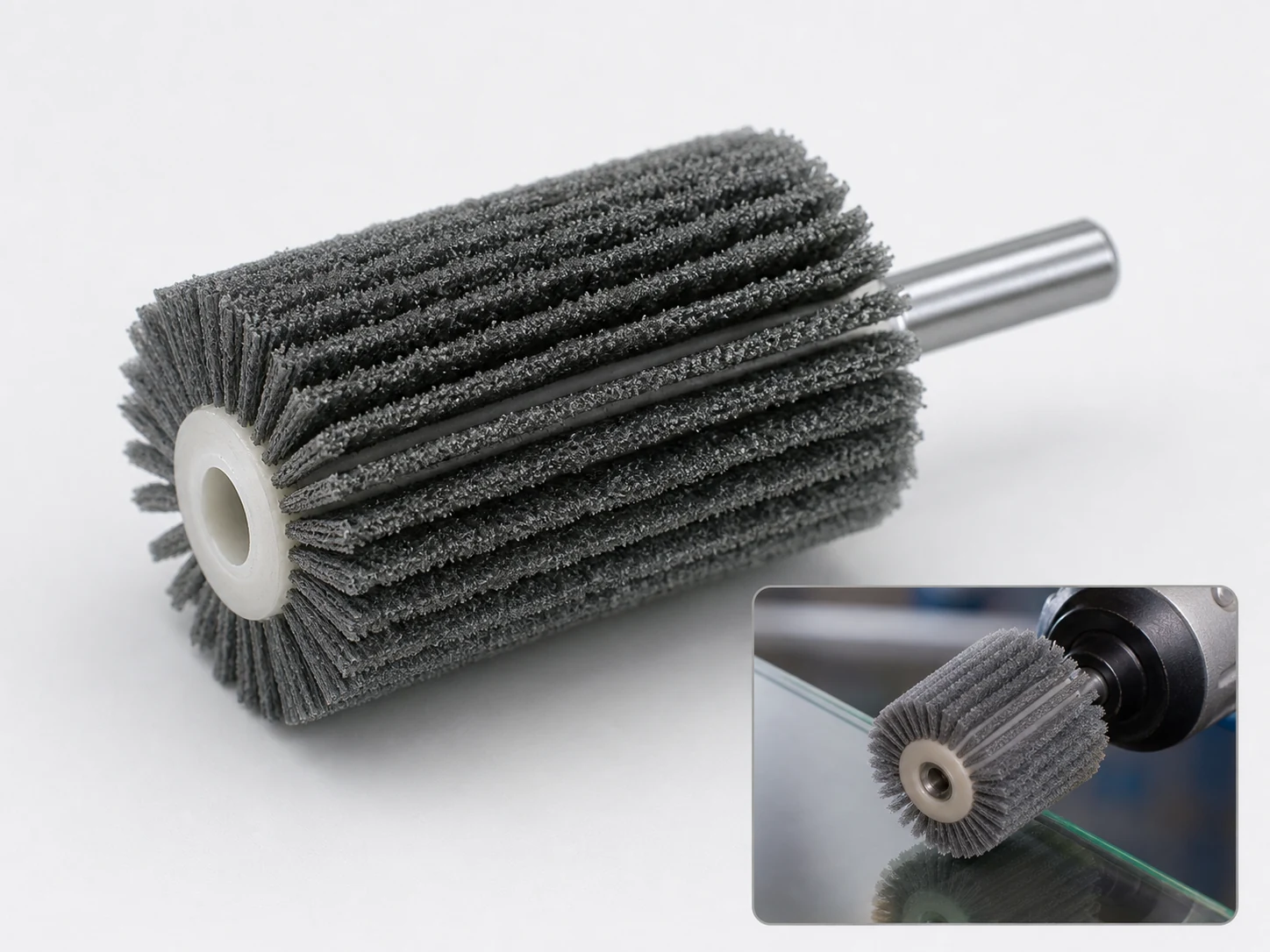
Machine-mounted abrasive nylon brush for glass frosting, edge deburring and residue removal. Silicon carbide filament in disc or roll form, grit 24#–320#.
Medium brush
100 pcs
Minimum order
Worked with two hands or on a pole: chimney, gutter and pond-filter brushes, discs, cups and tank brushes.
Production lead time, once the specification is confirmed
- Up to 100 pcsWithin 7 days
- 101–5,000 pcsWithin 14 days
- 5,001–50,000 pcsWithin 21 days
- Over 50,000 pcsConfirmed with your quotation
Peak season can extend these times; the shipping date is confirmed in writing with your quotation. Sampling and shipping are quoted separately.
A machine-mounted abrasive nylon brush for glass frosting, edge deburring, and residue removal on flat sheet, cut edges, and formed profiles. Silicon carbide–loaded filaments remove glass dust, grinding marks, polishing compound, and light surface contamination while conforming to chamfers and bevels.
What can this brush do for you?
Produces uniform frosted and matte finishes
The silicon carbide particles embedded in every nylon filament work across the full brush face, not just at a hard-wheel contact line. Grit selection from 24# to 320# controls the level of surface dulling, so a 120# brush leaves a different finish than a 240# brush on the same glass. This makes repeatable matte and satin finishes possible across production runs.
Removes sharp edges without creating new chips
After scoring, cutting, or pencil-edge grinding, glass carries micro-fractures and sharp corners. The flexible abrasive filaments cut into the edge with light, distributed pressure instead of the concentrated impact of a hard wheel, so burrs and sharpness are removed while the risk of chipping or edge damage stays low. This step matters before tempering, laminating, or edge seaming.
Clears dust and polishing compound between process steps
Glass dust, cerium oxide, slurry, and adhesive film left on the surface can interfere with coating, printing, or lamination. The brush face scrubs the panel and releases the debris into the wash or exhaust stream. Wet operation helps carry away the removed material and keeps filament tips freer of loaded glass fines.
Reaches bevels, chamfers, and radiused edges
Straight rigid wheels only contact the tangent point. Nylon filaments flex and work into angled edge profiles and radiused transitions, so the brush covers more of the contour without requiring a perfectly matched wheel profile for every glass shape.
Leaves no wire debris or metallic smear on the glass
Because the cutting particles are locked inside nylon monofilament, there are no loose steel bristles to break off and embed in the surface. This is important for glass that will later receive coatings, lamination, or visual inspection under light.
Disc or roll construction for existing glass machinery
Choose a disc brush for spindle-driven flat-surface and edge stations, or a roll brush for wide conveyors and roller-fed finishing lines. Outer diameter, face width, bore, and core are built to the machine, so the brush drops into the existing holder without adapter guesswork.
What is an Abrasive Brush Glass?
An Abrasive Brush Glass is an abrasive-filled filament brush designed for machine use on glass surfaces. Unlike a conventional cleaning brush, the working element is not plain bristle; it is nylon monofilament loaded with silicon carbide, so every filament is a small abrasive carrier. The brush can be configured as a disc that mounts on a rotating spindle or as a roll that fits a conveyorized brushing station.
In operation, the brush rotates at controlled speed while glass panels or edges pass under or into the brush face. Flexing of the nylon filaments controls contact pressure: each filament tip deflects as it touches the surface, spreading the abrasive action across many small points instead of one hard contact line. The result is surface frosting, edge conditioning, or residue removal that responds to brush speed, feed rate, and filament stiffness.
For glass work, silicon carbide is the standard abrasive fill because it cuts glass cleanly without transferring metal. Finer grits produce a more even matte or satin finish and gentler edge work; coarser grits remove more material per pass but leave a rougher surface. Wet operation is common for glass processing because it cools the filaments, controls airborne glass dust, and washes abrasive residue out of the brush face.
This brush is not a replacement for a hard diamond cup wheel or a precision lapping process. It is the conditioning step: removing the last sharpness, blending the cut or ground surface, and cleaning residue before the next production stage.
Technical Specifications
| Parameter | Value / Options |
|---|---|
| Brush form | Disc brush or roll brush, selected from the machine geometry |
| Abrasive fill (standard) | Silicon carbide (SiC) loaded in nylon monofilament |
| Grit size | 24#–320#; finer grits available for low-impact finishing |
| Filament diameter | 0.4–1.2 mm, matched to grit and required stiffness |
| Disc brush dimensions | Outer diameter, face width, and bore/hub built to spindle; common OD 100–350 mm, face width 20–100 mm |
| Roll brush dimensions | Outer diameter, working width, and core built to roller; common OD 80–250 mm, core 50–150 mm |
| Recommended operating speed | 3,500–4,500 rpm for disc brushes when diameter permits; roll speeds set by surface feet per minute |
| Wet / dry operation | Suitable for wet or dry glass processing; wet use recommended for dust control and filament life |
| Debris handled | Glass dust, abrasive slurry, polishing compound, grinding residue, and light surface contamination |
| Mounting | Keyed hub, flange, collet, or roll arbor as specified by the machine |
| Brush type | Custom Handheld Detail Brushes |
| How it is driven | Hand-guided |
| Cleaning target | flat glass processing line, glass edge seaming and deburring, and display glass cleaning |
| Surface or part | glass, edges, panels, profiles, fixtures, sheets, metal, and flat glass |
| Residue or debris | dust, oxide, polishing compound, glass fines, surface contamination, slurry, polishing residue, and haze |
| Mounting / connection | Keyed hub, flange, collet, or roll arbor as specified by the machine |
Critical dimensions are never assumed. Provide the machine drawing, spindle or arbor details, and line speed so OD, face width, bore, core, and mounting pattern are produced to the equipment.
Where does this brush work best?
- Flat glass processing lines where panels need a consistent frosted or matte face before washing, coating, or lamination.
- Glass edge seaming and deburring after cutting or straight-line edging, including flat edge, pencil edge, and chamfer profiles.
- Display glass, partition panels, backsplashes, and decorative glass where edge sharpness and surface haze must be controlled without changing overall flatness.
- Between grinding and coating steps, where cerium oxide slurry, glass fines, and polishing residue would otherwise contaminate the next process.
- Mixed panel sizes on conveyorized systems, where a roll brush covers the full width and adjusts to small thickness variations without fixture changes.
How do I choose the right one?
Start with the brush form. If the machine already uses a disc brush on a spindle, specify a disc. If the line uses a roller across a conveyor width, specify a roll. Do not convert from one to the other without checking shaft speed and available clearance.
Set the grit for the job:
| Job | Starting grit range | Expected result |
|---|---|---|
| Aggressive frosting or stock removal | 24#–60# | Faster material reduction, visibly rougher matte surface |
| Standard frosting and edge deburring | 80#–180# | Balanced removal with moderate surface smoothness |
| Final blending and residue cleaning | 180#–320# | Light abrasive action, even satin finish, low edge impact |
Use finer grits when the surface must remain smooth or when coatings will be applied. Use coarser grits only when subsequent polishing will remove the deeper scratch pattern.
Match filament diameter to the contour. Thinner filaments (0.4–0.6 mm) deflect more easily and work gentler on bevels and radiused edges; thicker filaments (0.8–1.2 mm) resist collapse on flat surfaces and last longer in continuous high-load service. If the edge has small internal radii, choose the thinner filament even at the same grit.
Decide wet or dry before ordering. Wet brushing cools the nylon and carries glass dust out; dry brushing usually requires dust extraction and reduces filament life. If the line is dry today, check whether the spindle and surrounding automation are sealed for dust before simply specifying a dry-rated brush.
When the standard silicon carbide fill is not enough, diamond-loaded nylon gives longer life on high-volume glass or hard ceramic surfaces, while aluminum oxide and ceramic fills work better when glass is processed together with metal frames or fixtures. The fill should match the material actually under the brush, not the name of the line.
Use a different tool when:
- The task is precise optical polishing or sub-micron surface quality. An abrasive nylon brush conditions and blends; it does not replace felt or resin-bond diamond polishing.
- The glass is already tempered. Heavy abrasive action on tempered glass can remove the compressive surface layer and cause unpredictable breakage. Use only light residue cleaning or switch to an earlier process step.
- The target is corrosion or mill scale on metal. A wire brush or aluminum oxide abrasive brush designed for metal will be more effective.
- The surface is contoured too tightly for a disc or roll face to enter. In that case, a formed brush, cup brush, or abrasive point can reach the internal geometry.
Can I customize this brush?
Every glass line has its own spindle, arbor, panel width, and line speed, so abrasive brushes for glass are almost always dimensioned to the equipment. Provide the machine drawing or an existing brush sample, plus the glass thickness, edge shape, target finish, and wet/dry condition. We will build to those inputs.
- Brush form and orientation — disc, roll, or special face layout for edge-only stations
- Abrasive fill — silicon carbide, diamond, aluminum oxide, ceramic, or grit blend
- Grit size and filament diameter — selected for finish and contour
- Disc dimensions — outer diameter, face width, bore/hub, keyway, flange thickness
- Roll dimensions — outer diameter, working width, core construction, journal ends
- Density and trim pattern — filament rows, face fill density, angled or straight trim
- Mounting interface — keyed hub, collet, clamp flange, or roll arbor
- Color, marking, packaging — custom color, process tags, bulk or line-side packaging
Project-specific documentation, material declarations, inspection records, and third-party testing support can be arranged when the customer’s process requires them. Include that requirement in the specification stage, not after the brush is built.
Which filament survives the cleaning and still lasts on an abrasive brush glass?
How do I know if the abrasive brush is loading and when to replace it?
If the face begins to look glazed, the brush vibrates, or the finish time per panel increases, the filament tips may be loaded with glass fines or worn too short. Wet operation and periodic cleaning with a brush-cleaning stick help remove loading. When filaments lose more than about 25–30% of original trim length or the edge quality becomes inconsistent, replace the brush.
Can I use the same brush for flat glass and edge work?
Only if the face width and filament trim allow the brush to work both zones without excessive pressure. Many glass lines use separate disc or roll configurations because flat surface conditioning and edge deburring need different grits, densities, and contact angles. Running one brush for both jobs usually compromises one of the two finishes.
Does brushing replace washing or polishing?
No. The brush loosens and removes residue mechanically, but loosened glass dust and slurry still need to be rinsed or extracted. If the glass requires optical clarity or a polished edge, brushing is an intermediate step before felt or diamond polishing, not the final step.
What should I check before installing a new brush on the glass line?
Verify the bore or core fits the spindle exactly, the maximum rated speed is not exceeded, no broken filaments are present, and the face is centered. Re-check guard clearances and dust extraction or coolant flow before starting the line.
Can this brush be used on tempered glass?
Only for light residue cleaning at low contact pressure. Tempered glass should not receive aggressive abrasive action, because removing surface material can weaken the compressive layer and cause delayed breakage. Any frosting or edge conditioning must be performed before tempering.
What information should I provide when the brush size is not standard?
The spindle or arbor drawing, existing brush dimensions or sample, glass panel width and thickness, line speed, brush speed or surface feet per minute, desired finish, and wet/dry operation. With those inputs we can produce a brush that matches the machine instead of supplying a near-fit off-the-shelf size.
Guides that go deeper on this
We have not written a guide specific to this one yet. The material that covers selection, filament, dimensions, maintenance and sourcing is collected in the technical resources library.
RELATED BRUSH RESOURCES
Recommended Reading & Related Brush Resources
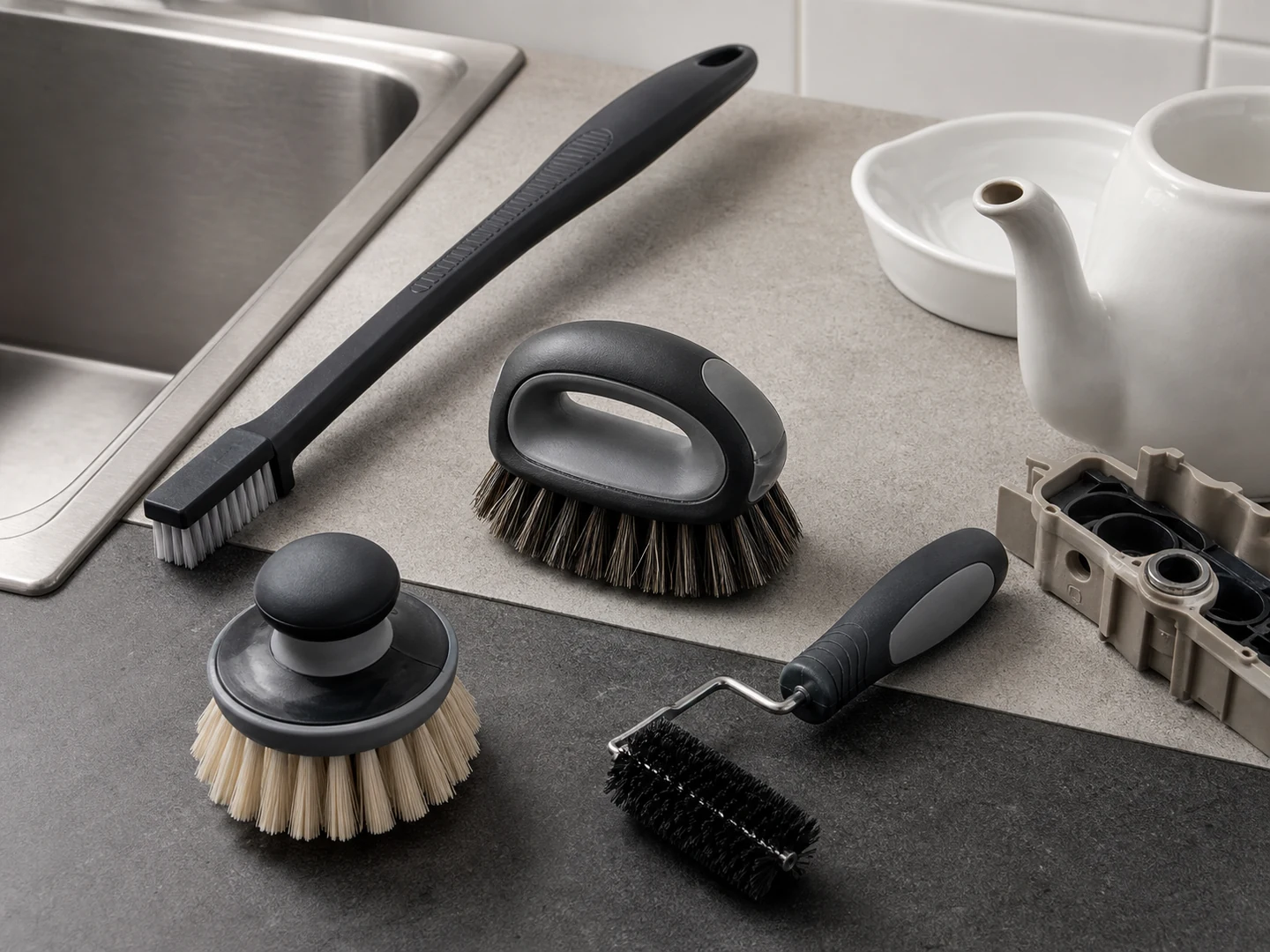
Custom Handheld Detail Brushes
Choose a handheld detail brush when you need direct control in seams, recesses, fittings,…
See how this type is built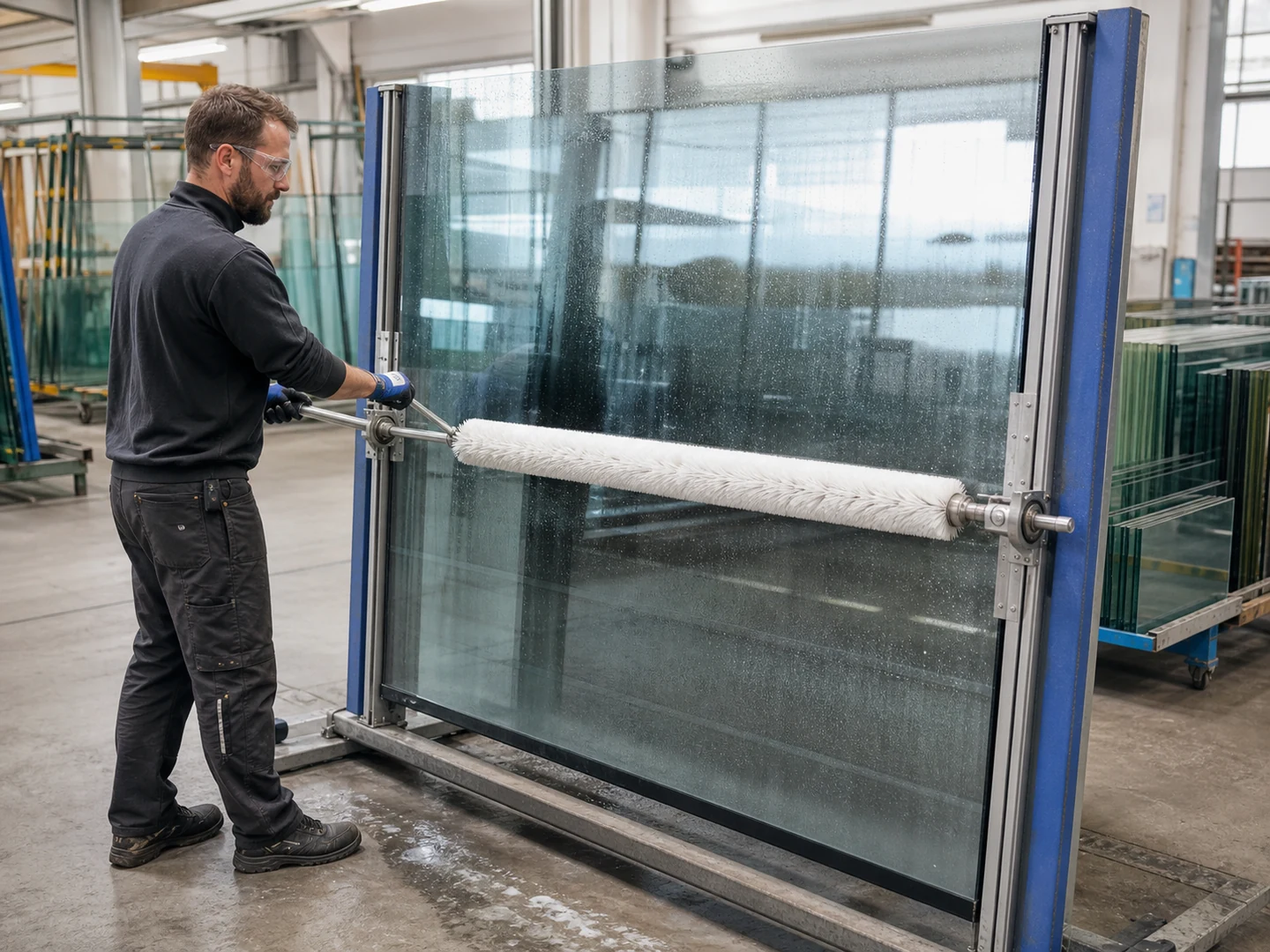
Glass Surface Cleaning
For Glass Surface Cleaning, the brush must reach the working area, disturb or collect…
See the cleaning job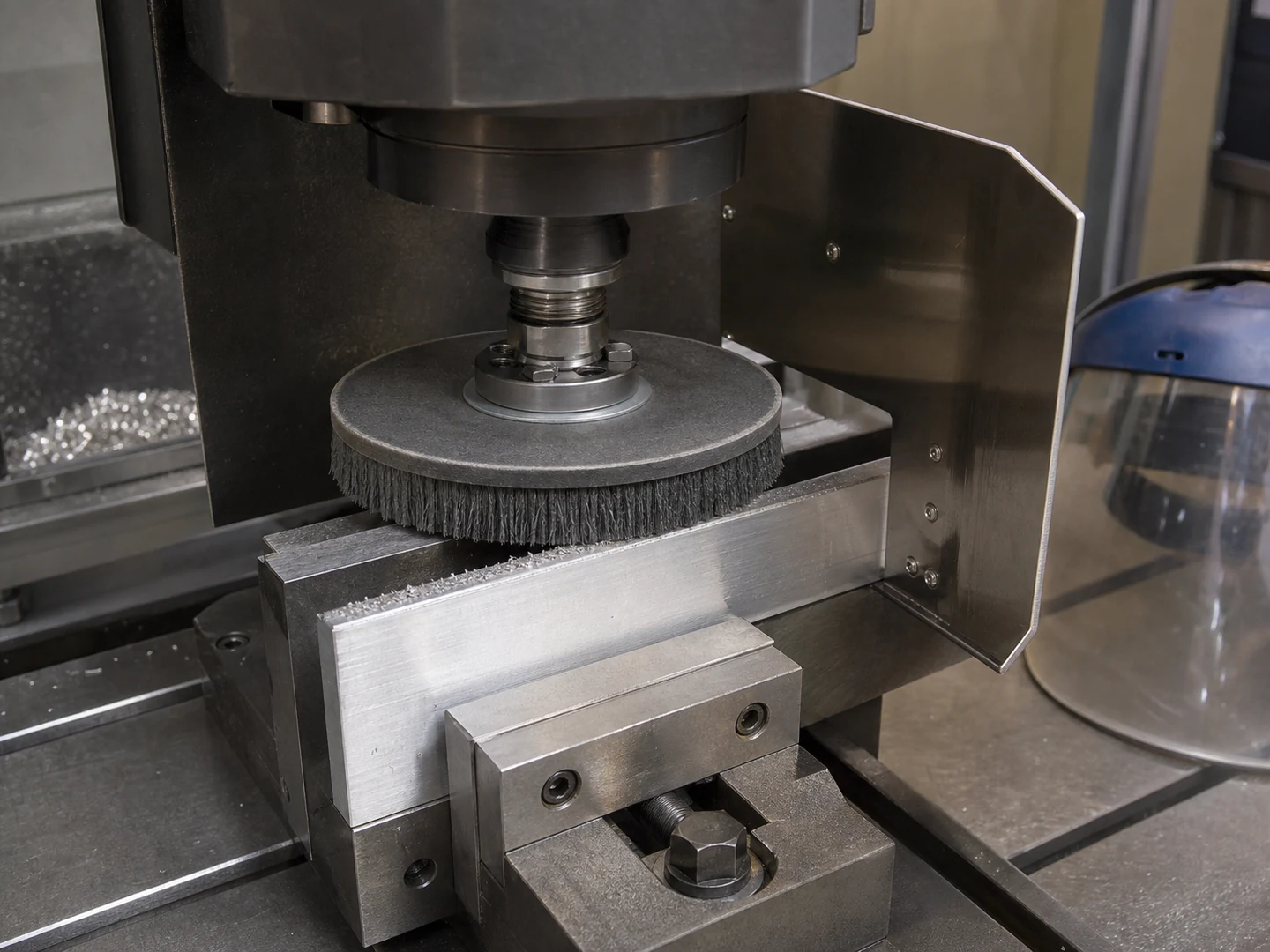
Deburring & Edge Breaking
Deburring & Edge Breaking is a process-use page rather than a general cleaning category.
See the cleaning job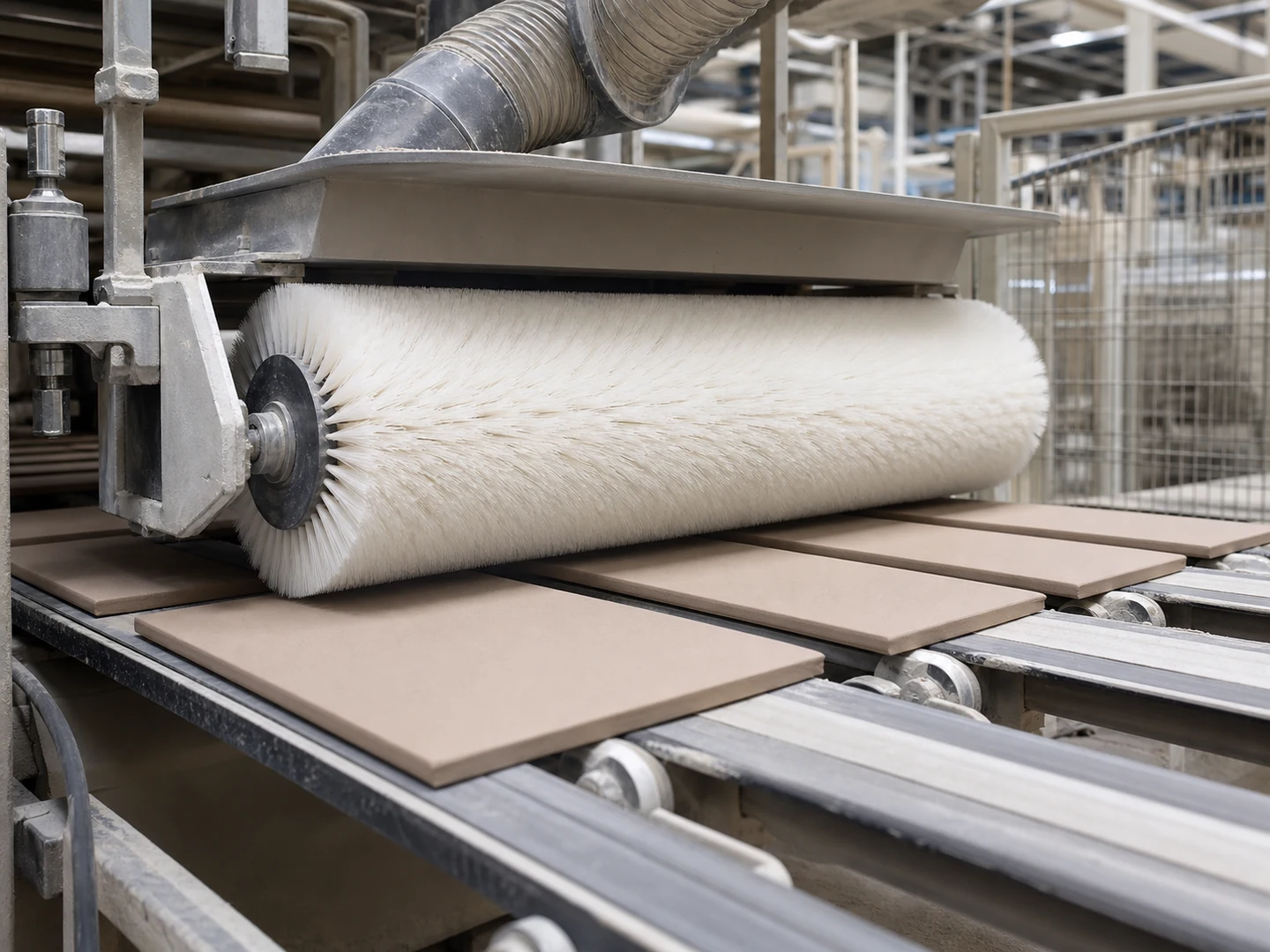
Ceramic Glaze Line & Tile Brush Use
Ceramic Glaze Line & Tile Brush Use is a process-use page rather than a…
See the cleaning job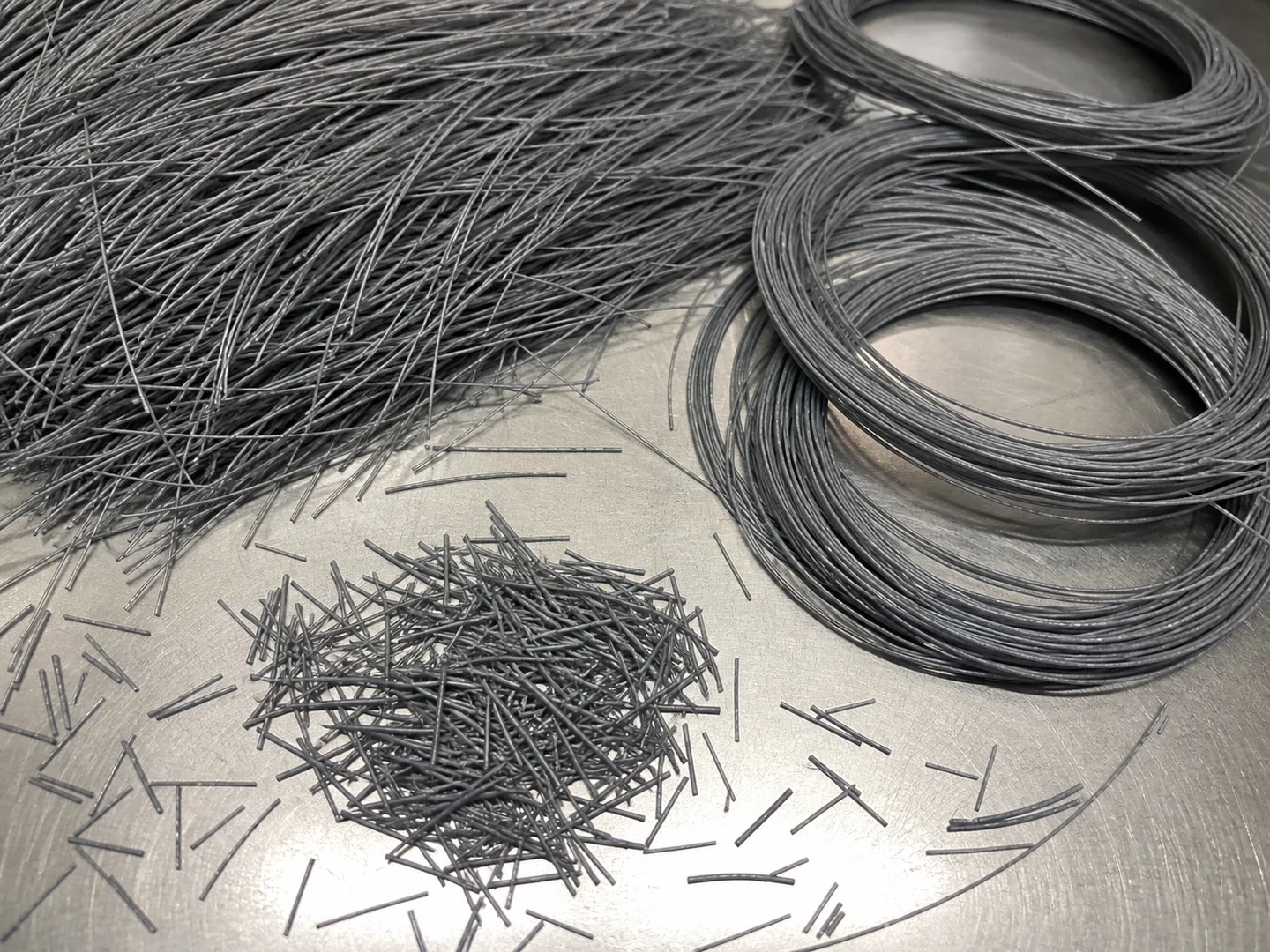
Abrasive Nylon
Choose Abrasive Nylon based on its stiffness, recovery, wear, wet-service, chemical, and temperature behavior.
Compare this material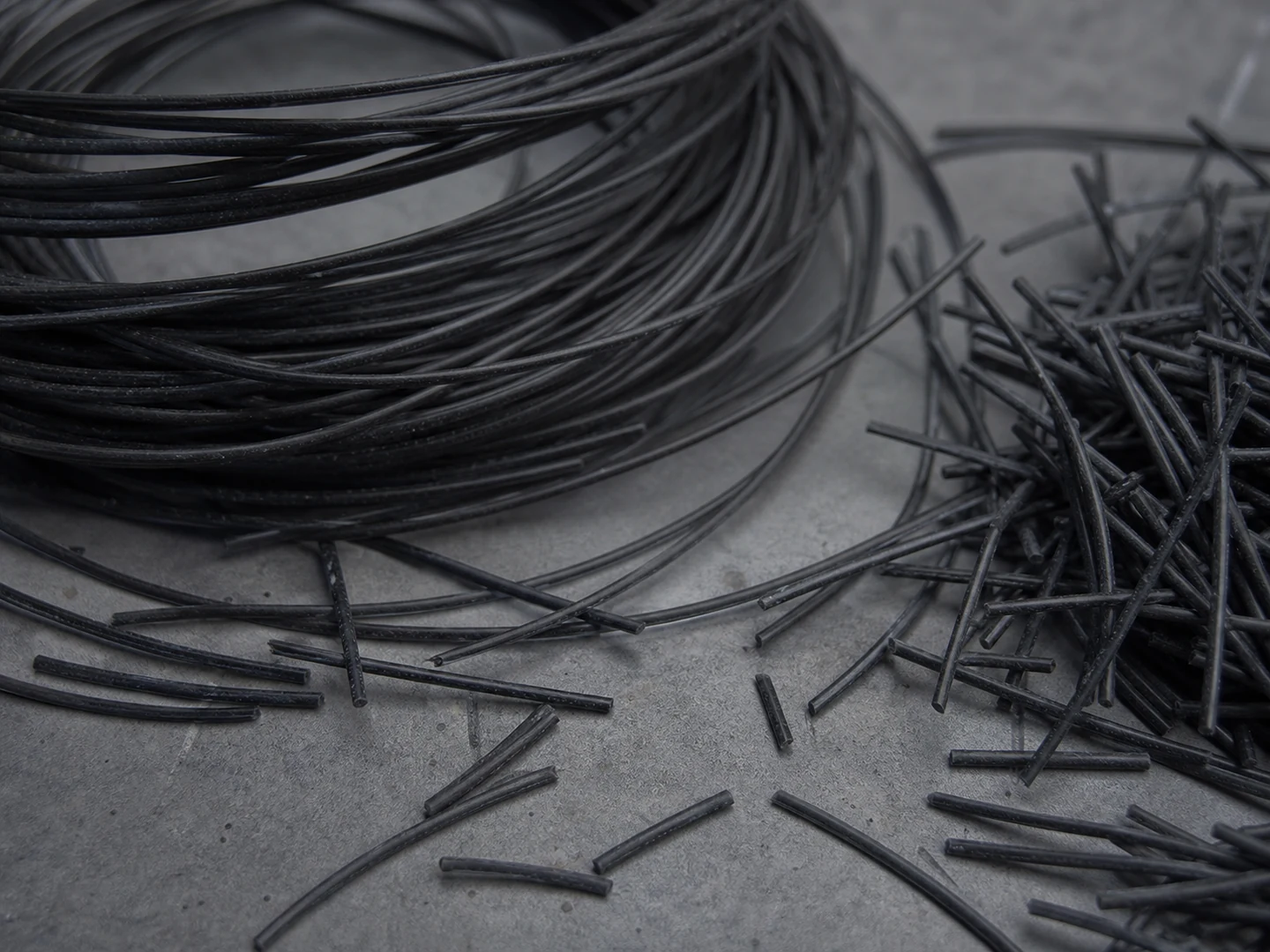
Silicon Carbide Abrasive Nylon
Choose Silicon Carbide Abrasive Nylon based on its stiffness, recovery, wear, wet-service, chemical, and…
Compare this material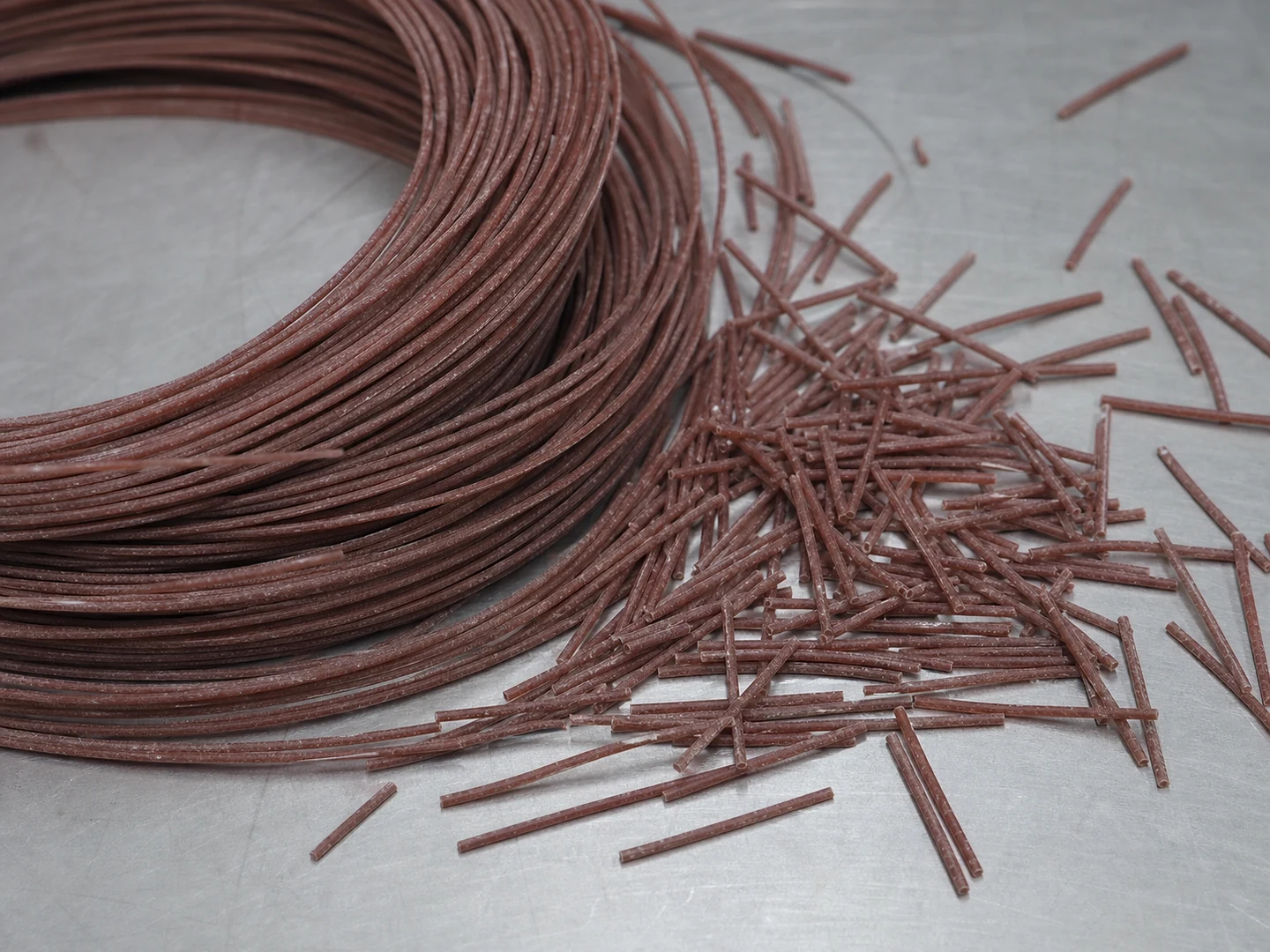
Aluminum Oxide Abrasive Nylon
Choose Aluminum Oxide Abrasive Nylon based on its stiffness, recovery, wear, wet-service, chemical, and…
Compare this material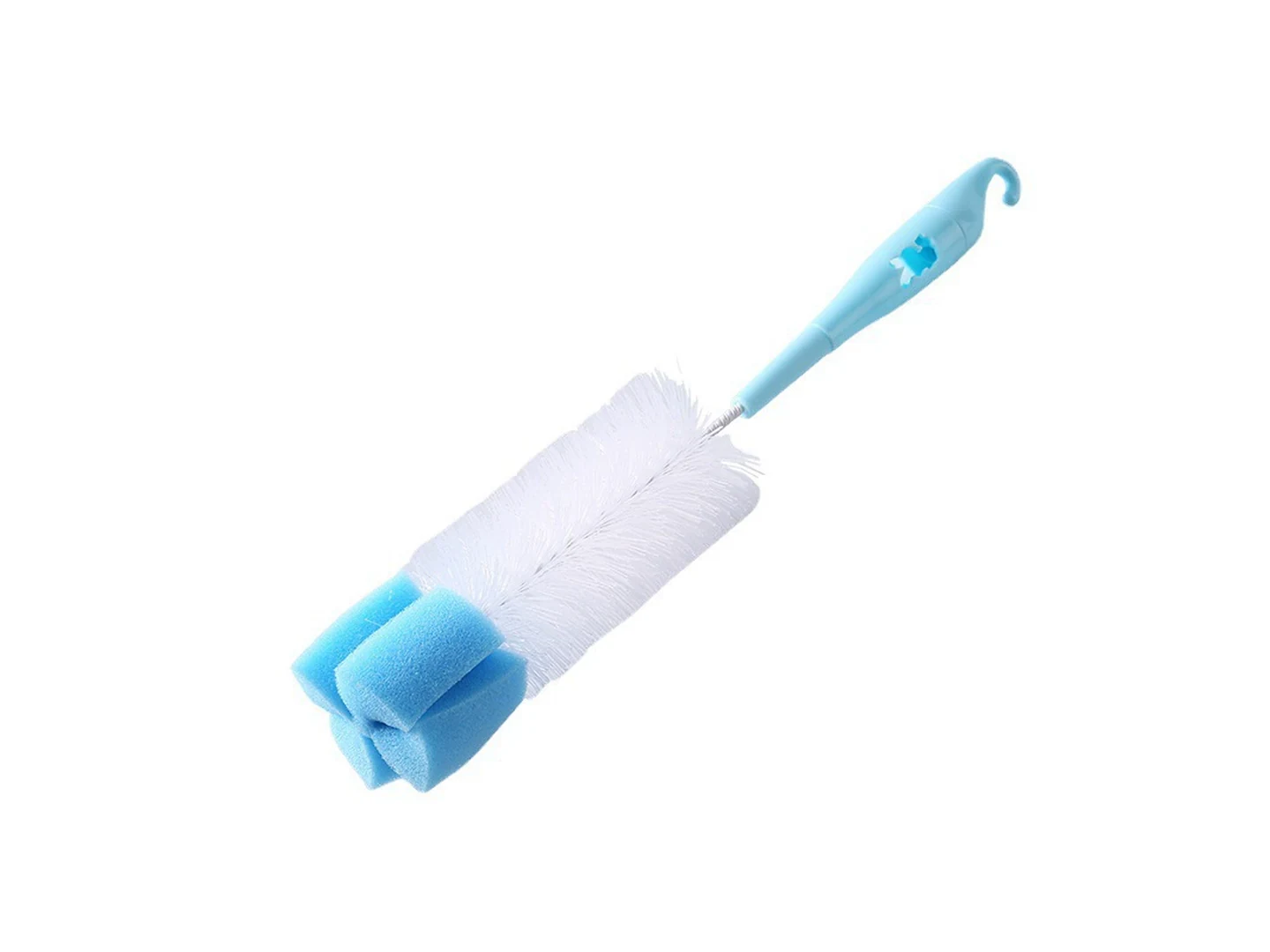
Glass Cup Cleaning Brush
Custom glass cup cleaning brushes with Nylon PA or Tampico fiber fill for cup…
Compare the specificationCustom Manufacturing RFQ
Describe Your Application
For a custom quote, we need the key dimensions, surface or part, residue, material preference, quantity, and reference image or drawing.
Drawing or photo optional — it speeds things up, it does not gate the enquiry.
Custom Brush RFQ
Send Your Brush Project
Upload a drawing, product photo, or sample photo and provide the core dimensions and cleaning conditions.
“We need a brush to remove wet residue from a stainless steel conveyor, about 800mm wide. The current brush wears quickly. We can send photos.”
“We sell drinkware and need a cleaning brush to include with the product. Quantity around 5,000 pieces.”