
Custom Cleaning Brush
Connector Cleaning Brush
Custom connector cleaning brushes engineered for electrical contacts, pins, sockets, and terminals.
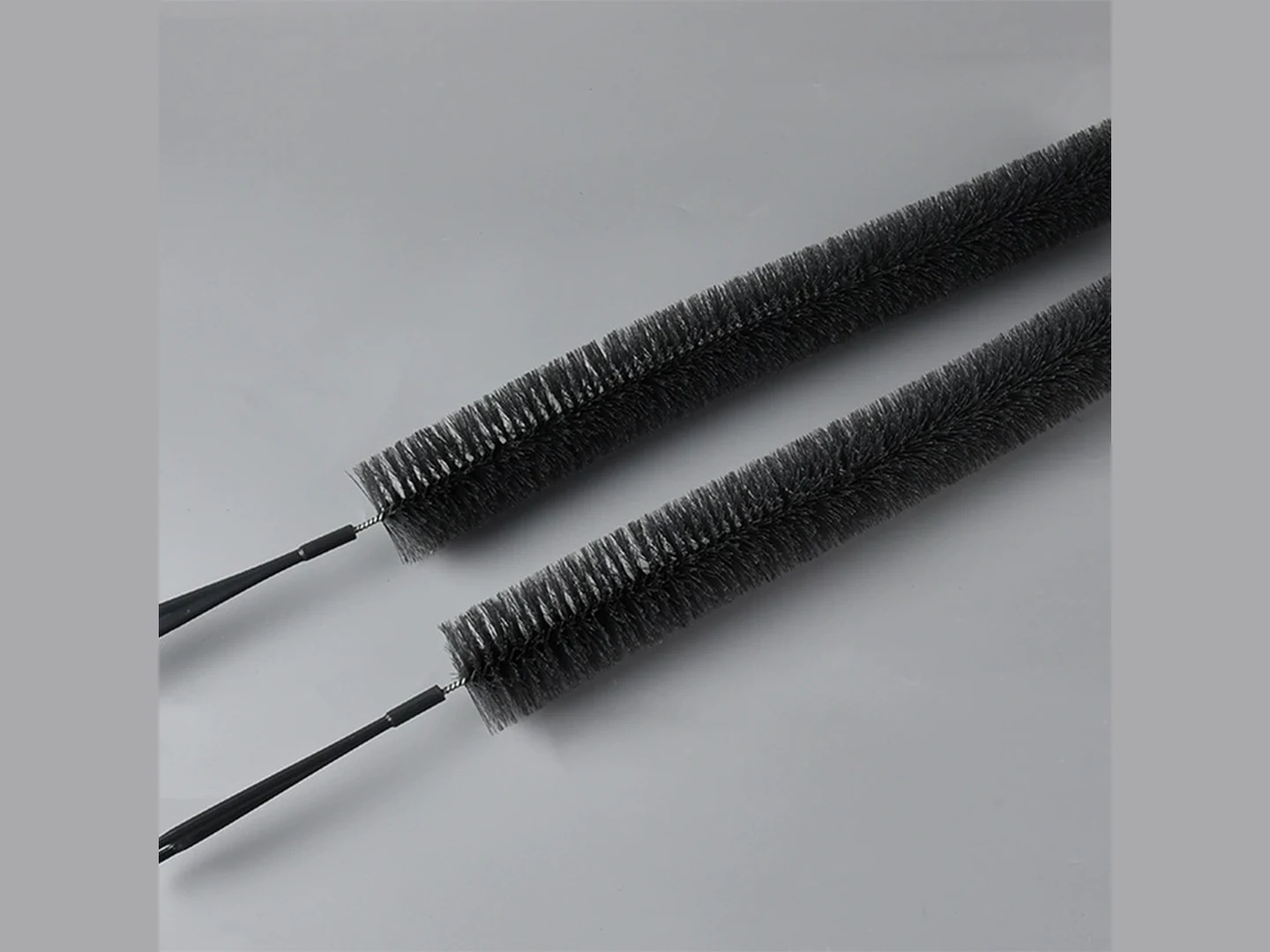
Small brush
500 pcs
Minimum order
Held in one hand: tube, bottle, detail and swab brushes — including long-handled ones with a small head.
Production lead time, once the specification is confirmed
- Up to 500 pcsWithin 7 days
- 501–50,000 pcsWithin 14 days
- Over 50,000 pcsWithin 21 days
Peak season can extend these times; the shipping date is confirmed in writing with your quotation. Sampling and shipping are quoted separately.
A hand-guided precision cleaning tool for electrical connector contacts, pin fields, sockets, terminal blocks, and mating surfaces. It clears dust, lint, oxide, and light flux residue from tight connector geometries without abrading gold or tin plating.
What can this brush do for you?
Reaches dense pin fields and recessed sockets
The working tip is formed around the target connector geometry, so the filament tuft can enter between closely spaced pins and down into socket cavities. Short, controlled trim makes sure the brush contacts the actual mating surfaces instead of bottoming out on the connector housing.
Removes contamination without leaving a new fiber trail
Fine-diameter horsehair and goat hair capture dust, lint, and loose oxide with minimal shedding, while densely packed nylon PA gives firmer wiping action for flux residue. A properly swaged or crimped ferrule keeps the working end together, so the brush does not deposit more particles than it clears.
Protects gold and tin contact plating
The filament ends are soft and rounded rather than abrasive, so sweeping the contact surface removes loose contamination without scratching or wearing thin plating. This matters on fine-pitch connectors where a scratched contact can change insertion force and long-term reliability.
Works dry or with standard connector cleaners
Depending on the contamination, the same brush can be used dry to lift dust and lint, or wetted with isopropyl alcohol, flux remover, or a specified contact cleaner for oxide and flux film. Filament, ferrule, and retention materials are selected for the actual cleaning method.
Adds static control without redesigning the work area
For static-sensitive assemblies, a dissipative handle and filament option reduces charge build-up during hand cleaning. Natural hair filament generates low charge in normal use, and the brush should still be used inside your established ESD-protected workflow, including grounded mats and wrist straps.
What is a Connector Cleaning Brush?
A Connector Cleaning Brush is a hand tool with three functional parts: a handle, a stem or ferrule, and a working filament tuft. The tuft may be round, flat, angled, pencil-point, stepped, or cavity-shaped, depending on the connector it must reach.
During use, the operator moves the brush across male pins or into the female socket with short strokes. The filament ends lift dust, lint, oxide particles, and light flux film from the contact surface while the shape of the tip controls how much contact pressure reaches each part of the connector.
It is a final-contact preparation and maintenance tool. It is used before connector mating, after soldering and rework, during field service, or before inspection and conformal coating. It removes loose contamination rather than correcting plating damage or clearing heavy corrosion.
Because connector geometry varies from one product line to the next, the brush is sized to the narrowest entry and the tightest pin pitch. This is not a general housekeeping brush; it is a precision tool whose tip, trim length, and filament are specified from the connector being cleaned.
Technical Specifications
Values below represent the standard engineering range for connector cleaning brush configurations. The final values are set from your connector sample or drawing.
| Parameter | Value / Options |
|---|---|
| Tip profile | Round, flat, angled, pencil-point, stepped, or cavity-matched to the target connector |
| Tip diameter / width | 1.5–15 mm typical; finer or larger profiles available |
| Filament trim length | 3–25 mm; shorter trim applies more contact pressure, longer trim reaches deeper |
| Filament material | Horsehair, goat hair, or nylon PA; static-dissipative nylon option |
| Filament diameter | 0.03–0.25 mm; finer for close-pitch pins, thicker for firmer wiping |
| Stem / ferrule | Nickel-plated brass, 304 stainless steel, or insulative polymer; swaged or crimped retention |
| Handle | Straight, pen-style, pocket-clip, or knurled; ESD-dissipative or insulative |
| Overall length | 100–250 mm standard; extended and angled reach versions available |
| Cleaning environment | Dry, IPA, flux removers, or specified contact cleaners; material set matched to the process |
| Brush type | Custom Handheld Detail Brushes |
| How it is driven | Hand-guided |
| Cleaning target | board-to-board and backplane connector, terminal block and relay socket, and post-solder and rework station cleaning |
| Surface or part | connectors, pins, terminals, housings, optical end faces, instruments, ports, and slots |
| Residue or debris | flux, dust, lint, oxide, flux residue, pitch, hair, and fiber |
| Mounting / connection | Shaft-Mounted / Flange |
All dimensional and material choices above can be fixed to the connector family you are cleaning.
Where does this brush work best?
- Board-to-board and backplane connectors — pin headers, sockets, card-edge slots, and high-density mezzanine connectors where dust or flux residue sits between pins and inside receptacles.
- I/O and circular connectors — USB, RJ45, D-sub, XLR, and industrial circular connectors with recessed sockets or tightly grouped pins that cloths and swabs cannot reach.
- Terminal blocks and relay sockets — screw, spring, and insulation-displacement contacts where lint or oxide on the clamping surface can raise contact resistance before wire termination.
- Post-solder and rework stations — lifting flux spatter and solder dust from connector bodies and contact zones before inspection, conformal coating, or final assembly.
- Fiber optic connector hardware — cleaning adapter sleeves, housing ports, and connector bodies. Polished optical end faces require a dedicated fiber-optic end-face cleaning tool, not a filament brush.
- Field service and maintenance kits — portable brush configurations for test instruments, industrial controls, and equipment where connector contamination is a recurring fault.
How do I choose the right one?
Start with the connector, not the brush. Measure the narrowest opening and the tightest row-to-row pin pitch. These set the maximum tip diameter and the filament diameter. A tip that is too large will jam or bend pins; a tip that is too small will remove contact area and increase cleaning time.
Match the working end to the contamination and the plating. Softer natural hair is the right choice for dust and lint on delicate platings, while nylon PA gives more scraping pressure for flux film or oxide on harder contact surfaces. The decision table below shows common starting points.
| Situation | Recommended configuration |
|---|---|
| Loose dust or lint in a dense SMT connector | Fine natural hair, round or pencil tip, light to medium density |
| Light oxide or flux residue on hard gold or nickel contacts | Nylon PA, shorter trim, flat or angled tip |
| Soft gold or tin-plated contacts that cannot be scratched | Goat hair or soft nylon, rounded filament ends |
| Deep recessed socket with limited access | Narrow tip diameter, extended angled stem, controlled trim length |
| Static-sensitive board or assembly | Dissipative handle and filament, ESD-safe packaging; use with grounded work surface |
| Wet cleaning with IPA or flux remover | Solvent-compatible filament, ferrule, and retention; confirm drying time before mating |
Do not use this brush as a substitute for rework or process cleaning when the connector has solder bridges, hardened conformal coating, heavy corrosion crust, or damaged plating. Those conditions need desoldering, ultrasonic cleaning, solvent treatment, or connector replacement before the contact surface is ready for brushing. Live, powered circuits must never be brushed.
Can I customize this brush?
Every connector family has its own pitch, depth, plating, and contamination profile, so the brush is configured project by project. Send the connector part number, a dimensioned drawing, or a physical sample; photos alone are usually not enough for fine-pitch work.
We can adjust:
- Tip geometry — tip diameter, profile, taper, step, angle, and cavity-fit shape from the target connector
- Filament — horsehair, goat hair, nylon PA, static-dissipative nylon, diameter, trim length, trim angle, and filament density
- Retention and stem — ferrule material, swaged or crimped retention, stem length, stem angle, and bent or extended reach
- Handle — pen-style, straight, pocket clip, knurled grip, ESD-dissipative or insulative material
- Identification — color coding, pad printing, laser marking, or molded identification for different line stations
- Packaging — bulk, individual ESD-safe bags, station kits, or project-specific packing
If your project needs material declarations, incoming inspection support, or third-party testing for a specific production requirement, we can assist with that during the configuration process.
Which filament survives the cleaning and still lasts on a connector cleaning brush?
Can I use the brush on a live or partially powered connector?
No. Always de-energize the equipment and verify the point of work before inserting the brush. Even a non-conductive or dissipative brush can push conductive debris across nearby contacts and create a short path.
How can I verify the brush will not damage fine-pitch pins before full production use?
Run the brush on a sacrificial or reject sample first. Inspect the connector under magnification before and after cleaning, and look for bent pins, plating scratches, or filament particles left in the cavities. If any appear, reduce tip interference or switch to a softer or finer filament combination.
Does brushing remove heavy oxidation from high-current contacts?
It removes loose oxide and dust, but it will not strip deep chemical oxidation from burned or heavily tarnished contact surfaces. Use the brush as part of the cleaning sequence with a suitable contact cleaner; if the base material or plating is already degraded, the contact should be replaced rather than brushed harder.
What shows that a connector cleaning brush should be replaced?
Check for matted or clumped filaments, visible fiber shedding, a loose or rotating ferrule, a deformed tip that no longer matches the connector profile, and any softening or discoloration after solvent exposure. Replace the brush when any of these conditions is present, not when a fixed calendar date passes.
Can this brush clean polished optical end faces?
No. Polished optical end faces need a dedicated fiber-optic end-face cleaning tool, wipe, or swab designed for optical surfaces and used with an inspection scope. This brush is appropriate for connector housings, adapter sleeves, and the area around the ferrule, not for the polished glass surface itself.
Do natural hair filaments prevent static damage on their own?
Natural hair generates relatively low charge in normal use, but that is not a static-control guarantee. For ESD-sensitive assemblies, select the dissipative handle and filament option and continue to work inside your existing ESD-protected area with grounded mats and wrist straps. The brush supports the workflow; it does not replace it.
Guides that go deeper on this
Connector Cleaning Brush Mistakes on Terminal Blocks
Read this guideGuideConnector Cleaning Brush vs Standard: Static-Sensitive Parts
Read this guideGuideConnector Cleaning Brush: Specs for Connector Contacts
Read this guideGuideFiber Optic Connector Brush on Terminal Blocks: What Fits?
Read this guideGuideFiber Optic Connector Brush: Material and Size for Contacts
Read this guideGuideFiber Optic Connector Brush: Which Fibre Won't Hold Charge?
Read this guideGuideHow to Choose Connector Cleaning Brush
Read this guideCustom Manufacturing RFQ
Describe Your Application
Send the key measurements, cleaning requirement, residue, material direction, mounting method, quantity, and drawing or photo.
Drawing or photo optional — it speeds things up, it does not gate the enquiry.
Custom Brush RFQ
Send Your Brush Project
Upload a drawing, product photo, or sample photo and provide the core dimensions and cleaning conditions.
“We need a brush to remove wet residue from a stainless steel conveyor, about 800mm wide. The current brush wears quickly. We can send photos.”
“We sell drinkware and need a cleaning brush to include with the product. Quantity around 5,000 pieces.”