What Is a Connector Cleaning Brush?
A connector cleaning brush is a specialized tool designed to remove dust, oxidation, oil, flux residue, or other contaminants from electrical, fiber optic, pneumatic, or multi-pin connectors without damaging the plating or dielectric surfaces. It typically features a compact head, precise bristle geometry, and materials chosen to avoid ESD buildup or chemical incompatibility with the target interface.
Unlike general-purpose brushes, connector cleaning brushes must match the connector’s pitch, cavity depth, and contact material. The wrong brush can bend pins, embed debris, or leave behind fibers that cause intermittent faults.
Common Types of Connector Cleaning Brushes
Brushes for connector cleaning vary by construction, bristle material, and mounting method. The table below summarizes the main categories.
| Type | Bristle Material Options | Typical Applications | Key Consideration |
|---|---|---|---|
| Pen/Pin Brush | Nylon, stainless steel, brass, horsehair | Pin sockets, female contacts, small-diameter ports | Must be size-matched to avoid bending pins |
| Swab Brush | Foam, microfiber, polyester knit | Ferrule end-faces, optical connectors, recessed contacts | Lint-free and static-dissipative for sensitive optics |
| Brush Card/Chip | Abrasive nylon, diamond particles | Edge connectors, card-edge slots, high-cycle cleaning | Abrasive grit must be finer than the contact plating thickness |
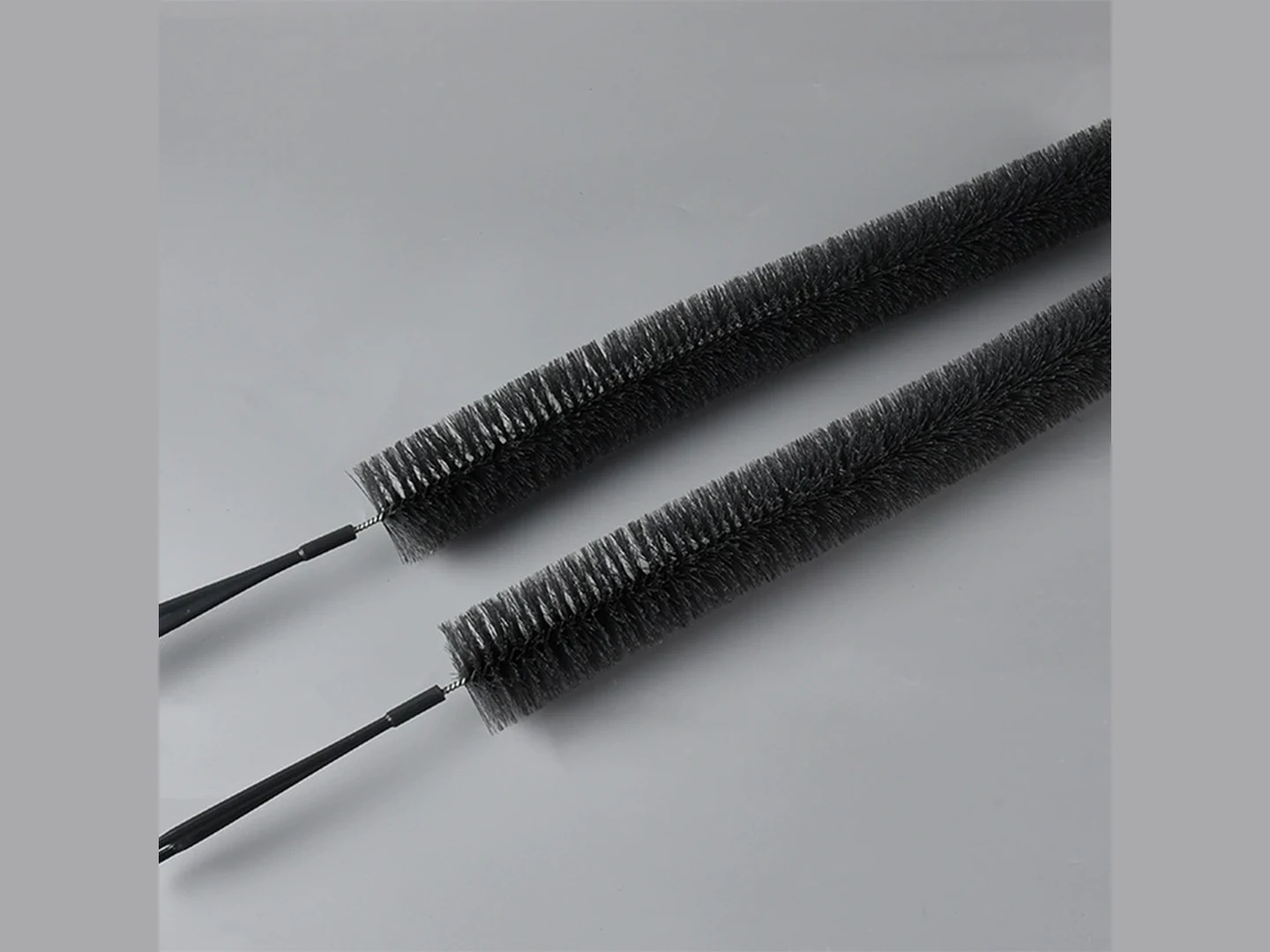
| Cylinder/Spiral Brush | Nylon, brass, stainless steel fill | Cylindrical connectors, threaded coupling interiors | Diameter and fill density control debris extraction |
| Cup Brush | Abrasive nylon, wire | Flat contact pads, ring terminals, ground blocks | Risk of rounding edges; use controlled-speed rotary tools |
| ESD-Safe Brush | Conductive nylon, carbon fiber, natural bristle | PCB edge connectors, static-sensitive circuits | Surface resistivity should be 10⁶–10⁹ Ω for safe static dissipation |
How to Choose the Right Connector Cleaning Brush
Rather than selecting a brush by name or cost, evaluate these five decision factors to match the tool to your specific connector cleaning task.
1. Equipment Interface and Contact Geometry
Measure or note the connector’s pitch, cavity depth, and pin diameter. A pen brush with a tip diameter 10–20% smaller than the socket ID is typical. For edge connectors, the brush card thickness must fit the slot without jamming. Custom-size brushes become a requirement when off-the-shelf sizes are unavailable or when miniature high-density connectors need cleaning without damage.
2. Contact Surface Material and Plating
Gold-plated contacts require soft, non-abrasive bristles such as horsehair, fine nylon, or microfiber. Tin- or nickel-plated contacts can tolerate mild abrasive nylon or brass provided the grit is compatible. Avoid steel wire on any precious-metal plating. Always confirm the brush will not scratch through the plating to the base metal.
3. Residue Type
Identify whether you are removing dry dust, light oxidation, flux residue, or heavy oil. Dry dust suits low-lint microfiber or foam. Oxidation may require mild abrasive nylon (e.g., aluminum oxide–filled bristles). Oily residues often need a solvent-compatible nylon core brush used with a cleaner. For combination residues, a two-step process with different brushes may be safer than an aggressive single tool.
4. Operating Environment
Cleanroom and fiber-optic environments demand lint-free, low-outgassing materials. Outdoor or field connectors exposed to mud and moisture might need chemically resistant synthetic bristles that can be flushed clean. ESD-sensitive areas require static-dissipative handles and bristles tested to relevant standards (e.g., ANSI/ESD S20.20).
5. Replacement Cycle and Total Cost
Consider the brush’s longevity under your usage frequency. Abrasive-impregnated brushes wear down predictably; when the bristle length shortens beyond the point of achieving full insertion depth, replacement is due. Disposable swabs may have a lower unit cost but generate more waste. Calculate cost per clean cycle rather than per brush unit.
Setup and Usage Factors
Connector cleaning brushes are used manually or with automated equipment. Hand-held brushes must have ergonomic handles for precision without fatigue. Rotary brushes used in cordless drivers require correct maximum RPM to prevent bristle flare. When cleaning multi-pin connectors, always clean from the back to the front to push debris away from the connector body. Dry cleaning is preferred; if a solvent is necessary, verify compatibility with connector housing materials.
Common Mistakes to Avoid
- Using a size that is too large – This can flare socket contacts or bend pins, creating permanent damage that requires connector replacement.
- Choosing steel wire for gold contacts – Even light pressure can scrub away thin gold flash, leading to corrosion and high contact resistance.
- Ignoring ESD requirements – A non-dissipative brush can transfer static charge directly into sensitive ICs, causing latent failures.
- Reusing disposable brushes beyond their life – A worn foam swab can shed particles or no longer clean the full depth of a ferrule, leaving behind contamination.
- Over-applying solvent – Excess isopropyl alcohol can wick into the connector body and damage adhesives or attract dust after drying.
When a Connector Cleaning Brush Is the Wrong Choice
Standard catalog brushes cover common MIL-DTL, USB, and RJ-type connectors, but they fall short for custom high-density grid arrays, underwater connectors with deep recesses, or connectors requiring simultaneous cleanroom compatibility and chemical resistance. In these cases, involving a brush manufacturer early with a dimensional drawing, connector sample, and cleaning requirement specification is the practical path. A custom brush design can precisely match cavity depth, bristle stiffness, and handle geometry to avoid the risks of improvising with off-the-shelf tools. Do not assume a generic “small brush” will work—when tolerances are under 0.5 mm, custom sizes prevent costly field failures.
Final Takeaway
Choosing a connector cleaning brush isn’t about picking the lowest-cost or most popular option. It’s about matching bristle material, tip geometry, and static-control properties to the specific connector you must maintain. Start by defining the interface dimensions, contact plating, and dominant contaminant. Then use the comparison table above to narrow options. Finally, test a candidate brush on a non-critical connector before implementing it in production or field maintenance. A well-matched brush preserves connector life and signal integrity far beyond its unit cost.
Frequently Asked Questions
What bristle material is safest for gold-plated connectors?
Soft materials such as horsehair, fine nylon, or microfiber. Avoid any metal or abrasive-filled bristles that can scratch the thin gold layer.
Can I use the same brush for 2.54 mm and 1.27 mm pitch connectors?
Rarely. The brush tip diameter should not exceed about 80% of the socket ID. A brush sized for 2.54 mm pitch will likely be too large for 1.27 mm, risking pin damage. Use separate brushes or an adjustable brush set if available.
How do I know if a brush is ESD-safe?
Look for a manufacturer’s surface-resistivity rating between 10⁶ and 10⁹ ohms (often tested per ASTM D257) or a stated compliance with ANSI/ESD S20.20. Conductive handles with a grounding path are also common.
Are foam swabs better than bristle brushes for fiber optic connectors?
For dry dust removal from ferrule end-faces, microfiber or polyester knit swabs are preferred because they leave no fibers. Foam can work if rated as lint-free and static-dissipative. Bristle brushes are generally avoided on bare glass fibers due to scratch risk.
How often should connector cleaning brushes be replaced?
Disposable swabs are single-use. Reusable brushes are replaced when bristles fray, bend permanently, or shorten to where full insertion depth is no longer reached. Visual inspection after each cleaning batch is a practical approach.
Can I clean a connector with just compressed air instead of a brush?
Compressed air can remove loose dust but not sticky residues, oxidation, or flux. It may also drive particles deeper into the connector. A brush designed for the connector type is typically required for thorough cleaning.
What should I provide to a manufacturer when requesting a custom connector cleaning brush?
A dimensional drawing of the connector cavity (preferably with tolerance), a sample connector for fit checks, details of contact plating and target contaminants, and any environmental requirements (ESD, temperature, chemical exposure).
Technical References
Which bristle material fits this job — Microfiber, Nylon PA or Abrasive Nylon?
| Material | Continuous temperature (°C) | Peak temperature (°C) | Water absorption | Hardness |
|---|---|---|---|---|
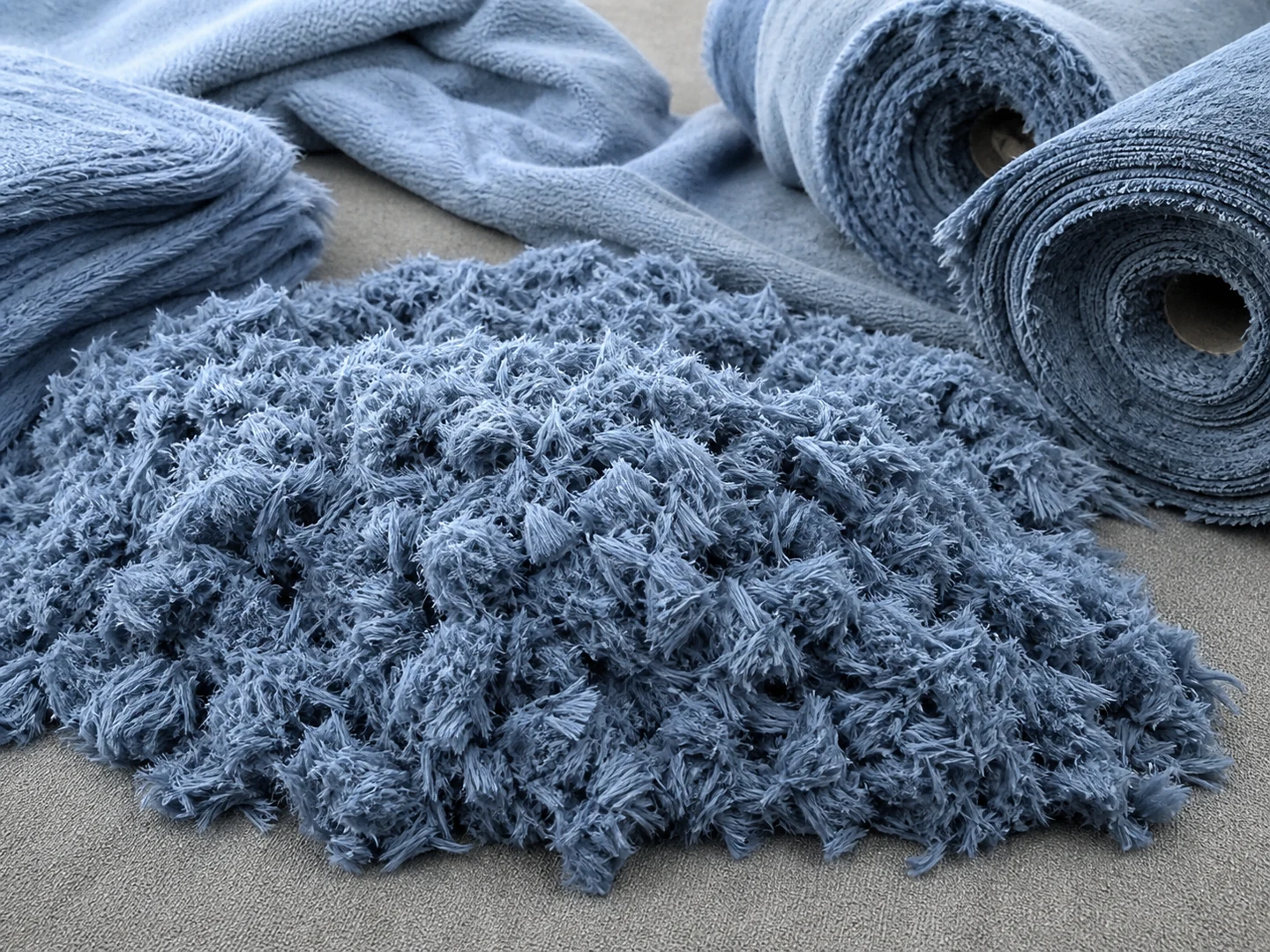
| Microfiber | 80–120 | 140–170 | 0.2–1.0%Material Itself ; Structure Can Absorb 3–7 Times Its Own Weight | — |
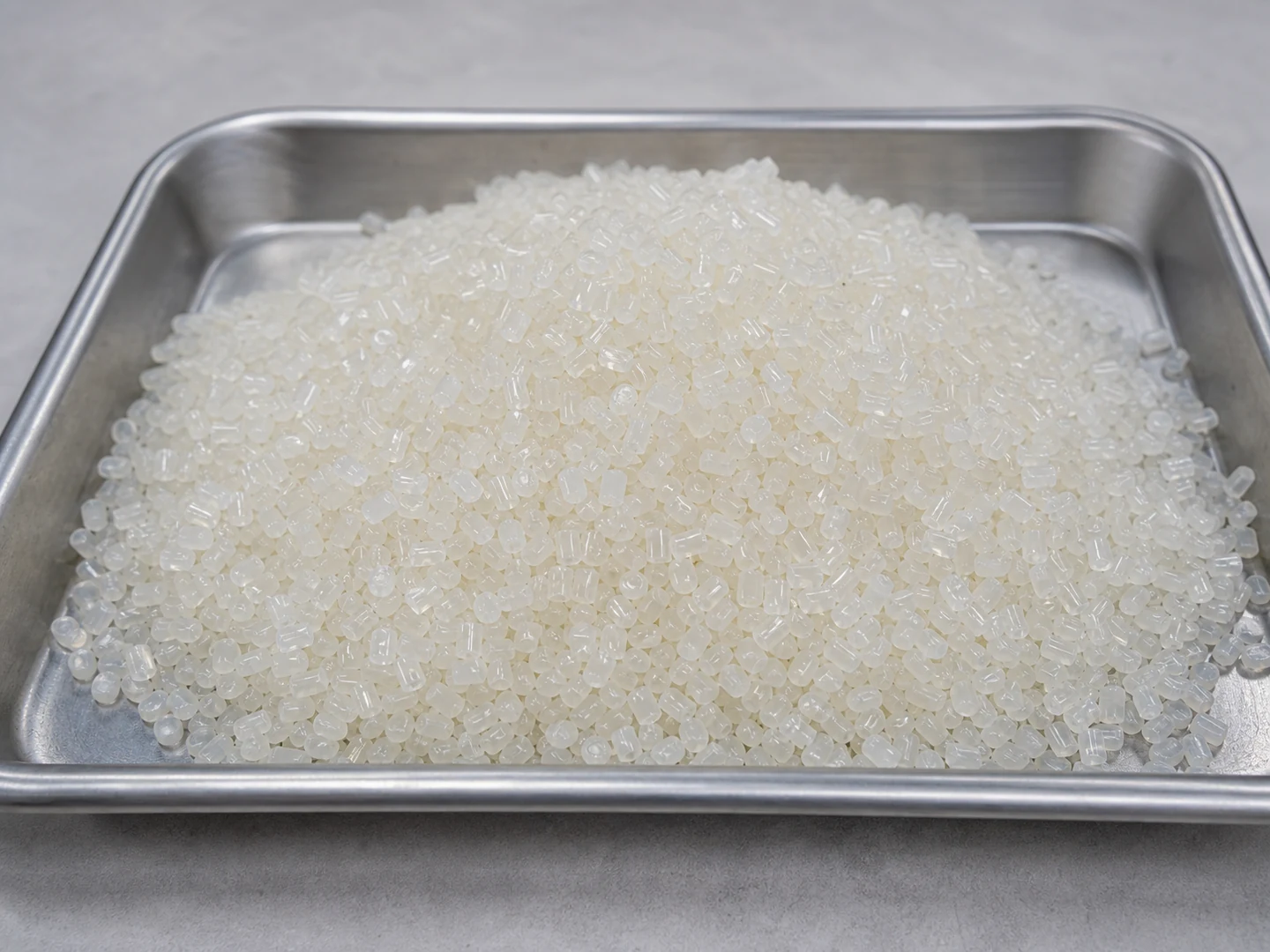
| Nylon PA | 93 | 121 | 0.3–9% by PA grade and conditioning | Medium to firm; filament diameter and trim length control bending force. |
| Abrasive Nylon | 120 | 150 | 0.1–1.0% | Abrasive filament; stiffness and cutting level is controlled by PA base, grit type, grit size, filament diameter and trim height. |
| Horsehair | 60–80 | 100–120 | 8–15% | — |
| Goat Hair | 50–70 | 90–110 | 12–20% | — |
Figures as published by Brushtec / DuPont; Perlon. Confirm the exact grade against the supplier datasheet before ordering.
What should replace Handheld Detail Brushes for connector cleaning brush?
- Handheld Detail Brushes — Handheld detail brushes cover general precision cleaning; auto-detailing brushes impose tighter controls for painted, polished, leather, display, and trim surfaces.
- Microfiber — Compare Microfiber with Cotton yarn, wool, felt, soft PBT filament. Change material when wet stiffness, temperature, chemical resistance, conductivity, particle shedding, or surface marking becomes the limiting factor.
- Nylon PA — Compare Nylon PA with PP, PBT, PET. Change material when wet stiffness, temperature, chemical resistance, conductivity, particle shedding, or surface marking becomes the limiting factor.
- Abrasive Nylon — Compare Abrasive Nylon with PP, PBT, PET. Change material when wet stiffness, temperature, chemical resistance, conductivity, particle shedding, or surface marking becomes the limiting factor.