What Is a Bakery Tray Cleaning Brush?
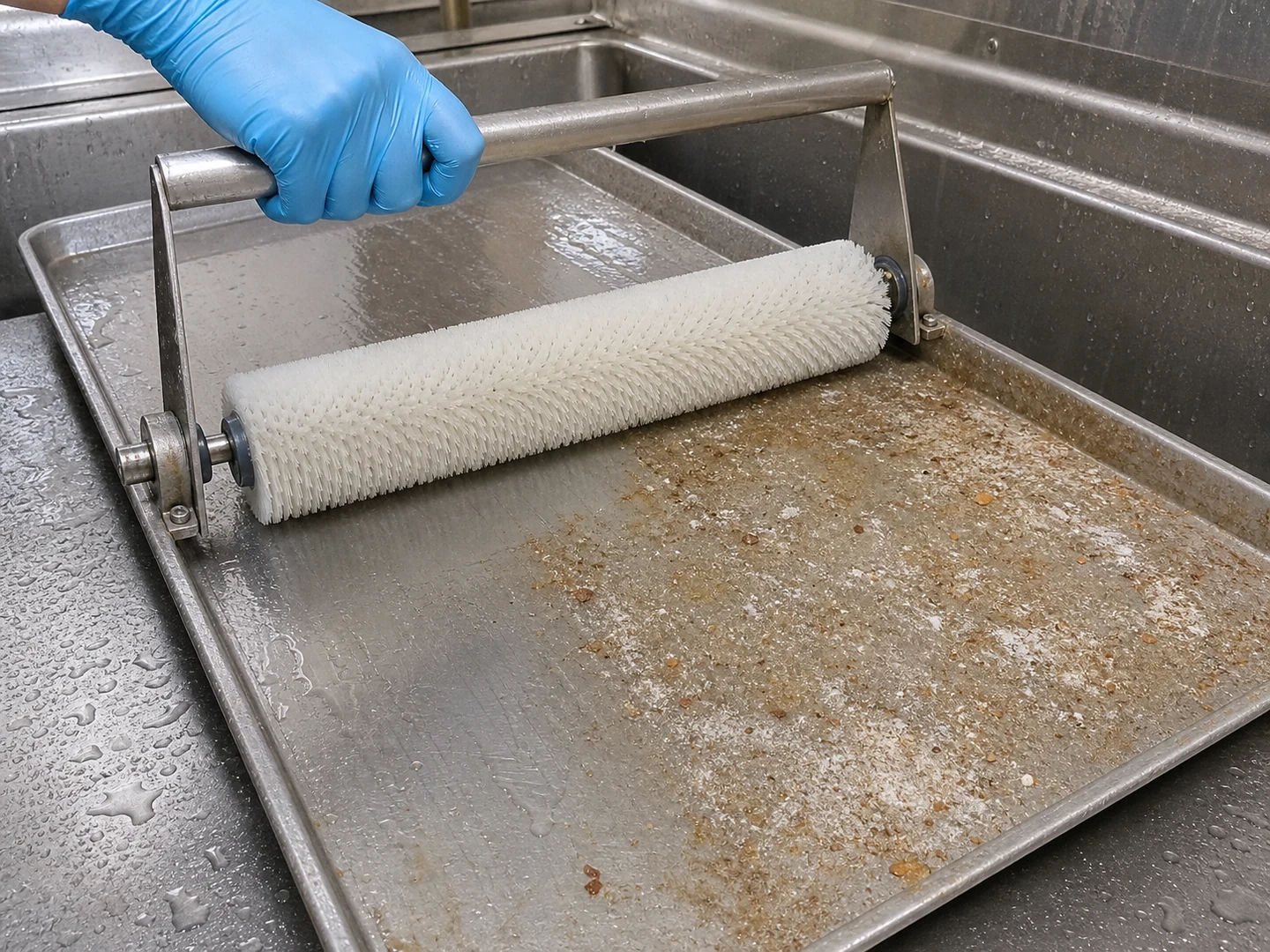
A bakery tray cleaning brush is a tool—typically integrated into automated washing or brushing stations—that uses mechanical action to clean bakery trays and conveying surfaces. It can be a cylindrical roller brush, a disc brush, a strip brush, or a cup brush, depending on the machine interface and cleaning pattern. These brushes are essential in high-volume operations where manual cleaning is impractical and consistent hygiene is critical.
Common Brush Types and Features
For food-manufacturing equipment and wet food zones, eCFR — 21 CFR Part 117 Human Food CGMP and Preventive Controls is the production-side CGMP and preventive-controls reference.
For the material or regulatory boundary in this section, the supporting reference is eCFR — 21 CFR 177.1500 Nylon Resins.
For the material or regulatory boundary in this section, the supporting reference is eCFR — 21 CFR 177.1520 Olefin Polymers.
For the material or regulatory boundary in this section, the supporting reference is eCFR — 21 CFR 177.1630 Polyethylene Phthalate Polymers.
For brush terminology and construction language, this section references American Brush Manufacturers Association — Brush Lingo.
Bakery tray cleaning brushes come in several configurations, each suited to different cleaning systems:
- Cylindrical roller brushes – rotate against the tray surface; suitable for flat trays and belt conveyors.
- Disc brushes – provide concentrated scrubbing on difficult spots; often used in robotic or multi-axis cleaners.
- Strip brushes – flexible strips that conform to irregular surfaces; useful for edges and corners.
- Cup brushes – small, aggressive brushes for spot cleaning or crumb removal in tight areas.
Each type can be constructed with various bristle materials, densities, and mounting hubs to fit specific machines.
Comparison of Bristle Materials and Brush Structures
Selecting the right combination of bristle material and brush form is the foundation of effective tray cleaning. The table below compares common options based on typical use, residue type, temperature resistance, and cost.
| Bristle Material / Structure | Typical Application | Residue Type | Temperature Tolerance | Cost Factor | Replacement Frequency |
|---|---|---|---|---|---|
| Nylon (standard) | General wet/dry cleaning | Light dough, crumbs, dust | Up to 200°F (93°C) | Low | Moderate |
| Polyester | Wash-down environments | Sticky dough, sugars | Up to 250°F (121°C) | Low–medium | High (absorbs less water) |
| Abrasive nylon (silicon carbide or aluminum oxide infused) | Heavy-duty scrubbing | Carbonized grease, baked-on starch | Up to 180°F (82°C) | Medium | Moderate |
| Natural fiber (tampico, union mix) | Manually assisted or low-speed machines | Delicate residues, dusting | Up to 170°F (77°C) | Medium | High (fibers break down faster) |
| Stainless steel wire | Stubborn carbon removal on metal trays | Heavy carbon, burnt oil | Up to 600°F (315°C) | High | Low (but may damage soft surfaces) |
| Strip brush (polypropylene or nylon) | Edge cleaning, seal gaps | Dough bits, sprinkles | Varies by plastic | Low | Moderate |
| Roller brush with segmented design | Large trays, replaceable core | Multiple residues | Varies | Medium–high (initially) | Segments can be replaced individually |
Note: Actual performance depends on bristle diameter, trim length, density, and operating speed. Always consult supplier data for chemical compatibility.
How to Choose the Right Brush for Your Bakery Line
To select a bakery tray cleaning brush, evaluate these five key factors:
- Equipment interface – Measure shaft diameter, length, drive type (keyway, setscrew, quick-release) and confirm the brush can be mounted securely. Incorrect fit leads to vibration, uneven wear, and possible machine damage.
- Contact surface – Flat trays need full-width roller brushes; mesh belts require brushes that can clean between wires without catching. Irregular shapes may benefit from disc or strip brushes.
- Residue type – Light crumbs need only soft bristles; baked-on grease or carbon demands abrasive nylon or wire. Always test a sample if unsure.
- Operating environment – Consider temperature, moisture, and chemical cleaners. Nylon absorbs water and may soften; polyester resists moisture better. Wire brushes should be dry unless stainless.
- Replacement cycle and maintenance – Frequent brush changes increase downtime. Segmented roller brushes allow partial replacement, reducing long-term cost. Check bristle wear regularly and keep spares on hand.
Setup and Usage Factors
Even the best brush fails if improperly installed or operated. Pay attention to:
- Brush rotation speed and pressure – Too fast or too much pressure accelerates wear and may warp trays. Follow machine manufacturer guidelines.
- Alignment and tracking – A misaligned brush cleans unevenly and can rub against side frames, causing damage.
- Cleaning medium – Wet systems require brushes that retain stiffness when saturated. Dry brushing may generate static; anti-static bristles are available.
- Brush storage – Store brushes away from direct sunlight and chemicals to prevent premature aging of bristles.
Common Mistakes When Selecting Bakery Tray Brushes
Avoid these frequent errors:
- Choosing by cost alone – A cheaper brush may wear out twice as fast, increasing downtime and labor.
- Ignoring chemical compatibility – Some cleaning solutions degrade certain plastics. Always verify with the brush supplier.
- Using overly aggressive bristles – Wire brushes on non-stick or soft-metal trays can destroy the coating, creating hygiene and sticking problems.
- Neglecting shaft fitment – A loose brush can spin on the shaft, reducing effectiveness and causing safety hazards.
- Assuming one brush fits all trays – Different tray sizes, shapes, and coatings may require different brush configurations within the same line.
When a Standard Brush Is Not Enough
Standard catalog brushes work for most bakery tray cleaning tasks, but certain situations demand a custom solution:
- Extremely irregular tray geometries (e.g., deep pockets, complex embossing) that cannot be cleaned by uniform roller brushes.
- Residues that are unusually sticky, abrasive, or chemically resistant, requiring a unique bristle blend or treatment.
- High-temperature zones above the limits of standard materials (e.g., near ovens).
- Machines with non-standard shaft sizes, keyways, or mounting patterns.
If repeated trials with standard brushes fail, request a custom design based on a sample tray and your operating data. A reputable supplier will help specify the right fill material, density, and pattern. This is a normal part of optimizing a production line and should not be skipped out of convenience.
Final Takeaway
Choosing the right bakery tray cleaning brush means balancing bristle material, brush type, fitment, and operating conditions against the specific residues and tray surfaces in your facility. Start by identifying the most demanding tray and residue combination, then select a brush that can handle it without damaging the tray or the machine. Keep a log of brush life and performance to refine your selection over time, and do not hesitate to move to a custom brush if standard options consistently fall short.
Practical Use Note
In daily use, the practical test is simple: check whether the brush reaches the full contact area, removes the target residue, and leaves the surface in the required condition. Record what changes when residue type, food-contact area, cleanability, storage, and cross-contamination risk changes, because many brush failures are caused by the working condition shifting rather than by the brush body alone.
Frequently Asked Questions
What bristle material is best for sticky dough residues?
Polyester or abrasive nylon often work well. Polyester resists moisture and stands up to sugars, while abrasive nylon can scrub off stubborn dough without excessive pressure. Always test a sample first.
Can I use a wire brush on non-stick coated trays?
Generally, no. Wire bristles will scratch and damage non-stick coatings, leading to food adhesion and corrosion. Use only soft nylon or natural fibers on coated trays.
How do I measure brush wear and know when to replace it?
Measure the bristle trim length from the hub outward. When bristles are worn to half their original length or cleaning performance declines noticeably, replace the brush or individual segments. Uneven wear can indicate misalignment or incorrect pressure.
What is the typical replacement interval for a bakery tray brush?
It varies widely based on usage, residue type, and bristle material. In a 24/7 high-volume line, a nylon roller brush might last a condition-based interval; abrasive types may need replacement frequent. Keep a simple tracking sheet to predict your own interval.
Can bakery tray brushes also clean conveyor belts?
Yes, but the brush type matters. Roller brushes can clean underneath flat belts, while special belt cleaning brushes with pattern configurations are used for mesh belts. Make sure the brush material is compatible with belt coating.
How do I clean the brush itself to prevent residue buildup?
In wet systems, a spray rinse during operation helps. For stubborn buildup, soak the brush in a compatible cleaning solution, then rinse with water. Avoid wire brushes where food debris can get trapped and harbor bacteria.
When should I consider a custom brush instead of an off-the-shelf one?
If you have unique tray shapes, extreme temperatures, or residues that standard brushes cannot handle, or if you need a non-standard shaft size or brush diameter, contact a brush manufacturer for a custom design. Providing a sample tray and your process data will help them create a suitable solution.