
Custom Cleaning Brush
Bucket Cleaning Brush
Wide-face filament brush for scrubbing bucket interiors, pails, and totes. PBT, PP, or nylon fills; 400–2000 mm reach; threaded or fixed handles.
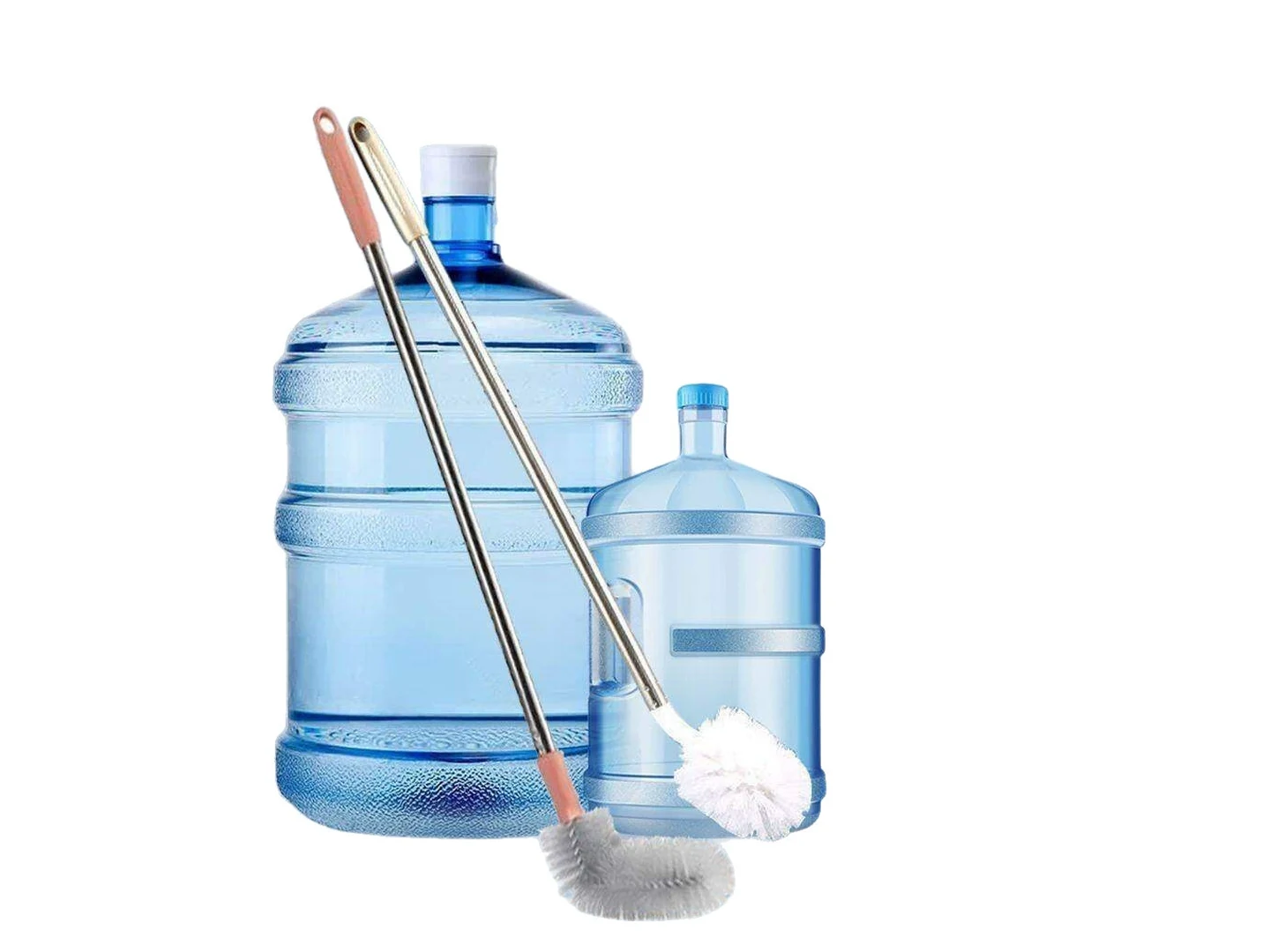
Medium brush
100 pcs
Minimum order
Worked with two hands or on a pole: chimney, gutter and pond-filter brushes, discs, cups and tank brushes.
Production lead time, once the specification is confirmed
- Up to 100 pcsWithin 7 days
- 101–5,000 pcsWithin 14 days
- 5,001–50,000 pcsWithin 21 days
- Over 50,000 pcsConfirmed with your quotation
Peak season can extend these times; the shipping date is confirmed in writing with your quotation. Sampling and shipping are quoted separately.
A wide-face filament brush for scrubbing interior sidewalls, bottoms, and corner fillets of open-top buckets, pails, and tubs — built with long reach and a choice of handle or threaded mounting so operators can clean without putting hands or arms inside the container.
What can this brush do for you?
Broad Head Covers a Large Section of the Wall with Each Stroke
The 130–250 mm wide working face and 170–300 mm long filament fill put a large contact area against the bucket wall on every pass. For a 5-gallon pail, mixing bucket, or utility tub, that means less up-and-down repositioning, shorter cleaning cycles, and fewer missed bands between strokes.
Long Reach Keeps Hands and Arms Out of the Bucket
Overall reach from 400 mm to 2000 mm lets the operator scrub the bottom and lower sidewall while standing upright. When the bucket has held paint, adhesive, chemicals, or perishable food product, the brush also keeps skin and clothing away from the cleaning solution and the remaining residue.
Filament Diameter and Material Set the Scrub Level
Filaments from 0.30 mm to 0.80 mm diameter in PBT, polypropylene, or nylon let you match the contact to the residue and the bucket surface. Thicker PBT cuts through dried latex and plaster film; polypropylene resists acid and alkali washdown chemicals; nylon gives softer, more compliant contact for light films and scratch-sensitive plastics.
Trim Length Controls Conformability and Reach into the Base Fillet
An exposed trim of 35–80 mm determines how far the filament tips reach into the rounded transition where the bucket sidewall meets the bottom. Longer trim follows contours and reaches under the rim ledge; shorter trim stays rigid for flat surfaces and stubborn deposits that need more direct pressure.
Threaded or Fixed Handle Fits the Cleaning Routine
Choose a fixed handle for a complete manual tool, or European thread, ACME, or M10 mounting so the same head can be used on an extension pole, a cleaning cart, or a wall bracket. Replacement heads can be swapped without discarding the handle.
What is a Bucket Cleaning Brush?
A Bucket Cleaning Brush is a hand-guided or mounted cleaning tool that uses a wide filament-filled head to scrub the inside of open-top containers such as buckets, pails, tubs, totes, and wide-mouth bins. The head is typically a molded polymer block with rows of PBT, polypropylene, or nylon filaments, connected to a fixed handle or a threaded hub for an extension or machine interface.
In use, the operator lowers the head into the bucket, presses the filament face against the wall, and works the brush up, down, and around the circumference. The brush removes liquid film, dried product, powder buildup, light biofilms, and odor-causing deposits before the bucket is rinsed and returned to service.
It is not a narrow-neck bottle brush, and it is not intended for very small passages, deep threaded ports, or surfaces that require a scraping or wire-abrasive action. The open geometry of a bucket determines the brush: head width, head length, trim length, and overall reach are all selected around the container size and the residue that needs to come off.
Technical Specifications
All dimensions are adjustable around the bucket diameter, depth, base shape, and residue type. Provide the container dimensions and a sample drawing or photo when available.
| Parameter | Value / Options |
|---|---|
| Head length | 170–300 mm, matched to bucket wall height and working pass |
| Head width | 130–250 mm, matched to bucket diameter and stroke coverage |
| Trim length | 35–80 mm, filament exposure beyond the block |
| Overall reach | 400–2000 mm, from handle end or mount to filament tips |
| Thread or handle | European thread, ACME, M10, or fixed handle; thread gender and pitch specified per order |
| Filament diameter | 0.30–0.80 mm |
| Fill materials | PBT, polypropylene PP, nylon PA; blends and colors available |
| Head / block material | PP, HDPE, or project-suitable polymer; stainless or brass insert where threaded mount is required |
| Filament pattern | Straight, crimped, or wavy fill, selected for stiffness and self-cleaning behavior |
| Face profile | Flat, radiused, or angled to suit sidewall and base transition |
| Operating environment | Aqueous, detergent, solvent, or sanitizing washdown; material grade selected for pH and temperature exposure |
| Brush type | Custom Handheld Detail Brushes |
| How it is driven | Hand-guided |
| Cleaning target | 5-gallon paint, food and beverage ingredient pail and mixing, and janitorial and utility bucket cleaning |
| Surface or part | containers, sidewalls, corners, walls, thread, hubs, plaster, and plastic |
| Residue or debris | biofilm, powder, adhesive, paint, grease film, batter, soap scum, and dough |
| Mounting / connection | European thread, ACME, M10, or fixed handle; thread gender and pitch specified per order |
Where does this brush work best?
- 5-gallon paint, adhesive, and mastic buckets where dried latex or product skin must be removed before reuse or recycling.
- Food and beverage ingredient pails and mixing buckets carrying batters, sauces, oils, powders, and syrups; the brush removes films and light biofilms.
- Janitorial and utility buckets with soap scum, hard-water film, and dirt rings at the waterline.
- Chemical storage and mixing buckets for powders, suspensions, and odorous residues that need a stiff, chemical-resistant filament.
- Open-top intermediate bulk containers and small process totes with wide access; the long reach lets one operator scrub from the top opening.
- Commercial kitchen and bakery buckets where grease film and stuck dough or batter require regular washdown.
How do I choose the right one?
Work through the sizing before you choose a filament, because the geometry of the bucket decides whether the brush can actually reach the areas that need cleaning.
Start with bucket geometry. Measure the internal opening diameter, sidewall depth, and bottom fillet radius. The head width should enter the opening cleanly and cover a practical arc of the interior without binding. The head length should cover a useful vertical section per pass, and the overall reach should allow the bottom to be scrubbed while the handle or mount stays outside the container. For deep, narrow buckets, a longer reach with a stiffer handle core may be required.
Match filament material to residue and surface.
| Residue / Surface | Recommended filament | Reason |
|---|---|---|
| Dried paint, plaster, adhesive, hard films | PBT 0.50–0.80 mm | Stiff, low water absorption, good scrubbing pressure |
| Food residue, grease film, light biofilm | Nylon PA or PP 0.30–0.50 mm | Compliant, easier on soft plastic, chemical resistant |
| Acid / alkali washdown, frequent sanitizers | PP 0.40–0.70 mm | Broad chemical resistance, low water absorption |
| Scratch-sensitive or lined buckets | Soft nylon or PP, longer trim 60–80 mm | Reduces point pressure, tips conform to the surface |
Choose trim and diameter for the deposit. Shorter trim of 35–50 mm with thicker filament resists deflection and applies more direct pressure on flat, stubborn films. Longer trim of 60–80 mm with thinner filament follows the curved base fillet and gets under rim ledges. If the brush deflects and does not remove the deposit, increase the filament diameter or shorten the trim. If it leaves streaks or surface marks, increase the trim or move to a softer filament.
Select the handle or thread interface. A fixed handle is the simplest option for a dedicated manual tool. A threaded mount makes sense when the same head is used across extension poles, cleaning carts, or wall brackets. Specify the thread standard, gender, pitch, and tightening direction at order.
Confirm the cleaning environment. Detergent type, chemical concentration, wash temperature, and whether the bucket is used in food or pharmaceutical areas all affect the filament, block material, and insert selection. Include these conditions early so the brush is built to the process, not just to the bucket.
When another brush or method is more suitable: For narrow-neck bottles, use a bottle brush or tube brush. For hard scale, carbon, or mineralized deposits, a wire or abrasive brush will perform better. For high-volume automated cleaning of many buckets, a roller brush mounted into a cleaning machine may be more efficient. If the bucket interior has a delicate coating and zero scratching is allowed, evaluate softer filaments or a silicone contact surface before committing to PBT.
Can I customize this brush?
Bucket cleaning brushes are configured around the container and the cleaning task. To define a custom head, provide the bucket’s internal diameter, depth, base form, residue type, cleaning chemical, wash temperature, and how the operator or machine will hold the brush. A sample bucket, drawing, or photo of the worst-case residue speeds up the design.
- Head geometry: length, width, block shape, radiused corners, angled edge, multi-row layout, curved face to match the sidewall.
- Filament fill: material, diameter, trim length, density, pattern, color, tipped or untipped ends.
- Head block / hub: PP, HDPE, or another polymer; molded-in thread insert, metal hub, or plain socket.
- Handle / interface: fixed handle length and grip; European thread, ACME, M10, quick-connect; extension pole compatibility.
- Marking: pad print, laser marking, hot stamp, or color coding.
- Packaging: bulk cartons, individual polybags, retail hang tags, or project-specific labeling.
If your project requires material declarations, production samples, inspection data, or third-party testing, we can support those requirements during the customization process.
How do you confirm a bucket cleaning brush has actually cleaned the surface?
How do I check that the head width fits my bucket before ordering?
Measure the internal diameter of the bucket. A head width up to roughly 80% of the bucket ID usually enters and strokes cleanly. Wider than about 90% may bind or skip over the curved wall. For square or oblong buckets, measure the narrowest interior dimension and test with a cardboard cutout if possible.
What is the fastest way to verify that the brush cleaned the entire interior?
After brushing and rinsing, wipe the sidewall and base fillet with a white cloth or glove under bright light. Any residue, color transfer, or odor means the trim length, filament, or stroke path is leaving a dead zone. Check corners and the bottom ring first, because those are where most incomplete cleaning occurs.
Does this brush remove dried-on product, or do I need pre-soaking?
It removes many dried films, especially with thicker PBT filaments, but heavily baked or rock-hard deposits may need a presoak or warm washdown to soften first. Brushing is mechanical loosening; it does not replace chemical action when the residue has mineralized or polymerized.
How should I store the brush to keep the filaments straight?
Rinse the head after use, shake out excess water, and store it hanging with the filaments pointing down or supported off the tips. Avoid resting the brush head on the filaments for long periods, because the weight can create a permanent set and reduce contact with the bucket wall.
When should I consider a bottle brush instead of this bucket brush?
If the opening is narrow relative to the body and the head cannot pass through, or if the internal shoulder or neck must be scrubbed, a bottle brush or tube brush is the right tool. This bucket brush is for open-top containers; it is not designed to compress through a neck or reach small ports.
Can I use the brush with hot water or steam during cleaning?
PBT and polypropylene handle warm aqueous washdown well, but nylon absorbs more water and can soften or change stiffness with prolonged hot or wet exposure. Confirm the maximum wash temperature and detergent mix before specifying the filament. For continuous steam, a heat-rated polymer block and stainless hub are recommended.
Guides that go deeper on this
We have not written a guide specific to this one yet. The material that covers selection, filament, dimensions, maintenance and sourcing is collected in the technical resources library.
Custom Manufacturing RFQ
Describe Your Application
To prepare the correct quotation, provide the dimensions, cleaning task, residue, material, mounting details, quantity, and a drawing or photo.
Drawing or photo optional — it speeds things up, it does not gate the enquiry.
Custom Brush RFQ
Send Your Brush Project
Upload a drawing, product photo, or sample photo and provide the core dimensions and cleaning conditions.
“We need a brush to remove wet residue from a stainless steel conveyor, about 800mm wide. The current brush wears quickly. We can send photos.”
“We sell drinkware and need a cleaning brush to include with the product. Quantity around 5,000 pieces.”