
Custom Cleaning Brush
Floor Scrubber Replacement Brush
Replace worn floor scrubber brushes with machine-specific disk or cylindrical brushes. Nylon, PP, PBT filaments for concrete, tile, epoxy.
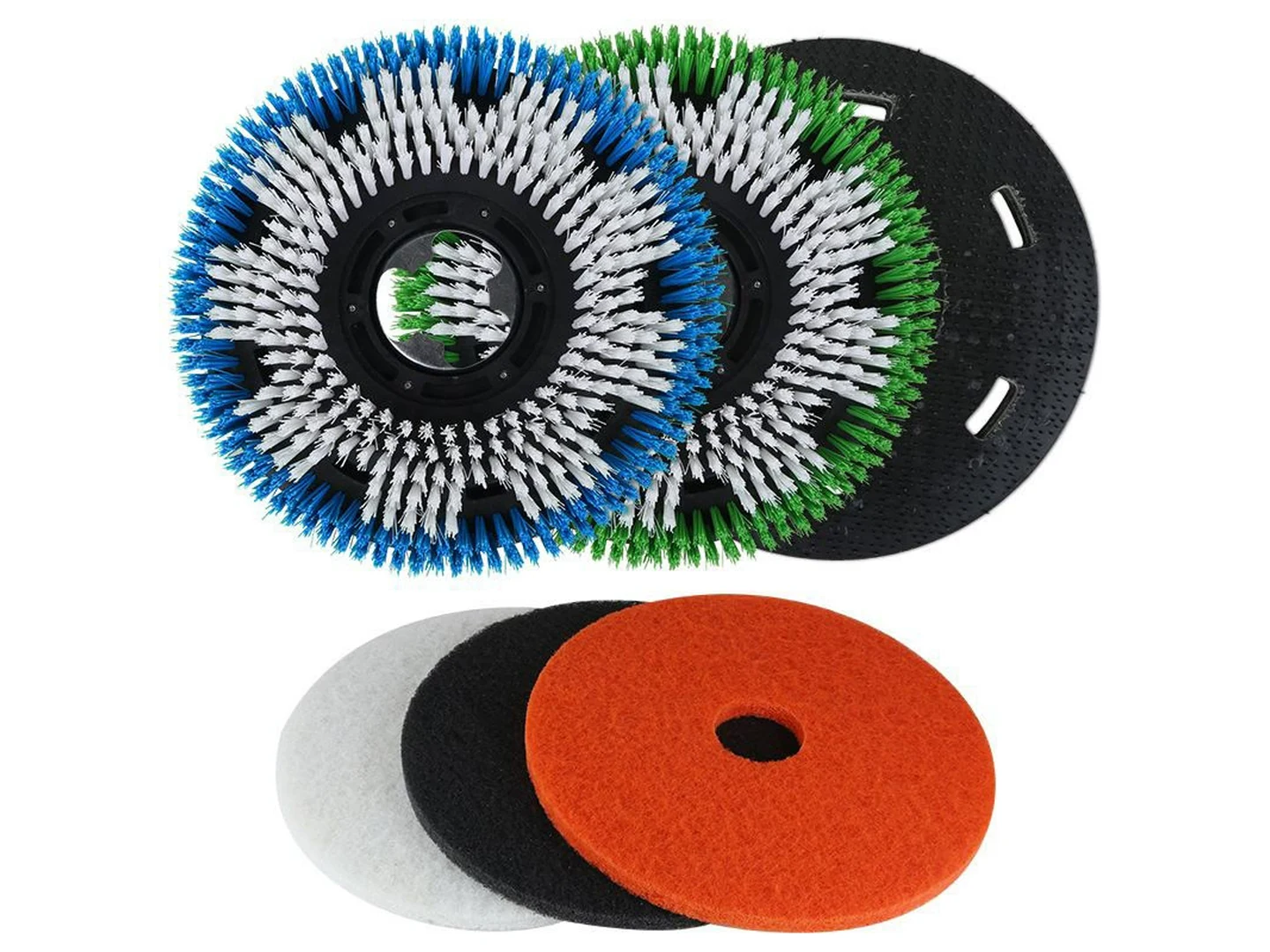
Large-format brush
100 pcs
Minimum order
Built one at a time on a core or channel: full-width rollers, sweeper brooms and long strip.
Production lead time, once the specification is confirmed
- Up to 100 pcsWithin 20 days
- 101–1,000 pcsWithin 30 days
- Over 1,000 pcsConfirmed with your quotation
Peak season can extend these times; the shipping date is confirmed in writing with your quotation. Sampling and shipping are quoted separately.
A replacement brush that mounts directly to your existing floor scrubber or auto-scrubber, restoring full cleaning performance on concrete, tile, epoxy, and textured floors without modifying the machine.
Built around your machine’s drive interface, this brush drops onto the deck with the correct hub, clutch plate, or bolt pattern and uses the right filament and trim for your floor and residue.
What can this brush do for you?
Direct machine fit, no adapter plates
The brush block is machined or molded to match your machine’s center hole, lug pattern, clutch drive, or spline. When the interface is right, the brush seats fully on the motor hub, spins true, and transfers torque without wobble. No shims, no field modification, no vibration that shortens motor and gearbox life.
Filament selection matched to the residue
Nylon PA removes embedded dirt and tire marks from concrete without gouging; polypropylene stands up to wet, acidic, or solvent-based cleaning chemicals; PBT provides extra stiffness for stubborn greasy or oily soils. The correct filament diameter and density mean the brush scrubs the residue off the floor, not just moves it around.
Balanced rotation for consistent contact
A properly centered and balanced brush keeps uniform pressure across the entire diameter. Unbalanced brushes bounce, leave streaks, and force the operator to slow down or overlap passes. Balanced construction keeps the deck steady at rated speed, which improves cleaning quality and reduces operator fatigue.
Size range covers walk-behind to ride-on machines
Disk configurations run from 100 mm (about 4 in) for compact machines to 700 mm (about 27.5 in) for large industrial scrubbers. Cylindrical configurations are available with working widths up to 1200 mm for scrubber driers. One supplier can cover the whole fleet.
What is a Floor Scrubber Replacement Brush?
A floor scrubber replacement brush is a rotary cleaning tool that takes the place of the original brush on a floor scrubber, auto-scrubber, or swing machine. It consists of a rigid backing block with bristle tufts secured into it, and a drive hub or bolt pattern that engages the machine’s motor spindle.
During use, the machine rotates the brush against the floor under controlled deck pressure. The tips of the bristles contact the surface, break up adhered soil, lift residues out of texture and grout lines, and work with the cleaning solution to suspend the dirt so the machine’s vacuum or squeegee can remove it. The brush itself is not the entire cleaning system; it is the mechanical contact that makes the rest of the system effective.
Because the brush is a wear item, it is designed to be replaced when the trim length shortens or the filaments lose their stiffness. The replacement must match not only the size of the original brush but also the machine’s drive interface and the operating conditions of the job. A brush that fits the deck but has the wrong filament will either under-clean or damage the floor.
This is not a polishing tool. If the goal is to shine or burnish a floor, a pad or a high-gloss finish pad is more suitable. This brush is for scrubbing, soil removal, and surface restoration on hard floors.
Technical Specifications
The table below shows the standard production ranges for floor scrubber replacement brushes. Every value can be adjusted to match your machine and floor.
| Parameter | Value / Options |
|---|---|
| Brush configuration | Disk (round) for rotary scrubbers; cylindrical/roller for scrubber driers and ride-on machines |
| Brush diameter (disk) | 100–700 mm (approximately 4–27.5 in), matched to scrub deck sweep |
| Working width (cylindrical) | 100–1200 mm, matched to machine brush core or deck width |
| Trim length | 20–80 mm (free bristle length beyond block) |
| Filament diameter | 0.25–1.20 mm; thicker for aggressive scrubbing, thinner for finer contact or grout penetration |
| Filament material | Nylon PA (6, 6.6, 6.12), Polypropylene PP, PBT; optional abrasive-impregnated nylon or added grit |
| Backing / block material | Plastic (PP or recycled PP), plywood, aluminum, or machine-specified composite |
| Drive interface | Machine-specific center hole, clutch plate, 3-lug / star drive, bolt circle, spline, thread, or quick-connect block |
| Max operating speed | Typically 150–350 rpm for rotary scrubbers; cylindrical brushes may run higher per machine specifications |
| Chemical exposure | Filament and backing selected for the pH, solvent, and temperature of the cleaning solution |
| Brush type | Custom Floor Scrubber Sweeper Brushes |
| How it is driven | Machine-driven, mounted in the equipment |
| Cleaning target | concrete warehouse and distribution center floor, tile and grout, and asphalt drive lane and safety flooring cleaning |
| Surface or part | floors, concrete, tile, epoxy, hubs, pads, grout lines, textured floors, and edges |
| Residue or debris | embedded dirt, tire marks, oil, oil film, dust, grease, mud, and sand |
| Mounting / connection | Machine-specific center hole, clutch plate, 3-lug / star drive, bolt circle, spline, thread, or quick-connect block |
Set the machine deck pressure to the manufacturer’s recommended range. The tips of the bristles should be doing the work. If the full trim is crushed against the floor, you are shortening brush life and wasting energy without gaining cleaning performance.
Where does this brush work best?
- Concrete warehouse and distribution center floors with embedded dirt, tire marks, and oil stains. Use a stiffer filament like PBT or thick-diameter nylon with a shorter trim.
- Epoxy and coated floors in food processing, pharmaceutical, and electronics facilities. Medium-stiff nylon with a longer trim and rounded tips removes residues without wearing through the coating.
- Tile and grout in commercial kitchens, restrooms, and entryways. Thinner filaments reach into the grout lines; a smaller diameter brush may be needed for tight areas.
- Textured, anti-slip, or safety flooring where a flat pad cannot get down into the surface profile. Brush tips follow the texture and lift out trapped soil.
- Asphalt, concrete aprons, and outdoor surfaces on ride-on sweepers or scrubbers, often with cylindrical brush configurations for wide paths.
- Stairs and small landings using compact floor machines with appropriately sized disk brushes.
How do I choose the right one?
Start with the machine interface. The most common cause of a wrong replacement brush is a mismatch at the drive hub. Check your machine’s manual for the correct brush part number. If that is not available, measure the center hole or bolt pattern, the number and spacing of lugs or bolts, and whether the drive is a clutch plate, spline, or thread. When possible, send us a photo of the worn brush or the drive plate.
Next, confirm the diameter or working width. A disk brush should match the machine’s scrub deck sweep. Too small and you leave uncleaned strips along the edges. Too large and the brush body may hit the machine frame or skirt. For cylindrical brushes, the working width must match the core or the deck station.
Then select the filament based on the floor and the residue. The table below is a practical starting point.
| Floor / Residue | Recommended filament | Notes |
|---|---|---|
| Concrete, embedded dirt, tire marks | Nylon PA (thicker diameter, shorter trim) | Durable and aggressive enough without damaging the concrete |
| Tile, grout, light food soil | Nylon PA (thinner diameter, longer trim) | Reaches into recesses, gentle on glazed tile |
| Epoxy or coated floors | Nylon PA medium stiffness | Avoid abrasive grit; use rounded tips and lower deck pressure |
| Wet, acidic, or chemical-heavy environments | Polypropylene PP | Resists acids and many solvents; slightly softer than nylon |
| Grease, oil, heavy industrial soil | PBT or abrasive-impregnated nylon | Higher stiffness and better chemical resistance at elevated temperatures |
Consider the operating environment. Is the machine used wet or dry? What cleaning chemicals are in use? What is the floor temperature? Nylon absorbs water and can soften when saturated; polypropylene does not. PBT holds its stiffness better at high temperatures. Specify these conditions so the brush material is compatible.
Finally, think about replacement frequency and cost. A harder filament lasts longer but may be too aggressive for coated floors. A softer filament is safer on sensitive surfaces but wears faster. Match the brush to the job, not just to the lowest price.
This brush is not the right choice for every floor task. If you are stripping floor finish, use a dedicated stripping brush or pad; a regular scrub brush will not cut through heavy finish layers efficiently. If your machine is designed only for pads and has no brush driver, this product cannot be retrofitted without a brush deck adapter. For polished stone or wood floors, use a soft pad or test in an inconspicuous area before committing.
Can I customize this brush?
Yes. Most replacement brush orders are built to match a specific machine and floor. We need the following from you: machine make and model, OEM brush part number if available, drive interface details (or a sample of the worn brush), floor surface and condition, residue type, cleaning chemicals and temperature, and desired brush life or replacement interval.
Based on that information, we can adjust:
- Diameter or working width — exact match to your scrub deck or cylinder core
- Trim length and filament diameter — from fine to aggressive
- Filament material and blend — nylon, PP, PBT, abrasive-impregnated, or hybrid combinations
- Drive interface — center hole, clutch plate, lug pattern, spline, thread, or custom-machined block
- Backing material and thickness — plastic, plywood, aluminum, or composite
- Tufting pattern and density — full coverage, sectioned, spiral, or ring patterns for specific cleaning needs
- Color coding — different colors for different floor areas, departments, or chemical compatibility
- Packaging — bulk pallets, individual boxes, or labeled for distribution
If your project requires material declarations, inspection reports, or third-party testing for a specific facility standard, we can also support that during the customization process.
When is a floor scrubber replacement brush worn out rather than just dirty?
How do I verify the drive interface before ordering?
Check the machine’s manual for the exact brush part number and mounting description. If that is not available, measure the center hole diameter and the distance between mounting bolts or lugs. Take a clear photo of the drive plate or the underside of the old brush. The more information you provide, the less chance of a mismatch.
What deck pressure should I set on the scrubber?
Start at the lowest setting recommended by the machine manufacturer and increase until the brush removes the soil in a single pass. Watch the bristle tips: they should stay upright and engaged with the floor. If the entire trim length is bent flat against the block, the pressure is too high and you will wear the brush prematurely.
How can I tell when the brush needs replacement?
Replace the brush when the trim length falls below about 20 mm, when bristles are permanently bent and no longer spring back, or when you notice inconsistent cleaning across the brush diameter. Also inspect the backing block for cracks or loose tufts. A worn brush causes the machine to work harder and leaves streaks.
Can this brush be used with floor cleaning chemicals?
Yes, but the filament and backing must be compatible with the specific chemical. Nylon is fine for most neutral and alkaline cleaners. Polypropylene is better for acidic or solvent-based products. Always rinse the brush after use and store it bristle-side up to prevent permanent set.
What is the difference between a scrub brush and a floor pad?
A brush has individual bristles that reach into surface texture, grout lines, and small pits, making it more effective for embedded dirt and uneven floors. A pad is a flat, continuous surface that cleans the tops of the floor profile and is better for light cleaning, polishing, or applying finish. For heavily soiled concrete or textured floors, choose a brush. For high-gloss maintenance, choose a pad.
Can I use this brush on polished stone or wood floors?
It depends on the filament and pressure. A soft nylon brush with a long trim and very low deck pressure may be safe on sealed stone, but polished stone or unsealed wood can be scratched by any bristle contact. Test in an inconspicuous area first. If you need to protect a high-gloss surface, a microfiber pad or a white polishing pad is usually the safer choice.
Guides that go deeper on this
Carpet Machine Brush vs Floor Scrubber Brush: Which Fits?
Read this guideGuideFloor Scrubber Brush Selection: Disc Brush vs Roller Brush
Read this guideGuideHow to Choose Floor Scrubber Brush
Read this guideGuideHow to Choose Floor Scrubber Brush Roll
Read this guideGuideHow to Clean Brush Rollers in Floor Scrubbers and Sweepers
Read this guideGuideWhich Floor Scrubber Brush Clears Outdoor Debris?
Read this guideGuideWhich Floor Scrubber Brush Lifts Warehouse Dust?
Read this guideGuideHow to Optimize Floor Burnisher Brushes Without Floor Damage
Read this guideGuideReproducing an OEM Replacement Brush
Read this guideCustom Manufacturing RFQ
Describe Your Application
An accurate custom quote starts with the dimensions, working surface, residue, material choice, connection, quantity, and reference files.
Drawing or photo optional — it speeds things up, it does not gate the enquiry.
Custom Brush RFQ
Send Your Brush Project
Upload a drawing, product photo, or sample photo and provide the core dimensions and cleaning conditions.
“We need a brush to remove wet residue from a stainless steel conveyor, about 800mm wide. The current brush wears quickly. We can send photos.”
“We sell drinkware and need a cleaning brush to include with the product. Quantity around 5,000 pieces.”