What Is a Silicone Bottle Brush?
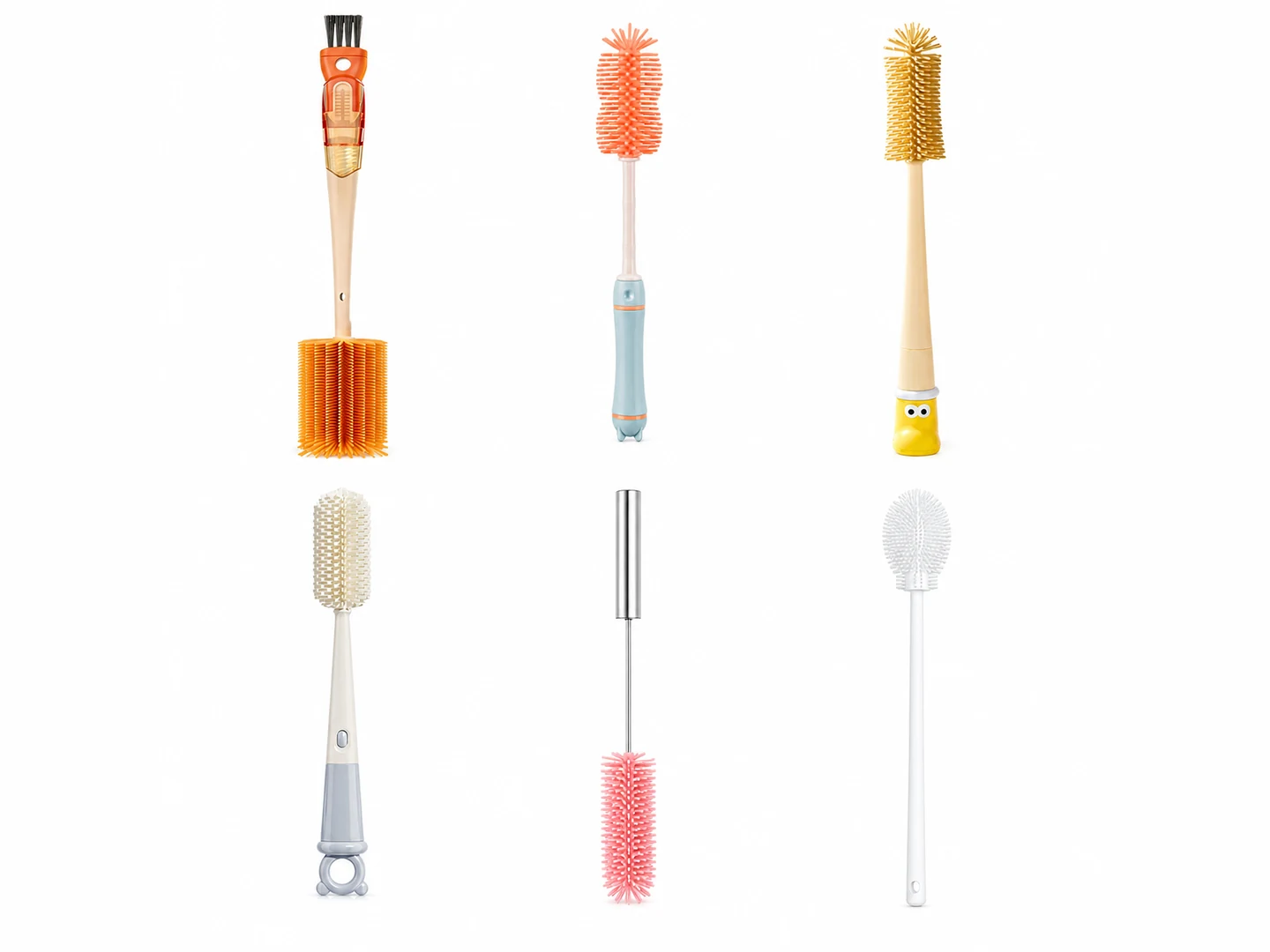
A silicone bottle brush is a cleaning tool with a core (often stainless steel or food-grade plastic) and outward-facing bristles made from solid silicone rubber. Unlike natural fiber or nylon brushes, silicone does not absorb water, chemicals, or organic residue. The filaments are typically molded with rounded tips to protect delicate surfaces while providing enough stiffness to dislodge soft deposits.
For kitchen cleaning examples, the FDA — Food Safety in Your Kitchen supports the distinction between normal cleaning, food handling, and hygiene habits.
For general foodborne-illness prevention language, the CDC — Preventing Food Poisoning is used as the public-health reference.
For the material or regulatory boundary in this section, the supporting reference is eCFR — 21 CFR 177.1500 Nylon Resins.
For the material or regulatory boundary in this section, the supporting reference is eCFR — 21 CFR 177.1520 Olefin Polymers.
For material-selection language, this section is supported by British Plastics Federation — Thermoplastics.
For brush terminology and construction language, this section references American Brush Manufacturers Association — Brush Lingo.
In wet cleaning environments—where exposure to water, detergents, sanitizers, or steam is constant—silicone brushes resist swelling, degradation, and microbial growth. This makes them a common choice for cleaning tanks, pipes, bottles, and small vessels where hygiene and surface integrity are priorities.
Common Types and Options
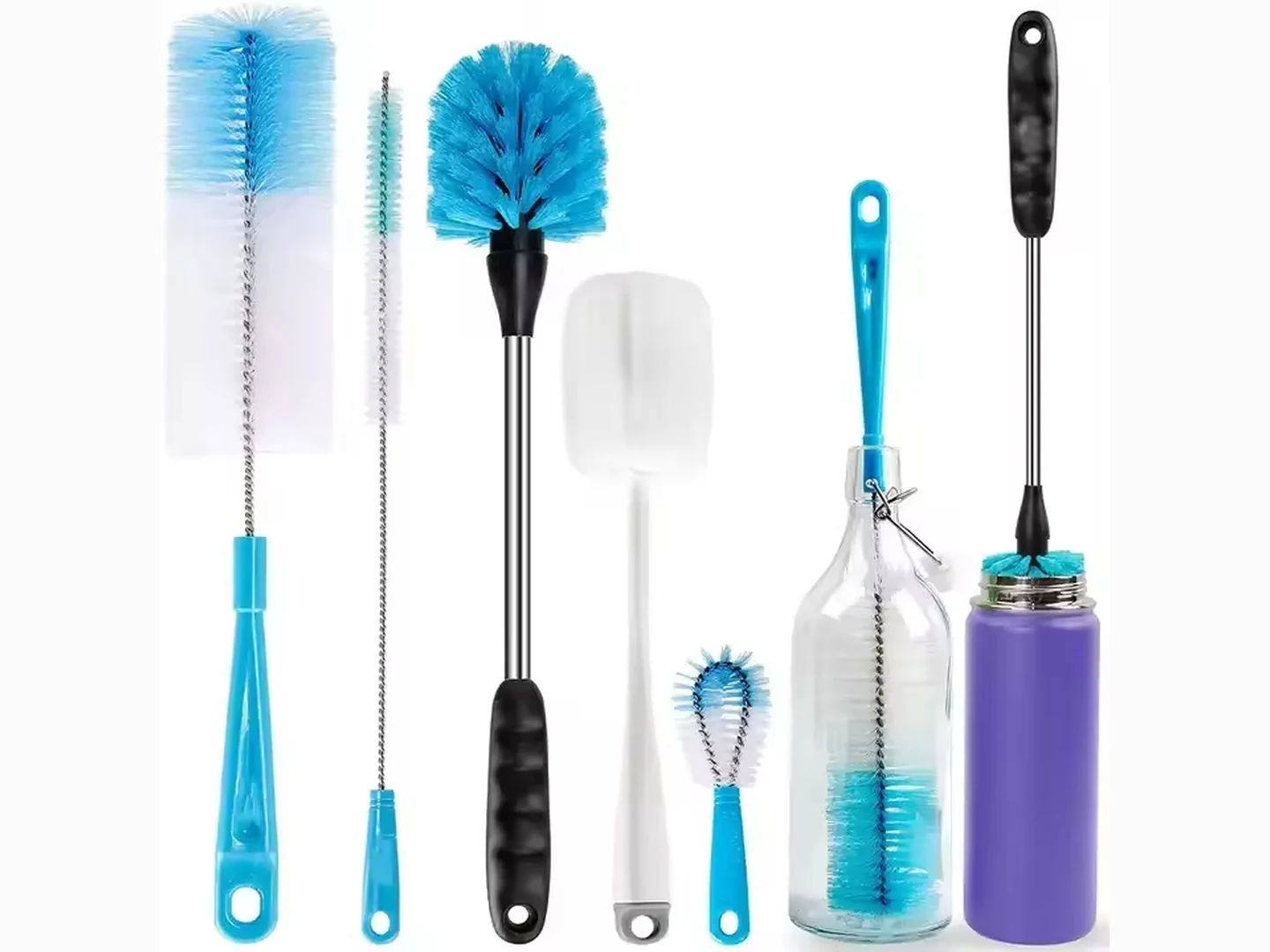
Not all silicone bottle brushes are identical. Buyers should recognize these variation points before writing an inquiry or comparing suppliers.
- Filament stiffness (durometer): Soft (shore A 20–40) for polished glass or thin plastic, medium (40–60) for general bottle washing, firm (60–80) for removing sticky syrups or paste residues.
- Filament diameter and length: Thin filaments reach narrow necks; longer bristles cover wider diameters but may bend more.
- Core material: 304 or 316 stainless steel for chemical resistance; polypropylene or PTFE when metal contamination is a concern.
- Handle / mounting style: Handheld with loop, twist-in drill attachment, or machine-mount shank for semi-automated lines.
- Overall diameter and length: Must match the internal diameter of the container or the stroke length of the cleaning station.
- Filament tip shape: Bulb, beaded, or cupped tips for gentle cleaning, or angled tips for better reach.
Silicone vs. Traditional Brush Materials: A Comparison Table
| Feature | Silicone | Nylon | Natural Bristle (Tampico, Palmyra) | Metal Wire (Stainless Steel) |
|---|---|---|---|---|
| Water / chemical absorption | Zero | Low | High | Zero |
| Risk of surface scratching | Very low | Low–medium | Low | High |
| Typical life in wet service | Long (no swelling) | Medium (may stiffen) | Short (rots, swells) | Long (if stainless) |
| Temperature tolerance | -40 to 200 °F continuous (-40 to 93 °C) | Up to 250 °F (121 °C) | Low (degrades >120 °F) | Up to 1000+ °F (538+ °C) |
| Hygiene / bacterial resistance | Excellent (non-porous) | Good (if dried) | Poor (holds moisture) | Good (if passivated) |
| Chemical compatibility | Broad (check with strong acids/ solvents) | Alkalies ok; acids may degrade | Poor with most chemicals | Check grade; 316 for acids |
| Typical wet cleaning use case | Food, beverage, pharma, cosmetic vessels | General utility; abrasive residues | Dry dusting; lab glassware | Heavy scale, rust, baked-on carbon |
This comparison shows silicone excels when non-absorption and soft contact are needed. It is not the right choice for heavy abrasive cleaning or high-heat applications.
How to Choose Based on Residue, Surface, and Equipment
Use these four decision factors to narrow options before reaching out to a supplier.
- Residue type and adhesion: Liquid or easily dissolved residues favor soft–medium silicone; sticky or pasty residues may need firmer filaments or additional soaking. If the residue contains abrasive particles, silicone may hold particles and scratch the surface—consider a different filament or a brush with larger gaps.
- Surface sensitivity: Glass, polished stainless steel, thin plastic, or lined tanks benefit from rounded silicone tips. For cast iron or uncoated steel where scratching is less critical, nylon or wire may be more effective.
- Equipment interface: Manual cleaning requires ergonomic handles. Automated CIP or semi-automated systems need shank dimensions, shaft length, and mounting compatibility (e.g., quick-change couplings, keyway slots). Share a drawing with the supplier early.
- Chemical and temperature exposure: Silicone generally resists mild acids, alkalis, and sanitizers, but always request a chemical resistance chart for your specific cleaning agent. Exposure above 200 °F can cause permanent softening or deformation.
- Hygiene expectations: In USDA, FDA, or EHEDG-regulated environments, silicone is often preferred because it does not trap moisture or bacteria. Confirm that the core material is food-grade and that the bristles are molded without pores.
- Maintenance frequency: Silicone brushes are easy to rinse and autoclave (if the core allows). They do not require drying time to prevent rotting. This reduces changeover time and cross-contamination risk.
Setup, Mounting, and Usage Factors
Even the right material can fail if the brush does not fit the machine or the operator’s workflow. Consider these points:
- Core diameter and shank length: Too thin a core may flex under pressure; too thick may not pass the bottle neck. The shank must match the chuck or collet of the drive motor.
- Filament coverage pattern: Full spiral coverage ensures 360° contact; dome-end brushes clean the bottom of a bottle more thoroughly than flat-end designs.
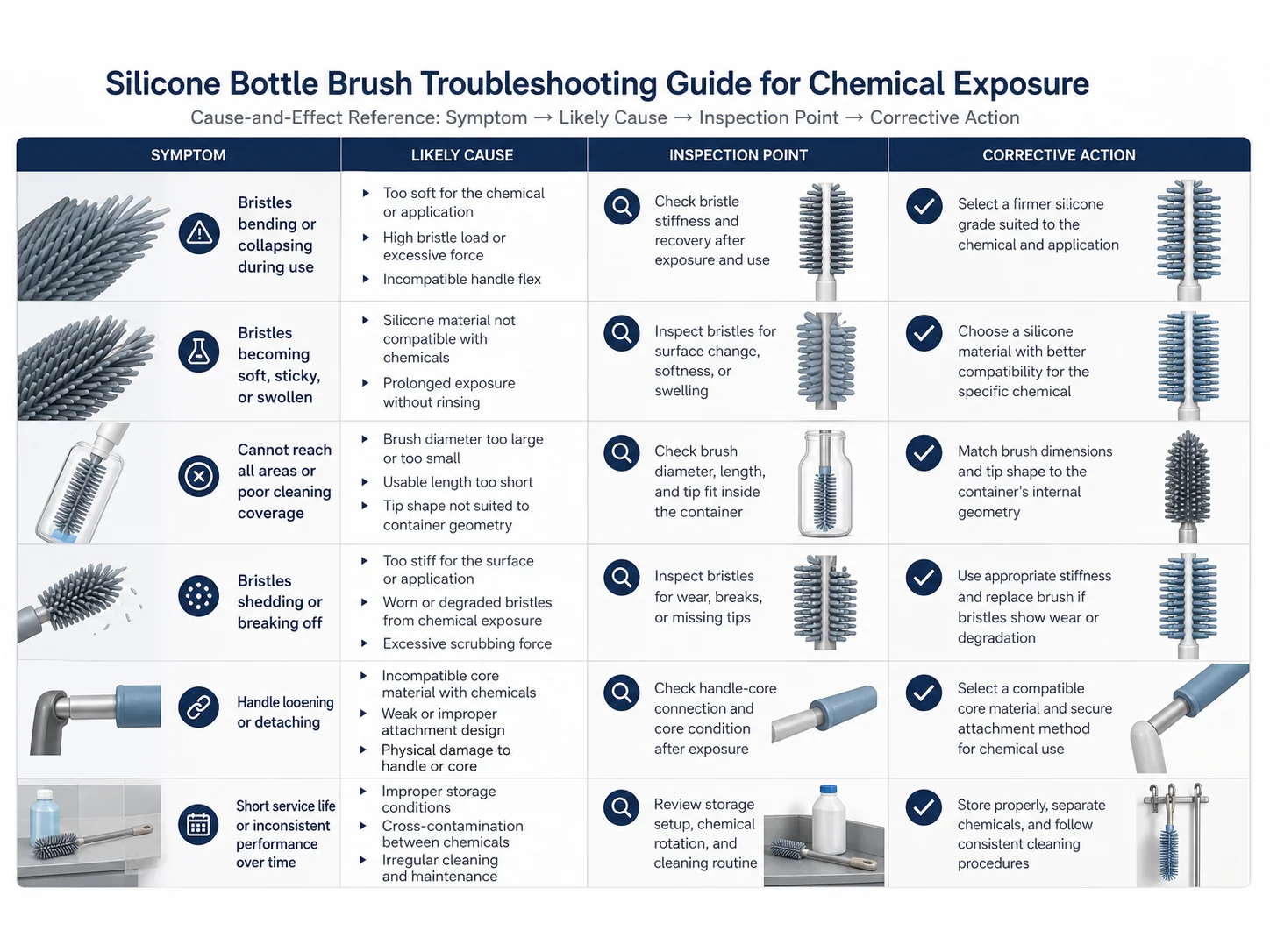
- Chemical rinse resistance: If the brush is submerged in sanitizer between batches, verify that the core material and any adhesives are compatible.
- Safety: In manual operations, a looped handle reduces slip. In automated lines, ensure no loose filaments can detach into the product stream.
Common Mistakes When Specifying a Silicone Bottle Brush
- Choosing by cost drivers alone: A low-cost silicone brush with a mild steel core will rust in wet conditions, contaminating the product. Always specify stainless steel or corrosion-proof plastic cores for wet cleaning.
- Ignoring durometer: “Soft” to one supplier may be “medium” to another. Request a Shore A value and physical sample to check feel and performance.
- Wrong diameter guess: Ordering a brush that is slightly too large can cause galling or equipment damage; too small leaves a gap. Provide internal diameter (ID) and required interference fit (e.g., 0.2–0.5 inch over ID) for the best result.
- Skipping chemical compatibility test: Even silicone can swell or lose tensile strength in strong oxidizing agents, ketones, or certain acids. Run a small batch test before committing to a spec.
- Overlooking shaft length: A brush that cannot reach the bottom of a vessel from the mounting point will leave residue. Always measure the distance from the mounting flange or chuck to the farthest cleaning point.
- Assuming “silicone” means food-safe: Platinum-cured silicone is typically required for food contact; peroxide-cured grades may leave residues. Specify FDA-compliant materials if required.
When a Silicone Bottle Brush Is Not Enough
Silicone has clear boundaries. Recognize when it is better to choose another brush type or request a supplier drawing review.
- Heavy scale, rust, or baked-on carbon: Silicone filaments lack the abrasiveness needed to cut through hard mineral deposits. Use a wire brush or a non-metallic abrasive filament like silicon carbide-impregnated nylon.
- High-temperature cleaning above 200 °F: In steam-in-place (SIP) systems reaching 250 °F or higher, silicone may soften. Nylon or metal brushes are more appropriate.
- Sharp edges or burrs inside the vessel: Silicone bristles can tear or cut. If the surface has weld spatter or sharp transitions, a brush with tougher filaments is needed.
- Need for precision cleaning with quantified removal rates: If a cleaning validation protocol requires consistent scouring action, silicone may not provide the repeatable mechanical cleaning force of a stiffer filament. In such cases, request lab testing data from the supplier.
- Custom geometry beyond simple brush profiles: For complex bottles with multiple shoulders or internal threads, a standard round silicone brush often leaves blind spots. Custom-formed brushes or multiple brush sizes may be required, and a drawing review becomes essential.
- When validation is required: If your facility operates under strict GMP or requires cleaning validation documentation, involve the supplier early. Ask about material certificates, FDA compliance statements, and lot traceability before ordering.
Final Takeaway
A silicone bottle brush is a practical, low-risk choice for wet cleaning when you need chemical resistance, non-absorption, and gentle surface contact. Make your selection based on residue type, surface sensitivity, core material, and mounting fit. Order a sample, test it with your actual cleaning chemistry, and provide a dimensioned drawing to the supplier. But if your process involves high heat, heavy abrasion, or precision scouring, a different brush material will serve you better.
Frequently Asked Questions
Are silicone bottle brushes better than nylon for wet cleaning?
In most wet, chemical- or hygiene-sensitive environments, yes. Silicone does not absorb water or cleaning agents, so it resists swelling, bacterial growth, and surface damage better than nylon. However, if you need aggressive scrubbing action or operate at temperatures above 200 °F, nylon may be more suitable.
Can I use silicone brushes with strong acids or caustics?
Silicone has good resistance to many mild acids and alkalis, but compatibility varies with concentration and temperature. Always request a chemical resistance chart from the supplier for your specific process chemicals. Strong oxidizing acids (e.g., nitric acid >10%) can degrade silicone over time.
How do I measure the correct brush diameter for a bottle neck?
Measure the narrowest internal diameter (ID) of the bottle neck. Add 0.2 to 0.5 inch for a light interference fit that ensures bristle contact without jamming. For tapered bottles, consider the ID at the neck and at the midpoint, and discuss with the supplier whether a stepped or spiral brush design would work better.
What shaft material is best for chemical resistance?
316 stainless steel provides excellent corrosion resistance against chlorides and acids. For high-purity applications where metal contamination is a concern, PTFE-coated or solid polypropylene shafts are available. Always verify that the shaft material is suitable for the chemical environment and temperature range.
Can silicone bottle brushes be custom-sized?
Yes, many brush manufacturers offer custom diameters, filament stiffness, and shaft lengths. Providing a drawing with exact dimensions (ID, length, mounting details) is the minimum requirement. Expect to go through a sample approval process to confirm fit and performance before full production.
How do I test a silicone brush before a bulk order?
Request a pre-production sample or a closest-match stock sample. Run the brush through your actual cleaning cycle—same chemical, temperature, and duration—and inspect for filament wear, core corrosion, and surface condition of the cleaned part. Validate that the brush fits your machine interface without modification.
Do silicone bottle brushes hold up in automated CIP systems?
They can, but it depends on mounting and cycle frequency. Because silicone is flexible, a poorly supported shaft can whip at high RPMs. Make sure the shank diameter is sized for the motor speed, and that the core material does not fatigue under repeated flexing. Discuss duty cycles with the supplier.
Is a silicone brush food-safe by default?
Not necessarily. Only platinum-cured silicone or grades specifically stated as FDA-compliant are suitable for direct or incidental food contact. Ask for a compliance certificate and confirm that the entire brush assembly (including core and adhesives) meets the required standards.