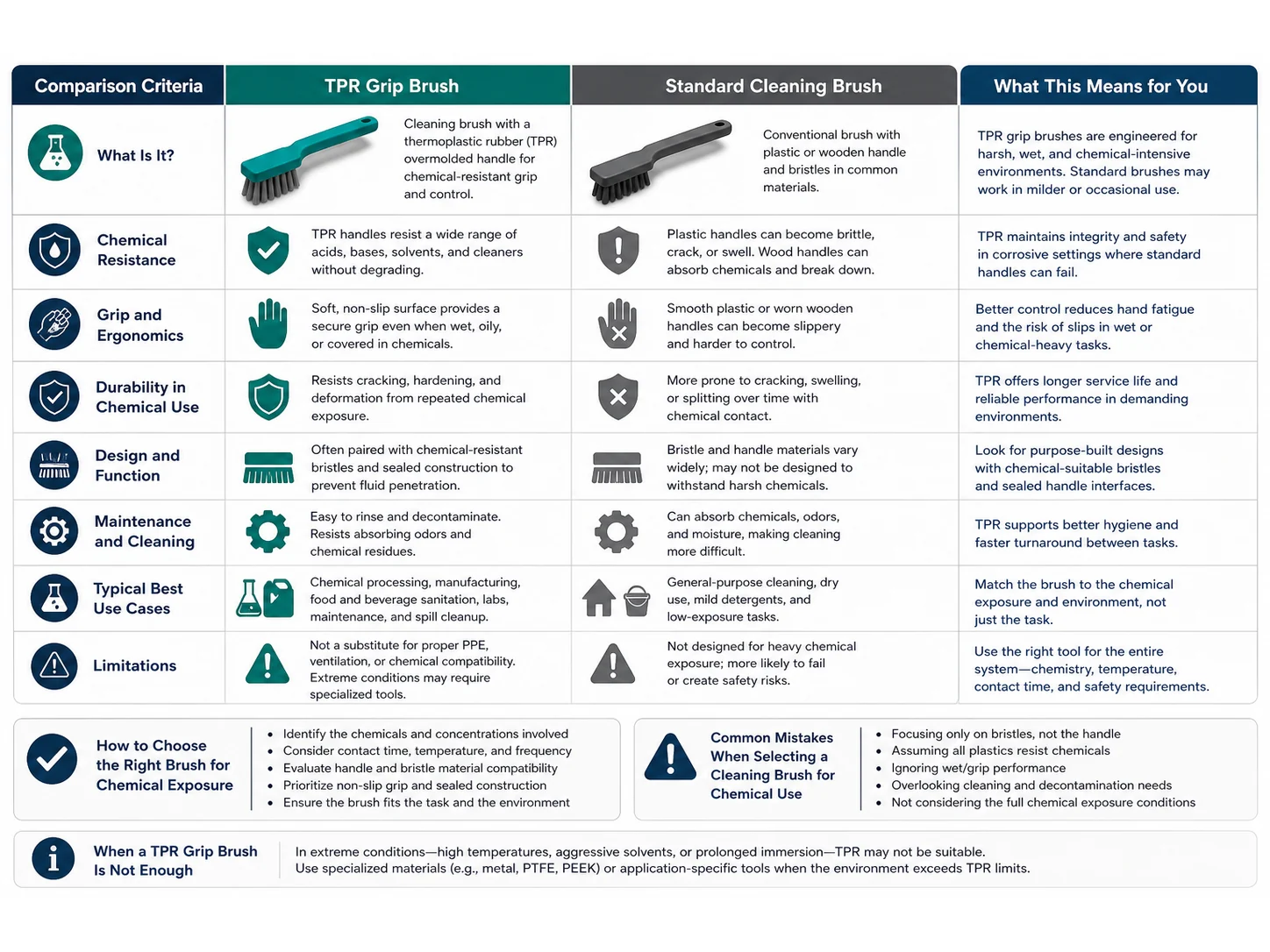
What Is a TPR Grip Brush?
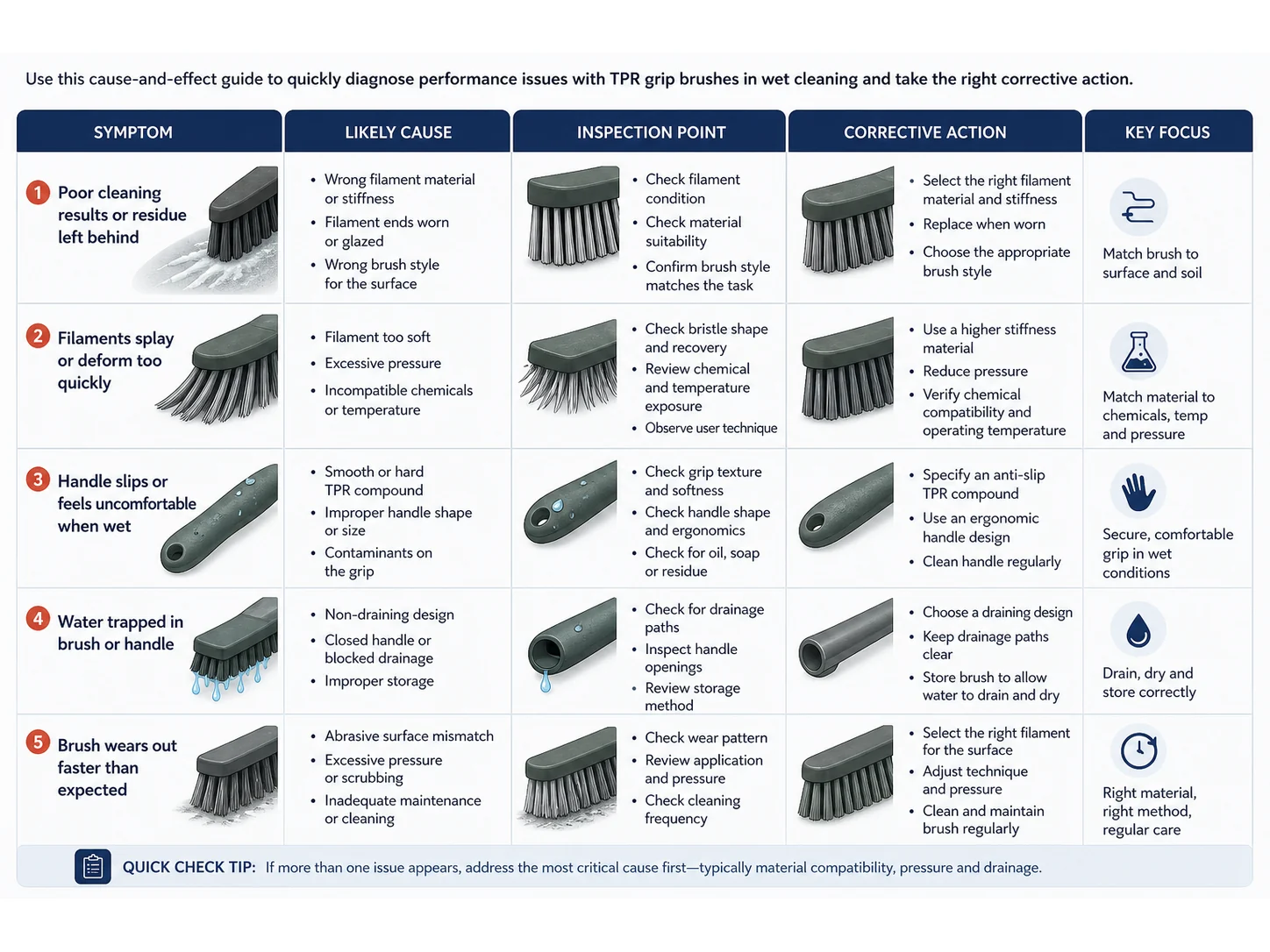
A TPR grip brush is a brush where the hand‑contact surface is made from thermoplastic rubber. TPR combines the feel of rubber with the processing speed of thermoplastics. It resists many common industrial chemicals, stays flexible in cold conditions, and provides a non‑slip grip even when wet. The brush filament may be nylon, polypropylene, polyester, or other materials, but the handle–hand interface is the defining feature.
Standard Cleaning Brushes in Chemical Environments
For the safety point in this section, the relevant OSHA reference is OSHA — Hazard Communication.
For the safety point in this section, the relevant OSHA reference is OSHA — Chemical Hazards and Toxic Substances.
For material-selection language, this section is supported by British Plastics Federation — Thermoplastics.
For brush terminology and construction language, this section references American Brush Manufacturers Association — Brush Lingo.
Standard cleaning brushes often use handles made of wood, polypropylene (PP), or nylon without a soft‑touch layer. These materials can swell, crack, or become slippery when exposed to solvents, acids, caustics, or repeated wet‑dry cycles. Grip comfort is secondary to cost in many general‑purpose designs. While the brush filament may chemically resist the cleaning media, the handle—where the operator connects—is often the first failure point.
Key Material and Design Differences
| Feature | TPR Grip Brush | Standard Polypropylene Handle Brush | Wooden Handle Brush | Wire Brush with Plastic Grip |
|---|---|---|---|---|
| Handle Material | Thermoplastic rubber over a rigid core | Solid polypropylene | Lacquered or raw wood | Nylon/PP grip, often hard |
| Chemical Resistance | Good resistance to many dilute acids, alkalis, and solvents | Good, but can become brittle with UV/strong acids | Poor—swells, splinters, absorbs chemicals | Depends on plastic; metal core may corrode |
| Wet Grip Safety | Excellent non‑slip, even with gloved hands | Moderate—can be slippery when wet | Poor when wet or oily | Moderate—ergonomics often secondary |
| Comfort & Ergonomics | Soft, reduces hand fatigue during repetitive tasks | Hard, may cause pressure points | Hard, may splinter or cause blisters | Hard; vibration transmission is high |
| Typical Cleaning Use | Lab equipment, food processing surfaces, tank cleaning | General shop floors, parts washing | Old‑style scrubbing, dry applications | Rust removal, weld prep, heavy scrub |
| Durability in Chemical Baths | Usually sealed; TPR won’t absorb fluids | Hollow mouldings may trap fluid | Absorbs liquid, degrades quickly | Metal wire may corrode; grip may crack |
How to Choose the Right Brush for Chemical Exposure
Select a brush type by matching the handle and filament to the chemical, contact time, surface, and operator needs.
- Chemical type and concentration: TPR resists many common lab and food sanitizers but may swell with aggressive ketones or strong oxidizers. Check compatibility with the specific solvent or acid.
- Contact duration: Brief splash exposure is less demanding than submersion or continuous wet contact. TPR handles can withstand longer wet cycles than wood or unprotected polypropylene.
- Surface sensitivity: If the cleaned surface is easily scratched, the brush filament (nylon vs. wire) matters more than the grip. For delicate equipment, pair a TPR handle with soft or medium filaments.
- Operator safety: In wet floors or with oily gloves, a TPR grip reduces slip risk and hand strain. This is critical in pharmaceutical, food, and chemical processing environments.
- Maintenance frequency: Brushes that must survive daily autoclaving or chemical sterilants need handle materials that don’t degrade. TPR often withstands repeated cleaning better than wood or low‑grade plastics.
- Custom size and shape: When standard handles don’t fit a reactor port or narrow opening, TPR grips can be overmolded onto custom cores shaped for the specific access point.
Common Mistakes When Selecting a Cleaning Brush for Chemical Use
- Choosing by cost drivers alone: The lowest-cost brush handle fails fast in chemicals, leading to higher replacement frequency and potential contamination risk.
- Ignoring handle–operator compatibility: A slippery or hard handle causes hand fatigue and safety incidents, especially with gloved hands in wet settings.
- Assuming “chemical‑resistant” means all chemicals: TPR is not a universal barrier. Always test or consult resistance charts for specific acids, solvents, and cleaning agents.
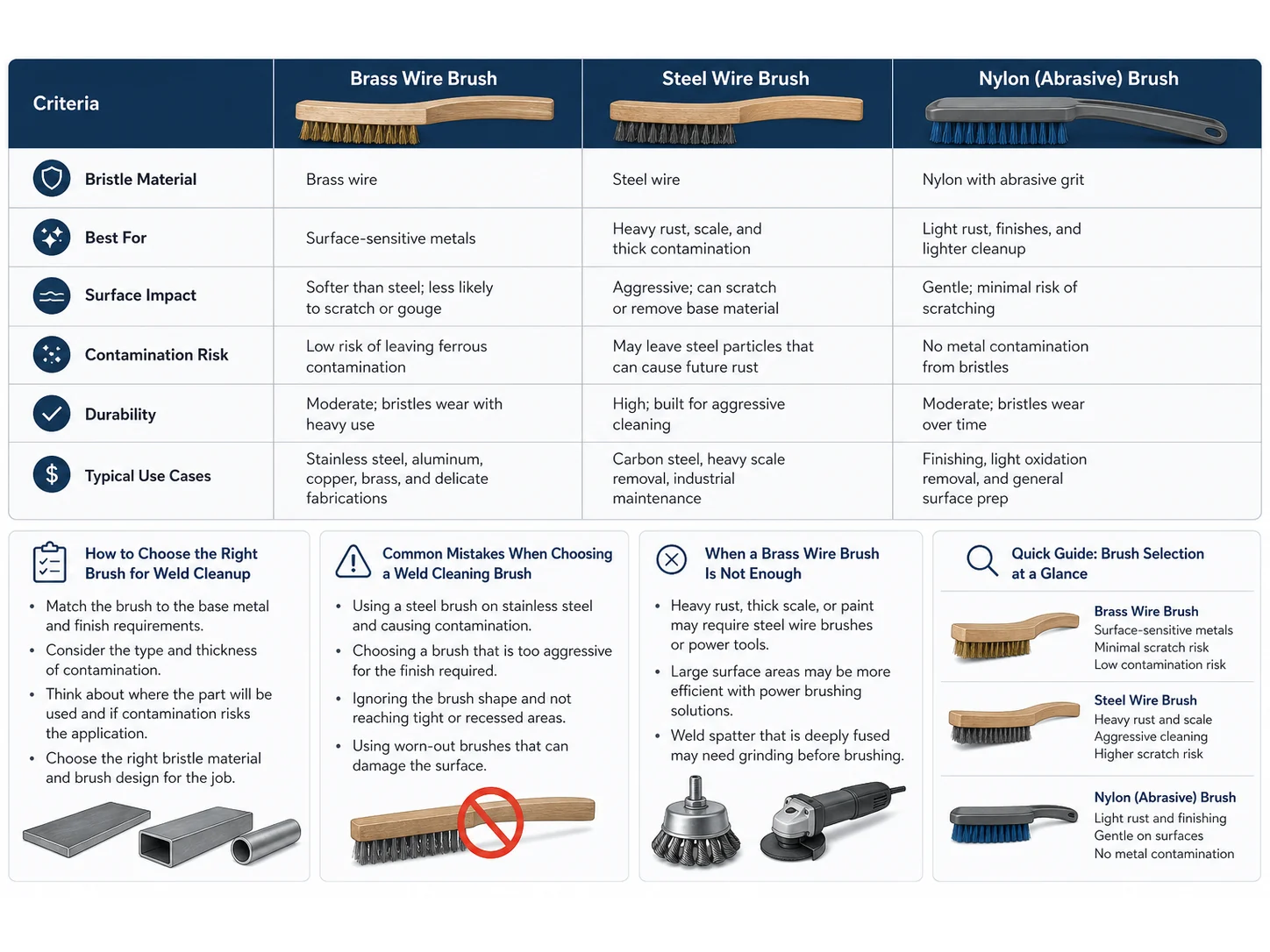
- Using metal‑core brushes without corrosion checks: Wire brushes with a thin plastic grip often hide a steel core that can rust inside the handle, weakening the tool.
- Not matching filament to the task: The grip might be perfect, but if the bristle material dissolves or scratches the surface, the brush is useless.
When a TPR Grip Brush Is Not Enough
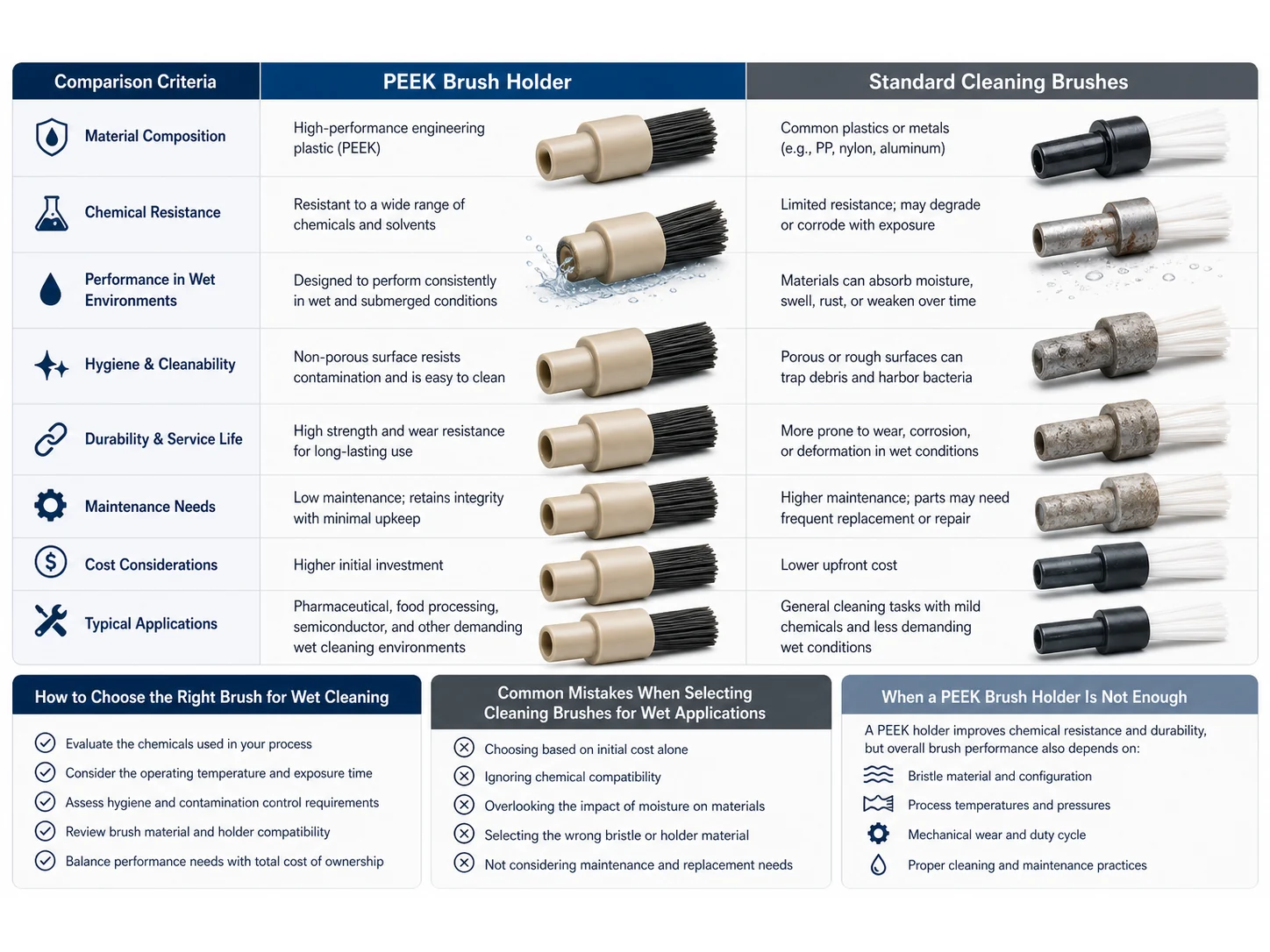
A TPR grip brush improves the operator’s side of the cleaning equation, but it does not solve every chemical cleaning problem. When the cleaning agent is a strong oxidizing acid (nitric, concentrated sulfuric), strong ketone (acetone, MEK), or high‑temperature caustic, TPR can soften, swell, or degrade. In these cases, fully sealed stainless‑steel handles or custom engineered polymer grips (e.g., PTFE, PVDF) may be required. For automated CIP systems or robotic cleaning heads, the grip is irrelevant—the brush design focuses on filament retention and fluid dynamics. Also, if the brush must pass through a narrow pipe or irregular contour, the flexibility of the TPR grip may be less important than the core geometry. Always request a chemical compatibility data sheet and consider a sample test program before finalizing a large order for a new chemical environment.
Final Takeaway
Choose a TPR grip brush when operator safety, grip in wet conditions, and chemical resistance of the handle are critical. Choose a standard brush only when chemical exposure to the handle is minimal, the cleaning task is dry, or the grip requirement is secondary. Match both the filament and the handle to the specific chemicals, temperature, and surface to build a cleaning setup that lasts longer and reduces risk.
Practical Use Note
In daily use, the practical test is simple: check whether the brush reaches the full contact area, removes the target residue, and leaves the surface in the required condition. Record what changes when access, residue type, surface sensitivity, brush stiffness, operating environment, and replacement routine changes, because many brush failures are caused by the working condition shifting rather than by the brush body alone.
Frequently Asked Questions
What chemicals can TPR handles resist?
TPR typically resists many dilute acids, alkalis, alcohols, and water‑based cleaning agents. It may swell or degrade with strong oxidizing acids, ketones, esters, and aromatic hydrocarbons. Always verify with a compatibility chart for your specific chemical mixture.
Can I autoclave a TPR grip brush?
Many TPR formulations withstand steam autoclaving at 121°C (250°F) for short cycles, but repeated high‑heat exposure can cause softening or distortion. Check the manufacturer’s temperature rating and validate with your exact sterilization protocol.
How do I know if my brush handle is truly chemical‑resistant?
Look for material data sheets that list resistance to your process chemicals. A simple soak test of a sample brush in the working concentration and temperature for 24–48 hours will quickly reveal swelling, softening, or cracking.
Is TPR grip better than a plain polypropylene handle for food processing?
Yes, in most wet food processing areas, a TPR grip provides better slip resistance and comfort. Ensure the TPR and filament materials are FDA‑compliant and designed for repetitive chemical sanitation.
What should I look for in a custom TPR grip brush for a specific tank opening?
Provide the supplier with the exact opening dimensions, the chemical exposure details, and the cleaning angle needed. An overmolded TPR grip can be designed onto a rigid core that fits your unique access point without sacrificing ergonomics.
How do I compare TPR grip brushes across suppliers without exact cost drivers?
Request samples and compare grip softness (durometer), chemical compatibility to your specific agents, filament type and density, and the quality of the overmolding bond. A short durability test in your actual environment will expose handle delamination or early filament wear.
When should I not use a TPR grip brush at all?
Avoid TPR when the process fluid is a strong ketone, concentrated oxidizing acid, or high‑temperature caustic above the TPR’s limit. In automated cleaning or extreme pH/temperature cycling, consider a fully metallic or high‑performance polymer handle instead.