
What Is a Brass Wire Brush?
A brass wire brush is a non-ferrous, softer-bristled brush that gently cleans surfaces without scratching or embedding rust-causing particles. Its bristles are made of brass, an alloy of copper and zinc, giving it a golden color. Brass wire brushes are non-sparking and non-magnetic, making them safe for use around flammable atmospheres. In weld cleanup, they are commonly used to remove light oxide discoloration, spatter, and heat tint from metals like stainless steel, aluminum, copper, and brass itself, where preserving the base metal finish is critical.
Common Types of Cleaning Brushes for Weld Cleanup
When selecting a brush for weld cleanup, you’ll encounter several material and configuration options. Each has its own strengths, limitations, and ideal use cases. Below are the main categories:
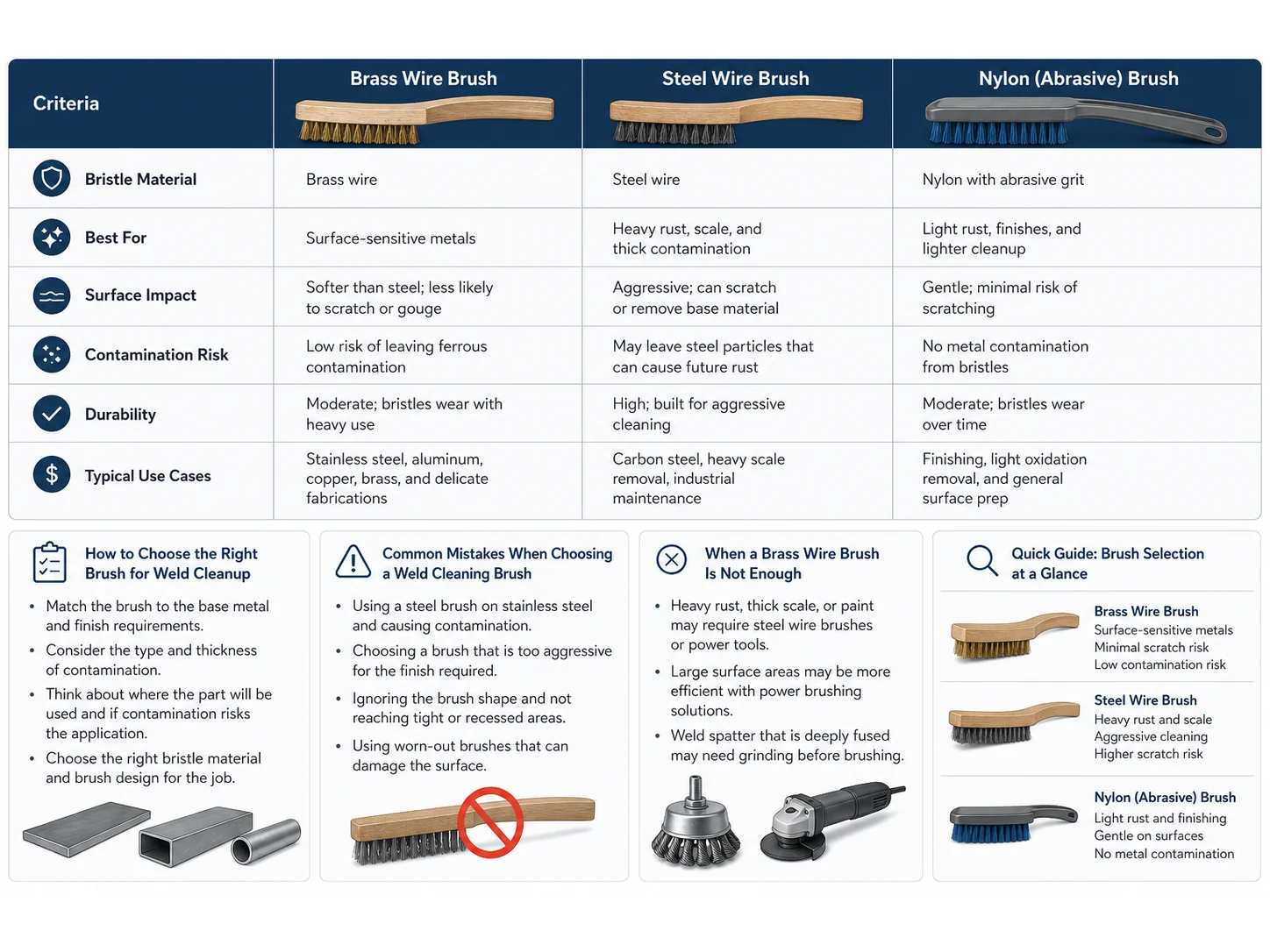
- Carbon Steel Wire Brush – Hard, aggressive bristles; effective for heavy rust and scale, but can scratch softer metals and leave behind iron particles that rust.
- Stainless Steel Wire Brush – Hard-wearing and corrosion-resistant; used on stainless and carbon steel when contamination with carbon steel must be avoided. Can still scratch aluminum.
- Brass Wire Brush – Soft, non-sparking, and non-magnetic; ideal for delicate surfaces, aluminum, and metals where avoiding iron contamination is essential.
- Nylon Abrasive Brush – Embedded with abrasive grit; good for light blending, deburring, and finishing without metal bristle damage. Often used with hand-held tools or machines.
These brushes also come in various forms: hand brushes, wheel brushes for bench grinders or angle grinders, cup brushes, and drill attachments. The choice of mounting style depends on the equipment available and the shape of the workpiece.
Brass Wire Brush vs Standard Cleaning Brushes: Comparison Table
The following table highlights the key differences to help you judge which brush type suits your weld cleanup application.
| Feature | Carbon Steel Wire Brush | Stainless Steel Wire Brush | Brass Wire Brush | Nylon Abrasive Brush |
|---|---|---|---|---|
| Material Hardness | High | High | Low | Moderate (grit-dependent) |
| Aggressiveness | Aggressive | Aggressive | Gentle | Gentle to moderate |
| Risk of Scratching Base Metal | High | Medium-high | Low | Very low |
| Sparks? | Yes | Yes | No | No |
| Rust/Iron Contamination Risk | High (leaves iron) | Low (if dedicated stainless) | None (non-ferrous) | None |
| Best For | Heavy rust, mill scale on carbon steel | Stainless or carbon steel where cross-contamination is a concern | Aluminum, stainless steel, copper, brass, light oxide removal | Deburring, surface finishing, delicate cleaning on any metal |
| Limitations | Ruins softer metals, causes rust if not cleaned | Can scratch aluminum, expensive | Ineffective on heavy rust or thick scale, wears faster | Cannot remove heavy deposits, may melt at high speed |
How to Choose the Right Brush for Weld Cleanup
Selecting the correct brush comes down to understanding your base metal, the type of residue, and the final surface requirements. Consider these factors:
- Base Metal Material: For aluminum and other soft metals, brass or nylon brushes are preferred to avoid scratching. Stainless steel can often be cleaned with brass, but a dedicated stainless steel brush may be needed if ferrous contamination rules are strict.
- Residue Type: Light heat tint and small spatter can be removed with a brass brush. Heavy slag or mill scale demands a steel brush or mechanical grinder first.
- Surface Finish: If the part will be painted, coated, or anodized, avoid iron contamination. Brass is often a safe choice, but test a small area. For food-grade or pharmaceutical applications, use brushes that don’t leave particles that cause corrosion or contamination.
- Equipment Interface: Hand brass wire brushes are common for small jobs. For larger areas, consider a brass wire brush drill attachment or a brass wire brush wheel for an angle grinder. Ensure the RPM rating matches your tool.
- Wet or Chemical Exposure: In environments where cleaning involves solvents or mild chemicals, brass resists corrosion better than carbon steel, though stainless steel is more durable.
- Maintenance Frequency: Brass bristles wear out faster than steel. If you need a brush that lasts through thousands of parts, consider stainless or even nylon abrasives. If gentle cleaning is paramount, accept the shorter life.
- Custom Size Requirements: For irregular shapes or hard-to-reach areas, a small brass wire brush or a custom-formed brush may be necessary. Discuss with suppliers if standard stock brushes don’t fit.
Common Mistakes When Choosing a Weld Cleaning Brush
- Using a carbon steel brush on stainless steel or aluminum. This scratches the surface and embeds iron particles that rust, causing cosmetic and structural corrosion.
- Assuming one brush type serves all metals. A brush that works well on mild steel can ruin a custom-fabricated aluminum part.
- Ignoring filament diameter and stiffness. Even within brass brushes, fine brass wire brushes are softer and less aggressive, while thicker wire removes more material but may still leave marks on very soft metals.
- Overlooking the tool speed. Running a brass wire brush wheel beyond its rated RPM can cause flyaways, breakage, or uneven cleaning.
- Not cleaning the workpiece after brushing. Loose bristle fragments or metal dust must be removed before painting or final assembly.
- Using brass on heavy mill scale. A brass brush will quickly wear out without effectively cleaning thick oxide layers—use a steel brush or grinder first.
When a Brass Wire Brush Is the Wrong Choice
Brass wire brushes excel at light, non-damaging cleanup, but they have clear limits. Avoid using them for:
- Heavy rust or thick mill scale. Steel wire brushes or abrasive discs are required for heavy material removal.
- Deep pitting or crevice corrosion. Brushes cannot remove deeply embedded corrosion; chemical treatments or blasting may be needed.
- Creating a surface profile for paint adhesion. Brass leaves a smooth finish; a sharper abrasive or grit blasting is needed for proper anchor profile.
- High-speed, continuous production where brush life is critical. For conveyor-line parts cleaning, stainless steel or abrasive nylon lasts longer.
- Applications sensitive to copper transfer. Some stainless steel processes (e.g., nuclear, certain chemical plants) forbid copper contamination. Confirm material compatibility with your project engineer or brush supplier.
In borderline cases, request a sample test from your brush manufacturer or ask for a supplier drawing review to ensure the brush meets your weld cleanup specification.
Final Takeaway
For most weld cleanup on aluminum, stainless steel, copper, or brass, a brass wire brush is the safest and most effective choice to remove light discoloration and spatter without surface damage. Use a stainless steel brush when iron contamination must be avoided on stainless or carbon steel, and choose carbon steel only for heavy rust or robust carbon steel parts. Nylon abrasive brushes offer a non-metallic alternative for delicate finishing. Always match the brush material, filament stiffness, and mounting style to your workpiece, residue, and equipment—and when in doubt, test on a scrap piece first.
Frequently Asked Questions
Can I use a brass wire brush on stainless steel?
Yes, brass wire brushes are commonly used on stainless steel to remove heat tint and light spatter without scratching. However, in some critical applications, the risk of copper transfer may require a dedicated stainless steel brush. Always check your specification.
Does a brass wire brush remove rust?
No, brass brushes are too soft for heavy rust. They are designed for light cleaning and oxide removal. For rust, use a carbon or stainless steel wire brush or chemical rust remover.
Can I use a brass wire brush with an angle grinder?
Yes, brass wire brush wheels for angle grinders are available. Ensure the wheel’s maximum RPM matches your grinder, and wear appropriate PPE. The soft brass reduces the risk of gouging the base metal compared to steel wheels.
Brass vs stainless steel wire brush for aluminum—which is better?
Brass is generally better for aluminum because it is softer and less likely to scratch. Stainless steel bristles can leave deep marks and may embed ferrous particles. Brass also avoids galvanic corrosion issues.
Is a brass wire brush non-sparking?
Yes, brass is non-sparking and non-magnetic, making brass wire brushes safe for use in potentially flammable or explosive environments.
What’s the difference between fine and coarse brass wire brushes?
Fine brass wire brushes have thinner bristles that produce a smoother finish but remove less material. Coarse or heavy-duty brass brushes have thicker wire for slightly more aggressive cleaning, though still gentler than steel. Choose based on the required surface finish and residue.
How do I clean a brass wire brush?
Rinse with a suitable solvent (like acetone or mineral spirits) to remove oils and metal particles. Avoid using steel wool or wire brushes on the brass bristles, as this can contaminate them. Let the brush dry thoroughly before storage.
Can I use a brass wire brush on a standard drill?
Yes, brass wire brush drill attachments with a 1/4-inch hex shank are compatible with most drills. For better control, use a corded or cordless drill at a moderate speed. Small detail brushes or cup brushes are available for tight spaces.
Technical References
- Copper Development Association — Brasses: Copper-Zinc Alloys
- OSHA — Hexavalent Chromium
- World Stainless — Corrosion Resistance of Stainless Steels
- British Plastics Federation — Thermoplastics
Which bristle material fits this job — Brass Wire, AISI 304 Stainless Steel Wire or Nylon PA?
| Material | Continuous temperature (°C) | Peak temperature (°C) | Water absorption | Hardness |
|---|---|---|---|---|
| Brass Wire | 150–200 | 250–300 | 0% | Rockwell B 40–90 |
| AISI 304 Stainless Steel Wire | 400 | 500 | 0% | Rockwell B 70–95 depending on temper and cold work |
| Nylon PA | 93 | 121 | 0.3–9% by PA grade and conditioning | Medium to firm; filament diameter and trim length control bending force. |
Figures as published by Alleima; Brushtec / DuPont. Confirm the exact grade against the supplier datasheet before ordering.
What should replace Brass Wire when it stops working?
- Brass Wire — Compare Brass Wire with Steel wire, stainless wire, nylon. Change material when wet stiffness, temperature, chemical resistance, conductivity, particle shedding, or surface marking becomes the limiting factor.
- AISI 304 Stainless Steel Wire — Use AISI 316 stainless steel wire for chloride, marine, dairy, beverage, chemical washdown, or higher pitting-resistance requirements. Use carbon steel for dry aggressive cutting and brass or abrasive nylon for lower marking risk.
- Nylon PA — Compare Nylon PA with PP, PBT, PET. Change material when wet stiffness, temperature, chemical resistance, conductivity, particle shedding, or surface marking becomes the limiting factor.