What Is a Nylon Brush for Drill?
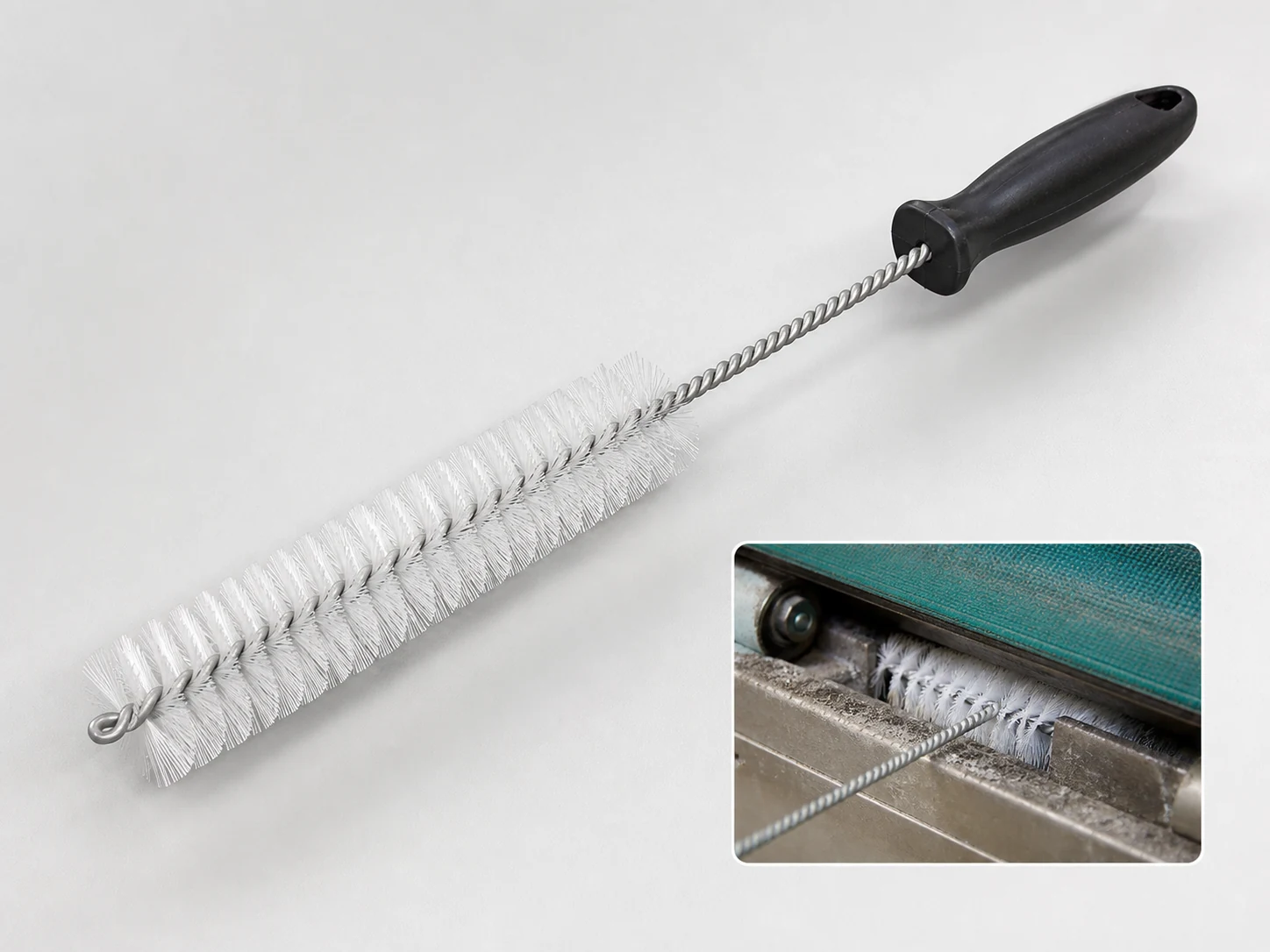
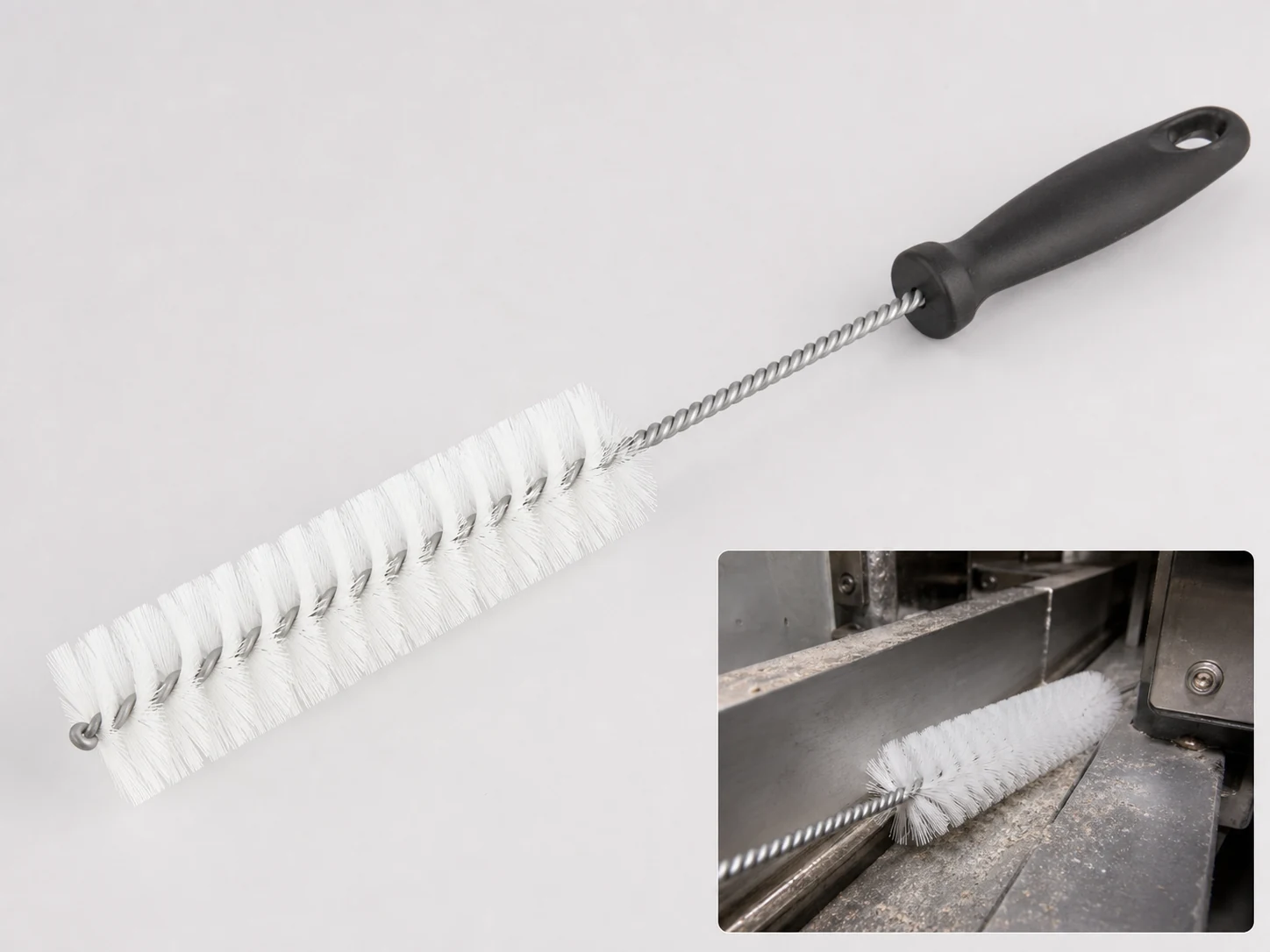
A nylon brush for drill is a rotary brush designed to be chucked into a handheld or stationary drill. The nylon filaments provide a non-metallic, flexible abrasive action. In chemical exposure applications, the brush may contact cleaning agents, solvents, rust removers, sanitizers, or acid-based residues. The nylon must resist degradation, and the core or hub must withstand corrosion.
For the safety point in this section, the relevant OSHA reference is OSHA — 1910.242 Hand and Portable Powered Tools.
For the safety point in this section, the relevant OSHA reference is OSHA — 1910.215 Abrasive Wheel Machinery.
For the safety point in this section, the relevant OSHA reference is OSHA — Personal Protective Equipment.
For brush terminology and construction language, this section references ABMA — ANSI B165.1 Power Brush Safety Slips.
For the safety point in this section, the relevant OSHA reference is OSHA — Hazard Communication.
These brushes are common in industrial tube cleaning, boiler maintenance, food equipment sanitation, marine growth removal, and chemical plant surface prep. The key advantage is that nylon is non-sparking, non-marring on many surfaces, and can be engineered for specific stiffness and chemical resistance.
Common Customization Options for Chemical-Exposure Applications
When a standard catalog brush does not meet the requirements, buyers must define these variables:
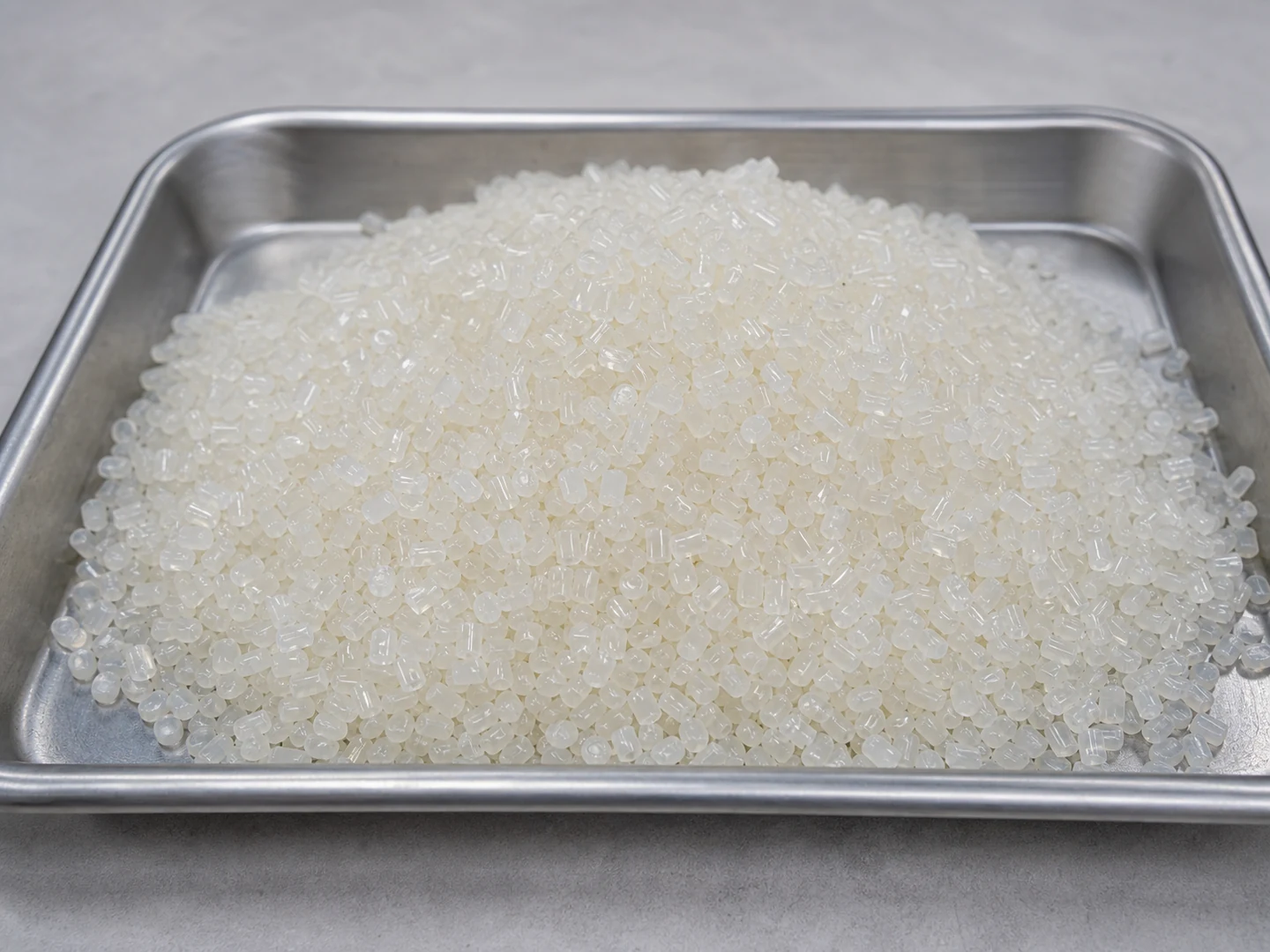
- Filament material: Standard nylon 6, nylon 6.6, abrasive-filled nylon, or specialty grades like oil-resistant or heat-stabilized nylon.
- Brush diameter: Outer diameter, often matching tube or pipe ID, or surface width.
- Filament stiffness: Controlled by filament diameter, trim length, and polymer grade. Stiffer for heavy residue, softer for sensitive surfaces.
- Core and handle design: Stem-mounted, wire-twisted, plastic hub, or metal core with protective coating for chemical resistance.
- Arbor/mounting: Hex shank, round shank, threaded stud, or quick-change adapter for drill compatibility.
Key Specifications to Define Before Ordering
The table below summarizes the main decision points and why they matter in chemical-exposure settings.
| Specification | Options | Why It Matters for Chemical Exposure |
|---|---|---|
| Filament Material | Nylon 6Nylon 6.6Abrasive nylon (SiC/AlOx)Specialty blends | Chemical compatibility with cleaning agents, acids, alkalis, solvents. Nylon absorbs moisture and can swell; wrong grade leads to softening or brittleness. |
| Brush Diameter | Custom OD (inches/mm) | Ensures proper contact in tubes, pipes, or confined spaces. Too small leaves residue; too large causes binding or excessive wear. |
| Filament Diameter/ Grit | 0.006″ to 0.040″+Grit range (if abrasive) | Thicker filaments for aggressive cleaning; thinner for polishing. Chemical attack can thin filaments over time—choose slightly heavier gauge if exposure weakens nylon. |
| Arbor/ Attachment | ¼″ hex shankSmooth shankThreaded studSnap-in adapter | Must match drill chuck and ensure secure grip. Corrosion-resistant plating or stainless shank needed if exposed to chemicals. |
| Core/ Hub Material | Plastic (polypropylene)Coated steelStainless steelWire stem | Avoid bare steel in wet or acidic environments. Plastic hubs may crack under torque; coated or stainless steel resists corrosion but adds cost. |
| Trim Length | Short (⅛″ to ½″) | Longer trim provides more conformity to irregular surfaces but may fold under pressure. Short trim gives aggressive action but less flexibility. |
How to Choose Based on Residue Type, Surface Sensitivity, and Equipment Interface
Use the following decision logic:
- Residue type: Soft, sticky residues (oils, grease) can be cleaned with soft nylon; hard scale or rust needs abrasive nylon or higher stiffness. Chemical solvents may already soften the residue—use a brush that works with the chemical, not against it.
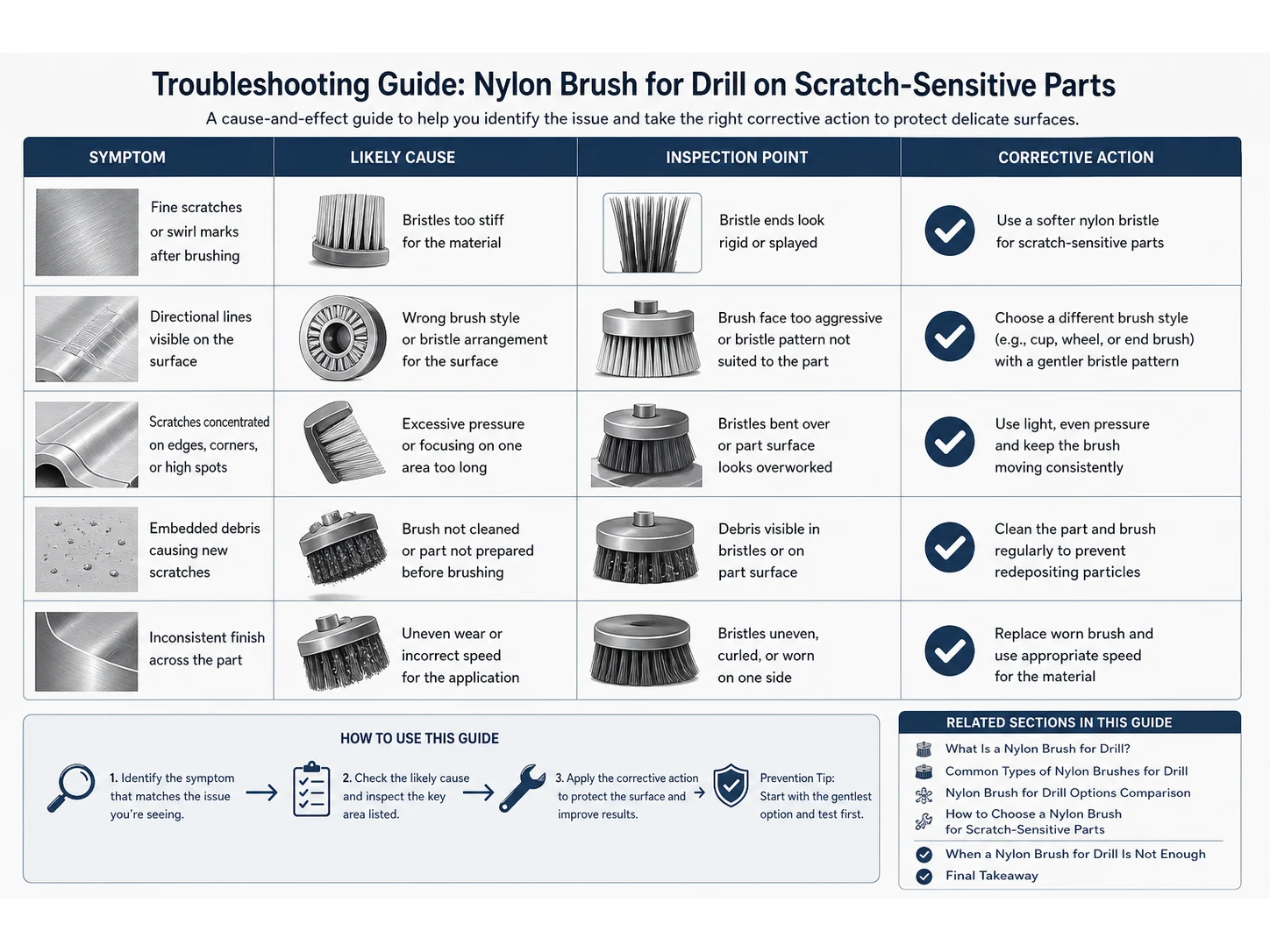
- Surface sensitivity: Polished stainless steel, food-grade equipment, or painted surfaces require non-scratch nylon. Test a sample on a hidden area first.
- Equipment interface: Measure the drill chuck capacity and speed. High RPM with a heavy, large-diameter brush can cause vibration and damage. Some custom orders may require a balanced core for safe operation at higher speeds.
Setup and Usage Factors: Wet Conditions, Hygiene, and Maintenance
Chemical exposure is rarely dry. Consider these conditions:
- Wet vs. dry operation: Nylon absorbs water and chemicals, which can change filament stiffness. In partially submerged cleaning, specify water-resistant or chemically saturated filaments if short-term use is acceptable.
- Hygiene expectations: Food or pharmaceutical applications require filament materials that do not support bacterial growth and can be sanitized. Avoid heavy metal core materials unless food-grade stainless and sealed.
- Maintenance frequency: Brushes used with harsh chemicals may need frequent replacement. Plan for wear monitoring: check for filament loss, core corrosion, or diameter reduction.
Common Mistakes Buyers Make When Specifying a Custom Nylon Drill Brush
- Skipping chemical compatibility test: Assuming “nylon” is one material. Nylon 6 and Nylon 6.6 have different acid resistance and moisture absorption. Request a filament sample and expose it to the chemical for 24-48 hours before committing.
- Ignoring shank corrosion: A perfect brush body ruined by a rusted shank that won’t release from the chuck. Specify stainless or coated shank if cleaning solutions are corrosive.
- Choosing diameter by guess: Ordering a tube brush without a clear measurement of minimum ID and any obstructions. A 2-inch brush in a 2-inch tube with buildup will bind.
- Over-specifying stiffness: Using extra-stiff filaments on a surface that only needs light scrubbing leads to scratches, increased wear, and higher cost.
- No dimensional drawing or spec sheet: Verbal descriptions (“about 3 inches”) invite expensive errors. Provide a simple sketch or reference a standard dimension sheet.
When a Nylon Brush for Drill Is Not Enough
A nylon brush for drill cannot solve every chemical cleaning challenge. Consider alternatives when:
- Temperature exceeds nylon limits: Continuous operation above 180–200°F (82–93°C) softens nylon. Switch to polypropylene, PTFE, or stainless steel brushes.
- Strong acids or solvents: Concentrated sulfuric, nitric, or phenolic compounds quickly degrade nylon. Use specialty polymers (PEEK, PVDF) or metal brushes with compatible bristle material.
- Heavy scale or weld spatter: Wire brushes or abrasive wheels may be necessary; nylon can’t cut hard metallic deposits effectively.
- Automated CIP systems: Custom drill brushes are manual tools. In closed-loop chemical circulation cleaning, consider spray balls or automated brush systems.
Final Takeaway: Pre-Order Verification Checklist
Before placing an order, walk through this checklist:
- Chemical type and concentration confirmed.
- Filament material tested or verified as compatible.
- Brush diameter, trim length, and stiffness defined for the specific residue and surface.
- Core and shank material selected for corrosion resistance and drill compatibility.
- Drill RPM and torque limits checked against brush design.
- Dimensional drawing or reference photograph provided to the supplier.
- Sample or first-article inspection agreed upon for custom orders.
Practical Use Note
In daily use, the practical test is simple: check whether the brush reaches the full contact area, removes the target residue, and leaves the surface in the required condition. Record what changes when drawings, dimensions, mounting interface, filament material, stiffness, sample testing, and actual working conditions changes, because many brush failures are caused by the working condition shifting rather than by the brush body alone.
Frequently Asked Questions
What type of nylon is best for acidic chemical exposure?
Nylon 6.6 generally has better resistance to weak acids than Nylon 6, but no nylon is truly acid-proof. For moderate acid exposure, opt for a filled or stabilized grade. Always request chemical resistance data from the filament supplier or brush manufacturer.
Can I use a standard nylon brush for drill with strong solvents?
Standard nylon can swell or dissolve in strong solvents like acetone, MEK, or concentrated phenols. You may need a specialized filament such as polyester (PBT) or PTFE. Define the solvent during the RFQ stage.
How do I know if the brush is too stiff for my surface?
Perform a scratch test: use a single filament or a small brush sample on a non-critical area. If it leaves visible scratches, move to a softer filament or finer grit. Surface roughness requirements should be part of the specification.
What is the difference between a wire-twisted core and a plastic hub brush?
A wire-twisted core is economical and flexible, often used in tube cleaning, but the metal wire can corrode. A plastic hub or coated metal core resists chemicals better and is preferred for food or sanitary environments.
Can I order a custom nylon brush for drill for a one-time cleaning job?
Yes, many brush manufacturers accept small-batch custom orders. Provide clear dimensions and chemical exposure details. Be prepared for a setup charge, but it may cost less than damaging equipment with the wrong brush.
What drill speed should I use with a nylon brush?
Typical speeds range from 500 to 3,000 RPM, but always follow the brush manufacturer’s maximum RPM recommendation. Overspeeding can cause filament loss, core failure, or injury. Chemical exposure may reduce the safe operating speed.
How do I specify a brush for internal tube cleaning in a chemical plant?
Measure the tube inside diameter, length, any bends or fittings, and provide the chemical composition and temperature. Specify the required cleanliness level (e.g., “white metal” or “no visible residue”). Include a drawing showing brush travel direction if automated.