
Custom Cleaning Brush
Wool Brush
Custom wool brushes for dusting, polishing, and controlled dye, wax, and adhesive application on leather, coated wheels, crafts, and delicate surfaces.
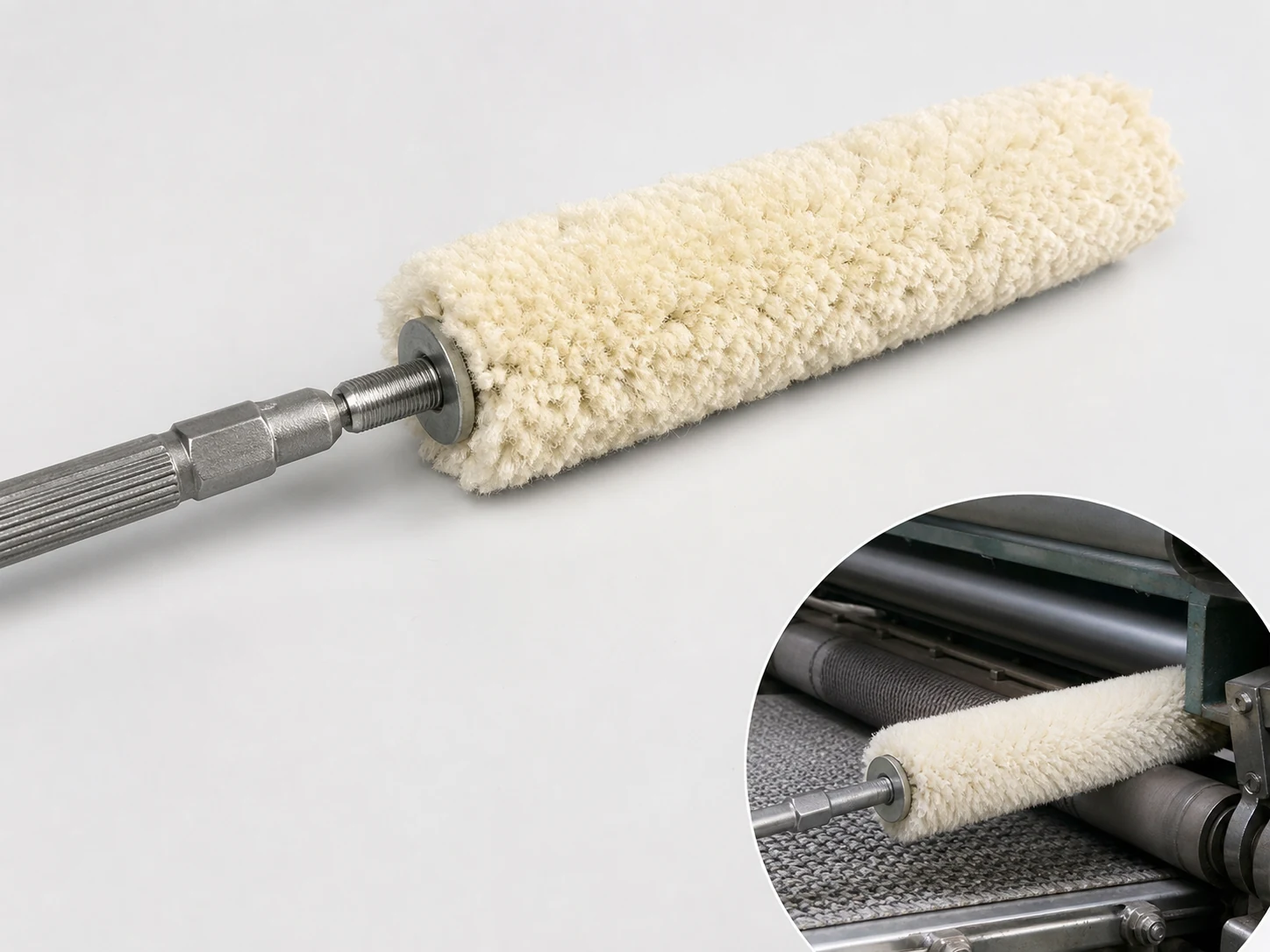
Small brush
500 pcs
Minimum order
Held in one hand: tube, bottle, detail and swab brushes — including long-handled ones with a small head.
Production lead time, once the specification is confirmed
- Up to 500 pcsWithin 7 days
- 501–50,000 pcsWithin 14 days
- Over 50,000 pcsWithin 21 days
Peak season can extend these times; the shipping date is confirmed in writing with your quotation. Sampling and shipping are quoted separately.
A natural wool brush built for dusting, polishing, and controlled application of waxes, dyes, conditioners, and adhesives on surfaces that cannot tolerate stiff or abrasive contact. Head size, wool density, core, handle, and mounting are configurable, so the same wool brush family can cover a 10 mm detail dauber, a 150 mm polishing head, or a 6–25 mm rotary end brush.
What can this brush do for you?
Fine, Scaled Fibers Pick Up Dust Without Marking the Finish
Natural wool fibers carry microscopic scales that trap dust and loose particulate while the rounded tips glide over clearcoat, leather grain, painted trim, and polished metal. The result is a dry dusting or light cleaning pass that removes contamination without the fine scratches a stiff nylon or abrasive bristle can leave on a finished surface.
Absorbent Wool Metes Out Liquids Instead of Dumping Them
The same fiber structure that holds dust also absorbs wax, dye, conditioner, and adhesive, then releases them gradually as the brush moves across the part. This controls coverage and reduces drips, streaks, and puddles in dyeing, polishing, and gluing work where too much product at one time is a defect.
Dense Wool Works Into Spoke Gaps, Stitches, and Molded Recesses
Wool fibers flex and compress under fingertip or machine pressure, then recover their shape. A dense 10–30 mm head follows the narrow channels between wheel spokes, leather seams, and small molded details where a flat cloth or block brush only skims the high points.
Wet or Dry Use Without Losing Shape
The brush works dry for dust pickup and wet for polish or dye application. Natural wool absorbs and releases liquids without melting or collapsing like some synthetics, and a properly dried head returns to its original loft for the next cycle. This makes one brush family suitable for both bench prep and finishing steps.
Handheld and Rotary Configurations From the Same Wool Head
The wool media can be fitted to a short hand handle for detail work, an extended 300–800 mm core for reaching into wheel wells or equipment housings, or a 6–25 mm OD shank for drill and die-grinder use. Balancing speed, head density, and shank fit lets you move the same finish-safe contact into manual or powered operations.
What is a Wool Brush?
A Wool Brush is a cleaning and finishing tool whose working end is formed from natural wool instead of synthetic bristle. The wool is wound, needled, or felted around a core, or set into a ferrule, so the head stays anchored during push, pull, and circular strokes. It works by repeated light contact: the fibers hold dust or product and transfer it to the surface in controlled amounts.
The brush is used in three basic positions: as a short hand dauber for bench finishing, as an extended-reach tool for wheels and hard-to-access surfaces, and as a rotary end brush for powered polishing or dusting. The same wool density can be offered in each format when the shank, balance, and operating speed are matched.
Natural wool is absorbent and resilient, but it is not a heavy-deposit scrubber. After wet use, rinse the head, squeeze out excess liquid, and dry away from direct heat; dried product in the wool can harden and change application behavior. Because wool can shed loose short fibers, a quick comb or flick before first use and between color changes keeps the workpiece clean.
Technical Specifications
Dimensions and materials below are standard project ranges. Final values are confirmed during customization.
| Parameter | Value / Options |
|---|---|
| Working head width or diameter | 10–150 mm; 10–50 mm typical for handheld detail work; 6–25 mm OD for rotary end-brush heads |
| Working head length | 20–250 mm of exposed wool contact |
| Overall reach | 100–800 mm |
| Media thickness / fill depth | 5–60 mm; selected for low, medium, or high wool density |
| Wool type | Scoured natural sheep wool, lambswool, twisted wool yarn, needled or felted wool, wool/synthetic blend |
| Core / handle diameter | 2–30 mm |
| Core / handle material | Hardwood, PP, aluminum, 304 stainless steel, or project-specified |
| Attachment | Mechanical ferrule, epoxy-set, crimped, or molded retention; solvent-resistant bonding option |
| Mounting | Handheld, extended reach, or cylindrical/hex shank for rotary drive |
| Operating environment | Dry dusting; wet use with water, mild detergent, waxes, dyes, conditioners, and light solvents; chemical list specified for compatibility |
| Brush type | Custom End Brushes |
| How it is driven | Supplied hand-guided or machine-mounted |
| Cleaning target | coated alloy wheel, leather shoe, and decorative painting and diy craft cleaning |
| Surface or part | spokes, housings, recesses, seams, panels, instruments, lug recesses, and machine housings |
| Residue or debris | wax, dust, fiber, adhesive, brake dust, polish, oil, and scale |
| Mounting / connection | Mechanical ferrule, epoxy-set, crimped, or molded retention; solvent-resistant bonding option; Handheld, extended reach, or cylindrical/hex shank for rotary drive |
Two ready-to-adapt formats are available: a handheld brush with 150–250 mm overall length and 10–50 mm head width, and a rotary end brush with 6–25 mm outer diameter and 2–8 mm contact length. Both use the same wool selection and density logic.
Where does this brush work best?
- Coated alloy wheels — dust and light brake dust around spokes, lug recesses, and rim lips; soft wool does not scratch clearcoat or painted finish.
- Leather shoes, bags, and goods — applying dye, conditioner, and polish into seams, creases, and edges without leaving bristle marks.
- Decorative painting and DIY crafts — controlled glue, dye, stain, and patina application on small parts, stencils, and textured surfaces.
- Industrial equipment dusting — instrument faces, finished machine housings, control panels, and optics where dry, non-scratch pickup is needed.
- Wood and furniture finishing — applying wax and oil into carved, fluted, or contoured profiles that flat cloths skip.
How do I choose the right one?
Five checks cover most wool brush selections.
- Start with the access space. Measure the narrowest gap or recess the head must enter. Detail work in wheel spokes, stitches, and small cavities usually needs a 10–30 mm head; broad panel polishing can use 50–150 mm.
- Match density to the material. Low-density wool picks up loose dust and applies thin coats; dense twisted or felted wool holds more liquid and releases it more slowly for dye, glue, and conditioner work. Test density with the actual material before committing to production.
- Set reach and grip. Short 150–250 mm handles give fingertip control for bench work. Long 300–800 mm cores reach into wheels, tanks, and housings but sacrifice some pressure control; a rigid core helps keep the head on line.
- Confirm chemistry and temperature. Wool tolerates water-based formulas, mild solvents, waxes, and conditioners. Strong acids, strong alkalis, and high-heat processes degrade the fiber; specify the chemical list and process temperature before material selection.
- Decide hand or rotary. Hand use favors wider heads and medium density for even stroke control. Rotary use needs a balanced shank, a head sized for the RPM, and density high enough to resist centrifugal flattening.
| Use condition | Recommended configuration |
|---|---|
| Tight wheel spokes, leather seams, small recesses | 10–30 mm dense wool head, short rigid core, hand control |
| Large flat painted or coated panel | 50–150 mm flat or dome head, medium density, 150–250 mm handle |
| Dye, glue, or conditioner application | Dense twisted or felted wool, solvent-resistant ferrule, controlled-release density |
| Rotary polishing or dusting on finished metal | 6–25 mm OD end brush with 2–8 mm contact, balanced shank, speed-matched density |
| Deep equipment cavity or housing | 300–800 mm overall reach, rigid core, head width matched to opening |
| Light dusting of instruments or optics | Wide low-density head, short handle, natural or low-lint scoured wool |
When this brush is not the right choice. Use a nylon, PBT, brass, or stainless steel brush when the deposit is baked, sintered, or requires aggressive mechanical removal—heavy corrosion, hardened brake dust, or mill scale. Use synthetic microfiber or PU foam when lint-free output is a process requirement. Choose a heat-resistant or chemical-resistant synthetic fiber when the process runs beyond wool’s practical temperature or chemical tolerance.
Can I customize this brush?
Wool brushes are configured around the actual contact area, liquid, and work method. To define a custom configuration, provide the target surface, access dimensions, residue or coating, liquid chemistry, operation method (hand or rotary), rotary speed if applicable, and a drawing or sample.
- Head geometry — round, flat, dome, pointed, tapered, or bevel; working width or OD 10–150 mm; exposed length 20–250 mm.
- Wool media — natural sheep wool, lambswool, twisted yarn, needled or felted wool, synthetic blend; scouring level, fiber length, density, and color.
- Core and handle — hardwood, PP, aluminum, or stainless steel; diameter 2–30 mm; length 100–800 mm; straight, ergonomic, loop, or hanging feature.
- Mounting — plain shank, threaded end, hex, or round shaft for drill or die grinder; keyed or set-screw option where needed.
- Color and marking — natural or dyed wool, custom handle color, branding, pad print, or laser marking.
- Packaging — bulk, polybag, retail card, kit, or project-specific packing with color coding.
If the project requires material declarations, inspection documentation, or third-party testing support, we can assist as part of the customization scope.
How do you confirm a wool brush has actually cleaned the surface?
How do I know if the wool density is right for my job?
Apply your intended liquid to a test panel and watch the brush. If the liquid pools or drips at the head, or fibers separate into wet clumps, the density is too low. If the head skips over the surface without holding any liquid, it is too dense. For dry dusting, the head should pick up visible dust in one pass and leave no fiber trails.
What should I do to a new wool brush before first use?
For wet work, dampen or condition the wool with the working liquid, then comb out loose fibers and check that the ferrule or core is secure. For dry dusting, flick or comb the head over a waste bin to release loose short fibers. This preparation usually prevents first-use shedding on the workpiece.
Can this brush remove heavy baked-on brake dust from wheels?
Not by itself. Wool is a finishing and light-cleaning medium. For sintered or baked brake dust, pre-soak the wheel with a dedicated cleaner, use a nylon or chemical-resistant detail brush for the heavy deposit, then switch to the wool brush for final dust removal or polish application. If the deposit resists the pre-soak, it is outside this brush’s working range.
How do I avoid cross-contamination between colors and chemicals?
Keep a separate wool brush for each color, dye, glue, or polish family. If a brush must switch, clean the head immediately with the solvent or detergent recommended for that product, rinse thoroughly, and dry completely away from direct heat before the next use. Color-coded handles or heads make this separation easier in production settings.
How should I inspect wool brushes before returning them to service?
Check that the ferrule or bonding area is tight, with no rotation or movement at the head. Bend the wool fibers gently; they should spring back instead of staying matted or breaking. Look for hardened residue, mildew odor, or excessive shedding. A head that has lost its spring or shape will not give controlled application and should be replaced.
When does a synthetic fiber make more sense than wool?
Choose wool when you need gentle polishing, natural absorbency, and even release of waxes, dyes, or conditioners on scratch-sensitive surfaces. Choose synthetic microfiber, PBT, or foam when the process demands lint-free output, repeated high-temperature or aggressive chemical exposure, or a brush that can be sanitized more aggressively. For heavy abrasion, use nylon, PBT, or wire.
Guides that go deeper on this
We have not written a guide specific to this one yet. The material that covers selection, filament, dimensions, maintenance and sourcing is collected in the technical resources library.
Custom Manufacturing RFQ
Describe Your Application
Please include the main sizes, application, residue, preferred material, interface, quantity, and any drawing or sample available.
Drawing or photo optional — it speeds things up, it does not gate the enquiry.
Custom Brush RFQ
Send Your Brush Project
Upload a drawing, product photo, or sample photo and provide the core dimensions and cleaning conditions.
“We need a brush to remove wet residue from a stainless steel conveyor, about 800mm wide. The current brush wears quickly. We can send photos.”
“We sell drinkware and need a cleaning brush to include with the product. Quantity around 5,000 pieces.”