
Custom Cleaning Brush
Drainage Ditch Cleaning Brush
Heavy-duty drainage ditch cleaning brushes with nylon, polypropylene, or 316 stainless wire fill. Long handles, replaceable heads, custom channel fit.
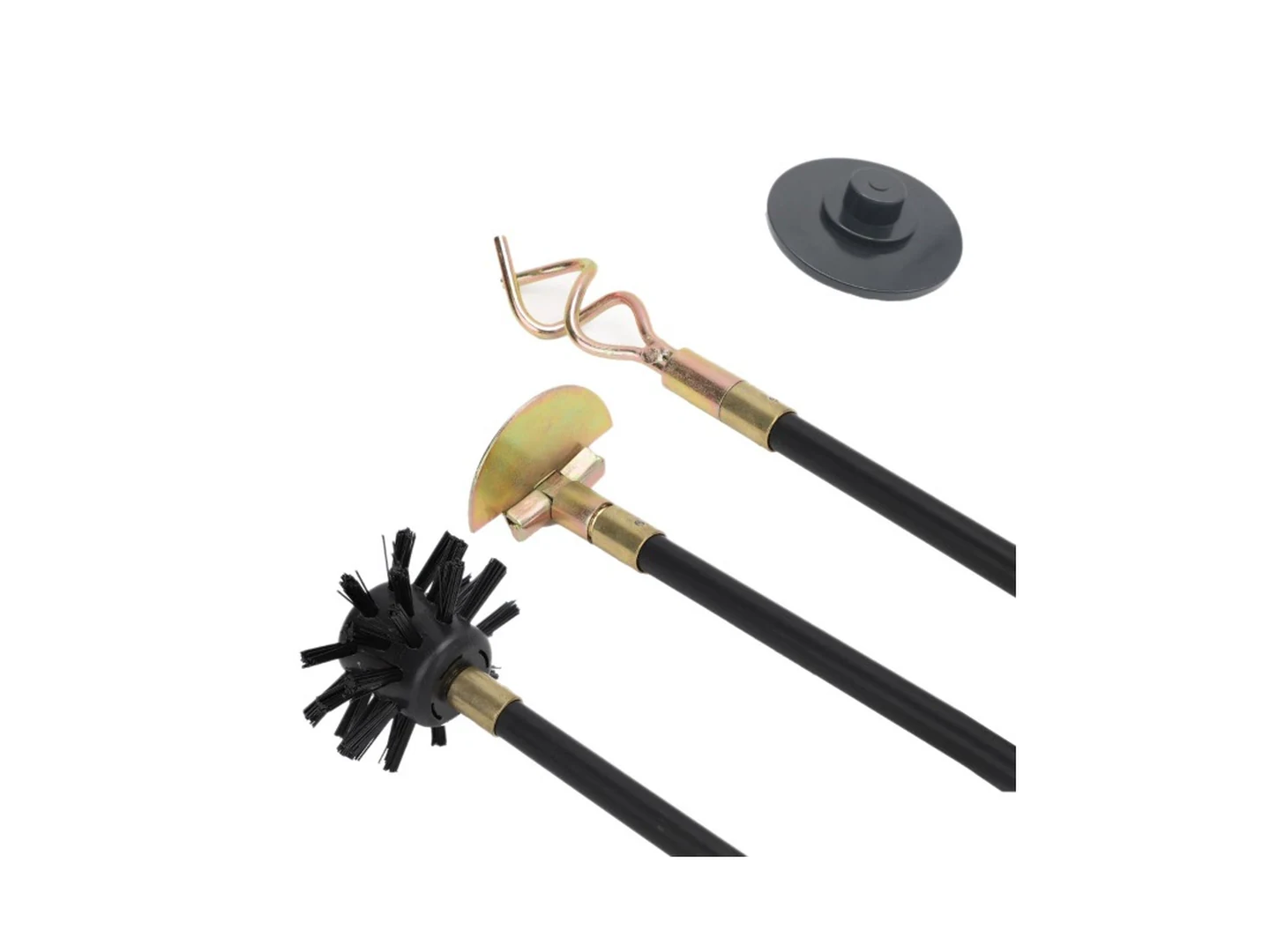
Medium brush
100 pcs
Minimum order
Worked with two hands or on a pole: chimney, gutter and pond-filter brushes, discs, cups and tank brushes.
Production lead time, once the specification is confirmed
- Up to 100 pcsWithin 7 days
- 101–5,000 pcsWithin 14 days
- 5,001–50,000 pcsWithin 21 days
- Over 50,000 pcsConfirmed with your quotation
Peak season can extend these times; the shipping date is confirmed in writing with your quotation. Sampling and shipping are quoted separately.
A long-handled outdoor brush built for cleaning open drainage ditches, curb channels, trench drains, and stormwater swales. Nylon, polypropylene, or 316 stainless steel wire fill options match the residue and surface condition while the angled head keeps the operator’s hands and knees out of the work.
What can this brush do for you?
Stand-up cleaning along the full channel length
Overall lengths from 300 to 1500 mm let a worker stand upright at the edge of the ditch and sweep the channel floor without kneeling or climbing in. The long handle carries the brush into the bottom of the channel while the operator keeps secure footing on level ground.
Filament choice for mud, leaves, moss, or caked deposits
Nylon PA sweeps loose sand, leaves, and light mud gently across concrete. Polypropylene resists water absorption and mild chemical exposure in wet ditches. 316 stainless steel wire attacks hardened mud, embedded moss, and mineral scale that would flatten soft synthetic bristles. The filament is selected for the residue, not the brush category.
Angled head follows the floor-to-wall transition
The head can be fixed at a working angle or fitted with a swivel so the bristle face stays flat on the channel floor while the operator is standing beside it. Short trim lengths and dense fill let the corners of the head dig out the line where the floor meets the sidewall, which is where most drainage sediment packs in.
Open fill sheds what it removes
Rows are spaced so leaves, mud, and grit do not lodge permanently in the bristle pack. Rinsing with a hose clears the head between passes, and the brush carries less weight as work continues.
Replaceable head keeps the handle in service
When the head wears or a different filament is needed for seasonal debris, the head can be swapped at the pole interface without replacing the handle. Maintenance crews can keep one handle in the truck and change heads by the job.
What is a Drainage Ditch Cleaning Brush?
A Drainage Ditch Cleaning Brush is a hand-guided outdoor cleaning tool that uses a dense bristle head on an extended handle to mechanically clear open channels, ditches, and curb lines. It is most often used with push-pull strokes along the channel floor and short scrubbing strokes in corners and around grates.
Unlike a push broom, this brush uses shorter, tighter-set fill that applies concentrated pressure to embedded material in a narrow channel. Unlike a flexible pipe brush, the handle is rigid so the operator can push downward and pull through accumulated sediment without the tool buckling. The head contacts concrete, asphalt, cast iron, or aggregate surfaces, so filament selection must balance cleaning aggressiveness against surface marking.
This is a tool for loosening, sweeping, and moving attached debris. It is not a vacuum, water jet, or powered scrubber. After brushing, the channel still needs flushing or mechanical removal of the loosened material.
Technical Specifications
All dimensions and materials can be adjusted to the channel, debris, and crew. The table shows standard ranges and options used for typical drainage ditch builds.
| Parameter | Standard Value / Options |
|---|---|
| Overall length | 300–1500 mm, selected for channel depth and operator height |
| Head width | 200–400 mm standard for open channels; 30–60 mm narrow face available for slot drains and tight curb lines |
| Bristle trim length | 8–40 mm, shorter for stiff scraping, longer for irregular concrete |
| Filament diameter | 0.10–0.80 mm, finer for light sweeping, coarser for heavy residue |
| Filament material | Nylon PA, polypropylene PP, or 316 stainless steel wire |
| Handle diameter | 8–35 mm, matched to grip and extension pole interface |
| Handle material | Fiberglass, aluminum, steel, or hardwood, selected for weight and exposure |
| Head attachment | Threaded ferrule, slip-on yoke, or bolt-through replaceable head |
| Head angle | Fixed 0–45° or swivel; 15–25° keeps the face flat during stand-up use |
| Operating temperature | 5–100°C (41–212°F), material dependent |
| Fill pattern | Standard dense row; custom spacing and density available |
| Brush type | Custom Handheld Detail Brushes |
| How it is driven | Hand-guided |
| Cleaning target | stormwater drainage ditch, curb and gutter channel, and trench drain and linear drain cleaning |
| Surface or part | channel, ditches, drain, curbs, corners, floors, concrete, and pipes |
| Residue or debris | sediment, leaves, mud, moss, sand, silt, litter, and mineral scale |
| Mounting / connection | Threaded ferrule, slip-on yoke, or bolt-through replaceable head |
Where does this brush work best?
- Stormwater drainage ditches along roadways, ramps, and warehouse aprons where leaves, sand, and mud collect after storms.
- Curb and gutter channels where sediment packs into the floor-to-curb corner and clogs the flow line.
- Trench drains and linear drains around loading docks, parking areas, and wash bays that need regular mechanical clearing.
- Catch basin rims, open gratings, and slot drain openings where litter and debris block water intake.
- Agricultural and landscape swales carrying silt, moss, crop residue, and organic buildup through the growing season.
- Food and beverage outdoor drains where wash-down residue combines with leaves; polypropylene or stainless wire fill can be selected for the chemical and moisture conditions.
How do I choose the right one?
Start with the ditch geometry, because it sets head width, head angle, handle length, and how far the operator must reach.
- The head should clear the narrowest point of the channel without binding but still cover enough of the floor to avoid extra passes.
- The handle length should let a standing operator reach the channel bottom without stooping. A handle that is too long reduces downward pressure and makes control harder.
- The head angle should keep the bristle face near-flat on the floor while the operator stands at the edge.
Match the filament to the debris and surface
Nylon PA is the gentlest contact and works well for leaves, sand, loose mud, and light film on concrete. Polypropylene is a better choice in continuously wet ditches with mild chemicals or algae film because it absorbs very little water and resists many wash-down solutions. 316 stainless steel wire is used when hardened mud, moss, or mineral scale has bonded to the channel surface and the synthetic options simply fold over without removing it.
If the channel is decorative, colored, or coated concrete, avoid wire fill unless marking is acceptable. If the debris is hard mineral scale or heavy embedded moss, nylon will leave the deposit behind.
Set trim length and filament diameter to the scrubbing pressure you need
Short trim with a larger filament diameter creates a firmer, more aggressive face for scraping packed sediment. Longer trim with fine filament conforms better to irregular aggregate and applies less pressure, which protects the surface. Choose the combination that removes the residue without damaging the substrate.
Consider replacement and interface
If a maintenance crew replaces heads weekly, a threaded or bolt-through replaceable head keeps the handle in service and cuts replacement cost. If the brush is used only seasonally, a fixed head is simpler and lighter. Match the attachment to any existing extension poles or handles the crew already uses.
When a different tool makes more sense
Use a flexible shaft drain brush for enclosed pipes or culverts the rigid handle cannot enter. Use a powered broom or vacuum for large volumes of loose leaves. Use a high-pressure washer to finish silt removal after the brush has loosened it. For heavy snow removal, a snow pusher is the primary tool; this brush can sweep light snow but is not built for heavy accumulation.
Can I customize this brush?
We build this brush to the channel, not the other way around. To define a custom configuration, provide the channel width and depth, the narrowest access point, debris type, surface material, preferred handle length and grip, whether the ditch holds standing water or sees chemicals, and the replacement interface if heads will be swapped.
- Head geometry: width, length, angle, row pattern, end shape for corners, and swivel or fixed mounting
- Fill: material, filament diameter, trim length, density, and staple-set or crimped construction
- Handle: overall length, diameter, material, grip, hanging feature, and threaded extension compatibility
- Head interface: threaded ferrule, bolt-through plate, quick-change, or one-piece fixed construction
- Color and marking: custom filament color, handle branding, pad printing, laser marking, or identification coding
- Packaging: bulk, individual bag, retail sleeve, or project-specific packing
If your project requires material declarations, inspection, or third-party testing, we can support those requirements as part of the customization process.
Which filament belongs on a drainage ditch cleaning brush, and how is that verified?
How do I verify the filament is stiff enough for the debris in my ditch?
Before specifying the full order, test a sample or standard brush head on the actual channel. If the bristles fold flat under normal hand pressure and do not move the residue, increase the filament diameter or shorten the trim length. If the face scratches soft concrete or leaves swirl marks, reduce the diameter or switch from wire to nylon.
When should I choose stainless steel wire fill over nylon or polypropylene?
Choose 316 stainless steel wire when hardened mud, attached moss, or mineral scale has bonded to the channel and synthetic bristles cannot break it loose. Choose nylon or polypropylene for loose debris and for surfaces where wire marks are unacceptable. The wire option is a scrubbing tool, not a general sweeping tool.
What should I check before using the brush in a new drainage channel?
Inspect the channel for rebar, anchor bolts, cracked concrete edges, or other projections that can catch and snap bristles or damage the handle. Remove branches, large stones, or debris too heavy for the brush to move. Confirm the head attachment is tight and that a swivel head rotates freely before starting.
Does brushing alone clear the ditch, or do I still need to flush or vacuum?
Brushing loosens and moves attached material, but the loosened debris still has to be carried away by water flow, a vacuum, or manual removal. Brushing is the mechanical stage of the cleaning sequence, not the complete sequence.
How do I know when to replace the brush head?
Replace the head when the trim length is less than half the original, when bristles stay splayed and no longer spring back, or when the plastic or metal ferrule is cracked or corroded. A worn head will skim over the channel floor instead of applying pressure to the residue.
How should I store the brush between uses?
Rinse the head after use and store the brush dry, off the ground, and out of direct sunlight when possible. Nylon and polypropylene degrade with long-term UV exposure, and stainless handle hardware should be rinsed to remove road salt or chlorides. Dry storage prevents the fill from matting and extends the working life.
Guides that go deeper on this
Custom Manufacturing RFQ
Describe Your Application
For an accurate quotation, please provide the main dimensions, material preference, working surface, residue, quantity, and a drawing or photo.
Drawing or photo optional — it speeds things up, it does not gate the enquiry.
Custom Brush RFQ
Send Your Brush Project
Upload a drawing, product photo, or sample photo and provide the core dimensions and cleaning conditions.
“We need a brush to remove wet residue from a stainless steel conveyor, about 800mm wide. The current brush wears quickly. We can send photos.”
“We sell drinkware and need a cleaning brush to include with the product. Quantity around 5,000 pieces.”