
Custom Cleaning Brush
Moss Removal Brush
Remove moss, algae, and lichen from roofs, turf, gutters, and hardscapes with a stiff abrasive nylon brush. Pole-ready, 100–300 mm heads; custom sizes.
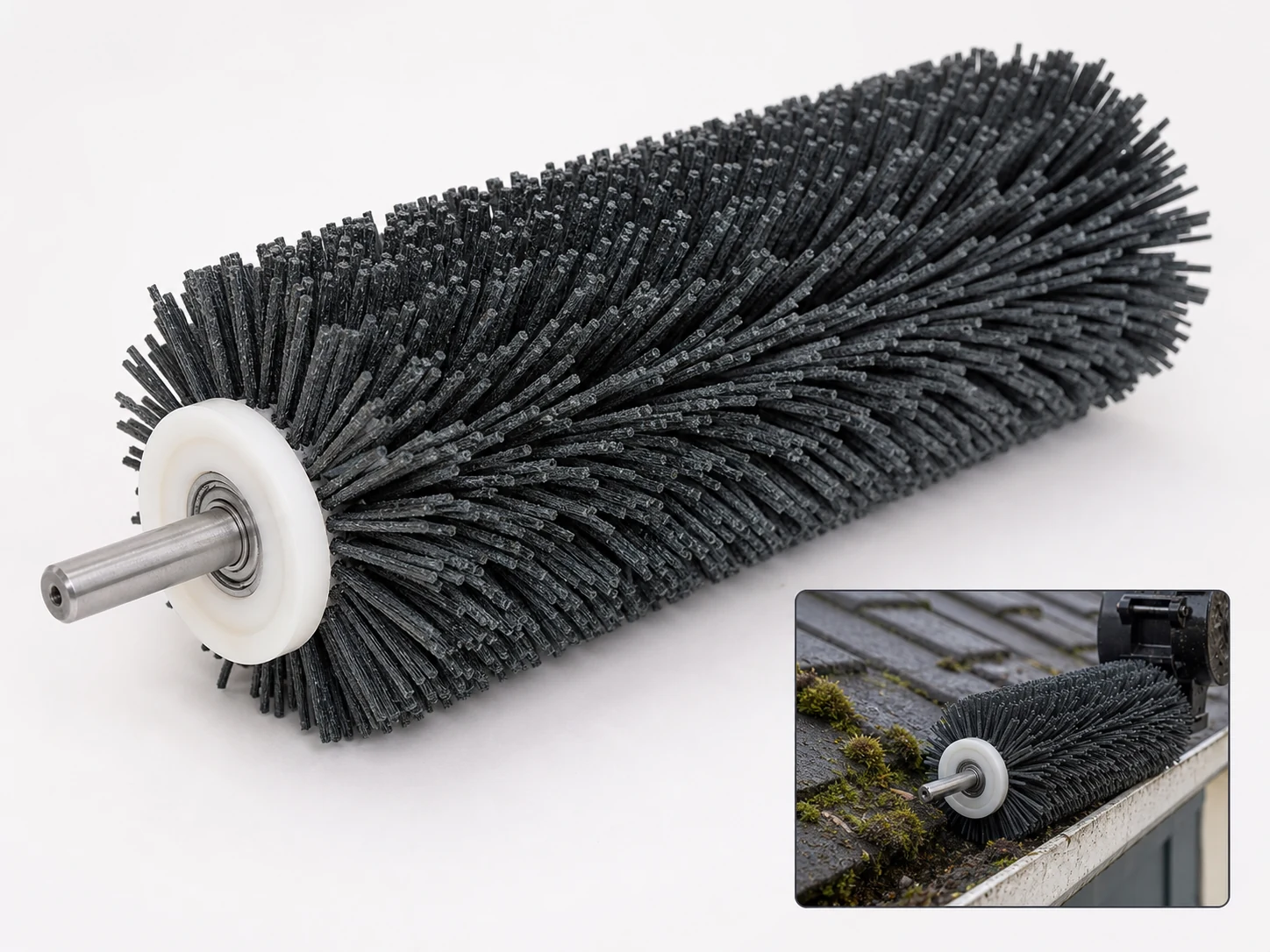
Medium brush
100 pcs
Minimum order
Worked with two hands or on a pole: chimney, gutter and pond-filter brushes, discs, cups and tank brushes.
Production lead time, once the specification is confirmed
- Up to 100 pcsWithin 7 days
- 101–5,000 pcsWithin 14 days
- 5,001–50,000 pcsWithin 21 days
- Over 50,000 pcsConfirmed with your quotation
Peak season can extend these times; the shipping date is confirmed in writing with your quotation. Sampling and shipping are quoted separately.
The moss removal brush combines a wide polymer head, stiff abrasive nylon fill, and a standard pole thread to lift moss, algae, and lichen from roof planes, synthetic turf, gutters, and exterior textures without putting operators on fragile surfaces. It is built for wet or dry manual brushing jobs where long reach and surface-safe scrubbing matter more than aggressive wire contact.
What can this brush do for you?
Lifts Moss and Algae Without Wire Contact
Silicon-carbide–impregnated nylon filaments cut through surface moss, algae film, and shallow lichen while remaining softer than steel wire. On asphalt shingles, concrete tile, and glazed roofing, the brush removes organic growth instead of shaving off protective granules or leaving rust streaks behind.
Covers Wide Roof Runs from a Ladder or the Ground
Head widths from 100 to 300 mm clear more area per stroke than a hand scraper, and the 1–4 m pole interface keeps the operator off unsteady slopes, glazed tiles, or brittle slates. On low-pitch roofs and single-story eaves, the work can be done without walking on the surface at all.
Clears Wet Moss Without Clogging the Fill
Crimped or straight filament layouts and an open trim pattern let wet moss, leaves, sand, and turf debris release from the head instead of packing between rows. The brush keeps working through heavy organic loads that normally choke dense scrubber fills.
One Head Moves from Roof to Gutter to Turf
The same stiff fill scrubs roof grooves, gutter exteriors, pool-wall recesses, synthetic turf thatch, and textured concrete. Contractors can consolidate tooling instead of carrying separate roof, deck, and turf brushes.
No Rust Marks on Light-Colored Surfaces
Nylon, SiC, and polypropylene contact materials do not corrode or transfer metal stains to white tile, light-colored plaster, or light shingle granules. The tool can sit outdoors or be used in wet conditions without generating rust.
What is a Moss Removal Brush?
A moss removal brush is a manual cleaning head that uses stiff polymer filaments—usually nylon PA or silicon-carbide abrasive nylon—to scrape and sweep moss, algae, lichen, and loose organic matter off exterior surfaces. It is made for the textured, sloped, and hard-to-reach areas where a squeegee cannot bite and a steel brush is too aggressive.
In roof work, the head is threaded onto a telescoping or fixed pole, pushed across the shingle or tile plane in overlapping strokes, and used to lift the moss mat before or after chemical treatment. On synthetic turf, the same head combs infill and removes matted debris; in gutters and around pools it works as a stiff scrubber for algae film and mineral staining.
The result is mechanical moss removal, not disinfection. The brush removes attached growth and loosened debris; it does not kill spores or prevent regrowth by itself. It is a complementary tool in a roof maintenance or surface-cleaning sequence, not a replacement for biocide treatment or rinse and drainage management.
Technical Specifications
The table below lists the standard ranges for this brush. Head width, trim length, filament diameter, and pole interface are adjusted per project.
| Parameter | Standard Range / Options |
|---|---|
| Brush head width | 100–300 mm, selected to cover the roof plane or turf lane |
| Fill material | SiC abrasive nylon (primary); nylon PA or PP for lighter residue |
| Filament diameter | 0.25–1.20 mm |
| Trim length | 25–100 mm |
| Filament form | Crimped or straight, matched to debris release and stiffness |
| Head block / backing | Polypropylene, ABS, or project-specified polymer |
| Pole thread / mount | M18, 3/4 in, ACME, or custom threaded socket / bracket |
| Working reach | 1–4 m with compatible pole or handle |
| Operating temperature | -20°C to 100°C |
| Chemical exposure | Nylon and PP fill rated for diluted roof cleaners and outdoor detergents; confirm concentration before use |
| Brush type | Custom Handheld Detail Brushes |
| How it is driven | Hand-guided |
| Cleaning target | asphalt shingle and composition roof, slate roof tile, and gutter and downspout exterior cleaning |
| Surface or part | gutters, synthetic turf, tile, thread, metal, concrete, asphalt, and panels |
| Residue or debris | moss, algae, lichen, algae film, granules, fiber, leaves, and sand |
| Mounting / connection | M18, 3/4 in, ACME, or custom threaded socket / bracket |
Where does this brush work best?
- Asphalt shingle and composition roofs — lift moss out of granular shingle texture, valleys, and drip edges while keeping granule loss lower than wire alternatives.
- Concrete, clay, and slate roof tiles — scrub moss and algae from grooves, overlaps, and ridge caps on roofs where foot traffic is risky.
- Metal standing-seam and coated panel roofs — remove organic film and debris without scratching painted or coated metal; use lighter abrasive fill for painted panels.
- Gutters and downspout exteriors — clear algae, moss, and attached soil from the outside face.
- Synthetic turf and outdoor carpet — comb matted fibers and lift sand, leaves, hair, and fiber debris from pile.
- Pool walls, coping, and paver joints — scrub algae film and embedded dirt from textured hardscape after wetting.
How do I choose the right one?
Start with the surface and what is growing on it
Soft, recent moss responds to lower filament stiffness and lighter abrasive fill. Older, crusted lichen or moss with mineral buildup needs larger filament diameter and more abrasive grit. The same head cannot be ideal for every growth stage, so choose the fill to the hardest residue you expect to encounter.
Match filament diameter and fill to how hard the residue is
- 0.25–0.50 mm standard nylon PA — light algae film, cosmetic cleaning, coated metal panels.
- 0.50–0.80 mm abrasive nylon — active moss on asphalt shingle, painted surfaces, plastic gutters.
- 0.80–1.20 mm abrasive nylon — thick moss mats, lichen crust, textured concrete and tile.
Choose head width and trim length for access and pressure
Wider heads speed up open roof planes but reduce maneuverability around chimneys, vents, and valleys. Narrower heads reach into gutter runs and turf seams. Longer trim reaches into tile grooves and turf pile; shorter trim applies more tip pressure on flat surfaces and painted metal.
Pick the pole thread and reach you can control
If the crew already uses poles with M18 or 3/4 in threads, match the brush to them. If not, specify ACME or a custom socket. The reach should let operators run overlapping strokes without overextending; a pole that is too long loses applied pressure, while one that is too short forces them farther onto the slope.
| Condition / Requirement | Starting Configuration |
|---|---|
| Light algae film on light-colored shingle | 0.25–0.50 mm nylon PA, 25–40 mm trim, 200–300 mm head |
| Thick moss mat on concrete tile | SiC abrasive nylon, 0.60–1.00 mm diameter, 50–100 mm trim, 150–250 mm head |
| Synthetic turf thatch and fiber debris | nylon PA or light SiC, 40–75 mm trim, narrower head for seams |
| Heavy lichen or mineral scale | consider steel wire moss removal brush or powered wire brush; not a first choice for shingles |
| Rust staining on light surfaces | use nylon or SiC brush instead of steel wire |
Use a wire brush for moss removal only when the surface will tolerate steel or stainless contact—concrete, masonry, and uncoated metal are typical candidates. Do not use steel wire on asphalt shingles, painted panels, or glazed tile if granule loss and scratching are a problem. If you are dealing with thick lichen or mineral scale rather than soft moss, the nylon head may take too long; combine it with a chemical pre-treatment or use a stiffer tool. For very steep or multi-story roofs, consider a telescopic water-fed pole or professional lift equipment instead of hand brushing.
Can I customize this brush?
Moss removal brushes can be configured for the roof or surface you maintain. Provide the surface material, area to be cleaned, residue type, existing pole thread, preferred head width, and working conditions such as wet or dry use, chemical exposure, and summer surface temperature. A drawing or sample photo is enough to start.
- Head width and block shape — 100–300 mm standard, rectangular, contoured, or angled block; custom widths available.
- Fill material and diameter — SiC abrasive nylon, nylon PA, PP, mixed fills, or custom stiffness and diameter.
- Trim length and filament form — 25–100 mm, crimped or straight, flagged or unflagged ends.
- Pole interface — M18, 3/4 in, ACME thread, tapered socket, threaded insert, or quick-release bracket.
- Head material and color — PP or ABS color, UV-stabilized additive, brand marking or label recess.
- Packaging — bulk, individual bag, retail card, or project packing with multiple heads per case.
If the project needs material declarations, dimensional inspection, third-party testing, or documentation for a maintenance contract or public tender, we can support those requirements during customization.
Which filament survives the cleaning chemicals a moss removal brush meets?
Can I use the moss removal brush with roof-cleaning chemicals?
Yes. Nylon PA and polypropylene are compatible with most diluted roof cleaners, oxygen-based cleaners, and mild detergents. Test any new chemical on a small section of the head or consult the chemical supplier before full use. Rinse the head after each shift to prevent dried cleaner from bonding with the filaments.
How do I tell if the brush is too stiff for my shingle roof?
Work a one-square-meter test area on the least visible roof slope or use a spare shingle. After brushing, run a white glove or cloth over the area. If you see excessive granule loss, deep scratches, or torn shingle tabs, drop to a smaller filament diameter, a standard nylon fill, or a shorter trim. Some granule dust is normal; visible erosion is not.
Will this brush kill moss or stop it from returning?
No. The moss removal brush lifts the moss mat and attached debris, but it does not kill spores or prevent regrowth. For durable results, pair mechanical brushing with a suitable moss-control treatment and correct roof drainage. The brush is the physical step in the process, not the chemical step.
Should the surface be wet or dry when brushing?
Both work, but wet moss releases more easily and reduces dust. However, wet roof surfaces are slippery, so follow fall-protection and ladder safety rules. On synthetic turf, brushing dry can make sand and hair release faster; on hard flat surfaces, wetting reduces scratching.
How do I check the brush before starting a roof job?
Confirm the pole thread is fully engaged, the head block is not cracked, and the filament rows are standing upright rather than flattened or matted. Remove leaves and moss trapped in the fill. If the trim is worn below half its original length or the filaments remain bent after cleaning, replace the head.
When should I choose a wire brush for moss removal instead?
Choose a wire brush for moss removal on unpainted concrete, masonry, and uncoated metal where scratching is acceptable and the growth includes hard lichen or mineral crust. Do not use steel wire on asphalt shingles, painted panels, or glazed tiles unless you accept granule loss and rust marks. Stainless steel wire reduces rust but not scratching.
Guides that go deeper on this
Custom Manufacturing RFQ
Describe Your Application
For a custom quote, we need the key dimensions, surface or part, residue, material preference, quantity, and reference image or drawing.
Drawing or photo optional — it speeds things up, it does not gate the enquiry.
Custom Brush RFQ
Send Your Brush Project
Upload a drawing, product photo, or sample photo and provide the core dimensions and cleaning conditions.
“We need a brush to remove wet residue from a stainless steel conveyor, about 800mm wide. The current brush wears quickly. We can send photos.”
“We sell drinkware and need a cleaning brush to include with the product. Quantity around 5,000 pieces.”