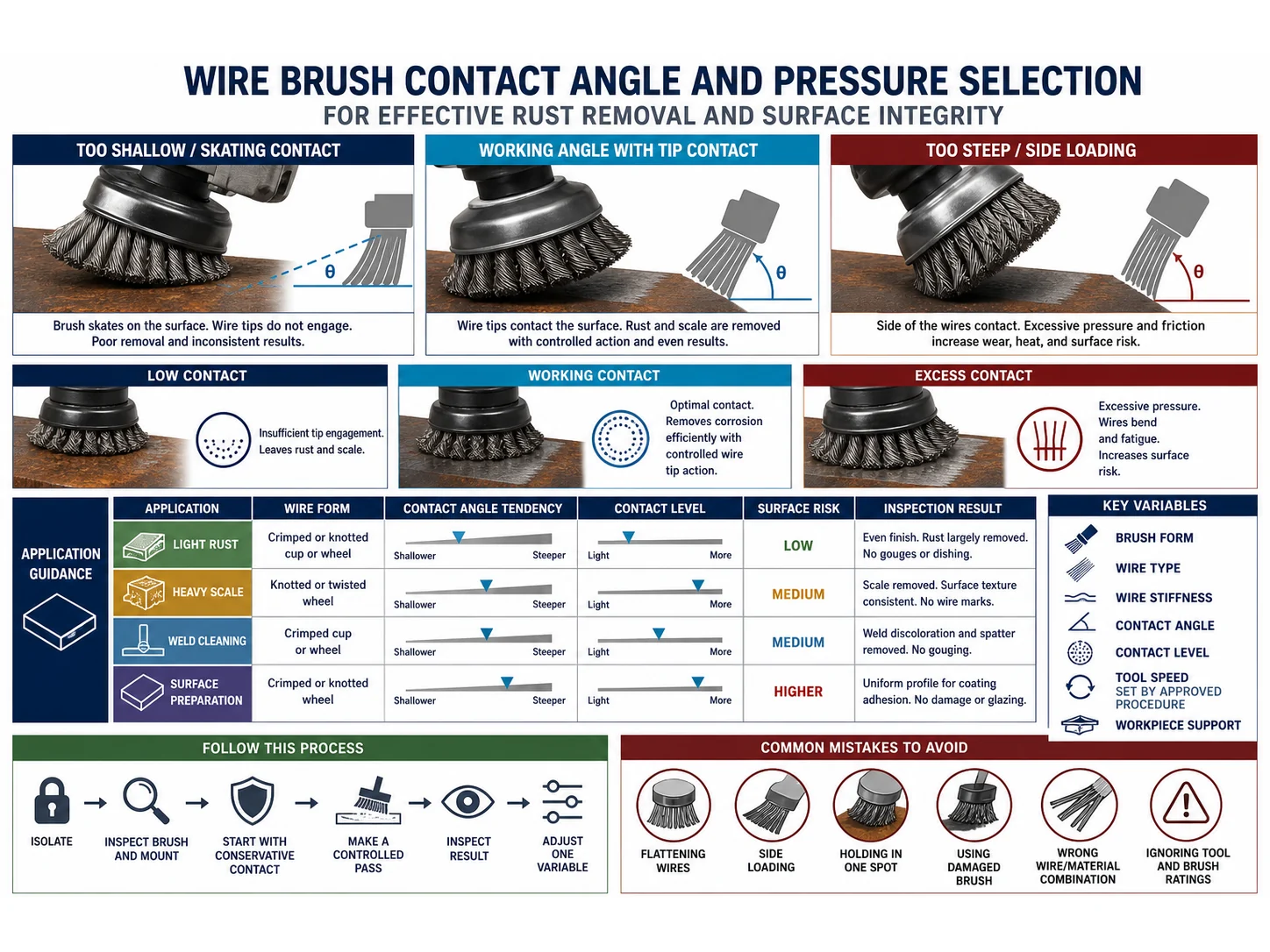
What Is Wire Brush Angle and Pressure?
Wire brush angle refers to the tilt between the brush face and the workpiece surface. Pressure is the force applied through the tool against the work. Together, angle and pressure determine how aggressively the wire tips strike rust, contaminants, and the underlying base material. A neutral or shallow angle typically lets the wire tips glide across the surface, while a steeper angle digs the tips in for faster material removal. Many operators think only about brush speed or wire type, but angle and pressure are the real-time variables that make the difference between a quick clean and a gouged surface.
Common Types of Wire Brushes for Rust Removal
Understanding the brush type helps you judge how angle and pressure behave:
- Crimped wire brushes – Flexible, good for lighter rust and contoured surfaces. More forgiving under moderate pressure changes.
- Knotted or twisted wire brushes – More aggressive, designed for heavy rust and scale. A small angle change can quickly shift from cleaning to cutting.
- Wire cup brushes – Often used on angle grinders. Contact angle is controlled by tool tilt; pressure is transferred along the brush perimeter.
- Wire wheel brushes – Mounted on bench grinders or portable tools. The natural contact angle depends on wheel positioning relative to the part.
- Fine wire brushes – Thinner wire diameters for light surface cleaning or blending. Pressure sensitivity is high.
How Contact Angle Affects Cleaning and Surface Risk
The angle at which wire tips hit the surface changes everything. A small, nearly parallel approach angle (maybe 5–15° tilt) allows the wire tips to strike with a scraping motion that lifts rust without digging deep. This is safer for thin sheet metal, soft substrates, or parts where preserving original surface profile matters. As you tilt the brush into a steeper angle (20–40° or more), the tips begin to cut rather than scrape—great for thick rust and mill scale but risky for base metal damage. The ideal working angle for most rust removal jobs exists in a narrow range: enough to engage the rust layer without driving tips into sound metal. Experiment on a hidden area first, especially with aggressive knot-style brushes.
How Pressure, Speed, and Wire Type Change the Equation
Adding hand pressure can simulate a steeper angle effect. Heavy pressure forces the wire tips deeper, which can cut faster but also shortens brush life through wire breakage and fatigue. A lighter touch, combined with a shallow angle and moderate tool speed, often yields more consistent results with less surface damage. Wire diameter and material matter, too: thicker carbon steel or stainless steel wires withstand higher pressure without bending, while fine wires require a delicate touch to avoid snapping. The best results come from balancing all three factors: angle, pressure, and rpm. If you have to use high pressure because rust is stubborn, first try changing to a more aggressive brush type rather than simply pushing harder.
Comparison: Light Rust, Heavy Scale, Weld Cleaning, and Surface Prep
| Cleaning Task | Rust Severity | Typical Brush Type | Angle Approach | Pressure Guideline | Main Risk |
|---|---|---|---|---|---|
| Light surface rust on steel | Mild, easily removed | Crimped wheel or fine wire brush | Shallow, 5–15° | Light to moderate | Marring soft base metal if too steep |
| Heavy flaking rust / mill scale | Thick, pitted, tightly bonded | Knotted cup brush | Moderate, 15–25° | Moderate to firm, but avoid leaning | Gouging; wire fatigue from excessive pressure |
| Removing weld discoloration | Heat tint, light slag | Fine stainless steel wire brush | Shallow, under 15° | Light; let the brush speed do the work | Cross-contamination, scratching |
| Surface prep before paint/coating | Full rust removal to near-white metal | Knotted or crimped, depending on profile needs | Varies; use shallow for blending, steeper for profile cut | Controlled to avoid creating deep scratches | Over-roughening or embedded contaminants |
| Cleaning threads or delicate parts | Light rust in crevices | Small-diameter wire brush or hand brush | Follow part contour; avoid steep angles | Minimal to preserve threads | Thread deformation |
How to Choose the Right Angle and Pressure for Your Job
Start with the least aggressive combination and ramp up only if needed:
- Identify the base metal and its hardness. Aluminum, thin steel, or polished surfaces need a shallower angle and light pressure.
- Assess rust thickness. Light bloom vs. flaky scale vs. pitting.
- Choose a brush type that matches the job’s aggression requirement.
- Begin testing on a scrap piece or hidden area: set a shallow angle (~10°), light pressure, and observe the cleaning rate and surface condition.
- If rust isn’t fully removed, increase angle slightly before adding pressure. A 5° angle change often makes a bigger difference than doubling downforce.
- Watch for wire brush behavior: flying wire fragments indicate excessive angle or pressure—back off immediately.
Common Mistakes to Avoid
- Using high pressure as a substitute for the correct brush type. This wears out brushes and damages surfaces.
- Working at a dead-flat 0° or 90° angle. Neither cleans efficiently; the wires skip or dig in uncontrollably.
- Ignoring tool rpm. A high speed with a shallow angle can generate enough friction to clean without pressure—don’t default to full speed.
- Forgetting heat buildup. Excessive pressure and steep angles can glaze the surface or blue the metal, especially on thin sections.
- Mixing wire materials. Carbon steel brushes must not be used on stainless if carbon contamination is a concern; match wire material to base metal.
- Skipping a test patch. A small hidden trial can prevent a ruined appearance or dimensional error.
When Wire Brushing Alone Is the Wrong Choice
Wire brushing with angle and pressure adjustment is highly effective for field maintenance and general rust removal, but it has limits. When compliance with a coating specification (such as SSPC-SP 10 or near-white blast) is required, wire brushing cannot create the required surface profile and cleanliness; abrasive blasting is the recognized method. Similarly, safety‑critical parts like pressure vessels or structural joints should be examined by a qualified professional before and after any cleaning—hidden cracks or pitting may be more dangerous than surface rust. If rust is deep enough to reduce cross‑sectional thickness, mechanical cleaning is only a temporary step; replacement or engineered repair is necessary. For hazardous surfaces containing lead paint or other toxic contaminants, follow regulated procedures that may prohibit dry wire brushing entirely.
Final Takeaway
Effective rust removal with a wire brush isn’t about pushing harder or working faster—it’s about reading the surface and adjusting angle and pressure to match the rust layer. A shallow angle with controlled pressure usually protects the base metal; a steeper angle adds aggression when you need it. Always test on a representative area, match the brush type to the job, and know when to stop and call for a more appropriate method. Small changes in how you hold and guide the brush can dramatically improve both tool life and finish quality.
Frequently Asked Questions
Can I use a wire brush on car body rust?
Yes, but choose a fine wire brush or low-aggression crimped brush on an angle grinder or drill with very light pressure and a shallow angle to avoid thinning the metal. Test on an inner panel first, and be prepared that heavy pitting may require more than wire brushing for a proper repair.
What angle grinder speed is best for wire brush rust removal?
Variable speed angle grinders let you control rpm. For most rust removal tasks, 6,000–8,500 rpm works well with a wire cup or wheel brush. Higher speeds increase cutting action, which can substitute for pressure, but too fast may lead to wire shedding and surface damage. Always stay within the brush manufacturer’s max rpm rating.
Why does my wire brush throw wires quickly?
Excessive pressure, a steep impact angle, overspeeding, or using a worn brush are the most common causes. Wires break and fly out when they bend past their fatigue limit. Reduce pressure, decrease the angle, check your tool’s rpm, and replace the brush if it shows uneven wear.
How do I know if I’m applying too much pressure?
Signs of too much pressure include: rapid brush wear, blue or discolored metal, a rough surface that feels gouged, excessive sparking, and premature wire breakage. If the tool bogs down, you’re likely pushing too hard. Try lightening up until the brush still engages the rust without laboring the motor.
Is a wire drill attachment effective for rust removal?
Wire brush drill attachments can handle light to moderate rust on smaller parts, but the lower rpm and less rigid connection limit their effectiveness on heavy scale compared to an angle grinder. Use a shallow angle and let the drill speed—not heavy pressure—do the work. For large flat areas, an angle grinder with a cup wheel is faster and more controllable.
Should I use a crimped or knotted wire brush for rusted fence railings?
Crimped wire brushes are usually a safer start for painted railings or light rust. If the rust is thick, heavily pitted, or there is old mill scale, a knotted brush can save time, but you must be careful with angle and pressure to prevent deep metal scoring. Always test on an inconspicuous area first.
Does wire brushing create a profile for paint adhesion?
Wire brushing creates a very shallow, non-uniform profile that may not meet some coating specifications. For demanding industrial applications where minimum surface profile and cleanliness are mandated, abrasive blasting is preferred. For many maintenance painting jobs, a well-executed wire brushing with enough angle to produce a uniform scratch pattern can improve adhesion sufficiently. Check the coating manufacturer’s requirements.
Technical References
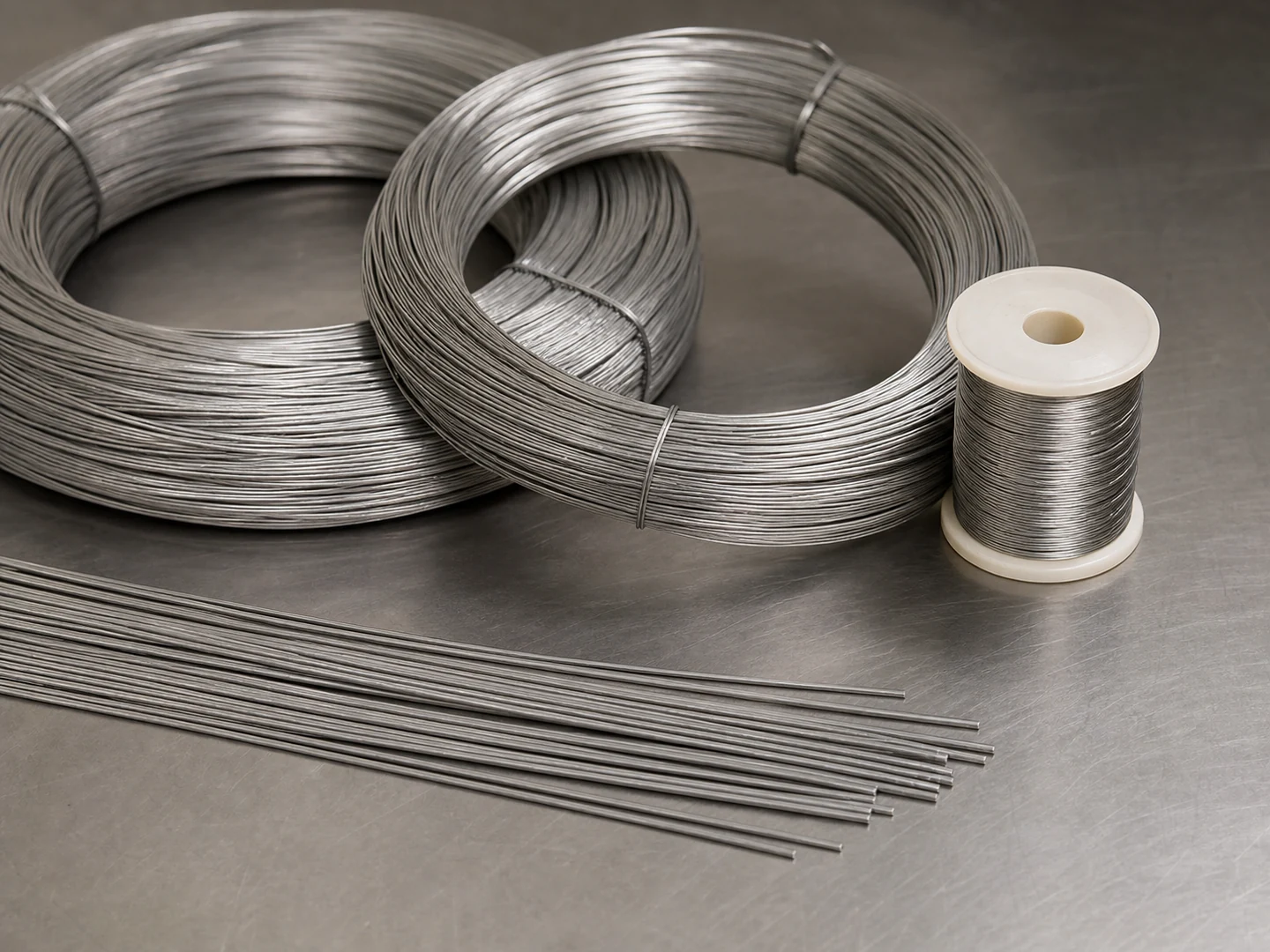
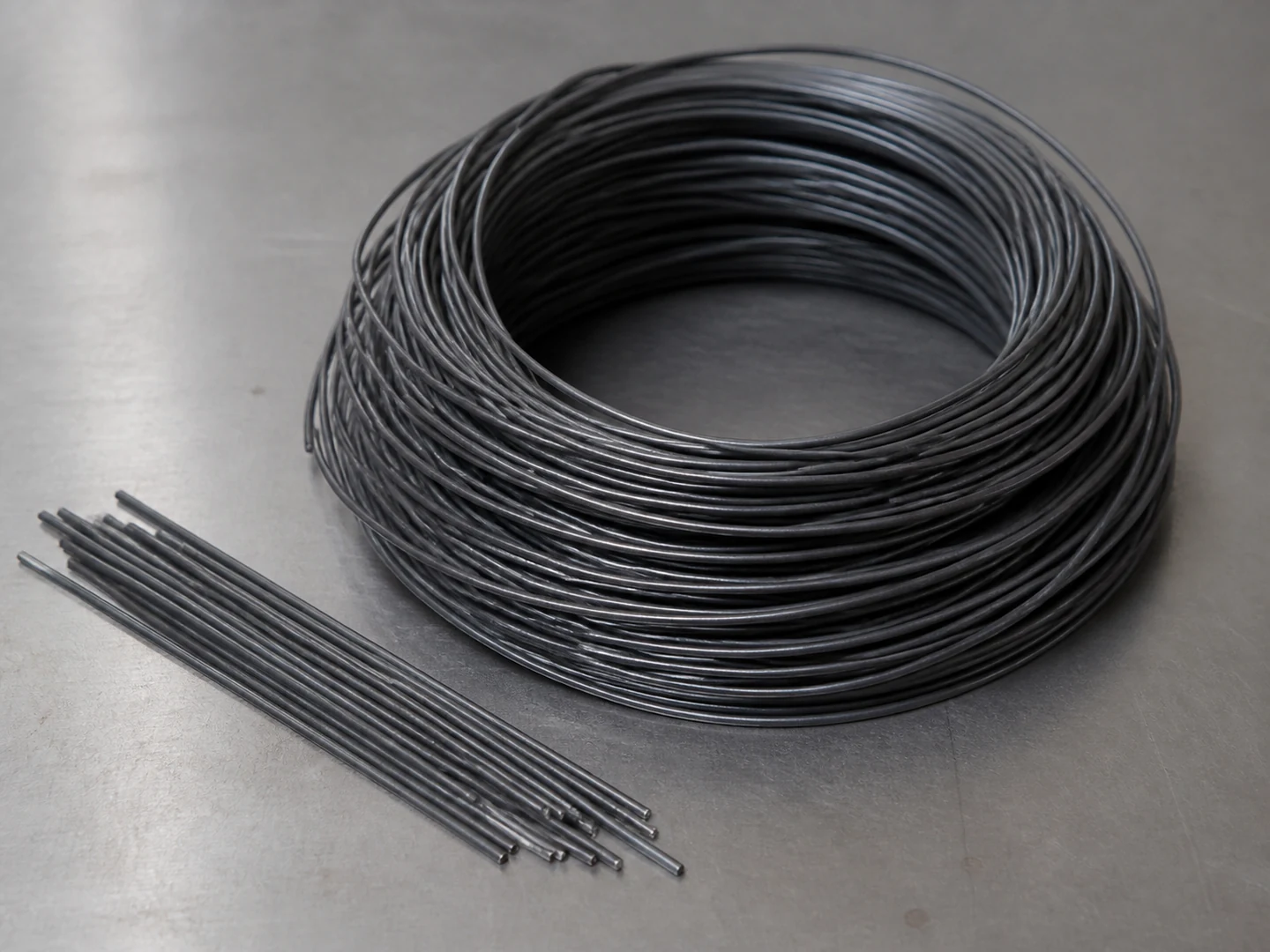
Which steel wire grade fits this job — AISI 304 Stainless Steel Wire, AISI 316 Stainless Steel Wire or Carbon Steel Wire?
| Wire grade | Continuous temperature (°C) | Peak temperature (°C) | Water absorption | Hardness |
|---|---|---|---|---|
| AISI 304 Stainless Steel Wire | 400 | 500 | 0% | Rockwell B 70–95 depending on temper and cold work |
| AISI 316 Stainless Steel Wire | 400 | 500 | 0% | Rockwell B 70–95 depending on temper and cold work |
| Carbon Steel Wire | 200–300 | 350–450 | 0% | Rockwell C 40–60 |
| Galvanized Steel Wire | 150–200 | 250–300 | 0% | Rockwell B 70–100 |
Figures as published by Alleima; Material manufacturer TDS / ISO / ASTM / industry reference. Confirm the exact grade against the supplier datasheet before ordering.
What should replace Handheld Detail Brushes for effective rust removal?
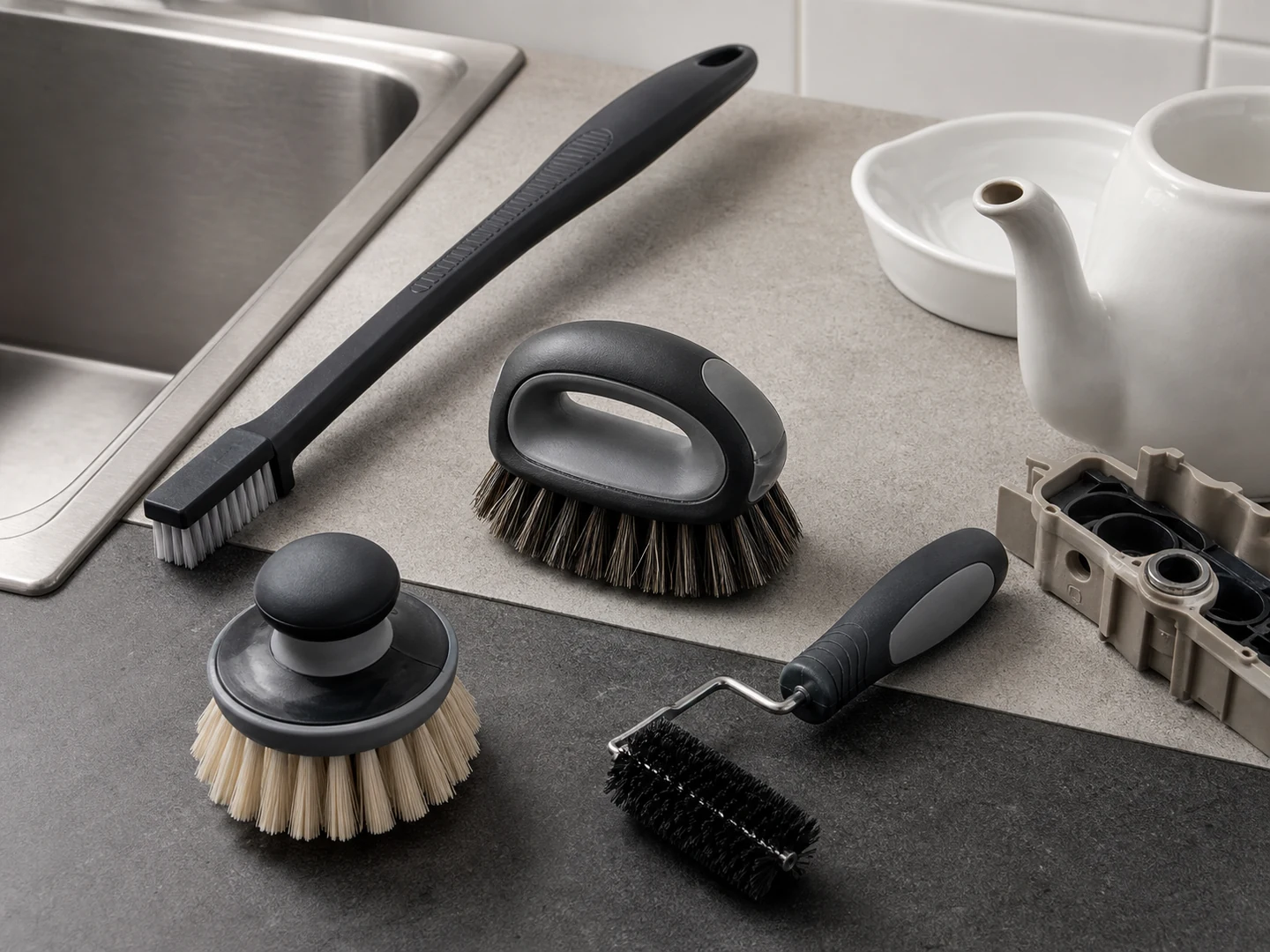
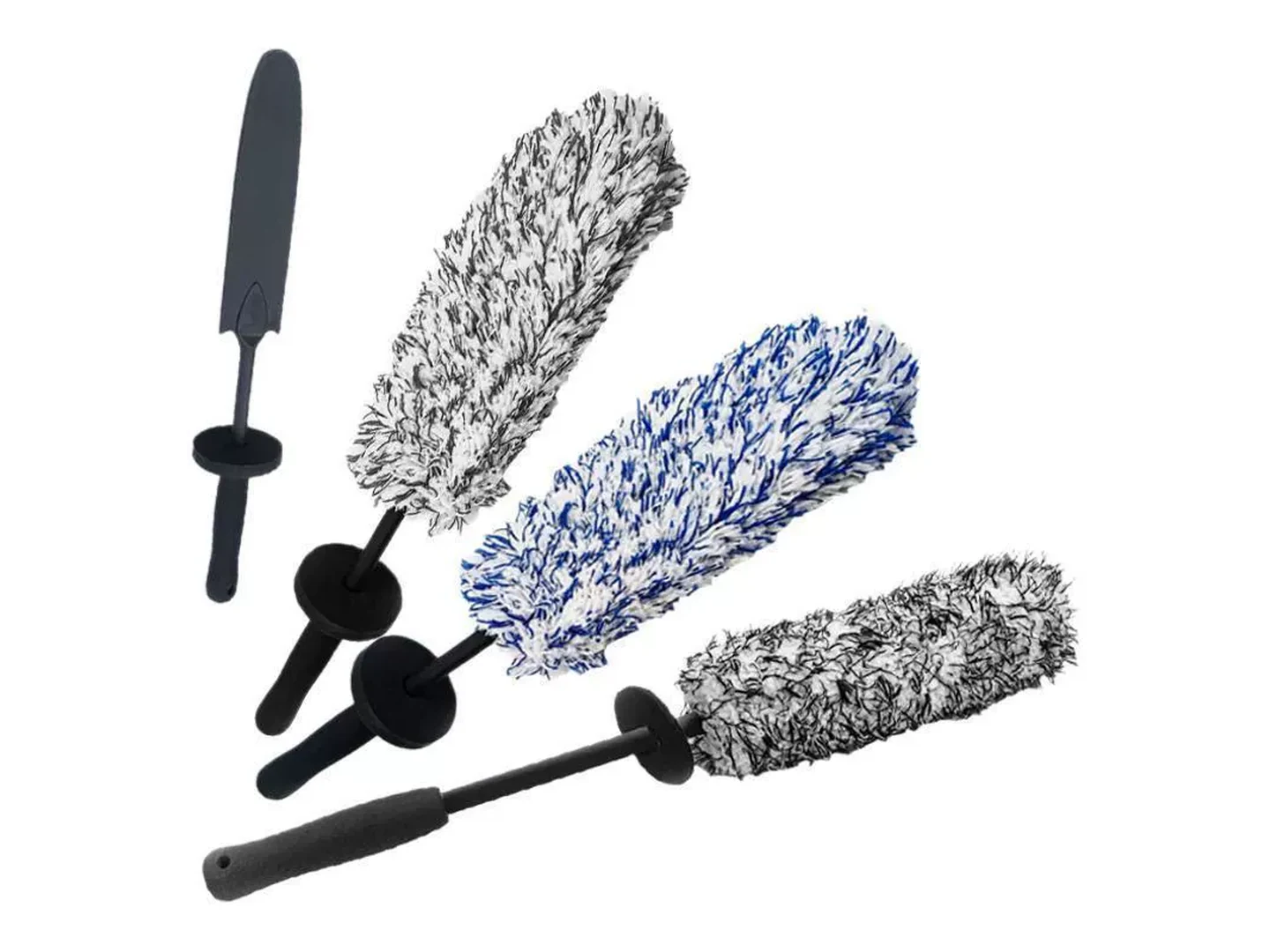
- Handheld Detail Brushes — Handheld detail brushes cover general precision cleaning; auto-detailing brushes impose tighter controls for painted, polished, leather, display, and trim surfaces.
- Wheel Brushes — Wheel brushes give narrow edge contact; cup brushes cover a broader open face, while end brushes concentrate contact at the end of a small stem for recesses.
- Cup Brushes — Cup brushes cover a broader face than wheel brushes; end brushes are better for small recesses or pockets where the cup body blocks access.
- AISI 304 Stainless Steel Wire — Use AISI 316 stainless steel wire for chloride, marine, dairy, beverage, chemical washdown, or higher pitting-resistance requirements. Use carbon steel for dry aggressive cutting and brass or abrasive nylon for lower marking risk.