
Custom Cleaning Brush
Rubber Brush Roller
Flexible rubber vanes on a driven core hold floor contact across grout lines and transitions, lifting hair and debris from hard floors and low pile.
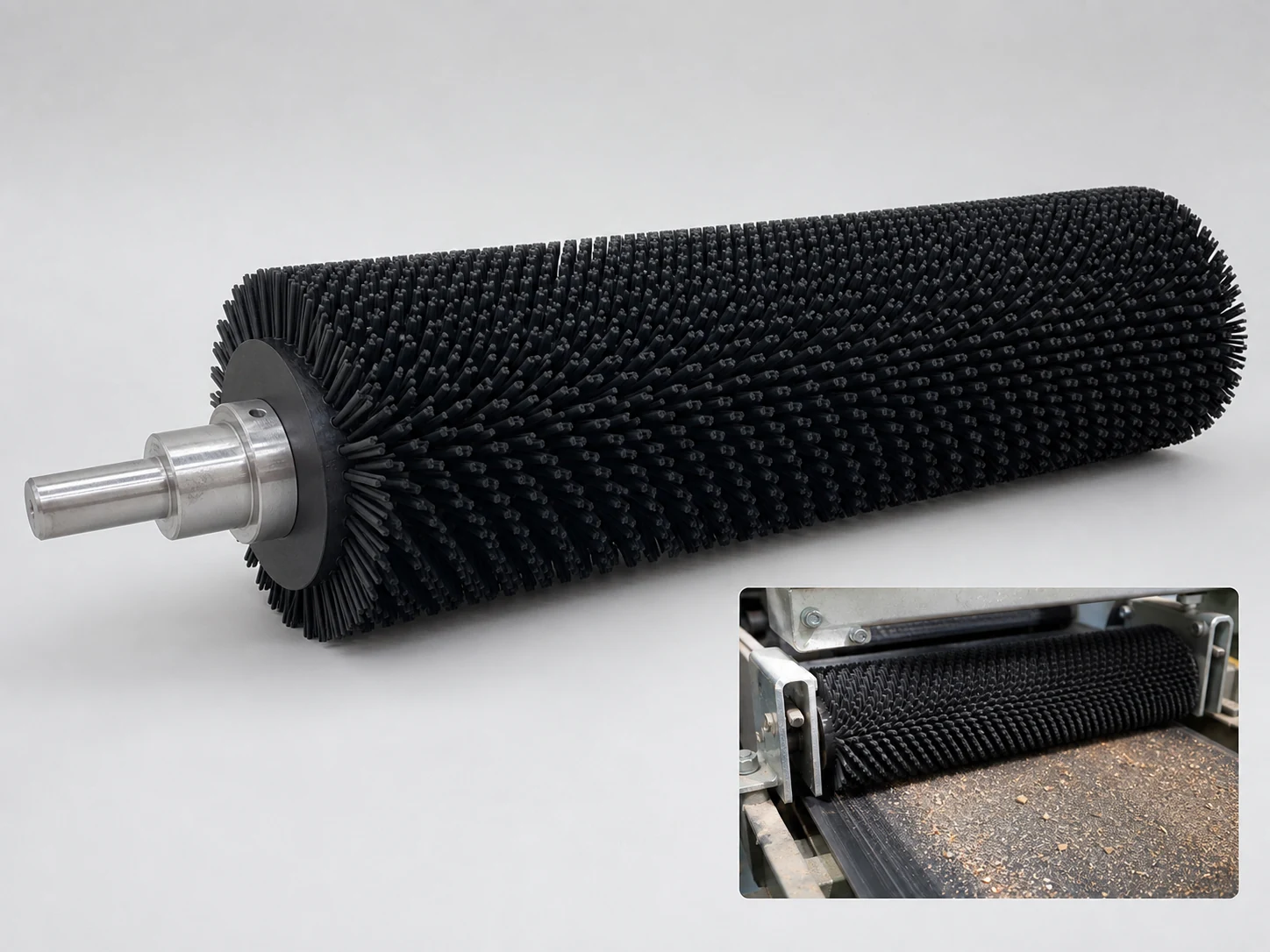
Large-format brush
100 pcs
Minimum order
Built one at a time on a core or channel: full-width rollers, sweeper brooms and long strip.
Production lead time, once the specification is confirmed
- Up to 100 pcsWithin 20 days
- 101–1,000 pcsWithin 30 days
- Over 1,000 pcsConfirmed with your quotation
Peak season can extend these times; the shipping date is confirmed in writing with your quotation. Sampling and shipping are quoted separately.
A rubber brush roller used as the main rotating pickup element in robot vacuums and floor cleaning machines. It combines flexible rubber vanes with a driven core to lift dust, hair, and scattered debris from hard floors and low-pile carpets while maintaining contact across floor transitions.
Working width, vane pattern, outside diameter, rubber compound, and shaft interface are configurable for OEM, replacement, and custom machine projects.
What can this brush do for you?
Holds floor contact across grout lines and surface changes
Rubber vanes flex as the roller passes over tile joints, floorboards, thresholds, and low-pile carpet edges. The vane tips return quickly after each flex, so the brush does not bridge over recessed grout lines the way a rigid roller does. Debris that would otherwise stay in those lower areas gets swept out instead of leaving dead bands in the cleaning path.
Moves hair, dust, and loose debris into the suction path
The roller is built as a pickup device, not just an agitator. Straight, chevron, or angled vanes push collected material toward the machine’s suction inlet. On center-suction machines, a V or chevron layout concentrates the flow where extraction is strongest, which reduces the dust trail that can appear when agitation happens without directed pickup.
Reduces the filament-wrap problem common to bristle rollers
Because the working surface is a continuous or segmented rubber form rather than a dense pack of individual filaments, hair and threads have fewer small anchor points to grip. Long hair may still collect at the roller ends, but it does not bind into the working face as quickly as it does in a fine bristle brush.
Operates in dry or wet cleaning machines with the right compound
Base rubbers are selected for the environment: general-purpose compounds for dry dust pickup, and hydrolysis-resistant compounds for machines that run with water, diluted detergent, or common floor-cleaning solutions. The core and end-cap materials are then matched to the same exposure so the roller does not fail from corrosion while the rubber is still serviceable.
Puts a predictable cleaning edge under the machine
A roller specified to the actual machine opening covers the full working width with a small overlap at each end. The leading cleaning edge runs continuously across the machine’s path, and the replacement roller installs into the same housing and drive without field modification.
What is a Rubber Brush Roller?
A rubber brush roller is the driven cylindrical element at the inlet of a robot vacuum or floor cleaning machine. It consists of a central core, a series of molded or bonded rubber vanes arranged around that core, and end caps or journals that locate the roller in the machine housing and connect it to the drive.
In operation, the roller spins against the floor. The rubber vane tips sweep across the surface, dislodge loose dust and fibers, and carry the material toward the suction or extraction zone. The vanes are elastic enough to follow small floor irregularities, yet formed with enough edge strength to flick heavier particles such as dry food crumbs, cat litter, or small stones into the pickup path instead of letting the machine roll over them.
The roller is normally positioned just ahead of the suction channel or between a squeegee and pickup area, depending on machine type. For dry robot vacuums, it is the primary floor-contact element behind the side brush. For floor cleaning machines, it may be the main brush roll inside a removable brush deck or a replaceable roller in a wet/dry extractor.
This is an agitation and pickup roller, not a wet-mop substitute and not a high-pressure scrub tool. It removes loose, surface-level material. Dried-on stains, hardened mud, and sticky films require a scrubbing element or chemical dwell time instead of, or in addition to, roller brushing.
Technical Specifications
Typical production envelope for robot vacuum and floor cleaning machine main roller brushes. Final values are matched to the machine opening, drive interface, and floor-contact requirement.
| Parameter | Value / Options |
|---|---|
| Working width | 120–350 mm standard; wider formats available for larger floor machines |
| Roller outside diameter | 30–70 mm over the vane tips |
| Core outside diameter | 16–35 mm |
| Shaft or journal diameter | 5–16 mm |
| Vane projection | 5–18 mm |
| Vane count | 4–12 depending on diameter, pattern, and debris type |
| Vane arrangement | Straight, chevron/V, helical, or custom profile |
| Rubber compound | TPR, EPDM, NBR, silicone, or TPU based on operating environment |
| Rubber hardness | 40–85 Shore A |
| Core / end cap material | Glass-filled nylon PA, aluminum, or 304 stainless |
| Recommended radial engagement | 2–8 mm |
| Edge overlap per side | 3–10 mm |
| Operating temperature | -10°C to +60°C for standard compounds; wider range on request |
| Moisture exposure | Dry or wet based on compound and core selection |
| Brush type | Custom Roller and Conveyor Brushes |
| How it is driven | Machine-driven, mounted in the equipment |
| Cleaning target | robot vacuum main roller replacement, pet-hair pickup, and floor cleaning machine and wet/dry extractor cleaning |
| Surface or part | roller, floors, housings, edges, tile, grout lines, wood, and aluminum |
| Residue or debris | dust, hair, loose dust, crumbs, fiber, mud, particles, and litter |
| Mounting / connection | Shaft-Mounted / Fixed |
All rows shown here can be adjusted to the project. The critical fit dimensions are the working width, outside diameter, and shaft or bearing interface; these should be confirmed from a drawing, housing sample, or an original roller before production.
Where does this brush work best?
- Robot vacuum main roller replacement: hard floors, tile with grout lines, laminate, vinyl, sealed wood, and low-pile carpet in homes, offices, and light commercial spaces.
- Pet-hair pickup on low-pile rugs and entry mats: rubber vanes agitate embedded hair and pull it up without bristle ends that can bury into the pile.
- Floor cleaning machines and wet/dry extractors: main roller brush in brush decks or removable pickup modules where the roller is the primary floor-contact element.
- Robotic and automated cleaning equipment: roller format that fits an enclosed deck, fixed inlet width, and repeatable contact pattern.
- High-traffic hard floors where loose dust, crumbs, hair, and fine grit need to be removed without abrasive contact on the floor surface.
How do I choose the right one?
Start with the machine geometry, then select the rubber performance around it.
Match the working width to the housing and pickup inlet
Measure the clear opening in the brush deck or inlet. The roller should cover the full machine path and carry 3–10 mm of edge engagement beyond the working zone on each side. Too narrow leaves edge trails; too wide loads the drive and can scrape the housing.
Set the outside diameter by throat clearance and drive capability
The vane tips must clear the deck at high speed while still reaching the floor through the opening. A larger diameter sweeps more surface per revolution but requires more torque and a taller housing. Confirm the drive motor’s startup behavior before moving up in diameter.
Select rubber hardness for the floor and debris mix
Softer compounds around 40–60 Shore A conform to polished or sealed surfaces and reduce visible rubber marks. Firmer compounds around 60–80 Shore A hold an edge better on textured tile, grout, and low-pile carpet and transfer more energy into lifting heavy particles. Compounds above 80 Shore A provide longer edge life on abrasive floors but can feel harsher and louder on hard surfaces.
Match the compound and core material to wet or chemical exposure
For dry dust pickup, general-purpose rubber and a nylon or aluminum core are usually sufficient. For machines that run wet or use detergents, specify hydrolysis-resistant compounds and stainless or appropriately coated metal parts so the roller does not swell, soften, or corrode before the vanes wear out.
Choose the vane pattern for the suction layout
A straight or angled pattern gives simple, even coverage. A chevron or V pattern pushes debris toward the center inlet. A helical pattern can help move material from the outer ends toward an off-center pickup and reduces the pulsing feel common with straight vanes. The pattern should be selected together with the machine’s air path, not in isolation.
When a rubber roller may be the wrong choice
Use a bristle or abrasive brush roller when the task is scrubbing dried mud, hardened grease, or mineral deposits. Choose a beater-bar or brush-type agitator for high-pile or shag carpet where deep fiber penetration is required. For wet machines that must physically absorb liquid, pair the roller with a squeegee and extraction system; the rubber roller lifts and directs, it does not dry.
Can I customize this brush?
Rubber brush rollers are project-built because machine openings, drive connections, and floor-contact requirements differ between models. We can adjust the entire working surface and interface.
What can be changed
- Working width and total roller length
- Outside diameter, core diameter, and vane projection
- Vane count, spacing, thickness, tip shape, and pattern: straight, chevron, V, helical, or mixed
- Rubber compound and hardness: TPR, EPDM, NBR, silicone, or TPU from about 40 to 85 Shore A
- Core, end caps, shaft journals, bearings, or drive coupling: plastic, aluminum, 304 stainless, coated steel, D-shaft, hex, pin, or keyway
- Color, hardness coding, molded part numbers, or surface markings
- Packaging: bulk trays, polybags, individual boxes, or retail-ready labeling
What helps us define the roller quickly
- Machine model, drawing, or original roller sample
- Housing opening width and throat clearances
- Shaft diameter, bearing layout, and drive interface
- Rotation direction and operating speed
- Floor surfaces, debris type, and wet or dry operation
- Cleaning chemicals, wash temperatures, and expected replacement interval
If your project requires material declarations, inspection records, or third-party testing against your internal specification, we can coordinate those project requirements before finalizing the roller design.
How do you confirm a rubber brush roller has actually cleaned the surface?
How do I tell if the rubber hardness is right for the floor?
Run a trial roller at normal operating speed on the hardest and softest floor surfaces in the application. If the vane tips flatten and stay folded, the compound is too soft for the contact pressure. If the machine chatters or skips over grout lines on a polished tile, the compound or engagement is too firm. Compare dry test dust pickup at the same pass count to confirm the roller is sweeping, not smearing.
What does the rubber roller clean, and what should be handled elsewhere?
It picks up loose dust, hair, threads, crumbs, and small scattered debris. It does not remove dried food deposits, hard water marks, or sticky residue. Those need a scrubbing element, chemical dwell time, or a separate spot-cleaning pass. The roller’s job is surface pickup and directing debris into extraction.
How can I check radial engagement after installation?
Remove the machine’s cover, set the machine on a flat surface, and look at where the vane tips contact the floor. Each vane should show a visible but small contact band around 2–8 mm of radial engagement. If the tip folds completely flat against the core, engagement is too deep. A quick field check is to lower the roller onto a flat surface and rotate it by hand: an even contact line should appear across the working width. If only the center or ends mark, the roller or deck is not level.
Will the roller remain completely free of hair wrap?
Not completely. Rubber vanes reduce the number of anchor points compared with filament brushes, but long, wet, or very fine hair can still wind around the shaft ends and back of the end caps. Specify smooth transitions at the ends and leave access for the user to clear end-wrap. A chevron pattern reduces mid-width wrap but does not eliminate collection at the far ends.
What should I check before approving a pre-production sample?
Confirm the roller drops into the housing without interference at full speed. Rotate it by hand to check for visible wobble or end cap rubbing. Run a test pass with fine dust, coarse crumbs, and a few long hairs on tile and low-pile carpet, then inspect the pickup channel and the floor for leftover streaks. For wet machines, also run the specified cleaning solution over the projected replacement interval and check for swelling or loss of edge.
Guides that go deeper on this
Abrasive Nylon Grit and Filament Selection
Read this guideGuideBrush Roller Conveyor Mistakes with Dry Dust
Read this guideGuideBrush Speed, Engagement, and Heat
Read this guideGuideConveyor Belt Cleaning Brush Design
Read this guideGuideFloor Scrubber Brush Selection: Disc Brush vs Roller Brush
Read this guideCustom Manufacturing RFQ
Describe Your Application
Send the key measurements, cleaning requirement, residue, material direction, mounting method, quantity, and drawing or photo.
Drawing or photo optional — it speeds things up, it does not gate the enquiry.
Custom Brush RFQ
Send Your Brush Project
Upload a drawing, product photo, or sample photo and provide the core dimensions and cleaning conditions.
“We need a brush to remove wet residue from a stainless steel conveyor, about 800mm wide. The current brush wears quickly. We can send photos.”
“We sell drinkware and need a cleaning brush to include with the product. Quantity around 5,000 pieces.”