What Is Brush Stiffness?
Brush stiffness describes how much a bristle resists bending under load. A soft bristle bends easily and applies light pressure, while a hard bristle resists bending and transfers more force to the surface. Stiffness directly affects cut force, surface finish, and the risk of scratching or gouging the workpiece.
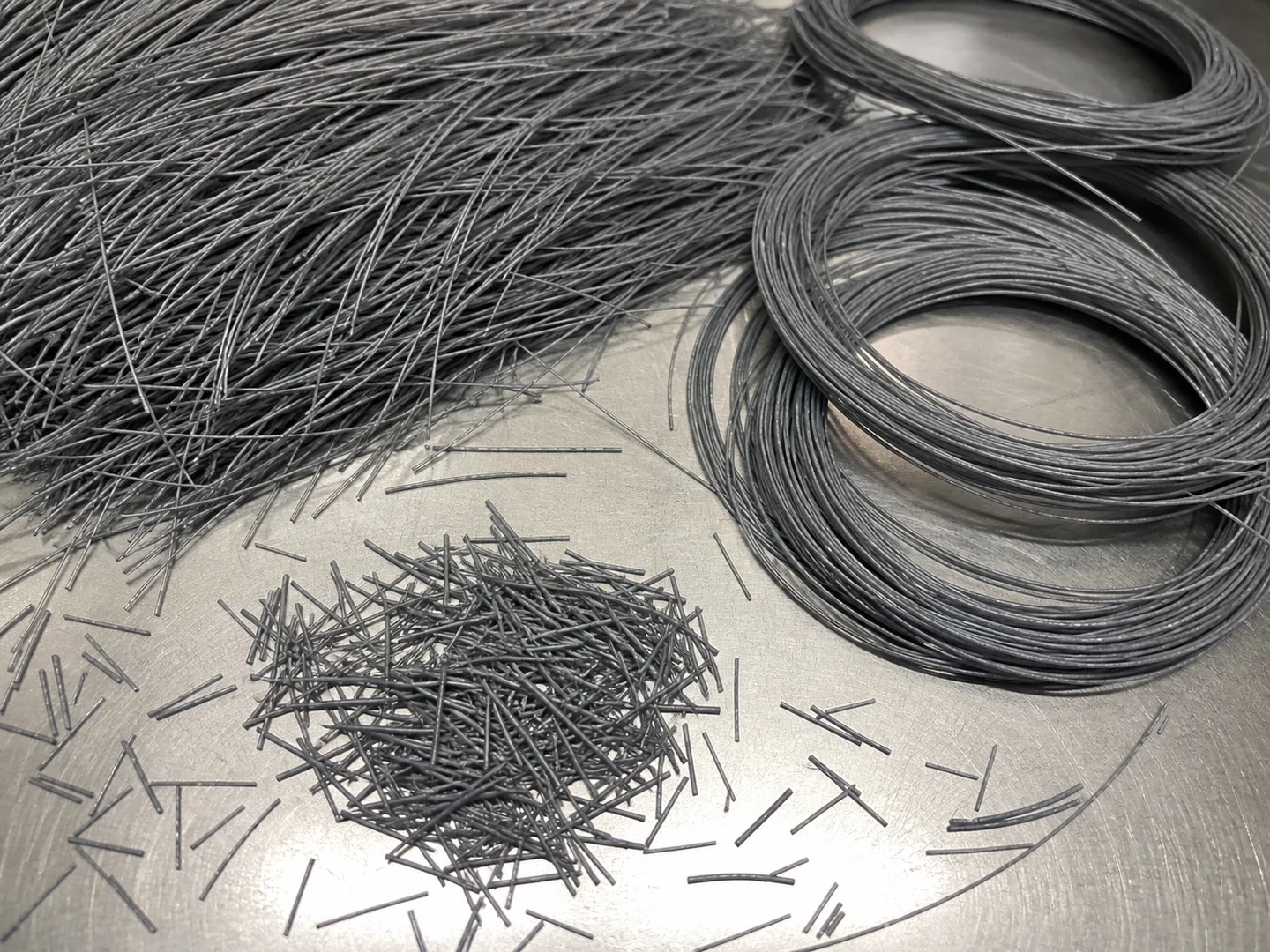
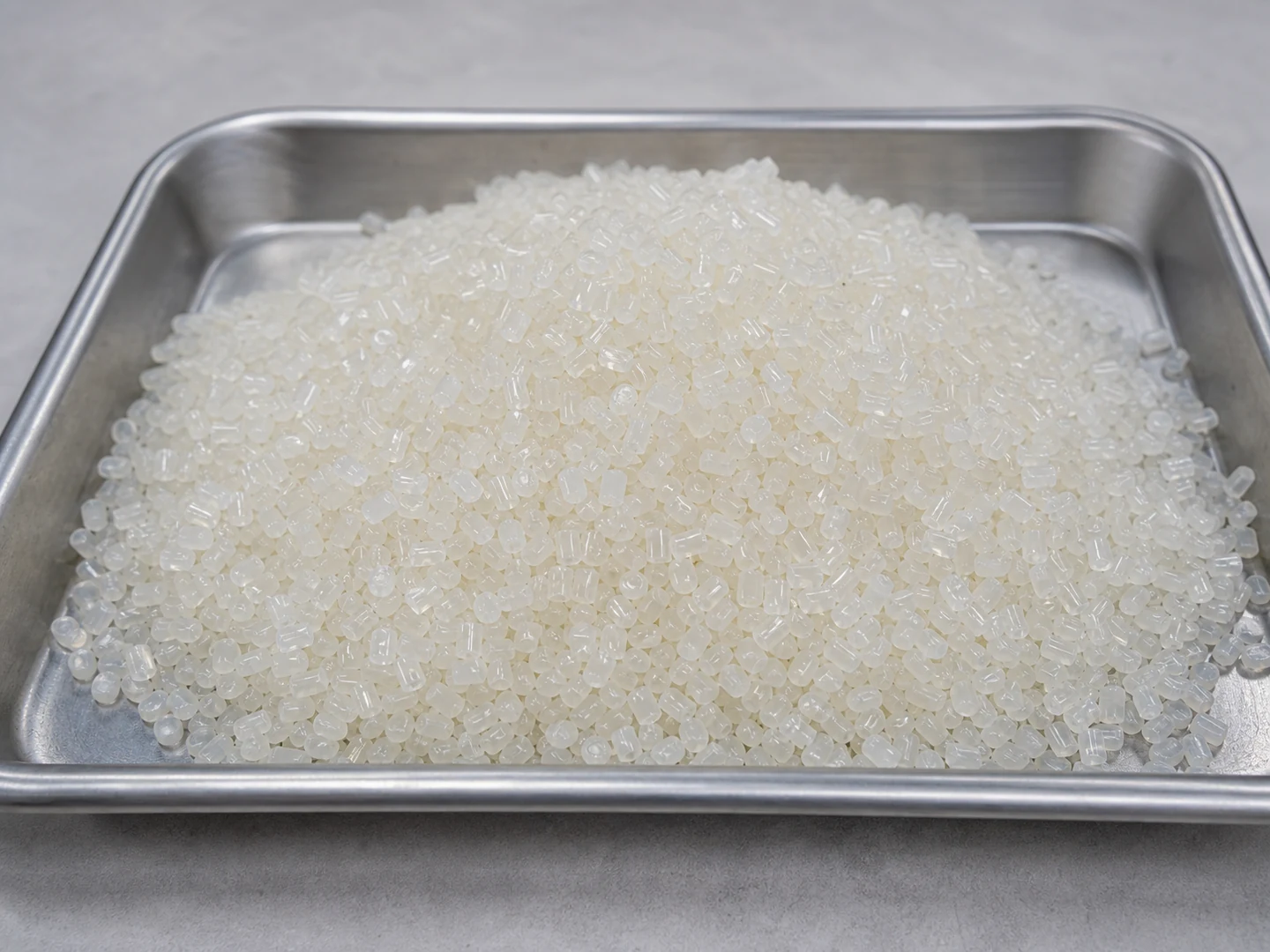
Bristle stiffness depends on the filament material, diameter, and trim length. Nylon, polypropylene, and natural fibers each have different flexural properties. Wire brushes, usually made of carbon steel or stainless steel, sit at the hard end of the spectrum. Abrasive brushes have bristles impregnated with abrasive grit, adding a cutting action that is still controlled by the filament stiffness.
Common Brush Stiffness Levels
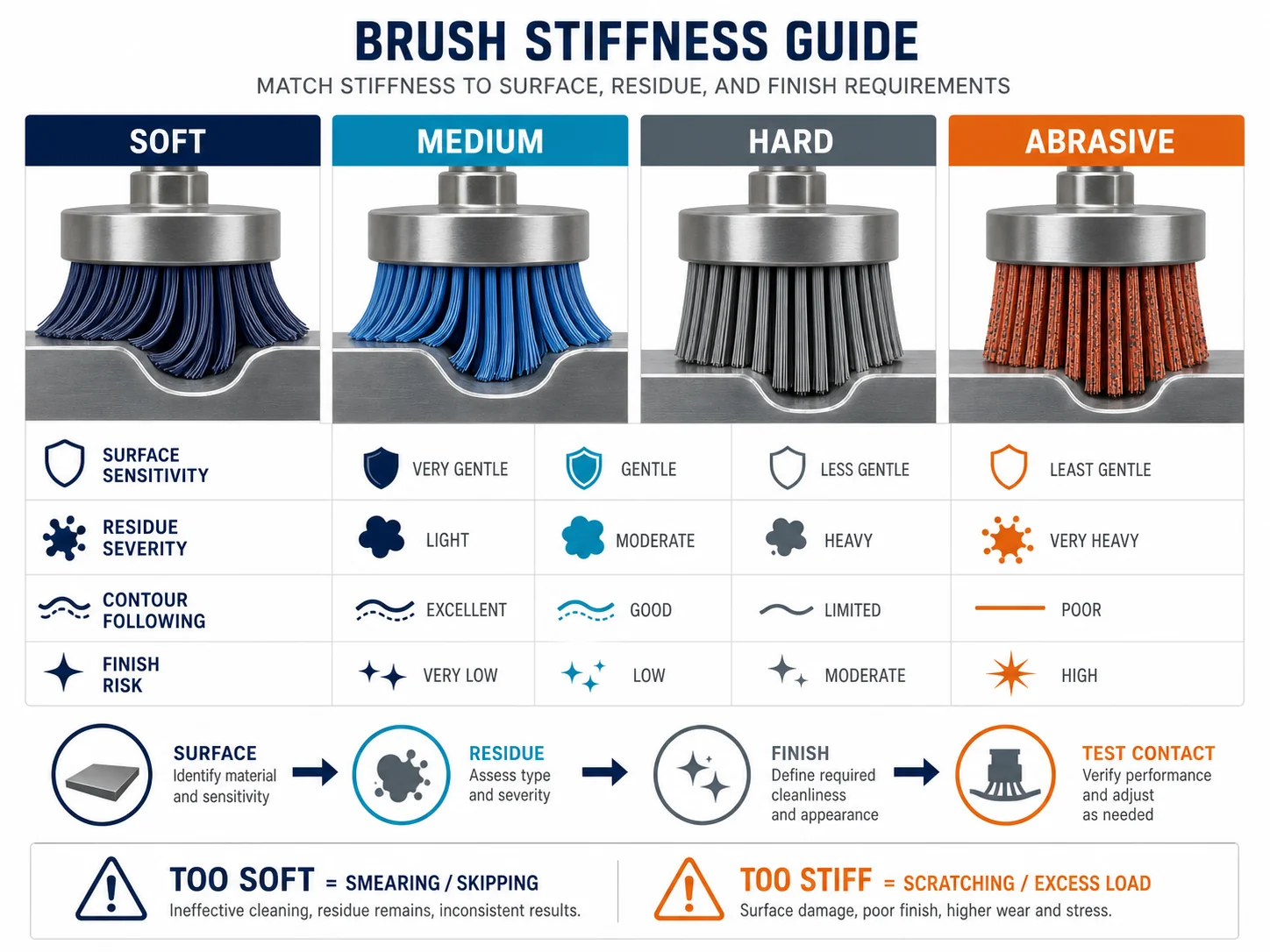
Most brushes fall into one of four practical categories:
- Soft – highly flexible bristles for delicate surfaces and light cleaning.
- Medium – a balanced stiffness for general-purpose cleaning and deburring on common metals.
- Hard – stiff bristles for aggressive material removal and heavy-duty scrubbing.
- Abrasive – bristles with embedded grit (typically silicon carbide or aluminum oxide) that cut and deburr in a controlled way, often with filaments that are less stiff than hard wire but with a sharp edge.
Soft vs Medium vs Hard vs Abrasive: Comparison Table
| Stiffness Level | Typical Feel | Cut Force | Surface Impact | Best For | Avoid On |
|---|---|---|---|---|---|
| Soft | Flexible, bends easily | Light | Minimal, preserves finish | Polishing, dusting, cleaning painted or coated surfaces, final surface prep on soft metals | Heavy rust/scale, weld spatter removal |
| Medium | Moderate resistance | Moderate | Controlled cleaning with slight surface effect | General cleaning, light deburring, removing light oxidation, tube and pipe cleaning | Very delicate surfaces, mirror finishes |
| Hard | Stiff, resists bending strongly | High | Aggressive, can scratch or texture | Heavy deburring, rust removal, weld cleaning, surface preparation for coating | Coated, anodized, or painted surfaces; soft metals like aluminum or brass that can gall |
| Abrasive | Firm but flexible, gritty to the touch | Controlled cutting | Removes material in a predictable manner, can leave a fine matte finish | Deburring without altering part dimensions, edge radiusing, cleaning without scratching sensitive metals, removing light coatings | Applications where embedment of abrasive particles is unacceptable, very thin platings |
How to Match Stiffness to Your Application
Use these decision factors to choose the right stiffness:
- Material hardness: Softer workpieces (aluminum, brass, plastics) generally require softer bristles to avoid scratching. Hard metals (steel, iron) can handle hard or abrasive brushes.
- Desired finish: If you need a polished or flawless surface, start with soft or non‑abrasive medium brushes. For a matte or textured finish before coating, hard or abrasive may be suitable.
- Coating sensitivity: Hard bristles will strip coatings. Soft or medium nylon brushes can clean without damaging. Abrasive nylon can be tuned to remove coatings without gouging the base metal.
- Geometry and reach: Soft bristles conform to complex shapes and internal bores better. Hard bristles may not reach all areas without excessive pressure.
- Process speed: Higher brush speeds can make a soft brush act stiffer. Always test at your operating speed.
Common Mistakes When Selecting Brush Stiffness
- Using a hard wire brush on anodized or painted surfaces – it quickly removes the coating.
- Choosing by cost alone instead of matching stiffness to the material – a low-cost hard brush can damage expensive parts.
- Assuming abrasive brushes always remove more material – they provide a controlled cut; a hard wire brush can actually gouge more.
- Ignoring brush pressure and speed – even a soft brush can cause damage if pressed too hard at high rpm.
- Using one stiffness for all stages of a process – often a combination of medium cleaning followed by soft finishing gives the best result.
When Abrasive Nylon Is the Right Choice
Abrasive nylon brushes fill the gap between medium cleaning and heavy material removal. They are ideal when you need to deburr without changing part dimensions or leave a consistent surface finish on metals like stainless steel. Compared to hard wire brushes, abrasive nylon produces less gouging and is safer on softer alloys. It is also preferred for edge radiusing and for cleaning molds or dies where steel brushes could embed and cause corrosion.
However, abrasive nylon is not a replacement for heavy grinding or machining. If you need to remove large amounts of stock, a more aggressive tool like a grinding wheel may be required first. Also, in applications where any residual abrasive particles could contaminate later processes (such as painting or plating), thorough cleaning after brushing is essential.
Final Takeaway: Pair Stiffness with Purpose
There is no universal best stiffness. Soft brushes protect delicate surfaces. Medium brushes handle everyday cleaning and light deburring. Hard brushes tackle heavy rust and scale. Abrasive brushes deliver controlled material removal for precise finishing. The right choice comes from analyzing your workpiece material, the desired finish, and how much force the surface can tolerate. Test a small area first, and when in doubt, start with a softer option and move up.
When the Chosen Bristle Stiffness Is the Wrong Choice
This brush is not enough when the main problem is blocked access, unsafe working conditions, damaged equipment, incompatible chemicals, or a process setting that keeps recreating the residue. In those cases, review base material, burr or oxide level, target finish, brush speed, pressure, and acceptable surface change and confirm the surrounding cleaning method before increasing brush stiffness or contact pressure.
Frequently Asked Questions
Can I use a hard brush on aluminum?
A hard wire brush can easily scratch or gall soft aluminum. Use a soft or medium nylon brush, or an abrasive nylon brush designed for aluminum, to clean without deep marking.
What happens if I use a brush that is too soft for the job?
A brush that is too soft will not remove the intended contamination, rust, or burrs. It will simply wipe the surface without cutting, wasting time and increasing process time.
Is abrasive nylon safe on stainless steel?
Yes, when used correctly. Abrasive nylon can clean and deburr stainless steel without causing scratches that would lead to corrosion, as long as the grit size and brush speed are appropriate. Avoid plain steel wire brushes on stainless to prevent carbon contamination.
Do brush stiffness and filament diameter relate?
Yes. For the same material, a thicker filament diameter increases stiffness. However, stiffness also depends on filament shape (straight, crimped, knotted) and trim length. In nylon brushes, a larger diameter might act as a harder bristle, while abrasive nylon stiffness can vary by grit content and filament formulation.
How does temperature affect nylon brush stiffness?
Nylon bristles soften at higher temperatures. If your process generates significant heat (high rpm, heavy pressure), a brush that feels medium at room temperature may act soft in use. Check the brush’s maximum service temperature to avoid permanent deformation.
Can I use the same brush stiffness for all stages of a cleaning process?
Usually not. A multi‑stage approach works best: a medium or hard brush for initial heavy removal, followed by a softer or abrasive nylon brush for final surface conditioning. Using only one stiffness may leave an inconsistent finish or take too long.
How can I test brush stiffness before buying?
Many suppliers provide sample brushes or stiffness descriptions. Ask for a sample to run on a test workpiece at your operating speed and pressure. Look for the bend recovery: a stiff bristle returns quickly to its original shape, while a soft one lags. Also, check that the brush does not immediately abrade or gouge a hidden area of the part.
What is the difference between an abrasive nylon brush and a wire brush for deburring?
A wire brush cuts by scraping with the wire tips; it can leave sharp edges, embed in soft metals, or gouge. An abrasive nylon brush has grit particles bonded throughout the filament, so it deburrs with a fine, controlled cutting action that is less likely to alter the part dimensions and often leaves a smoother, edge‑radiused finish.
Which bristle material fits this job — Abrasive Nylon, Nylon PA or AISI 304 Stainless Steel Wire?
| Material | Continuous temperature (°C) | Peak temperature (°C) | Water absorption | Hardness |
|---|---|---|---|---|
| Abrasive Nylon | 120 | 150 | 0.1–1.0% | Abrasive filament; stiffness and cutting level is controlled by PA base, grit type, grit size, filament diameter and trim height. |
| Nylon PA | 93 | 121 | 0.3–9% by PA grade and conditioning | Medium to firm; filament diameter and trim length control bending force. |
| AISI 304 Stainless Steel Wire | 400 | 500 | 0% | Rockwell B 70–95 depending on temper and cold work |
Figures as published by Perlon; Brushtec / DuPont; Alleima. Confirm the exact grade against the supplier datasheet before ordering.
What should replace Abrasive Nylon when it stops working?
- Abrasive Nylon — Compare Abrasive Nylon with PP, PBT, PET. Change material when wet stiffness, temperature, chemical resistance, conductivity, particle shedding, or surface marking becomes the limiting factor.
- Nylon PA — Compare Nylon PA with PP, PBT, PET. Change material when wet stiffness, temperature, chemical resistance, conductivity, particle shedding, or surface marking becomes the limiting factor.
- AISI 304 Stainless Steel Wire — Use AISI 316 stainless steel wire for chloride, marine, dairy, beverage, chemical washdown, or higher pitting-resistance requirements. Use carbon steel for dry aggressive cutting and brass or abrasive nylon for lower marking risk.