What Are the Key Brush Dimensions?
Before taking any measurements, it’s important to know the common terms used across most industrial brush types. A simple dimension table helps define them:
| Dimension | Description | Measurement Units |
|---|---|---|
| Outer Diameter (OD) | Total diameter measured from bristle tip to bristle tip. | Inches or millimeters |
| Inner Diameter (ID) | Bore diameter for mounting on a shaft or hub. Only for cylindrical brushes. | Inches or millimeters |
| Overall Length (OAL) | Total length measured along the axis of rotation or along the backing. | Inches or millimeters |
| Trim Length | Free length of the bristle from the backing or core to the tip. Often called bristle projection. | Inches or millimeters |
| Bristle Height | Similar to trim length; sometimes used synonymously, but in some styles it includes the portion inside the retainer. Clarify with the supplier. | Inches or millimeters |
| Filament Density | Number of bristles per unit area or per tuft hole, affecting stiffness and durability. | Count per square inch or tuft pitch |
How to Measure a Roller Brush Step by Step
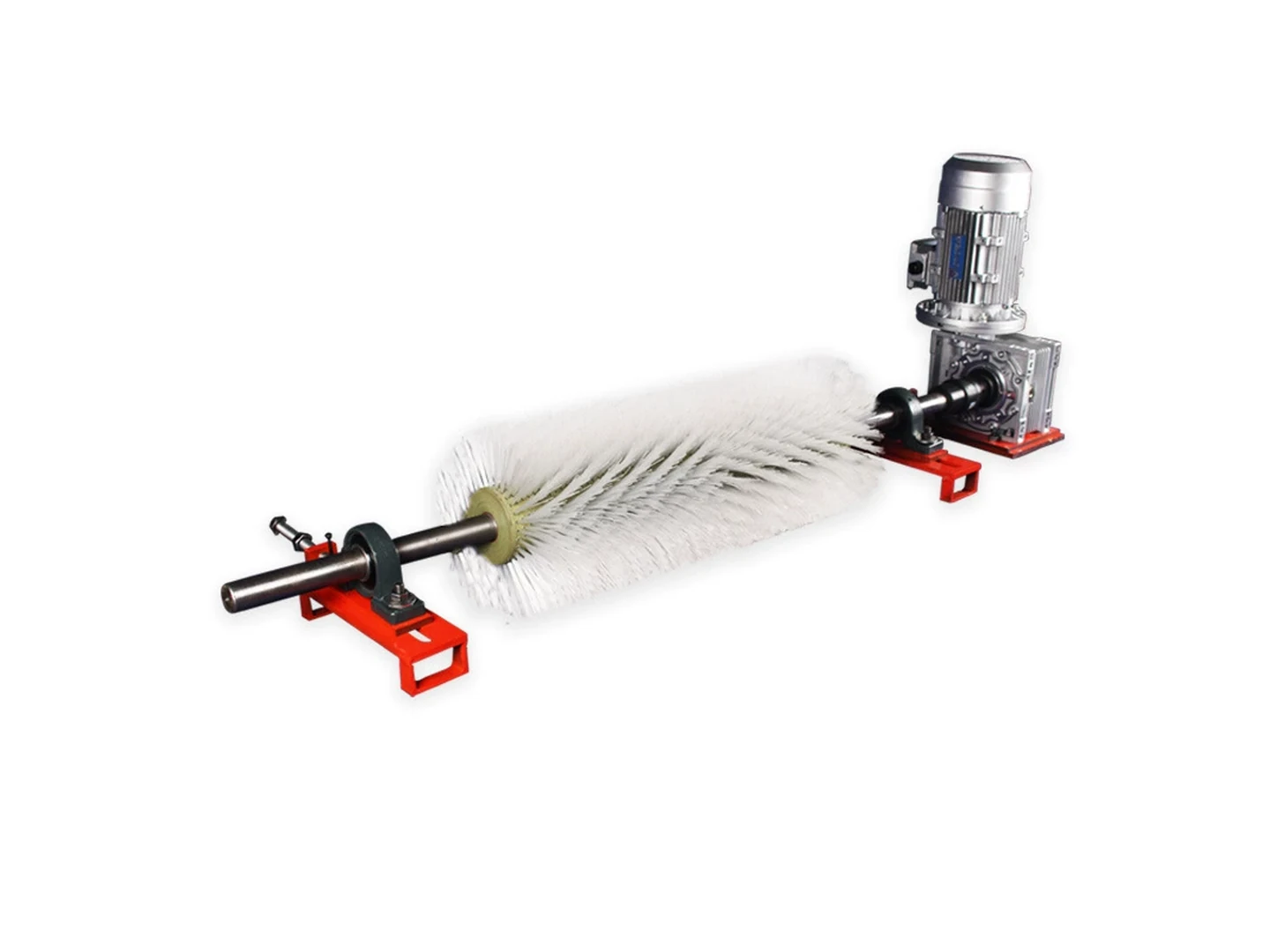
Roller brushes are widely used in conveyor cleaning, spreading, and material handling. Follow these steps:
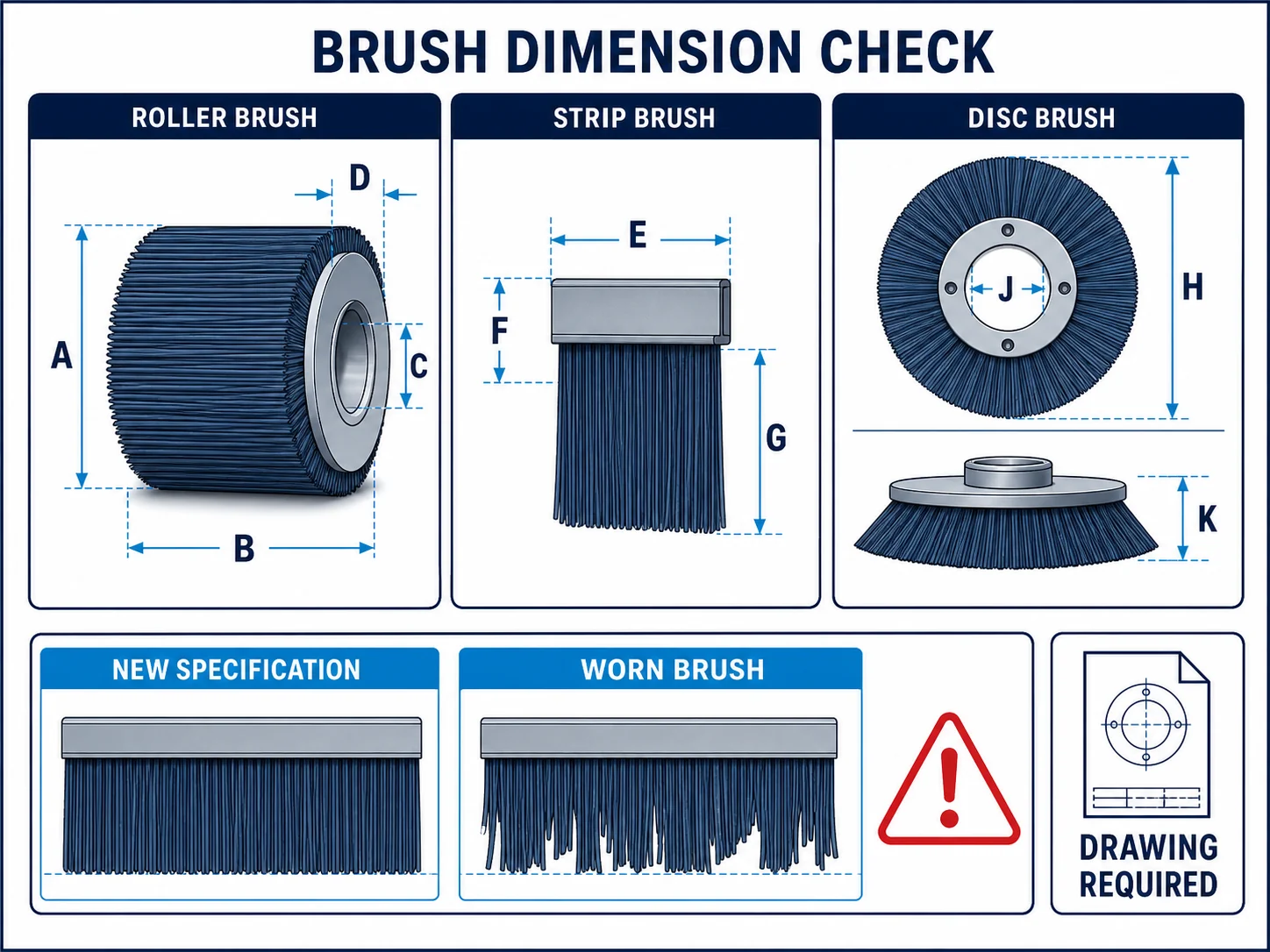
- Outer Diameter (OD): Use a caliper or micrometer across the bristle tips at several points along the length. Record the largest reading; worn spots may give lower values.
- Inner Diameter (ID): For brushes that mount on a shaft, measure the bore with inside calipers or a telescoping gauge. Check for roundness—a distorted core will cause runout.
- Overall Length (OAL): Measure end-to-end along the axis. Include any end flares or flanges only if they are integral to the brush. Exclude separate shaft extensions.
- Trim Length: Measure from the core surface to the bristle tip. If the core is not exposed, insert a pin gauge through the bristles to reach the backing.
- Filament Density: Count the number of tufts per linear inch in the axial direction and note the tuft pattern (spiral, staggered, straight). Also check the face density by counting tufts per square inch if possible.
How to Measure a Strip Brush Correctly
Strip brushes are flexible, linear brushes used for sealing, wiping, and static control. Measurement focuses on the backing channel and bristle depth:
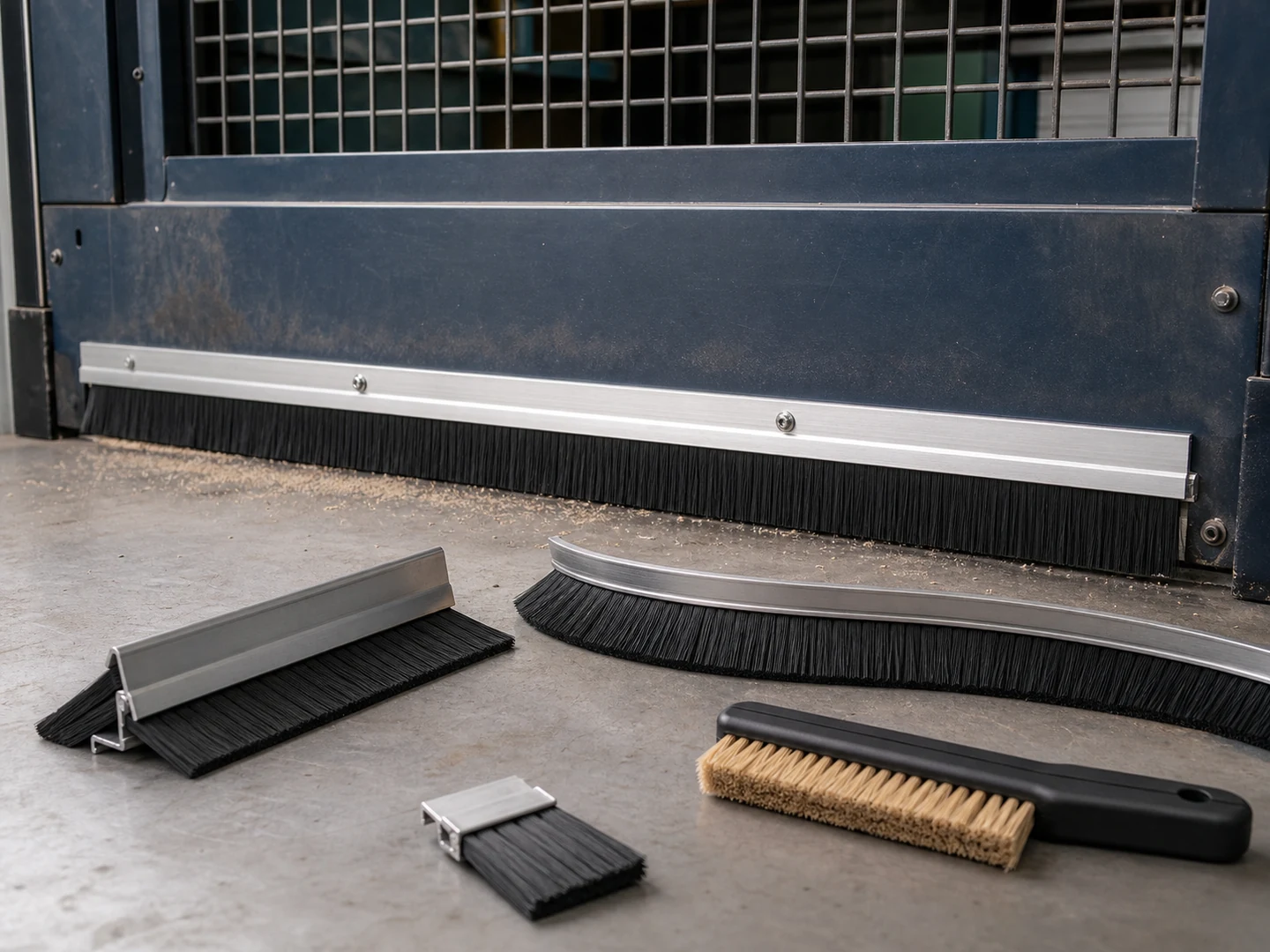
- Backing Width and Height: Strip brushes have a metal or plastic channel. Measure the overall width and the height of the backing. Common U-channel sizes are expressed as back width x back height (e.g., 1/4″ x 1/4″).
- Bristle Height: Measure from the channel face (where bristles exit) to the tips. If the brush has a crimped retainer, measure from the retainer edge to the tips. This is the trim length.
- Overall Length: Measure the length of the strip, including the metal backing. It can be supplied in coils or cut to length. Confirm if length requirement is total foot or per piece.
- Filament Density: For strip brushes, density is often given as tufts per inch of length. Count the number of tufts along a one-inch section.
- Channel Detail: Note the shape (flat, angled, slotted) and material (galvanized steel, stainless, aluminum, plastic). These affect mounting and corrosion resistance.
How to Measure a Disc Brush
Disc brushes are flat, round brushes with a center hole, used in rotary scrubbing, polishing, and deburring. Typical dimensions:
- Outer Diameter (OD): Measure across the bristle tips from edge to edge. Because discs can be flexible, take multiple measurements and average them.
- Center Hole Diameter (ID): This is the bore size. Common sizes include 3/8″, 1/2″, 5/8″, and larger. An accurate bore fit prevents wobble.
- Trim Length: Measure from the face of the disc body to the bristle tips. On cup-style discs, measure along the radial direction.
- Disc Body Thickness: The thickness of the backing plate or plastic cup. Include any reinforcing hub.
- Filament Type and Pattern: Note whether the bristles are tufted or, in radial disc brushes, arranged in rows or full face coverage. Density is usually given as tuft count per disc or total filament fill weight.
Common Mistake: Measuring a Worn Brush Instead of a New Specification
One of the most frequent errors in brush dimension selection is taking measurements from a brush that has already seen significant use. Worn bristles are shorter, reducing OD and trim length. This leads to ordering a brush that is too small, which may not provide adequate contact pressure or may require excessive penetration. If you must measure a used brush, try to:
- Find an unused area if part of the brush is protected.
- Compare to manufacturer documentation if available.
- Add estimated trim loss (usually 10–25% depending on application) only as a last resort.
Always look for the original specification stamped on the core, packaging, or in equipment manuals. A new or reference brush provides the most reliable dimensions.
When a Dimension Drawing Is Required for Custom Brush Sizes
Standard catalog brushes cover many applications, but when the required dimensions fall outside typical ranges or the shape is unique, a detailed drawing is necessary. A proper custom brush drawing should include:
- All critical dimensions: OD, ID, OAL, trim length, and backing dimensions with tolerances.
- Mounting details: Keyways, set screw locations, flange holes, or channel slots.
- Material specifications: Filament type (nylon, polypropylene, abrasive, wire), density, and core/backing material.
- Surface finish or tolerance requirements.
For a custom roller brush or custom strip brush, a dimensioned drawing speeds up quoting and ensures the manufacturer produces exactly what you need. It also helps avoid confusion between trim length and overall brush envelope.
Quick Comparison: Roller, Strip, and Disc Brushes
| Feature | Roller Brush | Strip Brush | Disc Brush |
|---|---|---|---|
| Core/Backing | Cylindrical tube or shaft with bristles on full surface | Straight metal or plastic channel | Flat disc or cup with center hole |
| Key Measurements | OD, ID, OAL, trim length | Backing size, bristle height, OAL | OD, ID, trim length |
| Typical Uses | Conveyor cleaning, spreading, dusting | Door seals, wipers, static elimination | Scrubbing, polishing, deburring |
| Mounting | Slides onto shaft; keyways common | Pressed into channel or bolted | Arbor or adaptor hub |
| Customization Drivers | Diameter, trim, density, filament type | Channel style, bristle depth, material | Disc shape, hole size, fill pattern |
How to Choose the Right Brush Dimensions for Your Application
Measuring correctly is only the first step. You also need to match those dimensions to the job conditions:
- Clearance: Measure the available space in the machine. The OD must fit with room for bristle flex and possible build-up.
- Trim Length vs. Stiffness: Longer trim means softer, more conforming brush action; shorter trim is stiffer and more aggressive. Choose trim length based on the needed contact pressure.
- Filament Density: Higher density increases cutting or sealing force but may trap debris. Select density based on the material being handled.
- Core/Backing Material: Consider temperature, moisture, and chemical exposure. Stainless or plastic channels may be needed instead of galvanized steel.
- Speed and Balance: For roller brushes, larger OD and higher speeds require better balance. Brush manufacturers often list maximum safe speeds.
Final Takeaway
Effective brush dimension selection relies on accurate measurement of outer diameter, inner diameter, overall length, and trim length—plus a clear understanding of filament density and materials. Always measure a new or unworn brush when possible, and don’t hesitate to provide a detailed drawing for custom sizes. By combining proper dimensional data with application requirements for contact pressure, speed, and environment, you can specify brushes that perform reliably and last longer.
When a Standard Brush Size Is the Wrong Choice
This brush is not enough when the main problem is blocked access, unsafe working conditions, damaged equipment, incompatible chemicals, or a process setting that keeps recreating the residue. In those cases, review drawings, dimensions, mounting interface, filament material, stiffness, sample testing, and actual working conditions and confirm the surrounding cleaning method before increasing brush stiffness or contact pressure.
Frequently Asked Questions
What is the difference between trim length and bristle height?
In many contexts, trim length and bristle height are used interchangeably to mean the free length of filament from the backing to the tip. However, some manufacturers define bristle height as the total filament length including the portion inside the retainer. Always clarify which definition is being used when ordering, and provide a drawing if possible.
Can I measure a brush while it is still mounted on the machine?
It’s best to remove the brush for accurate measurement. On-machine measurements are often less precise due to limited access, and you may be measuring a partially worn area. If removal is not possible, take multiple readings around the circumference and average them, but expect some error.
How do I determine filament density without a datasheet?
Count the number of tufts per inch or per square inch. For roller brushes, pick a 1-inch axial segment and count the tufts in a row; also count the number of rows around the circumference. Multiply to get tufts per square inch. For strip brushes, count tufts per linear inch. For disc brushes, count total tufts if the disc is flat, or use a tuft density gauge if available.
How much clearance should I allow between the brush and the workpiece?
Typical clearance is 10%–15% of bristle trim length, but this varies widely with filament type and application. Softer filaments may require more interference to apply enough pressure. When in doubt, start with less clearance and adjust based on performance. Brush manufacturers can often provide recommendations for specific substrates.
When should I specify a custom brush instead of a standard size?
A custom brush is justified when your required OD, ID, trim length, or overall length does not match standard catalog dimensions, or when you need a specialized filament material, density, or backing configuration. Custom sizes are common for unique mounting slots, non-standard diameters, or high-temperature applications.
What is the most commonly overlooked dimension when ordering a strip brush?
The backing channel height and width are often overlooked. Users focus on bristle height and overall length, but if the backing does not fit the mounting slot, the brush will be useless. Always measure the channel cross-section accurately and verify the intended fit.
How do temperature and chemicals affect brush dimension selection?
High temperatures can soften synthetic filaments, causing them to bend or lose stiffness, while low temperatures may make them brittle. Chemicals can swell or degrade materials. In these conditions, you may need to select a larger trim length to compensate for softening, or choose a different filament material entirely. Dimensional stability should be verified with the filament supplier.
Can I use a disc brush with a different ID if I use an adapter?
Yes, adapters (bushings or stepped hubs) can accommodate a disc brush with a larger bore on a smaller shaft. However, this adds cost and may introduce runout if the adapter is not concentric. If possible, specify the correct ID from the start to avoid extra components and potential imbalance at high speeds.
Technical References
Which nylon grade fits this job — Nylon PA, PA6 Nylon or PA66 Nylon?
| Grade | Continuous temperature (°C) | Peak temperature (°C) | Water absorption | Hardness |
|---|---|---|---|---|
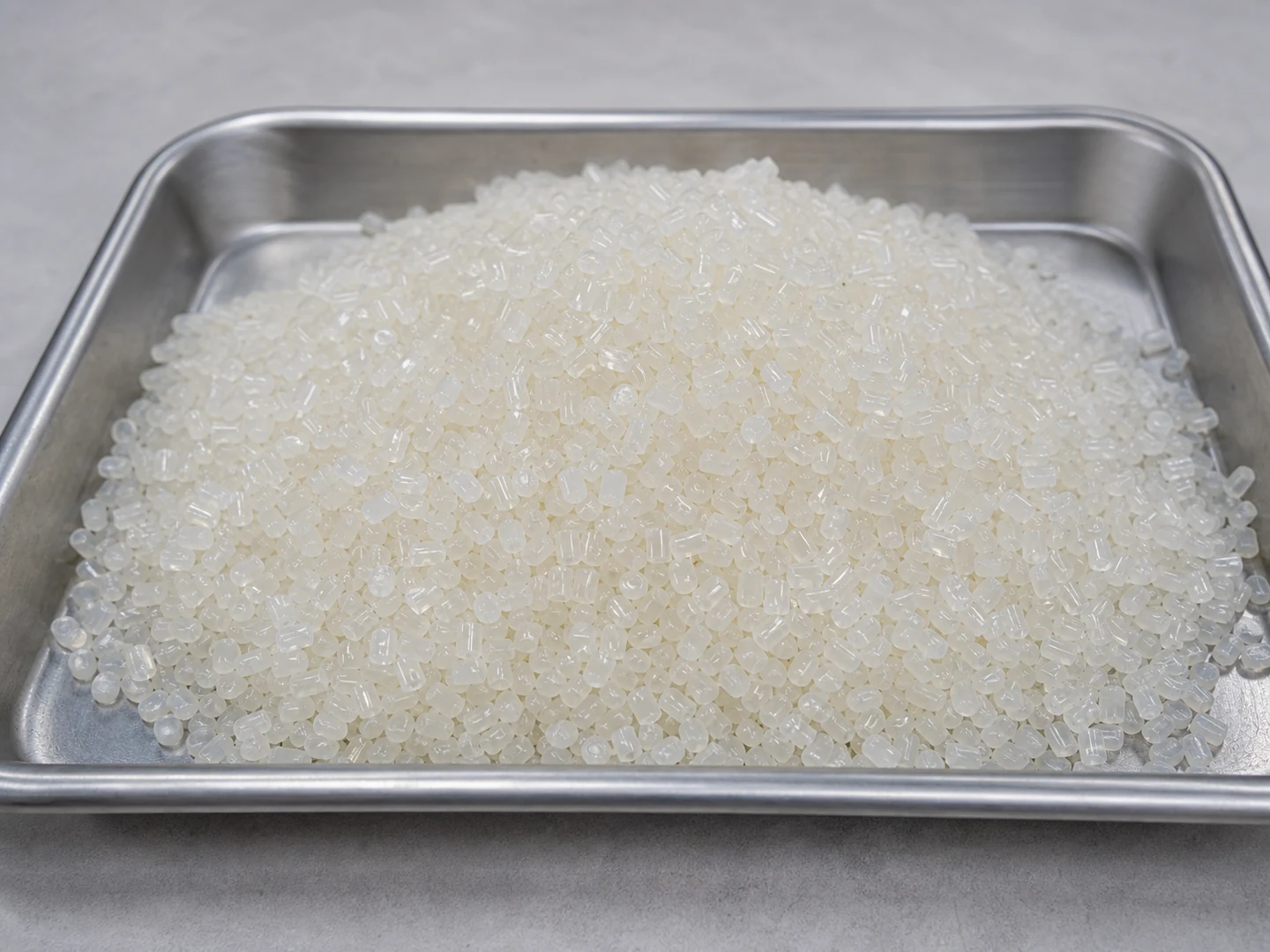
| Nylon PA | 93 | 121 | 0.3–9% by PA grade and conditioning | Medium to firm; filament diameter and trim length control bending force. |
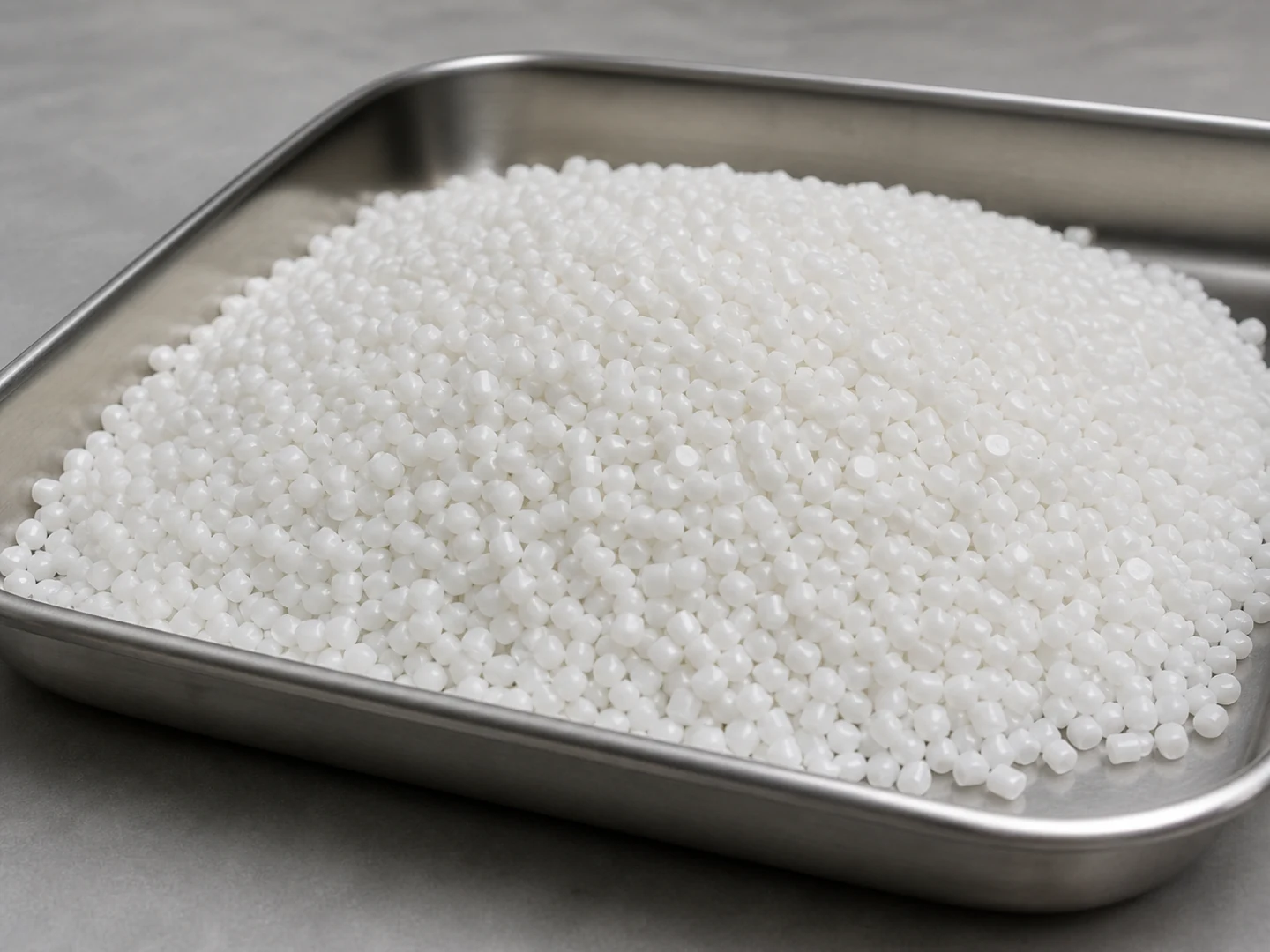
| PA6 Nylon | 80–100 | 130–160 | 1.5–3.0% | Shore D 75–85 |
| PA66 Nylon | 100–120 | 150–180 | 1.0–1.8% | Shore D 80–88 |
| PA610 Nylon | 90–110 | 130–150 | 0.5–1.0% | Shore D 72–82 |
| PA612 Nylon | 90–110 | 130–150 | 0.3–0.7% | Shore D 70–80 |
What should replace Strip Seal Brushes when they stop working?
- Strip Seal Brushes — Strip brushes create a linear barrier or guide; machine-table brush plates distribute load and support products over a broad area. Closest alternative: Machine Table Brush Plates.
- Roller and Conveyor Brushes — Roller and conveyor brushes hold cylindrical line contact across a working width, including helix-wound builds where the filament path is set to move loosened material toward one side; a strip brush holds the same line without rotating, so it seals or wipes but cannot carry residue along the width.
- Disc Brushes — Disc brushes use a flat circular working face; cylindrical floor or roller brushes use tangential line contact and are better when debris pickup or continuous width contact is important. Closest alternative: Floor Scrubber Sweeper Brushes.
- Nylon PA — Compare Nylon PA with PP, PBT, PET. Change material when wet stiffness, temperature, chemical resistance, conductivity, particle shedding, or surface marking becomes the limiting factor.