
Custom Cleaning Brush
Burette Brush
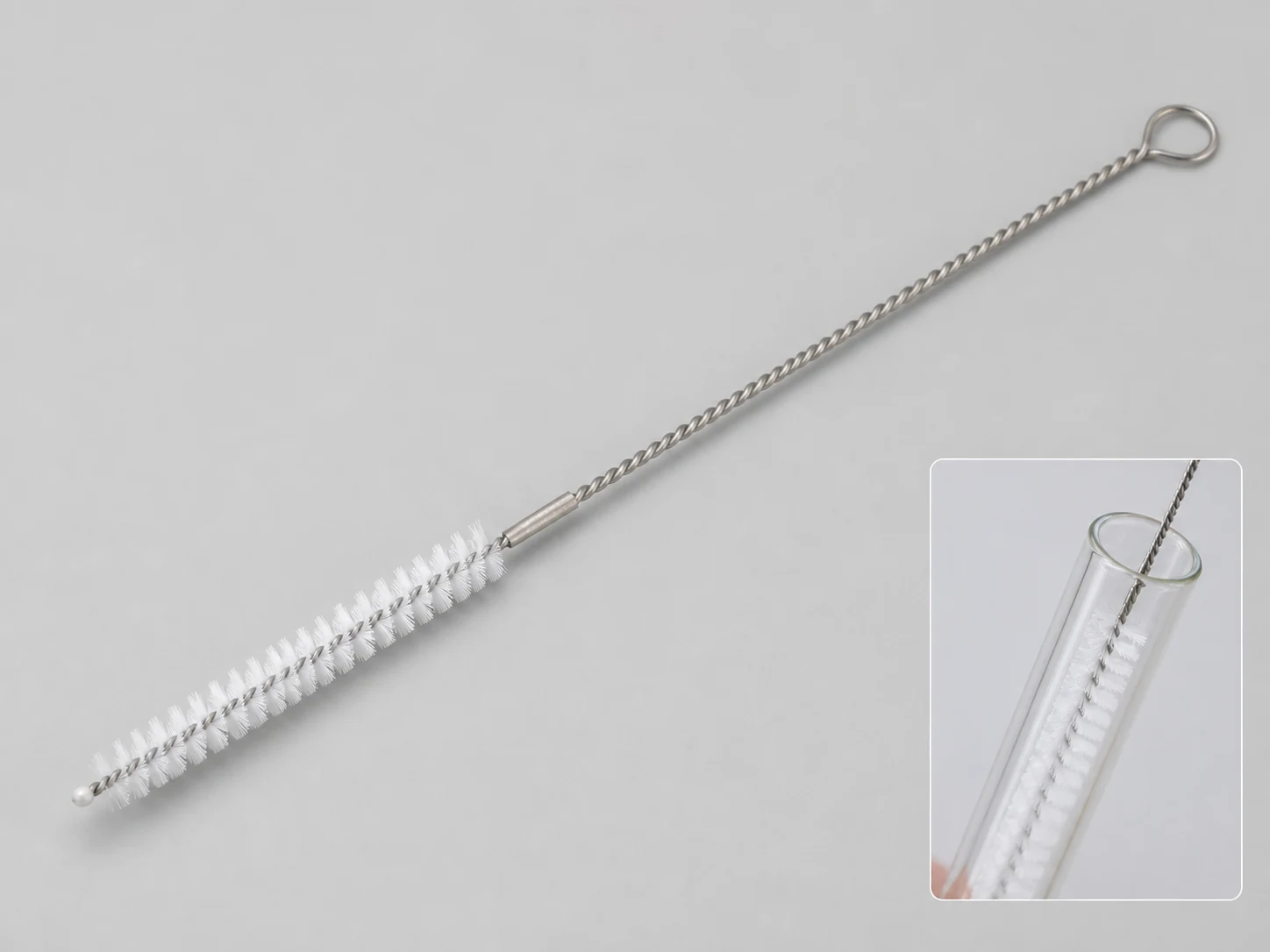
Long-reach burette brush with nylon PA or horsehair fill for cleaning burette bores, tapers, and stopcock seats.
Small brush
500 pcs
Minimum order
Held in one hand: tube, bottle, detail and swab brushes — including long-handled ones with a small head.
Production lead time, once the specification is confirmed
- Up to 500 pcsWithin 7 days
- 501–50,000 pcsWithin 14 days
- Over 50,000 pcsWithin 21 days
Peak season can extend these times; the shipping date is confirmed in writing with your quotation. Sampling and shipping are quoted separately.
A long-reach burette brush engineered for the internal bore, tapered lower section, and stopcock seating of glass burettes and similar precision laboratory tubes. The twisted wire core and Nylon PA bristle head remove reagent film, precipitates, detergent residue, and powder deposits without forcing the burette out of position.
What can this brush do for you?
Full-length bore contact without scratching graduation marks
The long twisted wire stem supports the bristle head as it travels from the top opening to the base of the burette. Bristle diameter and stiffness are selected so the head contacts the inner wall along the entire calibrated section. The contact is abrasive enough to lift surface film but controlled enough that printed graduations remain legible after repeated use.
Reaches the tapered tip and stopcock seat with an end tuft
Where the cylindrical bore narrows into the tip, the radial bristle section cannot follow. The optional end tuft extends past the radial section to reach the taper and the stopcock seating area. This is the residue point that causes leaking stopcocks and slow, inaccurate dispensing; the tuft clears it without requiring separate tools.
Nylon PA fill releases residue instead of absorbing it
Nylon PA is less absorbent than natural horsehair. After scrubbing, the bristle section rinses clean under running water, so the brush doesn’t carry reagent film into the next burette. This is especially important in titration and QC labs where cross-contamination between reagent batches can invalidate results.
Flexible core follows light off-axis entry without snapping glass
Glass burettes rarely sit at a perfect vertical angle during manual cleaning. The wire core flexes slightly to absorb misalignment and follows the natural path down the tube. If the brush hits the wall or lower taper, the stem absorbs the force instead of transmitting it as a point load to the glass.
Long service life with replaceable one-piece construction
There are no separate plastic hubs or glued joints to fail inside the bore. The bristle fill is twisted directly into the wire core, so the working head stays secured through repeated acid/base rinse cycles and daily use. When the bristles eventually show wear, the whole brush is replaced without leaving fragments in the glassware.
What is a Burette Brush?
A Burette Brush is a hand-operated cleaning tool used to scrub the inside of burettes and other narrow-bore laboratory glassware before or after chemical use. It typically consists of a long twisted wire core with a bristle section at the working end. The brush is inserted through the top opening of the burette and moved with push-pull and twisting strokes along the entire internal length.
During cleaning, the radial bristles contact the cylindrical bore and calibration area. If the brush has an end tuft, that tuft reaches past the taper into the tip and stopcock seating. The operator usually wets the brush with water or a compatible cleaning solution before insertion to reduce friction and improve residue pickup.
The brush is designed for routine film, soft precipitate, powder, and detergent residue. It is not intended to remove baked-on carbon, hard mineral scale, or strongly adhered deposits by force alone; those residues often require a chemical soak or ultrasonic pre-cleaning before brushing.
Technical Specifications
| Parameter | Standard Range / Options | Selection Notes |
|---|---|---|
| Head diameter | 8–20 mm standard; up to 40 mm custom | Selected about 1–2 mm larger than the straight bore ID for wall contact without binding |
| Bristle working length | 60–120 mm radial section; 10–20 mm optional end tuft | Longer section cleans more wall per stroke; shorter allows better reach into the taper |
| Overall length | 450–850 mm standard; custom up to 1000 mm | Must equal burette internal depth plus at least 150 mm grip outside |
| Stem diameter | 1.5–2.5 mm twisted wire core | Thicker core for long stems to prevent whipping; thinner for narrow top openings |
| Core material | Galvanized steel wire standard; 304/316 stainless steel optional | Stainless for acid processes, autoclaving, or corrosive reagent exposure |
| Fill material | Nylon PA standard; horsehair optional | Nylon for routine lab films; horsehair for softer contact on delicate or aged glass |
| Filament diameter | 0.10–0.30 mm standard; finer or coarser available | Finer filaments bend easily around curves; coarser filaments scrub more aggressively |
| Head profile | Radial twisted-in bristles with optional end tuft | End tuft recommended for stopcock seating and tip bore |
| Handle / top end | Wire loop, straight extension, or molded grip | Loop helps hang for drying; molded grip improves hand control |
| Operating temperature | Nylon PA: up to 90°C continuous wet use; horsehair: ≤60°C | Higher wash temperatures require material confirmation |
| Chemical compatibility | Nylon PA: water, detergents, dilute acids/alkalis, alcohols, many hydrocarbon solvents | Not recommended for strong oxidizers or concentrated mineral acids; confirm process chemicals |
| Brush type | Custom Tube & Pipe Bore Brushes | |
| How it is driven | Hand-guided | |
| Cleaning target | volumetric burette, burette stopcock and tip assembly, and graduated tube and narrow-bore column cleaning | |
| Surface or part | bores, glass, tubes, glassware, tapers, columns, profiles, and graduations | |
| Residue or debris | precipitate, reagent film, detergent residue, powder, mineral scale, and carbon | |
| Mounting / connection | Fixed |
Values listed are standard production ranges. Each parameter can be matched to a specific burette or tube drawing, so the brush fits the actual glassware instead of the nearest catalog size.
Where does this brush work best?
- Volumetric burettes in titration labs — acid/base, redox, complexometric, and precipitation titrations leave reagent film and precipitate on the calibrated bore; the brush removes it between runs so the next titration starts clean.
- Burette stopcock and tip assemblies — the end-tuft version clears the stopcock seating and tip bore where plugs bind, drip, or seize during delivery.
- Graduated tubes and narrow-bore columns — any straight glass tube with a restricted top opening and a smooth interior, including burette-shaped columns and some chromatography column bodies.
- Manual glassware cleaning stations — university teaching labs, QC departments, and analytical service labs that clean burettes by hand between sample batches.
- Pre-cleaning before automated or ultrasonic washing — the brush loosens surface deposit so the washing cycle can remove what remains without heavy mechanical action.
How do I choose the right one?
Start with the narrowest internal passage the bristle head must enter. For a standard cylindrical burette this is usually the top opening. If the brush must reach past the taper, measure the taper’s narrowest ID. Select a head diameter about 1–2 mm larger than the straight bore ID so the bristles flex against the wall. If the taper narrows significantly below that diameter, choose the end-tuft profile and keep the radial section sized only for the upper bore.
Match the fill material to the residue and the glass. Nylon PA is the standard fill for routine reagent film, detergent residue, powders, and light precipitate. It is stiffer than horsehair, wears longer, and rinses cleaner. Choose horsehair when the burette is old, thin-walled, or its graduation markings are sensitive to abrasion. Horsehair provides the softest contact but picks up more water and has lower resistance to strong chemicals.
Set the stem length from the burette depth. The overall length should be at least the distance from the top opening to the base of the tip plus 150 mm for a safe grip. If the stem is too short, the operator reaches too far and risks pushing against the top rim. If it is too long, the core can whip or bend under its own weight; in that case, use a thicker or stainless steel core.
Choose the core material by the cleaning environment. Galvanized steel wire is standard for general laboratory use with water and common detergents. If the brush will be autoclaved, exposed to strong acids, or used with corrosive reagents, specify a 304 or 316 stainless steel core to avoid rust streaks inside the burette.
Decide whether you need an end tuft. Radial bristles clean the straight bore and part of the taper. The end tuft extends into the tip and stopcock seat. If the stopcock is always removed and cleaned separately, a radial-only head may be enough. If the stopcock is left in place or the tip must also be scrubbed, order the end-tuft version.
When to choose a different brush or method: For internal diameters below about 6 mm, a capillary pipette brush or nylon-core bottle brush with a finer filament is safer. For hard mineral scale, barium sulfate precipitate, or baked-on deposits, use a chemical soak or ultrasonic bath before brushing. For PTFE/polymer stopcock plugs, don’t use wire-reinforced bristles; clean those components by soaking or with a non-scratching applicator.
Can I customize this brush?
Every burette brush is built around the actual glassware. To define the configuration, provide the bore ID, taper dimensions, distance from top opening to tip, residue type, cleaning chemicals, wash temperature, and preferred handle style. A drawing or sample photo helps.
We can adjust:
- Head geometry — head diameter, radial bristle working length, bristle density, end-tuft length, and rounded or tapered tip profile
- Fill material — Nylon PA in natural, colored, or crimped form; horsehair; or blended fill
- Filament specification — filament diameter, stiffness, and color coding for lab identification
- Stem / core — galvanized steel wire, 304/316 stainless steel, or coated wire; stem diameter, overall length, and straight or re-bent core shape
- Handle / top end — wire loop, straight extension, knurled grip, molded handle, or color-coded end cap
- Packaging — bulk, individually wrapped, or cleanroom-bagged for controlled laboratory receiving
If your purchasing process requires material declarations, dimensional inspection reports, or third-party testing for lab supply qualification, we can support those project requirements during customization.
Which filament survives the cleaning chemicals a burette brush meets?
How can I check that the bristle head is the right size for my burette?
Insert the dry brush into the empty burette. The head should slide through the top opening with light resistance and the bristles should visibly contact the inner wall along the full bore. If the head binds at the top or stops at the taper, it is too large. If it drops through without any wall contact, it is too small.
Should I pre-soak the burette before brushing?
Yes, for dried reagent film or precipitate. Fill or rinse the burette with water or a compatible solvent and let it stand for a few minutes before inserting the brush. Brushing against hard, dried deposits increases the force needed, which can flare bristles or bend the stem and may scratch the glass.
How do I clean and store the brush after use?
Rinse the bristle head under running water, then flush with a solvent that matches the residue type. Shake out excess liquid and hang the brush vertically by the loop so the bristles dry without standing in moisture. Store straight; storing bent or folded will permanently deform the core.
Does the brush clean the stopcock itself?
No. Remove the stopcock plug and clean it separately according to its material. The brush is intended for the bore, taper, and the seating area around the stopcock. Avoid brushing PTFE or polymer stopcock components with wire-reinforced bristles, as the stiff filaments can scratch the seating surface.
When should I use something other than a burette brush?
Use a chemical soak or ultrasonic bath for mineral scale, strongly bonded precipitate, or carbonized residue. Use a capillary or pipette brush for bores below about 6 mm. Use a non-wire applicator or swab for polymer components. And never force the brush into cracked or chipped glass.
How can I tell if the nylon bristles are degrading from chemical exposure?
Look for bristles that have become brittle, discolored, or that snap off during normal use. If the head loses stiffness quickly or leaves fragments in the bore, the Nylon PA is reacting with the process chemical. Switch to the horsehair fill or another filament material and keep the exposure time shorter.
Guides that go deeper on this
We have not written a guide specific to this one yet. The material that covers selection, filament, dimensions, maintenance and sourcing is collected in the technical resources library.
Custom Manufacturing RFQ
Describe Your Application
Please share the brush dimensions, working area, residue type, material direction, quantity, and a drawing or photo for quotation.
Drawing or photo optional — it speeds things up, it does not gate the enquiry.
Custom Brush RFQ
Send Your Brush Project
Upload a drawing, product photo, or sample photo and provide the core dimensions and cleaning conditions.
“We need a brush to remove wet residue from a stainless steel conveyor, about 800mm wide. The current brush wears quickly. We can send photos.”
“We sell drinkware and need a cleaning brush to include with the product. Quantity around 5,000 pieces.”