
Custom Cleaning Brush
Seal Strip Cleaning Brush
The fill is sized to channel depth, so the tips reach the base of door, window and sunroof seal grooves while protecting the rubber sealing face.
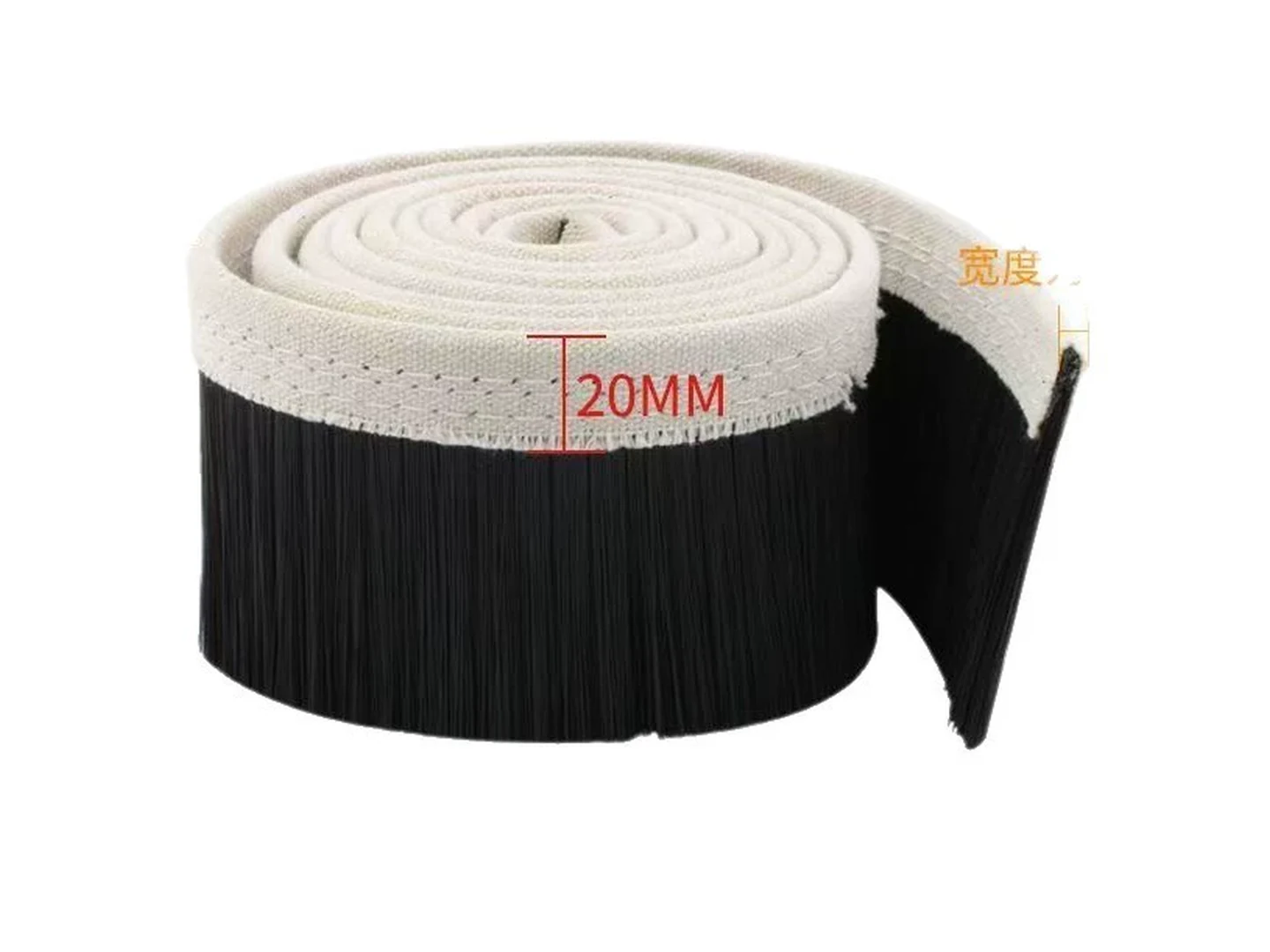
Large-format brush
100 pcs
Minimum order
Built one at a time on a core or channel: full-width rollers, sweeper brooms and long strip.
Production lead time, once the specification is confirmed
- Up to 100 pcsWithin 20 days
- 101–1,000 pcsWithin 30 days
- Over 1,000 pcsConfirmed with your quotation
Peak season can extend these times; the shipping date is confirmed in writing with your quotation. Sampling and shipping are quoted separately.
A linear brush strip engineered for removing dirt, grit, and moisture from the narrow grooves of door, window, trunk, and sunroof seal strips. It contacts the full channel cross-section while protecting the rubber, felt, or coated sealing surface from damage.
What can this brush do for you?
Reaches the bottom of the seal groove
The brush fill is sized to the channel depth, so the filament tips contact the base of the seal groove, not just the outer lip. This dislodges sand, dust, and dried residue that accumulates where the seal flexes and where a cloth or vacuum cannot reach.
Cleans without crushing or tearing the seal
Working compression is set between 5% and 25% of trim height, depending on the application. The soft, flexible filaments flex and recover as they pass over the rubber or felt, wiping the surface instead of pressing permanently into it. Over-compression is avoided so the seal retains its rebound and sealing force.
Fine filament tips clear trapped micro-debris
Filament diameters as small as 0.10 mm reach into the tiny folds and creases of weather seals, lifting grit that builds up in the sealing lip and hinge area. Finer fill is used for delicate silicone or coated seals; coarser fill handles heavier road dirt.
Works as a hand tool or a fixed wiping element
The brush strip can be fitted to a handle for manual cleaning of installed seals, or mounted in a holder along a conveyor, assembly station, or washing tunnel. Fixed mounting lets the brush maintain consistent contact while the seal or door passes by, reducing operator effort on high-volume lines.
Chemical-resistant fill protects the sealing material
Nylon PA, polypropylene PP, and PBT fills are selected according to the cleaning solution and operating temperature. The brush does not shed fibers onto the seal, and the filament ends are rounded or crimped to avoid scratching EPDM, TPE, felt, or flocked surfaces.
Long-strip format simplifies replacement and inventory
Sections from 100 mm to 3000 mm can be cut to the exact seal length, and replacement strips drop into the same holder. Maintenance requires no special tools, and spare inventory stays compact.
What is a Seal Strip Cleaning Brush?
A Seal Strip Cleaning Brush is a linear brush strip with flexible bristles set into a rigid channel or backing. The bristle row is shaped to match the internal groove of a weather seal, so one pass cleans the sidewalls, base, and sealing lip together. It is used on door seals, window channels, trunk and hood seals, sunroof tracks, and similar rubber or felt profiles.
The brush removes loose debris, dust, road film, and moisture before the seal closes or before a conditioner is applied. It is not a tool for reshaping hardened rubber, removing adhesive residue, or grinding away oxidized surfaces. When the seal itself is cracked, gummy, or permanently deformed, cleaning cannot restore its function and replacement is the correct service action.
The working principle is simple: the brush is aligned with the seal channel and moved along its length. The bristles flex into the groove, flick debris out of the recess, and wipe the faces of the lip. In automatic installations the brush remains stationary and the door or seal moves relative to it. In manual use the brush travels with the operator’s hand.
Technical Specifications
Dimensions are selected from the ranges below to match the seal groove and the cleaning method. All values can be adjusted for the project.
| Parameter | Value / Options |
|---|---|
| Strip length per section | 100 – 3000 mm, longer runs by joining sections |
| Trim height (bristle length) | 12.7 – 152.4 mm |
| Channel width (base backing) | 3.2 – 14.3 mm |
| Filament diameter | 0.10 – 1.27 mm |
| Fill materials | Nylon PA (PA6, PA6.6, PA6.12), Polypropylene PP, PBT |
| Working compression | 5 – 25% of trim height; 5–15% for wiping and dust control, 10–25% for deeper cleaning without crushing the seal |
| Holder / carrier | Straight channel, aluminum carrier, angle holder, custom profile, adhesive backing, or clamp mount |
| Filament end treatment | Flagged, crimped, or straight cut; flagged tips increase wiping contact |
| Operating temperature (continuous) | Nylon PA: up to 100 °C; PP: up to 80 °C; PBT: up to 140 °C |
| Chemical exposure | Resistant to water, mild detergents, and common automotive care solutions; verify compatibility for strong solvents or acids |
| End caps / mounting | Optional plastic or metal end caps, pre-drilled mounting holes, or holder clips |
| Brush type | Custom Strip Seal Brushes |
| How it is driven | Fixed in place, no drive of its own |
| Cleaning target | automotive door and window weather seal, sunroof and convertible top seal channel, and appliance door gasket cleaning |
| Surface or part | channel, grooves, seals, profiles, roads, tracks, window tracks, and glass |
| Residue or debris | adhesive, dust, sand, food particles, road grime, salt, adhesive residue, and loose debris |
| Mounting / connection | Optional plastic or metal end caps, pre-drilled mounting holes, or holder clips |
Where does this brush work best?
- Automotive door and window weather seals, including EPDM rubber and flocked profiles, for removing sand and grit before closing panels.
- Sunroof and convertible top seal channels, where debris buildup affects water tightness and glass operation.
- Refrigerator, freezer, and appliance door gaskets in food processing and commercial kitchens, where a soft brush clears food particles without damaging the magnetic strip.
- Sliding door and window tracks, where the strip reaches the bottom of the channel to dislodge dirt and debris that blocks smooth travel.
- Boat, RV, and trailer hatch seals, where salt, road grime, and moisture need regular removal to prevent seal wear.
- Automated cleaning or wiping stations on production lines, where the brush strip is fixed in a holder and the seal profile passes through continuously.
How do I choose the right one?
Measure the groove first
Take the internal width and depth of the seal channel, including the lip opening. The trim height must reach the base with the intended compression, and the bristle row must fit inside the channel without binding. A cross-section sketch or a sample of the seal makes selection faster.
Choose the filament material for the environment
Nylon PA is a good general-purpose choice for water-based cleaning and normal indoor or outdoor temperatures. PP absorbs less moisture and works well in humid areas. PBT is stiffer and holds its flex better at higher temperatures. If the cleaning solution contains aggressive solvents, confirm compatibility before ordering.
Match filament diameter to the debris and surface
Finer filaments (0.10–0.30 mm) clean narrow crevices and are gentle on silicone or flocked seals. Medium diameters (0.40–0.70 mm) handle typical dust and road grit. Coarser filaments (0.80–1.27 mm) remove heavier, compacted dirt but should be tested on soft rubber to avoid over-scrubbing.
Set compression for the job
For light wiping and dust removal, keep the brush at 5–15% trim compression. For deeper cleaning of embedded grit, increase to 10–25% while confirming the seal still rebounds and the holder does not bind. Too little compression leaves residue behind; too much can fold the bristles over and wear both brush and seal.
Choose the holder for manual or fixed use
A straight aluminum or plastic channel works for hand tools and simple jigs. Angle holders help reach offset grooves. Adhesive-backed strips retrofit onto existing equipment. For continuous wiping in a wash tunnel or assembly line, specify the mounting orientation and travel speed so the brush aligns correctly with the seal.
When to use a different brush
If the seal is coated with hardened adhesive, tar, or paint overspray, use a solvent treatment followed by a stiffer scraper brush. If the rubber is cracked or gummy, replace the seal rather than brushing it. For heavy rust or scale on metal door tracks, use a wire brush first, then a soft seal strip brush for the rubber. A seal strip cleaning brush is for removing loose and moderately attached contamination, not for aggressive material removal.
Can I customize this brush?
Yes. Each seal strip cleaning brush is configured to the groove it must clean. To define a custom brush, provide the seal profile drawing or sample, channel width and depth, target compression, filament material and diameter, holder or mounting preference, and the cleaning environment including chemicals and temperature.
We can adjust:
- Strip length and number of sections, with joined runs for long seals
- Trim height, bristle density, and filament diameter
- Fill material (Nylon PA, PP, PBT) and color
- Filament end treatment (flagged, crimped, straight) for wiping or scrubbing
- Holder profile and mounting: drilled holes, end caps, adhesive backing, angled carrier, or custom extrusion
- Packaging: bulk, cut pieces, retail sleeve, or kit with handle and spare strip
If your project requires material documentation, inspection support, or third-party testing for the cleaning environment, we can assist with those requirements during the customization process.
What size should a seal strip cleaning brush be, and how long does it last?
How do I know the brush is reaching the bottom of the seal groove?
After one pass, shine a light into the groove or run a thin white cloth along the base. If the cloth comes away clean and no grit remains visible at the deepest point, the trim height and compression are correct. If residue stays at the bottom, increase trim height or compression slightly and retest.
Will this brush scratch the seal’s flocked or coated surface?
With the correct filament diameter and soft compression, no. Use flagged or crimped tips and keep compression at 5–15% for coated or flocked seals. Before a full run, test on an offcut or hidden section and inspect the surface under magnification for any fiber damage.
Can the brush strip be cleaned and reused?
Yes. Rinse the bristles with water or a mild detergent, then allow the strip to air-dry. Avoid twisting or bending the backing channel. If debris is trapped deep in the fill, comb it out gently with a plastic pick. Do not use high-pressure steam or aggressive solvents unless the selected filament material is rated for those conditions.
How often should the strip be replaced?
Inspect the bristle row every maintenance cycle. Replace the strip when the filaments show permanent bending, significant loss of tip material, or when the brush no longer removes debris at the same setting and speed. On high-volume automated lines, keep a spare cut-to-length section on hand to minimize downtime.
Does brushing replace seal conditioning or lubrication?
No. Brushing removes contamination so that a conditioner or lubricant can actually reach the rubber. Apply the conditioner separately after brushing. Skipping the conditioning step on dry, aging seals can still lead to squeaks and reduced flexibility.
Can the same brush clean both the door seal and the window channel?
Only if the two grooves have the same cross-section and depth. Door seals and window channels often differ significantly in width and shape. In most cases, a separate strip with the correct trim height and channel fit should be used for each profile to avoid poor contact or binding.
Guides that go deeper on this
Anti-Static Strip Brushes: What Sets the Resistance?
Read this guideGuideBucket Elevator Seal Brushes: How to Choose the Right Type
Read this guideGuideConveyor Belt Cleaning Brush Design
Read this guideGuideCustom Brush Sampling and Validation Plan
Read this guideGuideIndustrial Brush Wear Patterns and Corrective Actions
Read this guideCustom Manufacturing RFQ
Describe Your Application
Send the key measurements, cleaning requirement, residue, material direction, mounting method, quantity, and drawing or photo.
Drawing or photo optional — it speeds things up, it does not gate the enquiry.
Custom Brush RFQ
Send Your Brush Project
Upload a drawing, product photo, or sample photo and provide the core dimensions and cleaning conditions.
“We need a brush to remove wet residue from a stainless steel conveyor, about 800mm wide. The current brush wears quickly. We can send photos.”
“We sell drinkware and need a cleaning brush to include with the product. Quantity around 5,000 pieces.”