
Custom Cleaning Brush
Strip Brush Cleaning Brush Musical Instrument
Custom strip brush with soft goat hair or nylon filaments for dusting musical instruments. Low-profile design reaches under strings and between keys.
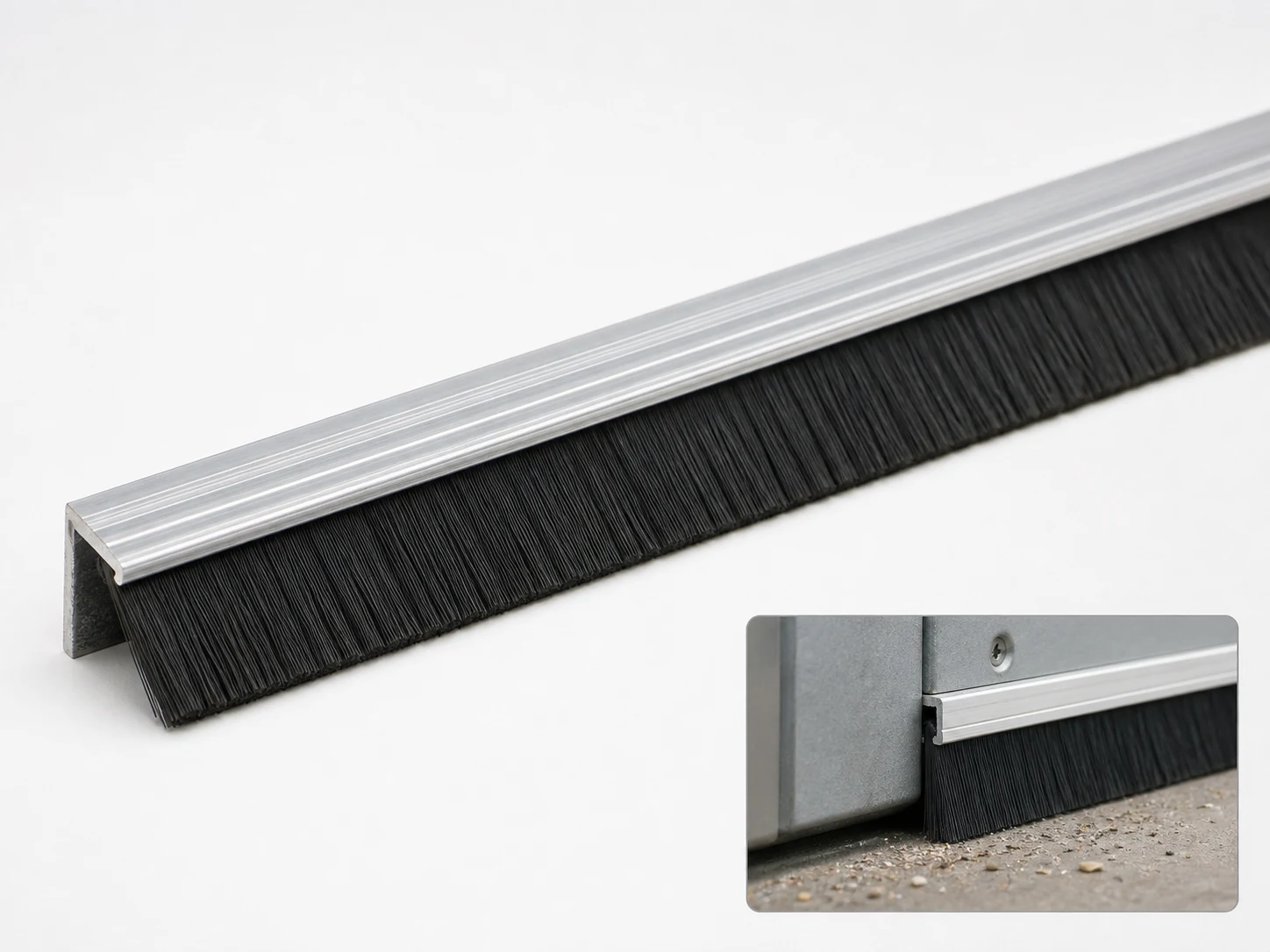
Medium brush
100 pcs
Minimum order
Worked with two hands or on a pole: chimney, gutter and pond-filter brushes, discs, cups and tank brushes.
Production lead time, once the specification is confirmed
- Up to 100 pcsWithin 7 days
- 101–5,000 pcsWithin 14 days
- 5,001–50,000 pcsWithin 21 days
- Over 50,000 pcsConfirmed with your quotation
Peak season can extend these times; the shipping date is confirmed in writing with your quotation. Sampling and shipping are quoted separately.
A narrow-profile strip brush with soft goat hair or fine nylon filaments, built for dry dusting and light cleaning of musical instruments. It reaches under strings, between piano keys, and into tight hardware gaps without scratching finishes or disturbing delicate components.
What can this brush do for you?
Fits into gaps a round brush cannot enter
The flat strip profile carries a narrow band of filaments, typically 3–15 mm wide, so the brush slides between adjacent keys, under string sets, and into action-part slots without forcing parts apart. A round brush creates a point contact that can skip over narrow openings; this one presents a continuous cleaning line.
Soft contact protects lacquer, shellac, plating, and inlay
Goat hair has a fine, flexible structure that lifts loose dust without abrading polished finishes. Where a synthetic option is preferred, fine-diameter nylon PA filaments are selected to stay below the scratch threshold for coated woods, nitrocellulose, and plated metal parts.
Flexible backing follows curved instrument bodies
The filament strip can be mounted in a bendable aluminum, brass, or plastic channel that conforms to arched tops, cutaways, and concave hardware recesses. The brush keeps contact with the surface instead of bridging across it, which means dust is removed from the actual curve rather than just the high points.
Lifts loose dust instead of pushing it deeper
A low-density filament layout with fine tips sweeps dust, rosin powder, and light debris up and out of the cleaned zone. Densely packed stiff bristles tend to shove particles farther into gaps; this configuration is set for carry-out, not compaction.
Anti-static options for electronics and active pickups
Natural goat hair is inherently low-static, and nylon filaments can be treated for static dissipation when the brush will be used around active pickups, preamps, faders, or other static-sensitive components. A non-conductive or grounded backing can be specified for those environments.
What is a Strip Brush Cleaning Brush Musical Instrument?
A strip brush cleaning brush for musical instruments is a hand-guided cleaning tool built around a continuous strip of soft filaments anchored in a narrow channel or backing. The strip may be straight, curved, or permanently formed to match a specific instrument area, and it is used in short sweeping or pull-through strokes to remove dust, loose dirt, rosin residue, and light debris from delicate surfaces and narrow gaps.
In practice, the user draws the strip across the area to be cleaned. The filament tips make contact with the surface and the low friction of fine hair or nylon allows the brush to travel under strings, around bridges, between key tops, and along hardware edges without dislodging or abrading the instrument. The brush is generally used dry or with only a light touch of clean water or an instrument-safe cleaner. Saturating the backing or soaking natural-hair filaments is not recommended, because moisture can weaken adhesives and distort the channel.
This is a precision dusting and light-cleaning tool, not a scrub brush. It is not intended for removing rust, corrosion, hardened deposits, glue, or heavy grime. For those conditions, a stiffer brush or a chemical-assisted cleaning process is the better choice.
Technical Specifications
| Parameter | Value / Options |
|---|---|
| Strip width | 3–15 mm standard; up to 20 mm custom |
| Bristle height (trim length) | 5–25 mm, adjusted to gap depth and contact pressure |
| Filament material | Goat hair (natural), Nylon PA6/PA66, or goat hair–nylon blend |
| Filament diameter | 0.08–0.30 mm; natural hair typically 0.05–0.15 mm |
| Backing / channel material | Aluminum, brass, stainless steel, PVC, or PP; rigid or flexible |
| Strip length | 30–500 mm standard; up to 2000 mm custom for long runs |
| Overall length (with handle) | 150–500 mm typical hand tool; longer on request |
| Handle options | Wood, plastic, metal ferrule, loop, or bare strip for OEM integration |
| Contact setting | Near-size contact for wiping; 5–20% oversize for polymer scrubbing on flexible backings |
| Operating conditions | Room temperature; dry or lightly damp use; avoid prolonged solvent immersion |
| Brush type | Custom Strip Seal Brushes |
| How it is driven | Hand-guided |
| Cleaning target | piano keyboard and action, guitar and other stringed instrument, and drum and percussion hardware cleaning |
| Surface or part | instruments, gaps, strings, keys, channel, slots, aluminum, and metal |
| Residue or debris | dust, hair, corrosion, rust, polish, tarnish, loose dust, and powder |
| Mounting / connection | Threaded Removable / Fixed |
All dimensions are starting points. We adjust strip width, bristle height, filament density, backing material, and handle form to the specific instrument and cleaning program before production.
Where does this brush work best?
- Piano keyboards and actions — between key sides, under strings, around tuning pins, and along action rails where dust accumulates.
- Guitars and other stringed instruments — under string sets, around bridges, saddles, pickups, tailpieces, and tuning machines without removing strings.
- Woodwind and brass instruments — exterior keywork gaps, between tone hole rims, and along rods and levers where dust and light tarnish collect.
- Drums and percussion hardware — inside lug casings, around tension rods, and at cymbal stand joints and hi-hat adjustments.
- Studio and stage electronics — mixing console fader slots, amplifier vents, pedal gaps, and patchbay openings where static-sensitive components need gentle dust removal.
- Repair benches and showcases — routine dusting of rosin, polish residue, and loose workshop debris from finished instruments before display or shipping.
How do I choose the right one?
Start with the access dimensions. Measure the narrowest gap the brush must enter — between keys, under strings at the lowest action point, or inside a hardware slot. The strip width plus two bristle heights should fit that gap without forcing. Add 1–2 mm clearance if the backing must flex through the space. If the brush will be pulled through a long channel, check that the backing can bend around the channel’s smallest radius without kinking.
Select the filament by the surface and the residue. Goat hair is the first choice for shellac, varnish, oil finishes, and plated metal because it is naturally soft and static-resistant. Nylon PA is better when the brush will see frequent use, light moisture, or repetitive flexing, because it holds shape longer and tolerates occasional cleaning. A blended fill combines softness with durability for mixed-use workshops.
Match backing flexibility to the contour. A rigid aluminum or plastic channel gives straight, consistent contact along flat surfaces and straight slots. A flexible backing is needed for arched tops, body curves, or cavities where the brush must wrap slightly. For permanently curved areas, the strip can be pre-shaped to the instrument profile.
Set filament density and stiffness to the dust load. Loose surface dust and rosin powder call for a low-density, soft fill that lifts debris without pushing it around. Lightly adhered dust in crevices benefits from a slightly firmer nylon fill with 5–20% oversize contact on a flexible backing. Do not increase stiffness beyond what the finish can tolerate.
| Situation | Recommended configuration |
|---|---|
| Loose dust on lacquered or shellac bodies | Goat hair, low density, near-size contact |
| Dust in narrow key gaps or hardware slots | Fine nylon, strip width 3–8 mm, short bristle height |
| Curved body areas or cutaways | Flexible backing, pre-shaped strip, soft filament |
| Studio electronics and active pickups | Anti-static nylon or natural hair, non-conductive backing |
| Lightly adhered dust or fine debris | Nylon with slightly higher density and up to 20% oversize contact |
Use a different brush when heavy grime, wax, rust, or corrosion is present — a stiffer cleaning brush or solvent-assisted method should remove the bulk first, with this strip brush as the finishing step. For internal bores and tubing, a round tube brush typically reaches better than a flat strip. When the cleaning target is an abrasive or scraping task, this product should not be specified.
Can I customize this brush?
Yes. The strip brush is built to the instrument and the cleaning program, not pulled from a fixed catalog. To start, we need the instrument type and models, the exact gaps or surfaces to be cleaned, the finish materials involved, the residue type, and the expected use frequency. A photo or simple sketch of the access area helps us confirm the fit.
We can adjust:
- Strip dimensions — width, length, bristle height, and overall profile
- Filament materials — goat hair, Nylon PA6/PA66, blends, custom diameters and stiffness
- Backing and channel — aluminum, brass, stainless steel, PVC, or PP; rigid, bendable, or pre-formed to a body curve
- Handle and interface — wood, plastic, metal ferrule, loop, double-ended, or bare strip for OEM products
- Contact configuration — filament density, trim angle, single or double row, edge sealing, or oversize setting
- Color, marking, and branding — filament color, channel finish, handle color, pad print, laser marking, or custom label
- Packaging — bulk, individual sleeve, retail hang card, or project-specific packing
If your project requires material documentation, inspection reports, or third-party testing for a specific market, we can support those requirements during the customization process.
Which filament survives the cleaning and still lasts on a strip brush cleaning brush musical instrument?
How do I check whether the strip will fit between my piano keys or under my strings?
Measure the narrowest clearance you need to enter — the gap between adjacent keys, or the spacing between the string and the fingerboard at the lowest action point. The strip width plus two times the bristle height should be less than that clearance if the bristles must deflect, or near-size if the brush only needs to wipe the surface. If the brush binds when inserted, reduce strip width or bristle height.
Will goat hair bristles shed onto the instrument?
A properly filled goat hair strip may release a few loose fibers during the first few uses, then stops shedding. If you see continued shedding after break-in, the fill density or anchorage is wrong for the application. We can increase fill density or switch to a synthetic blend to eliminate visible fiber loss.
Can I use this brush with instrument polish or cleaning fluid?
The brush is intended for dry dusting or use with only a lightly dampened filament. If you apply polish or cleaner, apply it to a separate cloth first, then use the brush to work the area only if the product is safe for the filament and backing. Avoid saturating the strip or soaking natural hair, and test on a hidden area of the instrument first.
How do I clean the strip brush after use?
Remove loose dust by tapping the brush against a soft surface or using low-pressure compressed air. If necessary, wash the filament area with mild soap and lukewarm water, then rinse and hang the brush bristle-down to dry completely before storage. Do not store the brush damp inside a closed case or plastic bag.
When should I replace the brush strip?
Replace the strip when the bristles become permanently flattened, bent, or lose their spring, when the backing channel cracks or no longer holds its shape, or when the brush leaves visible dust lines after a pass. If cleaning efficiency drops noticeably, check the strip before increasing pressure — a worn strip will not respond to more force.
Is the strip brush safe around active electronics inside the instrument?
Yes, when the right configuration is selected. Natural goat hair is low-static, and anti-static nylon is available for use near pickups, preamps, and circuit boards. Specify a non-conductive backing if there is any chance of contacting exposed terminals. Do not use a metal-backed strip directly across powered circuit connections.
Guides that go deeper on this
Anti-Static Strip Brushes: What Sets the Resistance?
Read this guideGuideCeramic Strip Brushes: Why Glass Lines Use Them
Read this guideGuideConveyor Belt Cleaning Brush Design
Read this guideGuideCustom Brush Sampling and Validation Plan
Read this guideGuideIndustrial Brush Wear Patterns and Corrective Actions
Read this guideCustom Manufacturing RFQ
Describe Your Application
Please include the main sizes, application, residue, preferred material, interface, quantity, and any drawing or sample available.
Drawing or photo optional — it speeds things up, it does not gate the enquiry.
Custom Brush RFQ
Send Your Brush Project
Upload a drawing, product photo, or sample photo and provide the core dimensions and cleaning conditions.
“We need a brush to remove wet residue from a stainless steel conveyor, about 800mm wide. The current brush wears quickly. We can send photos.”
“We sell drinkware and need a cleaning brush to include with the product. Quantity around 5,000 pieces.”