
Custom Cleaning Brush
Coffee Grinder Cleaning Brush
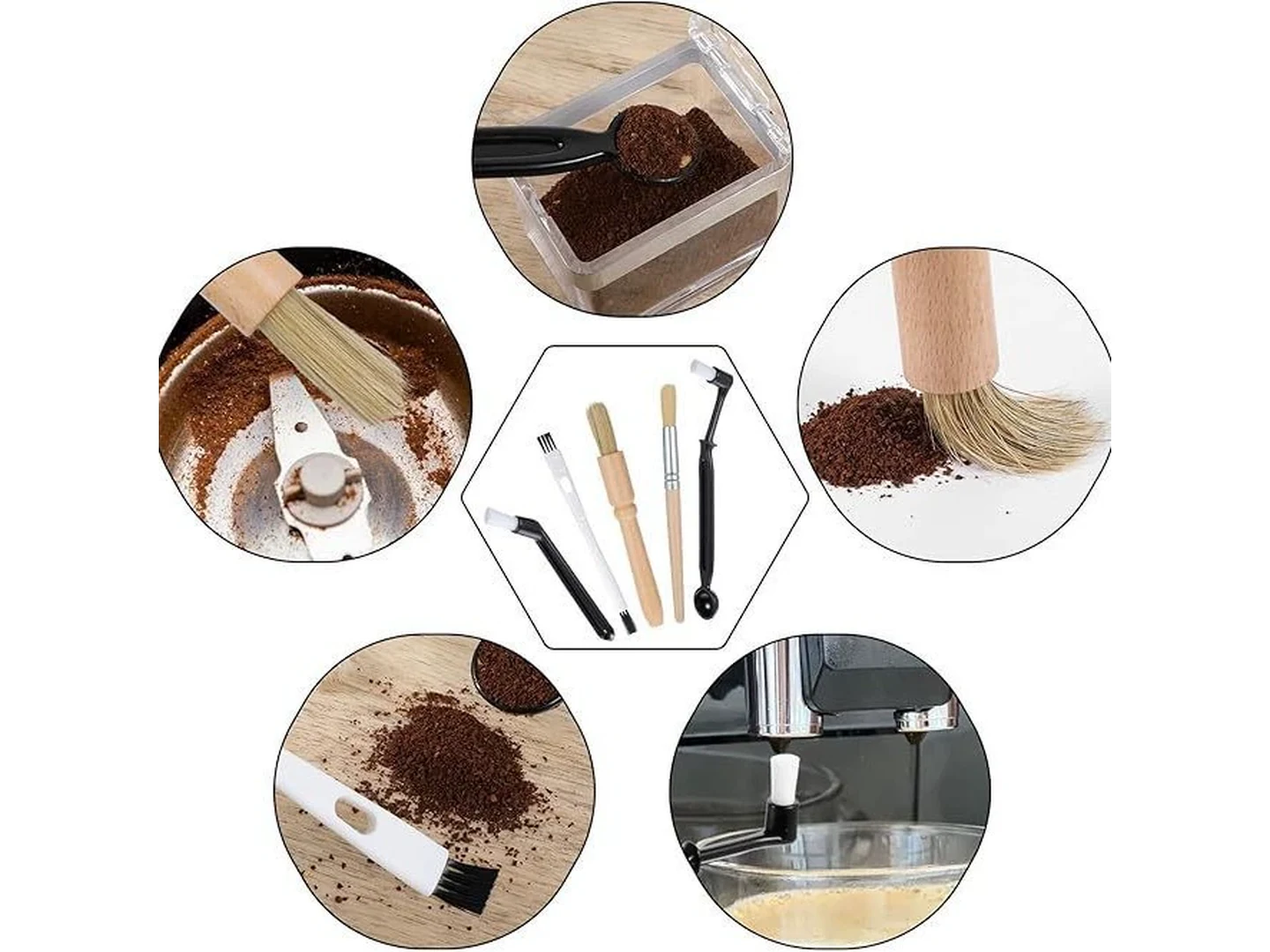
A narrow-profile coffee grinder cleaning brush for burr gaps, grind chambers, chutes, and dosing ports.
Small brush
500 pcs
Minimum order
Held in one hand: tube, bottle, detail and swab brushes — including long-handled ones with a small head.
Production lead time, once the specification is confirmed
- Up to 500 pcsWithin 7 days
- 501–50,000 pcsWithin 14 days
- Over 50,000 pcsWithin 21 days
Peak season can extend these times; the shipping date is confirmed in writing with your quotation. Sampling and shipping are quoted separately.
A narrow-profile maintenance brush for reaching burr gaps, grind chambers, chutes, and dosing ports in home and commercial coffee grinders. It sweeps out loose grounds and oily fines while protecting coated burrs and precision surfaces from scratches and bristle debris.
What can this brush do for you?
Gets Between Burr Teeth and Along Chamber Walls
The compact head diameter and trimmed working length let the filaments slide between burr teeth, under the grind adjustment ring, and along the chamber wall where stale grounds accumulate. A short, controlled trim keeps the tips from splaying under pressure, so the brush cleans the crevices instead of just pushing grounds around.
Lifts Out Oily Fines Without Leaving Fibers in the Coffee Path
Natural horsehair and goat hair pick up fine powder and coffee oil effectively, while nylon PA and synthetic fills release loosened residue quickly and hold their shape in damp conditions. The fill is set into the core to stay put during repeated use, so the brush does not shed plastic or natural fibers into the grind chamber between cleaning cycles.
Keeps Coated and Precision Burr Surfaces Safe
The working end is built with a soft filament contact and no exposed metal tip, so cleaning between burr teeth and around the chamber does not scratch titanium-nitride, coated, or precision-machined burr surfaces. That helps preserve grind consistency and avoids nicking the cutting edges that control particle size.
Reaches Retention Zones Without Full Disassembly
The slender stem and angled or tapered head options can enter discharge chutes, declumper areas, dosing funnels, and hopper necks without removing the burr set. Operators can clear stale grounds from retention points at bean changes or end of service without a full teardown.
Works With Dry Sweeping and Grinder-Cleaner Pellets
Use the brush dry for daily grounds removal, or after running manufacturer-approved grinder cleaner tablets to sweep loosened oil and residue out of the chamber and chute. Synthetic fills tolerate moisture and mild cleaning solutions, while natural hair fills are best reserved for dry contact to extend their working life.
What is a Coffee Grinder Cleaning Brush?
A coffee grinder cleaning brush is a hand-guided maintenance brush with a narrow, trimmed filament head at the end of a straight or angled stem. It is made to enter the internal spaces of coffee grinders — burr chambers, grind adjustment threads, discharge chutes, declumper areas, hopper necks, and dosing mechanisms — and remove coffee residue that a cloth, sponge, or vacuum nozzle cannot reach.
During use, the operator works the brush with short push-pull, rotating, or sweeping strokes to loosen grounds, oil film, and fine powder from hard-to-access surfaces. The brush is normally used with the grinder unplugged and the hopper removed or the chamber open. It removes loose and tacky residue, not hardened mineral scale or caramelized deposits. For those conditions, the brush is used after a grinder cleaner or descaler to remove loosened material.
Technical Specifications
The table below shows typical dimensions and material options for a coffee grinder cleaning brush. These values can be adjusted to match your grinder’s internal geometry and cleaning routine.
| Parameter | Value / Options |
|---|---|
| Overall length | 150–350 mm, selected to reach from hopper neck to chamber base |
| Working head length | 15–80 mm of filament-bearing section |
| Head diameter | 5–40 mm, sized to burr gaps and chamber clearance |
| Trim length | 10–35 mm; shorter for scrubbing between burr teeth, longer for sweeping chamber walls |
| Handle diameter | 10–30 mm, matched to operator grip and access opening |
| Filament material | Nylon PA, horsehair, goat hair, PP, PET |
| Filament diameter | 0.08–0.40 mm depending on stiffness and gap width |
| Stem / core | Stainless steel twisted-wire, coated steel, or plastic core |
| Handle material | Wood, PP, stainless steel, or soft-grip; custom forms available |
| Working end geometry | Straight, angled, tapered, pointed tip, fan, or flared profile |
| Operating temperature | 0–140°C for synthetic fills and handles; natural hair intended for dry, ambient-temperature use |
| Contact clearance | Keep 0.5–2.0 mm between filament tips and housings, burrs, or sensors during insertion |
| Brush type | Custom Handheld Detail Brushes |
| How it is driven | Machine-driven, mounted in the equipment |
| Cleaning target | espresso grinder burr chamber and grind adjustment, commercial grinder discharge chute and dosing chamber, and single-dose and home burr grinder cleaning |
| Surface or part | chambers, chutes, hoppers, necks, ports, gaps, thread, and precision surfaces |
| Residue or debris | burrs, coffee, oil, fines, oil film, particles, fine particles, and scale |
| Mounting / connection | Snap-Fit / Quick-Change Coupling / Fixed |
Where does this brush work best?
- Espresso grinder burr chambers and grind adjustment threads in cafes and coffee bars, where stale grounds and oil film collect between burr teeth and around the adjustment ring.
- Commercial grinder discharge chutes and dosing chambers that pack fine particles around declumpers and exit ports, affecting dose accuracy and flavor.
- Single-dose and home burr grinders used with multiple bean types, where bean-to-bean retention is noticeable in the cup.
- Hopper necks, bean shutters, and transfer funnels where broken beans, static-clinging fines, and oil residue build up at contact points.
- Dosing cups, portafilter baskets, and distribution tools where coffee particles and oil film need regular removal without scratching coated surfaces.
The brush performs best as part of a routine cleaning sequence: sweeping, vacuum extraction, and, where needed, a manufacturer-approved grinder cleaner. It is not intended to replace those steps or to act as a descaler.
How do I choose the right one?
Start with the narrowest access path. Measure the minimum gap between the burr outer edge and the chamber wall, the chute width, and the hopper neck opening. The head diameter should enter without force and leave roughly 0.5–2.0 mm of clearance to the housing or sensor surfaces.
Then match the filament to the residue and surface. Horsehair is a soft, low-scratch option for loose fines and light oil film. Goat hair and nylon PA provide more tip stiffness for tacky or compacted residue. PP and PET are economical synthetic choices for wet or food-contact-like cleaning routines where natural fiber life may be shorter.
Set the trim length to the cleaning action. A shorter trim, around 10–15 mm, gives a firmer scrubbing contact for between-tooth and under-burr work. A longer trim, around 25–35 mm, flexes more and sweeps wider chamber walls and chute surfaces. For angled access under the burr or into a horizontal chute, choose a bent or angled stem rather than forcing a straight stem into an awkward path.
Consider how the brush will be used. If it will be rinsed, sanitized, or exposed to cleaning solutions daily, select nylon PA, PP, or PET fills and a stainless or plastic core. Natural horsehair and goat hair are better for dry, low-moisture environments and typically require replacement sooner when used wet.
A short decision guide:
| Cleaning situation | Recommended filament | Reason |
|---|---|---|
| Loose fines and soft oil film | Horsehair | Soft pickup, low scratch risk on burrs |
| Tacky or sticky coffee residue | Nylon PA or goat hair | More tip stiffness to dislodge deposits |
| Frequent wet cleaning or rinsing | Nylon PA, PP, or PET | Moisture tolerant and quick to dry |
| Sensitive coated burrs | Horsehair or fine nylon PA | Minimizes surface marks and edge damage |
If the deposits are hardened scale or caramelized oil, this brush will not remove them by force. Use the grinder manufacturer’s approved cleaning tablets or descaler first, then use the brush to clear the loosened residue. Wire brushes and abrasive pads should not be used on burr chambers or coated surfaces because they can damage cutting edges and change grind performance.
Can I customize this brush?
Yes. Coffee grinder cleaning brushes are built around the specific dimensions and access points of your equipment. To define the configuration, provide the grinder make and model, internal access dimensions, the narrowest gap the head must enter, the surfaces being cleaned, whether the brush will be used wet or dry, and your preferred handle and packaging. A drawing or photo of the cleaning points shortens the process.
We can adjust:
- Head geometry — diameter, working length, taper, pointed tip for burr gaps, fan or flared profile for chutes
- Filament — material, diameter, crimp, cut, density, tuft pattern, and color
- Stem / core — length, angle, flexibility, stainless, coated steel, or plastic core, and ferrule style
- Handle — material, shape, diameter, grip texture, hanging loop, and molded or printed branding
- Construction — twisted-in-wire, stapled, tufted, or double-ended configurations
- Packaging — bulk, individual bag, retail sleeve, or kit with dosing tools and cleaning accessories
If your project requires material documentation, inspection reports, third-party testing, or other project-specific quality support, we can assist with those requirements during the customization process.
What size should a coffee grinder cleaning brush be, and how long does it last?
How do I clean and store this brush so it doesn’t contaminate the grinder?
Tap loose grounds out after each use, then rinse synthetic fills in warm water if needed and air-dry completely before returning the brush to service. For natural horsehair or goat hair, brush the fill clean with your fingers and keep it dry; moisture can soften or deform natural filament. Store the brush in a sealed, dry location away from steam and oil mist, and replace it if the core rusts or filaments start shedding.
Can I use this brush while the grinder motor is running?
No. Always disconnect the grinder from power and, in commercial environments, follow lockout/tagout before inserting any tool into the grind chamber. The brush is a hand tool only; a moving burr can catch filaments, bend the core, and throw fragments into the coffee path.
Will this brush remove hardened coffee oil or mineral scale?
Not by itself. It dislodges loose grounds, tacky oil film, and soft residue. Hardened oil, caramelized coffee residue, and limescale usually require a manufacturer-approved grinder cleaner or descaler. The brush is best used after those treatments to sweep away loosened material — not as a replacement for chemical or mechanical deep cleaning.
How do I know if the head diameter is correct for my grinder?
With the grinder open and empty, insert the head slowly. It should pass without forcing and you should be able to see roughly 0.5–2.0 mm of clearance between filament tips and the chamber wall or housing. If the filament bends over permanently or the head sticks, it is too large. If the head enters with plenty of space but cannot sweep the sidewall or burr gaps, it is too small.
How often should I replace the brush?
Replace it when filaments flatten, splay outward, or no longer spring back; when the core bends permanently; or when the tips feel worn smooth. A brush with tired filaments pushes grounds into corners instead of lifting them and may start shedding material into the coffee path.
Is this brush safe for coated, titanium-nitride, or specially plated burrs?
Yes, provided the fill is selected for non-abrasive contact and the working end has no exposed metal wire that can touch the burr. Choose horsehair or fine nylon PA for sensitive coatings, use light pressure, and verify during the first use that no filament end is leaving marks. Hard wire brushes and abrasive pads should not be used on coated burr surfaces.
Guides that go deeper on this
We have not written a guide specific to this one yet. The material that covers selection, filament, dimensions, maintenance and sourcing is collected in the technical resources library.
Custom Manufacturing RFQ
Describe Your Application
To prepare the correct quotation, provide the dimensions, cleaning task, residue, material, mounting details, quantity, and a drawing or photo.
Drawing or photo optional — it speeds things up, it does not gate the enquiry.
Custom Brush RFQ
Send Your Brush Project
Upload a drawing, product photo, or sample photo and provide the core dimensions and cleaning conditions.
“We need a brush to remove wet residue from a stainless steel conveyor, about 800mm wide. The current brush wears quickly. We can send photos.”
“We sell drinkware and need a cleaning brush to include with the product. Quantity around 5,000 pieces.”