
Custom Cleaning Brush
Washing Machine Gasket Cleaning Brush
Narrow-profile nylon brush for front-load washer door gasket folds. Angled head reaches the seal crease, removes lint, detergent scum, mold, and mildew.
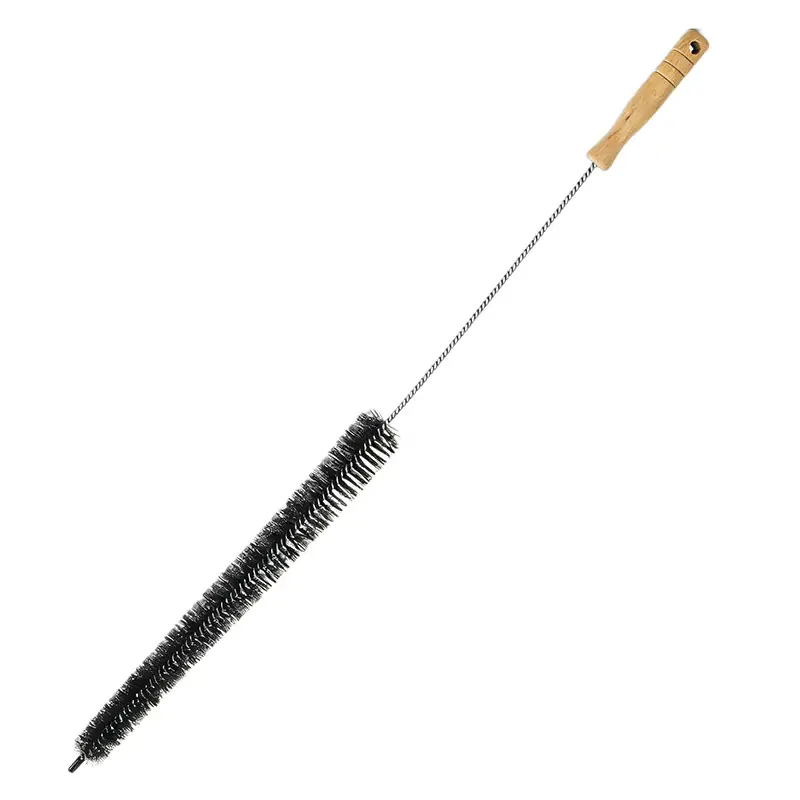
Small brush
500 pcs
Minimum order
Held in one hand: tube, bottle, detail and swab brushes — including long-handled ones with a small head.
Production lead time, once the specification is confirmed
- Up to 500 pcsWithin 7 days
- 501–50,000 pcsWithin 14 days
- Over 50,000 pcsWithin 21 days
Peak season can extend these times; the shipping date is confirmed in writing with your quotation. Sampling and shipping are quoted separately.
The Washing Machine Gasket Cleaning Brush is a narrow-profile hand tool designed to reach into the folds of front-load washer door gaskets. Its angled head and stiff yet rubber-safe nylon filaments remove lint, detergent scum, mold, and mildew without scratching or tearing the seal.
What can this brush do for you?
Slim angled head reaches where the seal meets the drum
The head profile is kept between 5 and 25 mm wide so it can slide into the gap between the rubber gasket and the outer drum without forcing the fold open. A downward-angled tip lets the bristles contact the inner crease, where most residue hides.
Short, dense nylon bristles scrub without tearing the rubber
Nylon PA filaments are cut short and packed densely enough to break up soap scum and mold, but their rounded tips prevent gouging. The short trim keeps the brush stiff enough to disrupt deposits while still following the rubber curve.
Optional microfiber wiping surface picks up loose residue
When configured with a microfiber side or tip, the brush lifts loosened debris and wipes the seal dry in one pass. Less moisture left behind means slower regrowth of mold and mildew.
Extended reach keeps hands clear of the drum
With overall reach from 140 to 240 mm, the handle lets you work deep into the drum and around the hinge without putting your hands inside the machine. The grip diameter is matched for comfortable one-hand control.
Rinse-clean, moisture-resistant construction
Nylon PA and PBT do not absorb water, dry quickly, and withstand common appliance cleaners. The brush itself won’t hold moisture or become a source of mold growth between cleanings.
What is a Washing Machine Gasket Cleaning Brush?
A Washing Machine Gasket Cleaning Brush is a hand-guided cleaning tool built specifically for the rubber door seal on front-loading washing machines. It has a narrow angled head with short, stiff filaments that slide into the fold between the seal and the drum. During use, you pull the gasket lip back or push the brush into the crease, then sweep along the circumference to dislodge accumulated lint, detergent residue, mold, and mildew. Some configurations include a scraper tip or microfiber wiping section for final residue removal.
This is a maintenance tool, not a heavy-duty scraper. It is designed for regular cleaning of accessible rubber surfaces. It will not remove deep internal deposits inside the tub, and it should not be used on torn or brittle seals where brushing could worsen existing damage.
Technical Specifications
The table below lists the standard parameter ranges for this brush. All dimensions and materials can be adjusted to match your project requirements.
| Parameter | Value / Range |
|---|---|
| Head width / diameter | 5–25 mm, selected to fit the gasket fold gap |
| Working head length | 30–80 mm, based on fold depth and contact area |
| Overall reach | 140–240 mm, adjusted for drum depth and hinge access |
| Grip / body diameter | 10–30 mm, matched to handle comfort |
| Head angle / profile | Straight, bent tip (30–60°), angled hook, or custom geometry |
| Primary contact materials | Nylon PA (standard), PBT (higher stiffness option), microfiber (wiping side) |
| Bristle trim length | 5–12 mm, short for stiffness, longer for deeper folds |
| Bristle stiffness | Soft, medium, or firm via filament diameter and trim adjustment |
| Optional wiping surface | Microfiber section on back side or tip for residue pickup |
| Handle material | PP, TPE overmold, or stainless core with polymer body |
| Operating environment | Wet, detergent exposure, ambient temperature; chemical compatibility to be confirmed |
| Brush type | Custom Handheld Detail Brushes |
| How it is driven | Hand-guided |
| Cleaning target | front-load washing machine door gasket fold, top-load washer lid seal and drum rim, and other appliance gasket cleaning |
| Surface or part | molds, drums, seals, holes, rims, gasket folds, gaps, and drain |
| Residue or debris | mold, lint, hair, soap scum, and detergent residue |
| Mounting / connection | Fixed |
Where does this brush work best?
- Front-load washing machine door gasket folds — the primary target, where lint, detergent scum, mold, and mildew accumulate in the crease and drain holes.
- Top-load washer lid seals and drum rim crevices where similar residues collect.
- Around detergent dispenser drawers and fabric softener compartments on front-load models.
- Between the outer tub and rubber seal where small objects like coins or hair ties get trapped.
- Other appliance gaskets such as refrigerator door seals or dishwasher door gaskets that require narrow crease cleaning.
How do I choose the right one?
Start with the gasket gap width
Measure the opening between the rubber seal and the drum or outer rim. The brush head must enter without stretching the rubber excessively. A head that is too wide will force the fold open and risk tearing; one that is too narrow will not contact both sides of the crease.
Match bristle stiffness to the residue and rubber condition
Soft bristles are safer for aged, matte, or slightly brittle seals. Medium stiffness handles routine maintenance on healthy rubber. Firm bristles remove established mold and soap scum, but only on seals in good condition. If the rubber is cracked or torn, replace the gasket before aggressive brushing.
Pick the head angle for your access path
A straight head works when the fold is shallow or you can pull the seal back to expose the inner surface. A bent tip or angled hook reaches recessed folds or areas behind the door hinge. Choose the shape that lets the bristle tips contact the full crease without you forcing the tool into position.
Set the handle reach for comfortable operation
The handle should be long enough to reach the back of the drum and around the hinge without overextending your arm, but short enough to maintain control during sweeping strokes. Standard reach is 140–240 mm; longer is available if the machine drum is deep.
Consider material options
Nylon PA is the standard choice for moisture resistance and durable scrubbing. PBT offers higher stiffness and better performance with certain cleaning chemicals. Add a microfiber wiping side if you want the brush to also lift and dry the seal surface after scrubbing.
When to use something else
If the residue is hard mineral scale or deeply bonded deposits, this brush may not generate enough force — a stiffer brush or chemical descaling treatment is more appropriate. If the gasket is severely degraded, brushing can worsen damage; the seal should be replaced. If you need to clean inside the tub or drum beyond the gasket, use a separate drum cleaning brush or a cleaning cycle.
Can I customize this brush?
Every washing machine gasket brush can be adjusted to the specific model and cleaning routine. To define the right configuration, provide the gasket gap width, fold depth, rubber condition, type of residue, cleaning chemicals used, and any handle preference. A drawing or photo of the gasket helps us get the geometry right faster.
We can adjust:
- Head geometry — width, length, angle, hook profile, scraper tip, or multi-surface design
- Bristle configuration — material (PA, PBT, or blend), diameter, trim length, density, and stiffness
- Wiping surface — microfiber section on the back, tip, or as a removable cover
- Handle — length, grip diameter, material, overmold texture, hanging hole, or printed branding
- Color and marking — custom color, pad print, laser marking, or identification coding
- Packaging — bulk, individual bag, retail card, kit with cleaning instructions, or project-specific packing
If your project requires material documentation, inspection reports, or third-party testing for cleaning performance or chemical resistance, we can assist with those requirements during the customization process.
Which filament survives the cleaning chemicals a washing machine gasket cleaning brush meets?
How do I check if the brush head is the right size for my washer gasket?
Measure the widest opening in the gasket fold. The brush head should be 2–4 mm narrower than that opening so it enters without forcing the rubber apart. If the rubber stretches visibly or the brush cannot reach the crease, adjust the head width.
Should I pull the gasket back before brushing?
Yes, gently pull the outer lip back to expose the inner fold and drain holes. This gives the bristles direct access to the surfaces where residue accumulates. Work slowly and avoid overstretching older rubber.
Can this brush remove mold stains, not just mold growth?
Mechanical brushing removes surface growth and loose residue. Deep staining may remain even after scrubbing; follow up with a mold-removal cleaner or diluted bleach solution. The brush prepares the surface for chemical treatment by breaking up the deposit.
Is the nylon safe for the rubber seal?
Yes, nylon PA and PBT filaments are selected for rounded tips and controlled stiffness, so they scrub without cutting. However, if the rubber is already cracked or brittle, any brushing action can worsen the damage. Inspect the seal before use.
How should I clean and store the brush after use?
Rinse the brush under warm water to remove loosened debris, shake off excess water, and air dry. Since the materials are moisture-resistant, the brush will not hold water or develop mold. Avoid leaving it in a closed, damp container.
Can I sterilize this brush between uses?
Disinfection with common household disinfectants is typically fine, but confirm chemical compatibility with the bristle and handle materials. High-temperature autoclaving may deform the polymer components, so check the operating temperature limits before using heat sterilization.
Guides that go deeper on this
Custom Manufacturing RFQ
Describe Your Application
An accurate custom quote starts with the dimensions, working surface, residue, material choice, connection, quantity, and reference files.
Drawing or photo optional — it speeds things up, it does not gate the enquiry.
Custom Brush RFQ
Send Your Brush Project
Upload a drawing, product photo, or sample photo and provide the core dimensions and cleaning conditions.
“We need a brush to remove wet residue from a stainless steel conveyor, about 800mm wide. The current brush wears quickly. We can send photos.”
“We sell drinkware and need a cleaning brush to include with the product. Quantity around 5,000 pieces.”