
Custom Cleaning Brush
Washing Machine Cleaning Brush Rolling Nylon Plastic
Rolling nylon washing machine brush for gasket gaps, seals, dispenser and filter chambers. Plastic core, PA or PBT filament, project-sized dimensions.
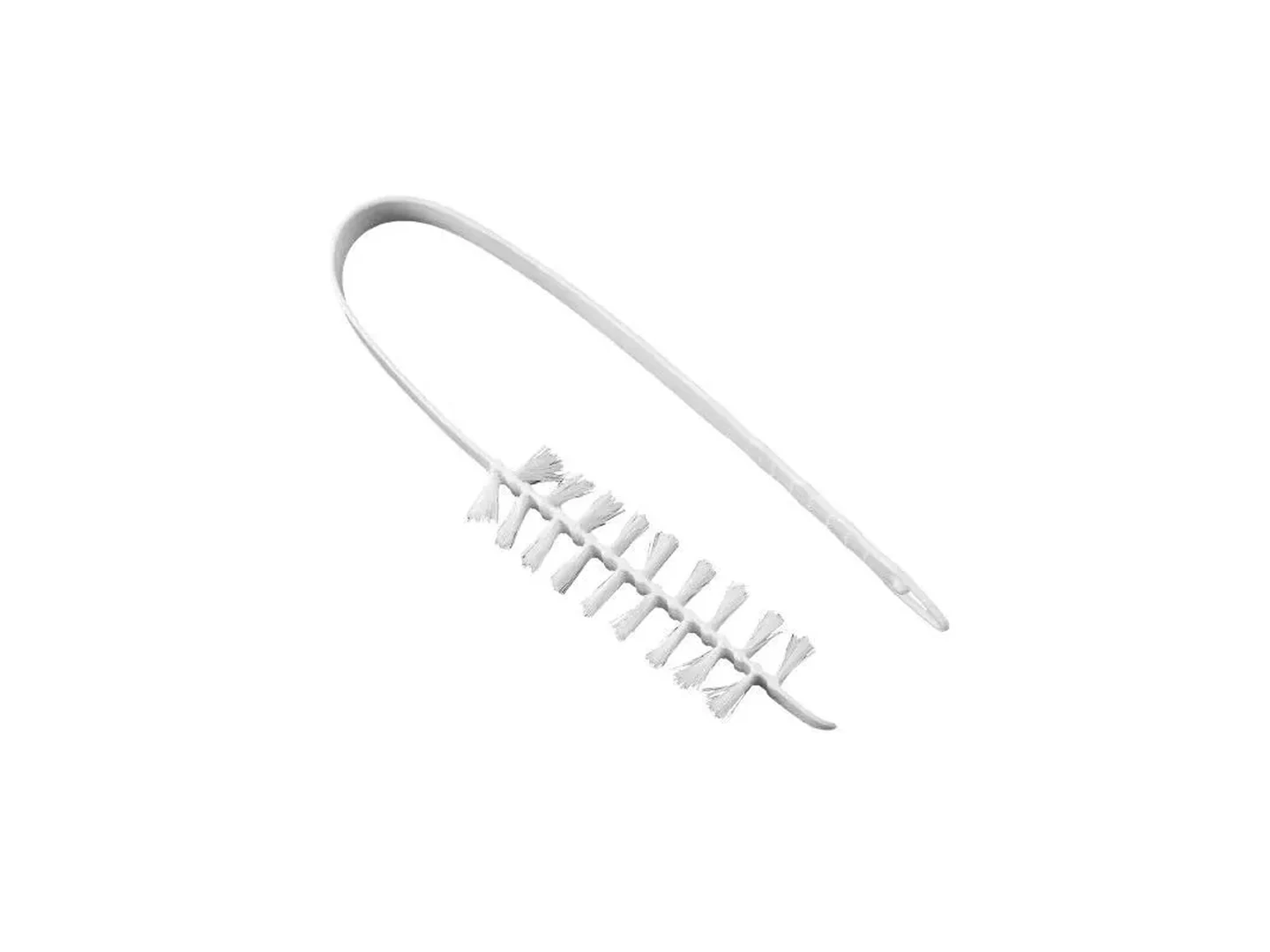
Medium brush
100 pcs
Minimum order
Worked with two hands or on a pole: chimney, gutter and pond-filter brushes, discs, cups and tank brushes.
Production lead time, once the specification is confirmed
- Up to 100 pcsWithin 7 days
- 101–5,000 pcsWithin 14 days
- 5,001–50,000 pcsWithin 21 days
- Over 50,000 pcsConfirmed with your quotation
Peak season can extend these times; the shipping date is confirmed in writing with your quotation. Sampling and shipping are quoted separately.
A hand-guided roller cleaning brush with nylon filament built around a plastic core, sized to work inside the narrow gaps and service channels of washing machines and other laundry appliances. It reaches the door gasket fold, drum-to-seal gap, dispenser housing, and filter chamber where lint, soap film, and damp sludge accumulate, using plastic construction that does not scratch or stain the machine while it works.
What can this brush do for you?
Rolling Contact That Does Not Depend on Handle Angle
Bristle tips cover the full circumference of the nylon roller, so the cleaning face stays in contact as the brush rotates or tilts inside the gasket channel. A flat detail brush loses its working edge the moment the hand twists; the rolling head keeps scrubbing the sidewall and the bottom of the gap through the same stroke.
Fully Plastic Construction for Wet, Detergent-Rich Spaces
The core, shaft, and handle are molded from a project-matched plastic, with nylon filament as the only contact material. No exposed metal sits in the damp gasket fold or dispenser housing where it could oxidize, drip rust marks onto the tub, or leave a scratch on the rubber door seal. For front-load washers with soft seals, this is the contact material the job calls for.
Long, Controlled Reach Past the Door Seal
Working lengths from 100 mm to 600 mm let the filament section travel to the bottom of the seal fold, into the dispenser drawer housing, or down toward the filter chamber while the handle stays outside the opening. Length is added where the operator needs depth, not as unsupported overall length for its own sake.
Filament Configurable for Soap Film or Packed Lint
Long, soft trim wipes biofilm, soap film, and loose deposits from broad surfaces. Short, dense trim with heavier filament digs out packed or dried lint without cutting into the seal. The filament diameter, trim length, and wind pattern can each be set to the residue the machine actually produces.
An Open Filament Coil That Rinses and Dries Quickly
The wound filament structure leaves clear space along the core, so lint and sludge flush out under running water instead of lodging in a solid pad. After servicing one machine, the brush itself can be rinsed, shaken, and hung through the handle hole to dry before the next unit.
What is a Washing Machine Cleaning Brush Rolling Nylon Plastic?
A Washing Machine Cleaning Brush Rolling Nylon Plastic is a roller-style hand cleaning brush: a cylindrical core carries nylon filament around its full working surface, and a shaft extends that core to a molded handle. Most configurations are plastic from the filament anchor to the grip, so nothing ferrous is present in the wet spaces where the tool is used.
In a front-load washer, the brush is introduced into the channel between the rotating tub and the rubber door gasket, then drawn through the gap with a sliding, rotating, or combined push-and-turn stroke. The roller surface keeps bristle contact on both sidewalls and the channel base while the handle moves. The same tool, in a narrower or longer configuration, cleans detergent dispenser drawers, filter housings, and other recessed surfaces where fingers and flat brushes cannot reach.
The brush is a mechanical residue-removal tool. It loosens and lifts lint, hair, soap biofilm, and soft sludge from accessible surfaces. It does not descale mineral deposits, disinfect, or replace a machine wash or sanitizing cycle, and it should not be forced into gaps narrower than the roller diameter allows.
Technical Specifications
Dimensions below are the working envelope. Each parameter can be set to the actual gasket gap, machine geometry, and retail or service program.
| Parameter | Value / Options |
|---|---|
| Roller (brush) diameter | 10–50 mm, selected to pass the tightest point of the target gap |
| Working length (filament section) | 100–600 mm, matched to gap depth and channel length |
| Overall length | 250–1000 mm including shaft and handle |
| Trim length (bristle length from core) | 15–50 mm; longer trim for surface film, shorter trim for packed lint |
| Filament diameter | 0.15–0.50 mm; finer for soft wiping, heavier for stiffer scrubbing |
| Filament material | Nylon PA6 or PA6.6; PBT where hot-water recovery matters |
| Core and shaft | Polypropylene PP or project-specified plastic; optional internal stiffener |
| Handle | Molded PP grip with hanging hole; texture, shape, and overmold on request |
| Interface | Integral handle, extension-shaft connection, or bare shaft stub for customer assembly |
| Filament arrangement | Spiral wound, double-spiral, or straight rows around the core |
| Fit clearance | Diameter sized to leave 0.5–2.0 mm working clearance from the narrowest point of the gap |
| Operating temperature | 5–100 °C contact environment for standard PA/PP construction |
| Chemical exposure | Standard laundry detergents and warm water; aggressive chemicals should be specified before order |
| Brush type | Custom Roller and Conveyor Brushes |
| How it is driven | Machine-driven, mounted in the equipment |
| Cleaning target | front-load washing machine door gasket, detergent dispenser drawer and drawer housing, and drain pump filter chamber and service-access recess cleaning |
| Surface or part | gaps, channel, housings, roller, plastic, filters, chambers, and gasket folds |
| Residue or debris | lint, biofilm, sludge, soap film, hair, and mineral deposits |
| Mounting / connection | Integral handle, extension-shaft connection, or bare shaft stub for customer assembly |
Where does this brush work best?
- Front-load washing machine door gaskets, where the rubber seal folds around the drum opening and traps lint, hair, and soap biofilm in a damp channel.
- Detergent dispenser drawers and drawer housings, including ribs and corners the hand cannot reach.
- Drain pump filter chambers and service-access recesses on residential and commercial washers.
- Top-load washing machines around the rim, balance-ring gap, lid hinge recess, and agitator base.
- Dryer lint-trap housings, door seal channels, and related laundry appliance gaps.
- Multi-unit and commercial laundry operations that maintain machines on a schedule and need a repeatable, rinse-clean service tool.
How do I choose the right one?
Size the roller to the tightest point of the gap
Measure the minimum opening the roller must pass through, not the average or the widest point. The roller needs 0.5–2.0 mm of clearance at that tightest point. Too large a diameter will bind against the seal or fold the bristles over; too small a diameter will brush only one side of the channel at a time and leave residue behind.
Match filament and trim to the residue
Wet soap film and soft biofilm wipe off with fine filament around 0.15–0.25 mm and a longer trim that conforms across the surface. Dried or packed lint needs shorter trim and heavier filament around 0.30–0.50 mm to hold enough pressure. PBT filament recovers its shape better through repeated hot-water exposure; nylon is the economical all-condition workhorse for wet detergent use.
Decide how much reach needs to be filament and how much needs to be handle
Working length covers the inside of the gap; overall length exists to keep the operator’s hand outside the opening. A long filament section with no support flexes and loses contact pressure, so deep-channel tools are better built with a progressive taper or stiffer core than with a thin, over-long working area.
Keep the shaft plastic wherever rubber or painted surfaces are present
For door-seal work, a fully plastic shaft and core avoid both corrosion and marking. If a steel stiffener is added for a very deep or stubborn channel, it should be fully enclosed so it never contacts the machine surface.
If the job is hard mineral scale on metal surfaces, choose a wire or abrasive brush instead. If the passage is a long narrow hose or duct, a flexible tube brush reaches further than a roller. If the target is odor or bacterial load, the brush removes the residue that holds moisture, but descaling and sanitizing steps still have to follow. When the gap is too narrow for the smallest workable roller, a flat blade-style detail brush is the better fit.
| Cleaning situation | Suggested configuration |
|---|---|
| Soft film on rubber gasket | Long trim, 0.15–0.25 mm nylon filament, fully plastic shaft |
| Dried, packed lint in deep gap | Short trim, 0.30–0.50 mm filament, stiffer core |
| Dispenser housing corners | Narrow roller diameter with longer overall reach |
| Frequent hot-wash exposure | PBT filament with PP core |
| Retail-ready consumer program | Molded handle with hanging hole, custom color and branding |
Can I customize this brush?
Every dimension in the specification table can be set to your machine or program. To define the right configuration, provide the narrowest and widest gap measurements, the gap depth, the surface materials, the residue type, the detergent or chemical used, the normal wash temperature, and the preferred handle form. A photo of the machine opening or a dimensional sketch accelerates the development.
Common variables include:
- Roller diameter, working length, and overall length matched to the gap and operator position
- Filament material (PA6, PA6.6, or PBT), filament diameter, trim length, and winding pattern
- Core and shaft material, including enclosed internal stiffeners where extra rigidity is required
- Handle geometry, grip texture, hanging hole, and extension-shaft interface
- Color, molded brand mark, pad print, or laser marking on the handle
- Packaging: bulk, polybag, retail card, or project-specific kits
Where the program requires documentation, material declarations, inspection records, or third-party testing for a retail or OEM specification, that support is defined as part of the project scope before tooling and production.
What size should a washing machine cleaning brush rolling nylon plastic be, and how long does it last?
Will the roller jam in a gasket gap that is not the same width all the way around?
Check the narrowest section of the gap at several points around the door before ordering, and size the roller to that point with working clearance. During use, if the roller starts to bind, reverse the stroke instead of forcing it through; a diameter built for the tightest point should still contact the wider sections of the channel.
Should the brush be used wet or dry?
Either, depending on the residue. Dry passes remove loose lint and hair first, which keeps wet debris from packing. Soap film and biofilm come off better when the gap is wet with warm water and a neutral detergent. Brushing dried or crusted material dry tends to pack it deeper rather than lifting it.
How do I clean the brush after servicing a machine?
Rinse the filament section under running water while flexing the bristles to release trapped lint and sludge, then air-dry the brush before storage. If hair or fibers wrap around the core, remove them by hand or with a fine comb. Keeping the handle hole open for hanging helps the brush dry fully.
Is the brush safe to use on the rubber door seal?
With a fully plastic shaft and nylon filament, yes under normal hand pressure. Rounded or feathered filament ends can be specified for soft elastomer seals. Avoid pressing the core against the rubber, because the filament does the work; only the bristle tips should carry the load.
Will brushing alone remove the musty smell from a washing machine?
Brushing removes the lint, hair, and biofilm that hold moisture in the seal crevice, which reduces the food source for odor. The machine may still need a descaling product, a hot sanitary wash cycle, and drying of the gasket afterward. The brush is the mechanical step in that sequence, not a replacement for it.
How can I tell when the brush needs replacement?
Inspect the roller for flattened or permanently bent filament, missing bristles, wobble on the shaft, or cracks in the plastic core and handle. If the brush no longer presses evenly into the gap, or if filament ends feel hard and curled, replace the tool. Compare contact pressure against a new sample when in doubt.
Guides that go deeper on this
Abrasive Nylon Grit and Filament Selection
Read this guideGuideBrush Speed, Engagement, and Heat
Read this guideGuideCapsule Polishing Machine Brushes: Selection and Maintenance
Read this guideGuideCarpet Machine Brush vs Floor Scrubber Brush: Which Fits?
Read this guideGuideConveyor Belt Cleaning Brush Design
Read this guideCustom Manufacturing RFQ
Describe Your Application
To prepare the correct quotation, provide the dimensions, cleaning task, residue, material, mounting details, quantity, and a drawing or photo.
Drawing or photo optional — it speeds things up, it does not gate the enquiry.
Custom Brush RFQ
Send Your Brush Project
Upload a drawing, product photo, or sample photo and provide the core dimensions and cleaning conditions.
“We need a brush to remove wet residue from a stainless steel conveyor, about 800mm wide. The current brush wears quickly. We can send photos.”
“We sell drinkware and need a cleaning brush to include with the product. Quantity around 5,000 pieces.”