What Is a Nylon Brush Plate?
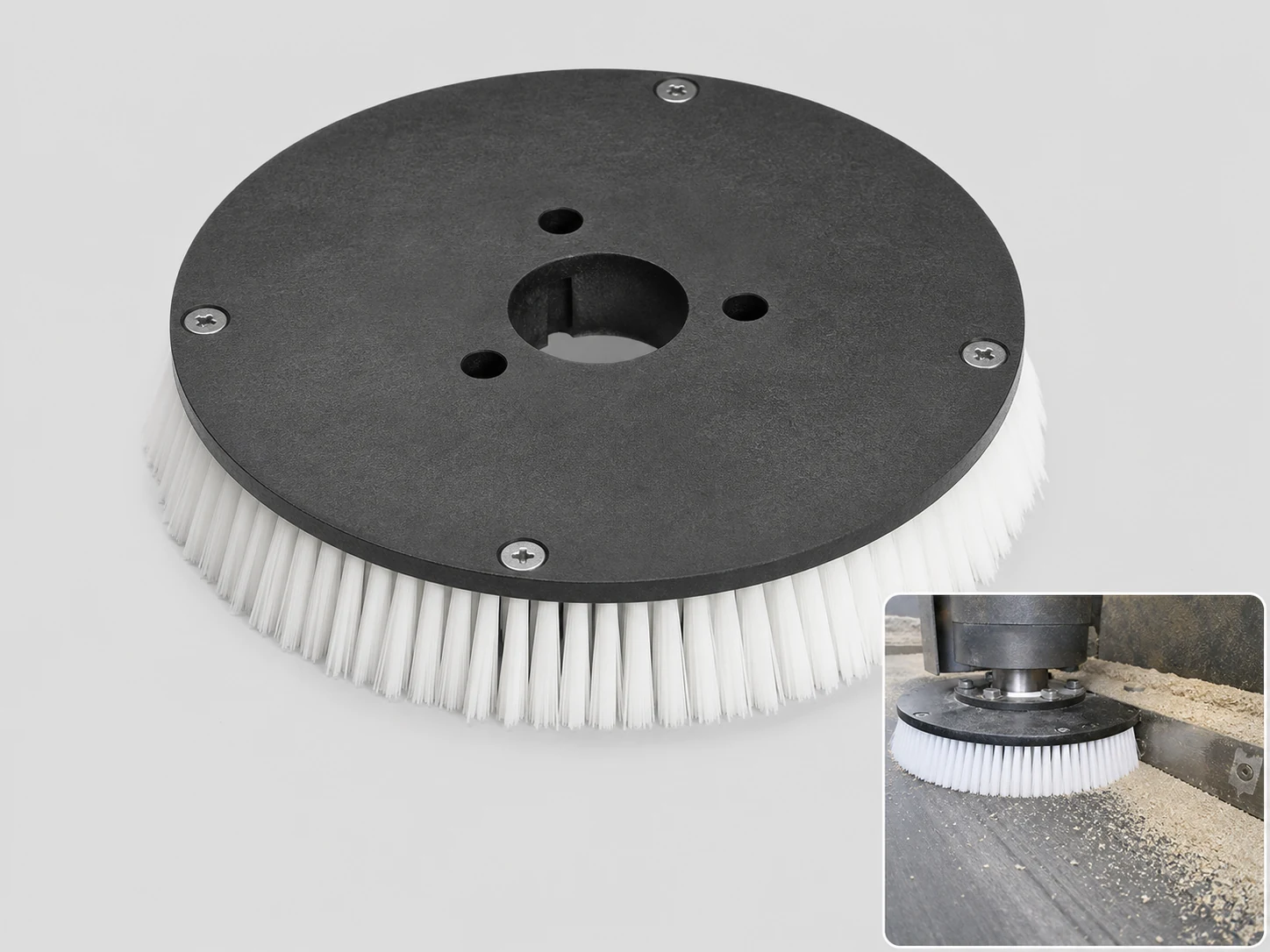
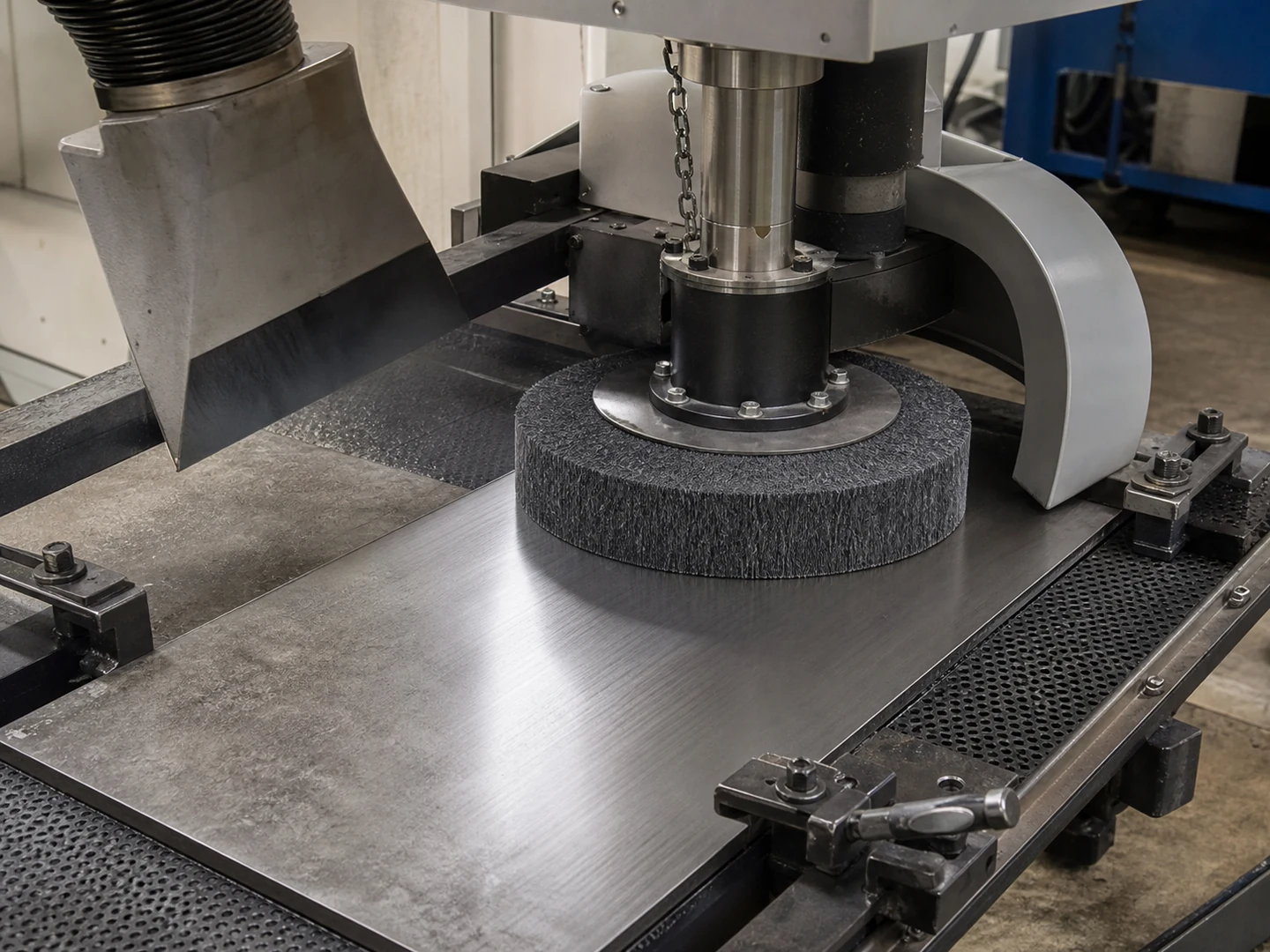
A nylon brush plate typically consists of a rigid backing plate (metal, plastic, or composite) with nylon bristles anchored in a specific pattern. The plate mounts directly to a machine, conveyor, or rotary tool and is used for surface finishing, contaminant removal, static dissipation, or light material handling. Nylon is chosen for its resilience, chemical resistance, and non-abrasive to mildly abrasive cleaning ability.
For engineering drawing, dimensions, tolerance, thread, fit, and RFQ specification context, this section references ASME — Y14.5 Dimensioning and Tolerancing.
For thermoplastic material family and polymer property context, this section references British Plastics Federation — Thermoplastics.
For brush construction terminology, bristle/fill/backing/stem terms, this section references American Brush Manufacturers Association — Brush Lingo.
Standard vs. Custom Nylon Brush Plates
Understanding the fundamental trade-offs sets the stage for a good sourcing decision.
| Factor | Standard Plate | Custom Plate |
|---|---|---|
| Availability | Stocked in common sizes and configurations | Built to order with production schedule for tooling and production |
| Cost per unit | Lower, due to production volume | Higher, reflecting engineering and setup |
| Minimum quantity | Often low; single pieces available | May require a project quantity requirement due to tooling investment |
| Fit precision | Limited to standard dimensions and hole patterns | Exact match to your equipment and tolerances |
| Bristle material / density | Standard nylon grades and fill densities | Custom nylon blends, abrasive grit loading, trim length, density |
| Core / holder material | Typically steel or common plastic | Stainless steel, aluminum, engineered plastics, etc. |
| Mounting interface | Pre-drilled patterns or common shaft sizes | Custom bolt circles, keyways, quick-release features |
| Application testing | No pre-production samples | Samples or first-article inspection common |
When a Standard Nylon Brush Plate Is Enough
- Your equipment uses industry-standard brush plate dimensions and mounting patterns.
- The operating environment does not expose the brush to extreme temperatures, aggressive chemicals, or strict sanitary requirements.
- The process can be accomplished with general-purpose nylon bristles of medium stiffness.
- Downtime for replacement is minimal and frequent adjustment of brush height or angle is acceptable.
- You can source the plate from multiple suppliers without modification.
If these conditions align, a stock item will be faster, cheaper, and simpler to reorder.
Key Application Drivers That Require a Custom Nylon Brush Plate
- Unique dimensions: Your machine footprint, clearance, or operating window demands a non-standard length, width, or thickness.
- Special bristle performance: High-temperature nylon, anti-static additives, supported by food-contact documentation material, or precisely controlled abrasive grit loading for surface finishing.
- Aggressive or delicate contact: You need a specific filament diameter, stiffness, or crimp to avoid part damage while maintaining effective cleaning.
- Unusual mounting: The plate must mate with proprietary brackets, quick-change systems, or irregular bolt patterns.
- Process integration: The brush works in sequence with sensors, vacuums, or washdown, requiring sealed construction or integrated channels.
- Long-life requirements: You are replacing a frequently wearing standard part and want a denser fill, longer trim, or reinforced plate to reduce changeovers.
What to Include in a Custom Nylon Brush Plate RFQ
A complete request for quotation helps suppliers respond accurately and reduces back-and-forth. Use this checklist.
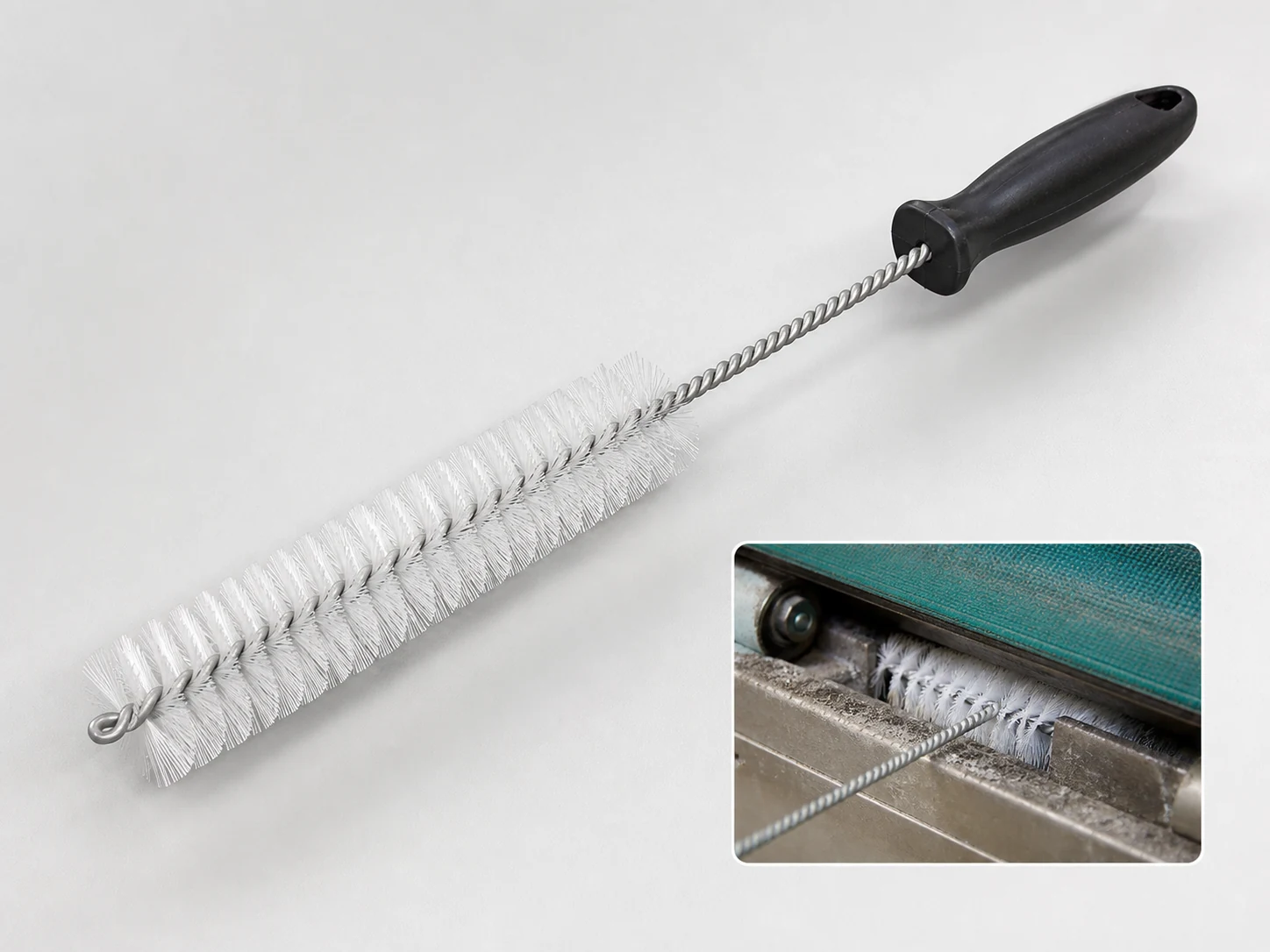
- Brush type: Strip brush, coil brush, disc brush, or a flat plate with drilled and filled holes.
- Dimensions: Overall length, width, thickness, and critical tolerances. Include a drawing or sketch with key reference points.
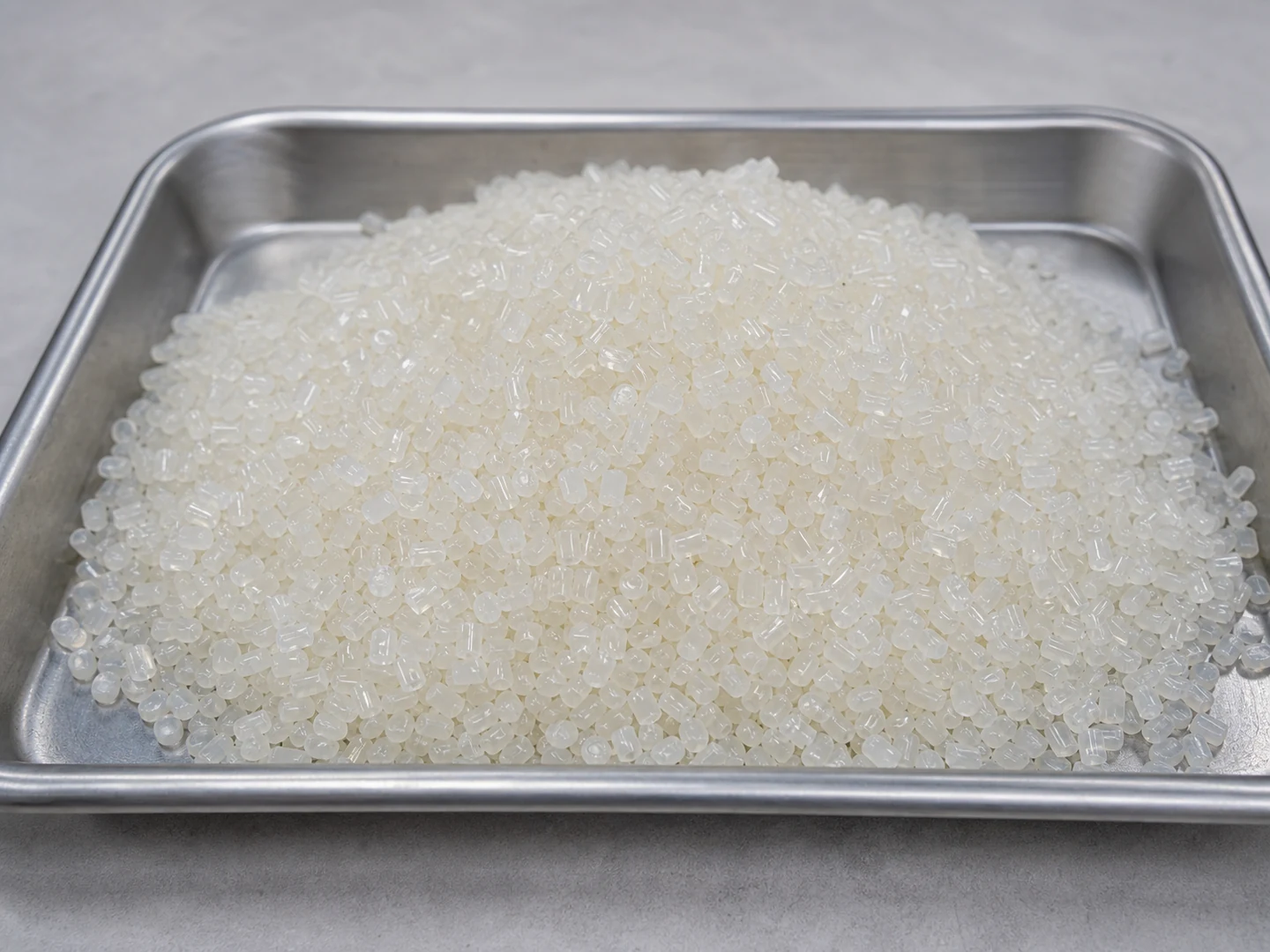
- Bristle material: Specify nylon type (e.g., 6, 6.6, 6.12) and any additive (abrasive grit size, anti-static, heat-stabilized).
- Core/holder material: Plate substrate – steel, stainless steel, aluminum, polypropylene, etc.
- Mounting interface: Hole pattern, bolt circle diameter, slot dimensions, or attachment method.
- Quantity: Prototype quantity, initial production run, and forecasted annual usage.
- Application description: What the brush contacts (material, surface condition), speed, pressure, duty cycle.
- Operating environment: Temperature range, chemical exposure, moisture, washdown, cleanroom requirement.
- Packaging and documentation: Individual wrapping, lot traceability, certificates of conformance, or material test reports.
- Sample policy: Whether you need a first-article sample, pre-production sample, or functional test sample.
How Design Choices Affect Fit, Durability, and Cost
| Choice | Fit Impact | Durability Impact | Cost Impact |
|---|---|---|---|
| Bristle diameter / stiffness | Affects how the brush conforms to workpiece geometry | Thicker stiffer bristles last longer but may scratch; softer bristles wear faster | High-diameter filament or specialty blends increase material cost |
| Fill density (bristles per square inch) | Changes cleaning aggressiveness and surface contact | Denser fill extends brush life but can trap debris | More bristles raise unit cost; may require specialized insertion tooling |
| Plate material | Must match machine mounting surface and corrosion resistance | Stainless steel resists rust; plastic may warp under high temperature | Stainless costs more than mild steel; engineered plastics fall in between |
| Tolerances | Tighter tolerances ensure precise fit on automated lines | Overly tight tolerances add cost without proportional life gain | Relaxing non-critical tolerances reduces machining time and cost |
| Mounting method | Custom bolt patterns avoid field modification | Poor mounting can cause vibration and premature bristle loss | Simple bolt patterns are cheaper; quick-release features add expense |
Common Mistakes When Specifying a Custom Nylon Brush Plate
- Over-tolerancing: Demanding ±0.001 inches when ±0.010 inches works drives up cost and production schedule.
- Ignoring chemical compatibility: Nylon 6 absorbs moisture and can swell; nylon 6.12 or special treatments are needed in wet environments.
- Skipping the sample stage: Ordering production quantities without a first article risks a full batch that doesn’t fit or perform.
- Providing incomplete mounting information: Missing bolt size, thread pitch, or orientation leads to unusable plates.
- Ordering too few for custom tooling: When tooling cost is high, a very low volume order can make the per-unit cost prohibitive.
- Not specifying packaging: Fine bristle patterns can deform during shipping if not properly protected.
When to Request Samples and Supplier Testing
Samples bridge the gap between specification and real-world performance. Ask for a sample when:
- You are ordering a new design or significant modification for the first time.
- The brush operates at the edge of recommended speed, pressure, or temperature limits.
- Surface finish requirements are critical (e.g., optical components, medical devices).
- The plate will be used in a tested process where change introduces regulatory documentation.
Supplier testing might include run-out checks, bristle retention force, dimensional inspection reports, or a functional test in the supplier’s own test rig. Agree on pass/fail criteria before the sample is built.
For SI measurement and unit specification context, this section references NIST — Metric SI.
Final Takeaway
Customize a nylon brush plate when your machine, material, or maintenance constraints can’t be met by standard plates. Provide a clear RFQ with a dimensioned drawing, bristle specification, and operating conditions. Always invest in a first-article sample unless the design is a proven repeat order. With the right information, a custom brush plate becomes a precision tool that increases uptime and process consistency.
Practical Use Note
In daily use, the practical test is simple: check whether the brush reaches the full contact area, removes the target residue, and leaves the surface in the required condition. Record what changes when drawings, dimensions, mounting interface, filament material, stiffness, sample testing, and actual working conditions changes, because many brush failures are caused by the working condition shifting rather than by the brush body alone.
Frequently Asked Questions
What is the typical production schedule for a custom nylon brush plate?
Custom production schedules usually range from 4 to 8 weeks after design approval, depending on material availability, tooling requirements, and production capacity. Rush options may be available for an added fee.
Can I order just one custom brush plate?
Yes, many manufacturers can produce a single custom plate. However, the unit cost will be higher because fixed setup charges are not spread over a larger quantity. It is common to order a small batch for initial validation.
How do I know if I need a nylon brush plate with abrasive grit?
If the primary purpose is cleaning light oxidation, paint preparation, or deburring, abrasive grain embedded in the nylon bristles (like silicon carbide or aluminum oxide) improves cutting action. For simple wiping or dust removal, non-abrasive nylon is sufficient.
What documentation should I request with a custom order?
Typical documentation includes a dimensional inspection report, certificate of conformance, material certifications (especially for food-grade or anti-static requirements), and surface finish or bristle retention test results if critical.
How do I ensure the brush plate is food-contact suitable?
Specify supported by food-contact documentation nylon resin, a stainless steel or approved plastic plate, and request a certificate from the supplier confirming the materials meet indirect food contact standards. Avoid any secondary coatings unless validated.
Can I modify a standard brush plate instead of going fully custom?
In some cases, drilling new mounting holes or trimming overall dimensions on a standard plate is possible. However, modifying the bristle pattern or density usually requires full custom manufacturing. Always check with the supplier before altering the plate.
What is the difference between a nylon brush plate and a nylon strip brush?
A brush plate is a rigid flat plate with bristles directly embedded; it is designed to bolt or clamp to a machine. A strip brush is flexible, often with a metal channel back, and can be bent or cut to length. Plates are used where a stable bristle plane is needed; strips are used for sealing, sweeping, or conveyor guide applications.