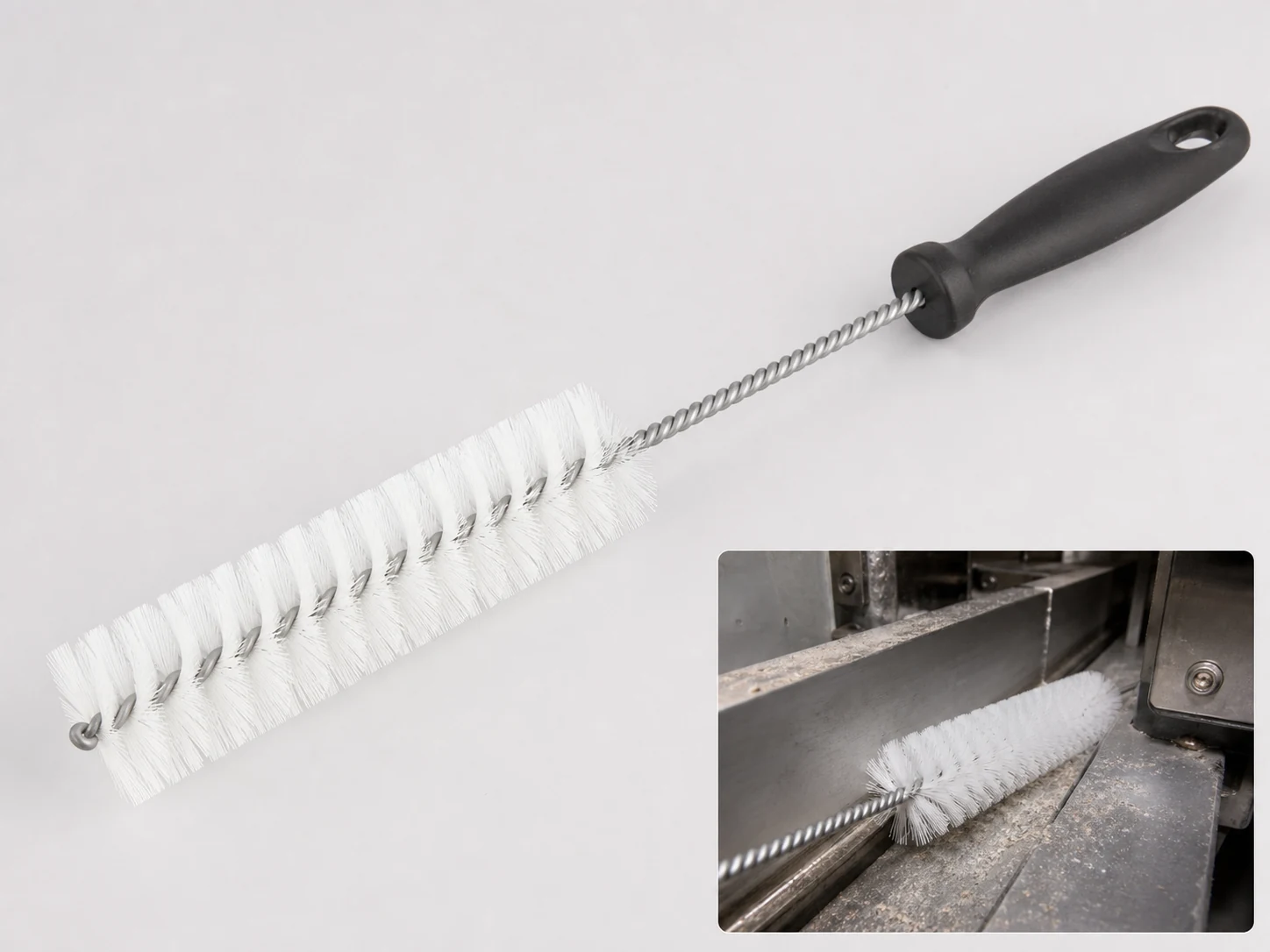
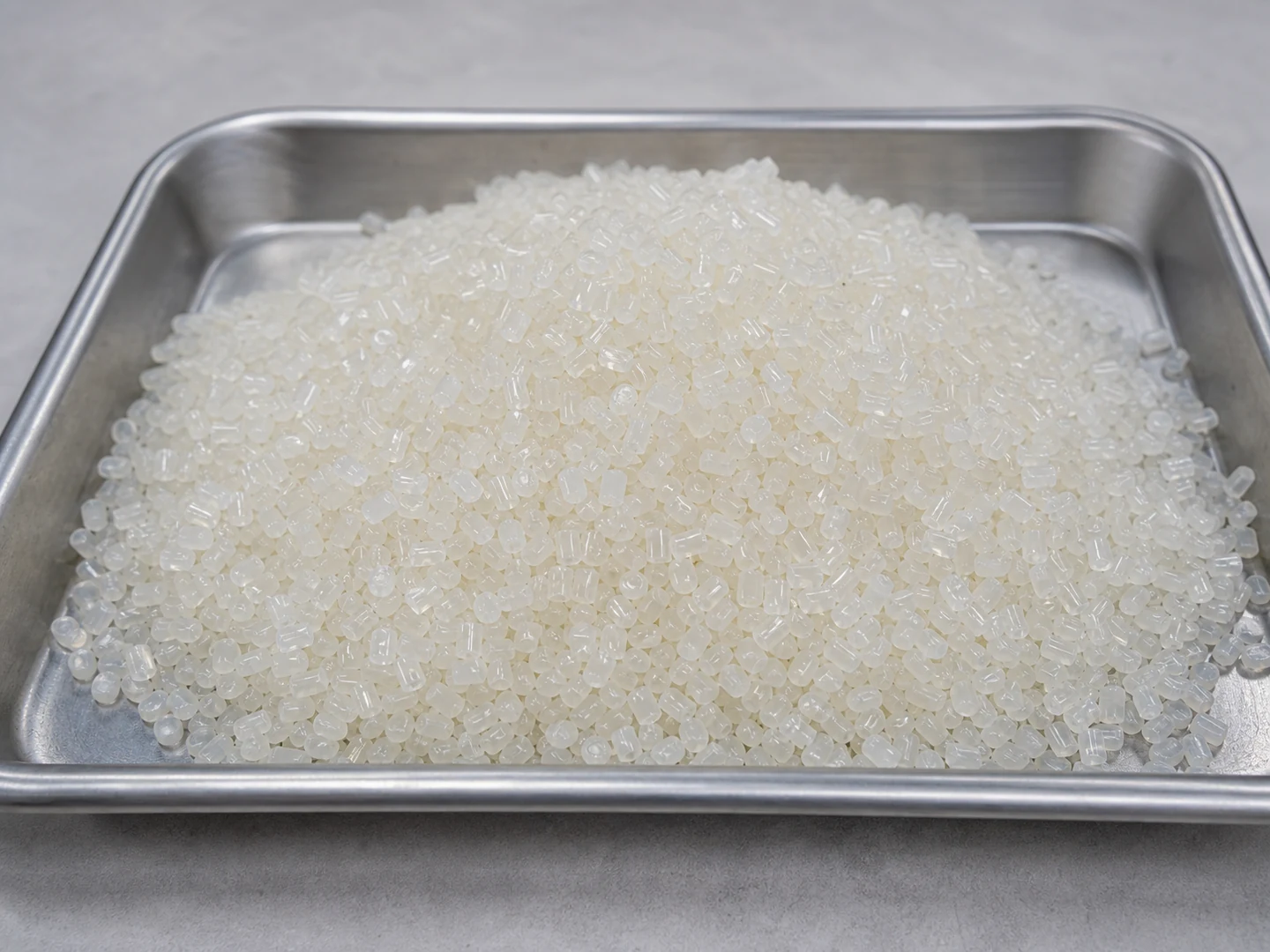
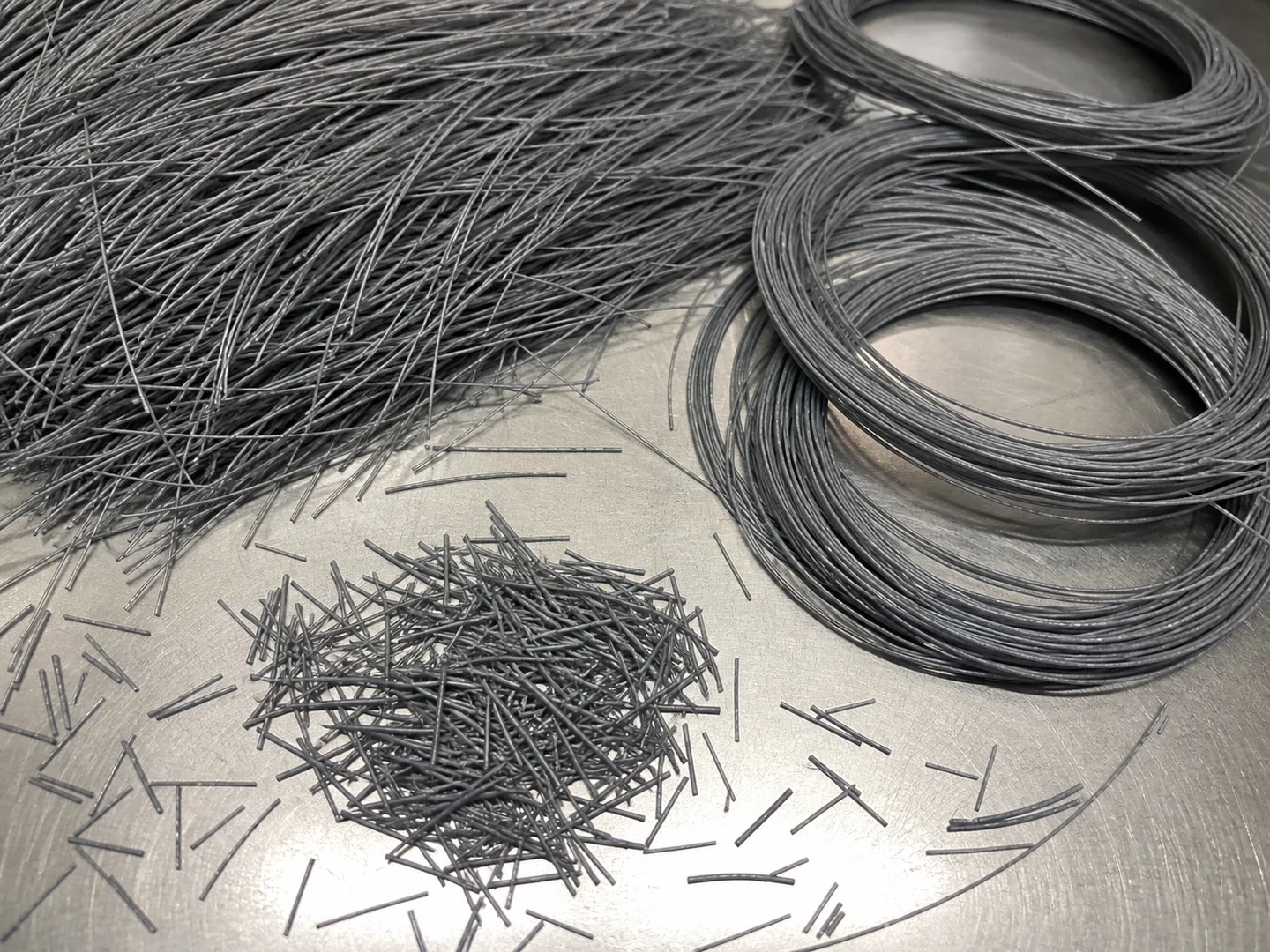
What Is a Nylon Brush Block Component?
A nylon brush block is worth specifying only when the working conditions justify it. Check drawings, dimensions, mounting interface, filament material, stiffness, sample testing, and actual working conditions before deciding. If the problem is caused by machine setup, chemical choice, blocked access, or damaged surfaces, a brush may be only one part of the fix.
A nylon brush block component is a pre‑assembled brush unit where bristles made of nylon are set into a solid block or holder. The block provides a mounting surface and holds the bristles in a fixed pattern. These components are used across many industries for cleaning, sealing, conveying, static dissipation, surface finishing, and light deburring. Nylon is chosen for its flexibility, chemical resistance, and ability to be made abrasive or non‑abrasive.
When Customization Makes Sense
A custom nylon brush block becomes the better path when at least one of the following is true:
- Your required length, width, or bristle trim length does not match any standard catalog option.
- You need a specific mounting interface—such as a snap‑fit, dovetail slot, or adhesive backing—that is not offered off the shelf.
- The operating environment involves chemicals, extreme temperatures, moisture, or UV exposure that demand a specialized block material or a particular nylon grade (e.g., heat‑stabilized or FDA‑compliant).
- Performance requirements like bristle density, fill pattern, or the use of abrasive‑impregnated nylon cannot be met by standard products.
- You expect to order consistently over time and want a repeatable, documented configuration that matches your equipment exactly.
If two or more of these points apply, a custom solution is likely worth investigating.
Standard vs. Custom Brush Blocks: A Quick Comparison
The table below highlights the main trade‑offs you will encounter when moving from a catalog item to a custom design.
| Feature | Standard Brush Block | Custom Brush Block |
|---|---|---|
| Dimensions | Fixed, limited range | Exact to your requirement |
| Bristle material blend | Common nylon grades | Specialty nylons, abrasive grit options |
| Mounting | Simple holes or plain back | Customized interface for your machine |
| production schedule (typical guidance) | Stock to short | Tooling + sample + production |
| Cost per unit | Low, no setup charge | Higher unit cost; one‑time tooling may apply |
| project quantity requirement | Low or no minimum | Often higher due to setup |
| Fit accuracy to equipment | Good enough for general use | Designed for your exact envelope |
| Performance in tough conditions | Limited to standard specs | Optimized for temperature, chemical, or wear conditions |
| Design flexibility | None | Full control over bristle pattern, density, block shape |
What to Prepare for a Custom Brush Block RFQ
A clear RFQ package helps suppliers respond accurately and reduces back‑and‑forth. Provide as much of the following as possible:
- Drawing or sample: A dimensioned drawing (PDF or CAD) is ideal. If you only have a worn‑out part, send a physical sample so the supplier can reverse‑engineer it.
- Dimensions: Overall length, width, block height, bristle trim length, and bristle row spacing.
- Bristle material: Nylon type (e.g., nylon 6, nylon 6.6, anti‑static, FDA), filament diameter, and whether abrasive grit is required (silicon carbide, aluminum oxide, etc.).
- Block / holder material: Plastic (polypropylene, ABS, etc.), wood, or metal. Include any color or marking needs.
- Mounting interface: Hole pattern, slot dimensions, adhesive type, or other attachment method.
- Quantity: Samples, first article run, and anticipated annual volume.
- Application: What the brush will do—wipe, seal, clean, convey, deburr. Include stroke speed, pressure, and mating surface material.
- Operating environment: Temperature range, chemical exposure, moisture level, outdoor/UV exposure, and any cleanliness or washdown requirements.
- Packaging and documentation: Bulk pack, individual wrap, labeling, certificates of conformance, or material test reports.
Key Specification Choices and Their Impact
Each decision in a custom brush design affects cost, durability, and how the brush performs on the machine.
- Abrasive vs. non‑abrasive nylon: Abrasive grit impregnated into the bristles adds cutting or aggressive cleaning action but increases cost and can wear mating surfaces faster. Non‑abrasive nylon is gentler and often used for dust wiping or sealing.
- Filament diameter: Thicker bristles are stiffer and last longer in abrasive environments, but they may not conform as well to irregular surfaces. Thinner filaments provide softer action and better conformity.
- Bristle density and fill pattern: Higher density increases stiffness and brush life but raises material cost and can trap debris. Pattern (in‑line, staggered, coiled) affects how the brush loads and wears.
- Block material: Plastic blocks are lightweight, moisture‑resistant, and economical. Wood blocks are traditional but can swell in wet conditions. Metal blocks handle high heat but add weight and cost.
- Mounting method: A simple bolt‑on pattern is easiest to implement and maintain. Adhesive mounting can simplify assembly but may fail under high shear or heat. A custom dovetail or quick‑release design speeds change‑out but adds tooling cost.
- Sample confirmation: Always request a first‑article sample before production. Test it under real conditions—same speed, load, chemicals, and temperatures. Pay attention to bristle shedding, early bristle breakage, and block dimensional stability.
Common RFQ Mistakes to Avoid
- Providing incomplete dimensions: Omitting bristle trim length or hole placement leads to quotes that don’t match the intended design.
- Ignoring tolerances: Not stating acceptable variation on critical dimensions can result in a brush block that doesn’t fit your holding fixture.
- Assuming custom equals lower cost per unit: Tooling and setup often mean the unit cost is higher than a standard item, especially for small volumes.
- Skipping the prototype stage: Ordering a full production run without testing a sample risks a whole batch that does not perform.
- Not simulating real operating conditions during testing: Testing a sample at room temperature when the brush will run in a 200°F environment gives a false sense of security.
- Overlooking bristle density trade‑offs: Packing bristles too tightly can increase cost, reduce flexibility, and make the brush harder to clean, while too few bristles may wear prematurely.
- Failing to specify packaging: Custom brushes without proper protective packaging may arrive bent or contaminated.
When a Standard Brush Block Is the Better Choice
Customization is not always necessary. Stick with a standard brush block when:
- Your required dimensions are close to a stocked item and the fit difference is not critical to function.
- Standard bristle materials and block materials already withstand your operating environment.
- production schedule is tight and you cannot wait for tooling and sampling—standard parts can often ship immediately.
- Your budget is tight and the one‑time tooling charge is hard to justify, especially for a low‑volume or one‑time need.
- The standard brush block has already been tested and works reliably in your application.
- You only need a small quantity, making the per‑unit cost of a custom brush unattractive.
Final Takeaway: Deciding to Customize
Start by asking: Does an off‑the‑shelf nylon brush block meet your three most critical requirements—dimensions, mounting, and environmental resistance? If the answer is yes, try the standard option first. If any one of those three is a definite mismatch, a custom solution is worth pursuing. Document your requirements clearly, test a sample against real‑world conditions, and choose a supplier that can support you through the tooling and qualification process. A well‑specified custom brush block can outlast and outperform a poorly fitting standard part, but the decision should always be driven by a clear cost‑benefit analysis, not by the assumption that custom is always better.
Frequently Asked Questions
What is the project quantity requirement for a custom nylon brush block?
There is no universal minimum. For brush blocks that require dedicated tooling, the supplier will often suggest a first production quantity that amortizes the setup cost. For simple modifications to an existing design, low quantities may be possible. Always ask for sample and prototyping options first.
How long does it take to get a custom brush block sample?
production schedule depends on complexity. A sample that uses existing tooling and stock bristle materials may ship in a few weeks. A fully new design requiring new molds or special bristle treatment can take longer. Confirm the timeline with your supplier before placing an order.
Can I get a custom nylon brush block with mixed bristle materials?
Yes, many manufacturers can combine different bristle types—for example, alternating rows of abrasive nylon and non‑abrasive nylon—but this adds complexity to the assembly process and may increase cost. Discuss the technical need for mixed materials with the supplier to ensure it is worth the extra expense.
How do I specify bristle stiffness in an RFQ?
Stiffness is influenced by filament diameter, bristle length, and material grade. Instead of using words like “firm” or “soft,” provide the filament diameter (e.g., 0.012 in, 0.020 in) and the trim length. If you have a known reference brush, supply a sample as a stiffness benchmark.
What if the custom brush block doesn’t perform as expected?
This is why a sample or first‑article run is critical. Test the sample under actual operating conditions—speed, load, temperature, and chemicals—and measure performance (wear rate, cleaning quality, etc.). If results are unsatisfactory, work with the supplier to adjust specifications before committing to the full order.
How do I compare quotes from different brush manufacturers?
Look beyond the unit cost. Compare tooling charges, sample cost, production schedule, project quantity requirement quantities, payment terms, and the supplier’s experience with similar applications. A slightly higher quote from a supplier that understands your industry often avoids costly missteps.
What information is most important for a custom brush block supplier?
A dimensioned drawing (or a physical sample) and a clear description of the application are the most valuable items. After that, the operating environment (temperature, chemicals, moisture) and the desired bristle material are essential for accurate quoting.
Can a standard brush block be modified instead of going fully custom?
Sometimes, yes. Simple modifications like drilling new mounting holes, trimming bristle length, or removing small sections of the block can be done in‑house or by a local machine shop. This approach works when the base brush block is close to what you need and only minor dimensional or attachment changes are required.
Technical References
Which bristle material fits this job — Nylon PA, Abrasive Nylon or PA6 Nylon?
| Material | Continuous temperature (°C) | Peak temperature (°C) | Water absorption | Hardness |
|---|---|---|---|---|
| Nylon PA | 93 | 121 | 0.3–9% by PA grade and conditioning | Medium to firm; filament diameter and trim length control bending force. |
| Abrasive Nylon | 120 | 150 | 0.1–1.0% | Abrasive filament; stiffness and cutting level is controlled by PA base, grit type, grit size, filament diameter and trim height. |
| PA6 Nylon | 80–100 | 130–160 | 1.5–3.0% | Shore D 75–85 |
| PBT | 120–140 | 160–180 | 0.05–0.20% | Shore D 80–90 |
Figures as published by Brushtec / DuPont; Perlon. Confirm the exact grade against the supplier datasheet before ordering.
When are Handheld Detail Brushes the wrong choice for brush orders?
- Handheld Detail Brushes — Use a tube brush, powered brush, scraper, wipe, sponge, or vacuum when the target is internal, heavily bonded, or highly delicate.
- Nylon PA — The nylon family spans several grades, so heat, moisture and chemical limits should follow the selected PA resin rather than a generic nylon value.
- Abrasive Nylon — Exposed grit can change a surface finish, and high heat or aggressive chemicals can weaken the polymer carrier.
- PA6 Nylon — PA6 takes up more moisture than long-chain nylons, which can reduce stiffness and dimensional stability in continuously wet service.
What should replace Handheld Detail Brushes for brush orders?
- Handheld Detail Brushes — Handheld detail brushes cover general precision cleaning; auto-detailing brushes impose tighter controls for painted, polished, leather, display, and trim surfaces.
- Nylon PA — Compare Nylon PA with PP, PBT, PET. Change material when wet stiffness, temperature, chemical resistance, conductivity, particle shedding, or surface marking becomes the limiting factor.
- Abrasive Nylon — Compare Abrasive Nylon with PP, PBT, PET. Change material when wet stiffness, temperature, chemical resistance, conductivity, particle shedding, or surface marking becomes the limiting factor.
- PA6 Nylon — Compare PA6 Nylon with PA66, PP, PBT. Change material when wet stiffness, temperature, chemical resistance, conductivity, particle shedding, or surface marking becomes the limiting factor.