What Is an EZ Detail Wheel Brush?
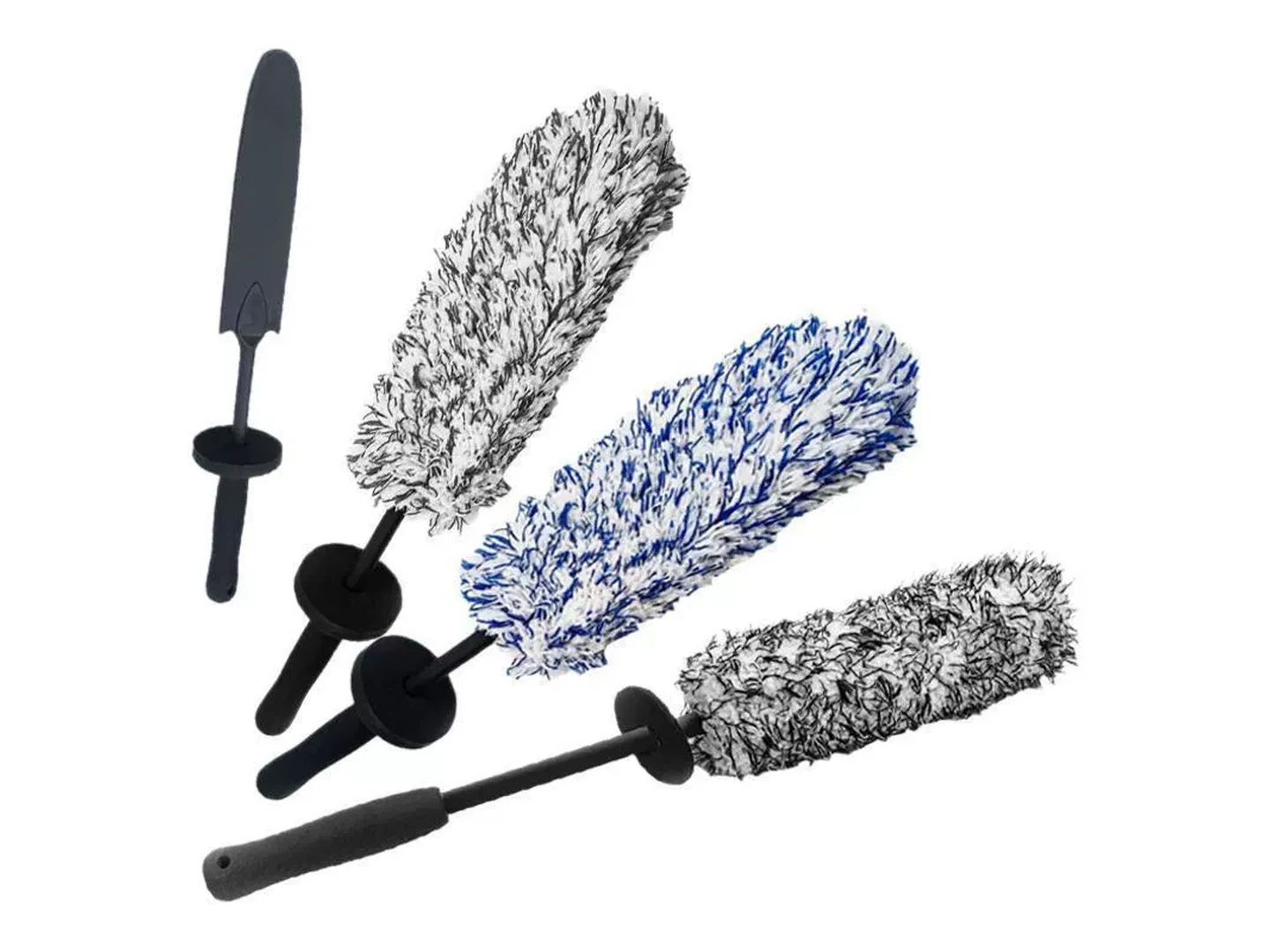
An EZ Detail Wheel Brush is a long-reach, flexible cleaning tool with densely packed synthetic or natural bristles, designed to clean hard-to-reach wheel areas without the need for wheel removal. The brush typically features a slender, bendable core and a foam-covered handle to prevent accidental contact with delicate finishes. While the term “EZ Detail” originally referred to a specific brand, in the detailing community it now broadly describes any similar wheel brush optimized for tight spaces.
Why Cleaning Lug Nuts Requires Special Attention
For the safety point in this section, the relevant OSHA reference is OSHA — 1910.242 Hand and Portable Powered Tools.
For the safety point in this section, the relevant OSHA reference is OSHA — 1910.215 Abrasive Wheel Machinery.
For the safety point in this section, the relevant OSHA reference is OSHA — Personal Protective Equipment.
For brush terminology and construction language, this section references ABMA — ANSI B165.1 Power Brush Safety Slips.
For tire, wheel, and vehicle-safety context, the relevant source is NHTSA — Tire Safety Ratings and Awareness.
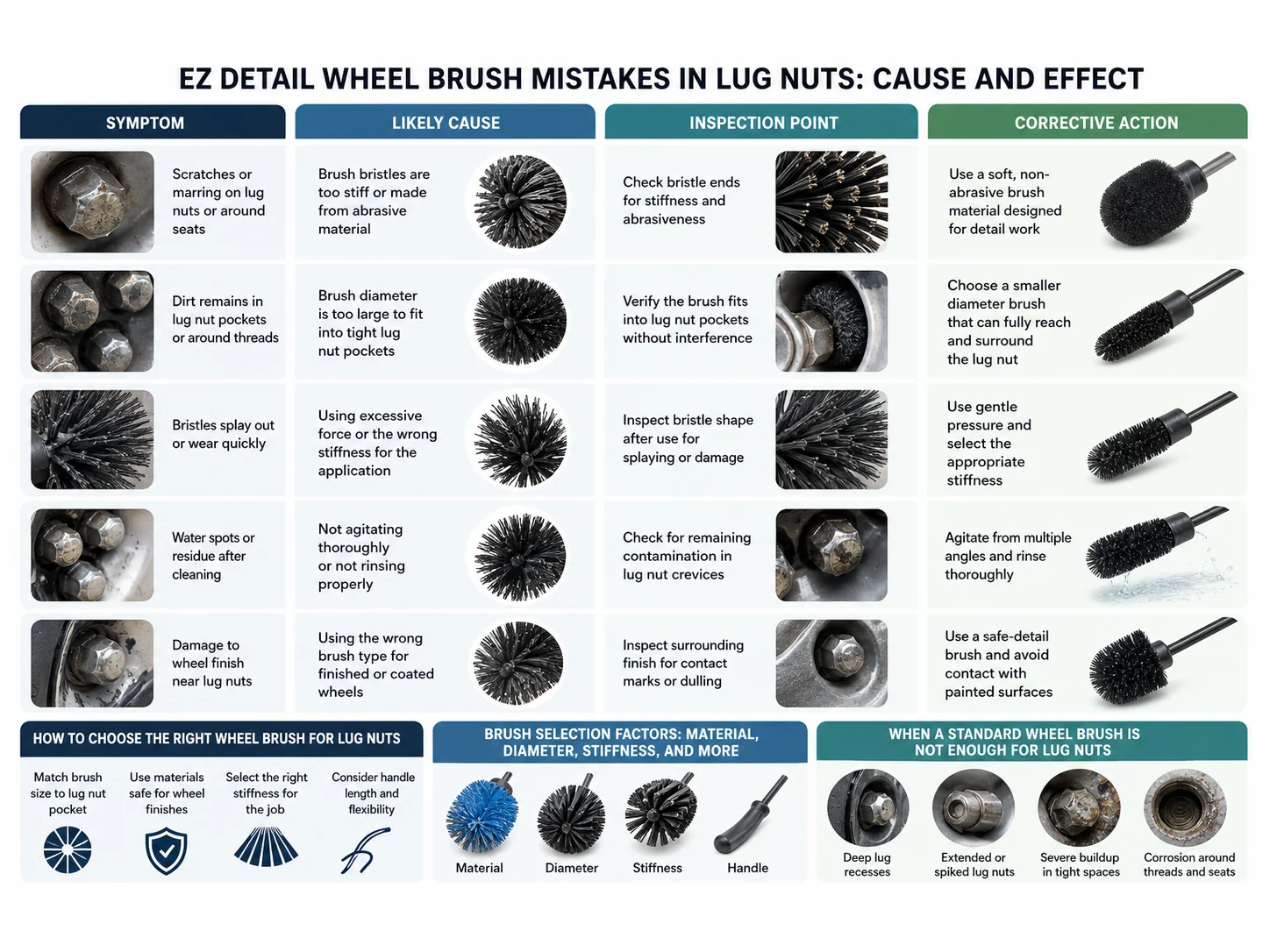
Lug nut recesses are narrow, deep cavities that trap brake dust, road tar, and grime. The protective coating on many modern lug nuts—often a thin cosmetic cap—makes them especially vulnerable to scratching and peeling. Using a brush with the wrong diameter, stiffness, or material can abrade the lug nut surface, embed debris, or leave behind harmful residue. Effective cleaning requires a brush that fits the recess diameter, reaches the full depth, and agitates without causing damage.
Common Mistakes with EZ Detail Wheel Brushes in Lug Nuts
- Using an Oversized Brush Diameter: Forcing a brush that is too thick into a lug nut hole can mar the surrounding paint or bend the bristles, rendering them ineffective.
- Choosing Overly Stiff Bristles: Hard nylon or wire bristles can scratch chrome, anodized, or painted lug nut finishes.
- Skipping Pre-Soaking: Scrubbing dry, baked-on brake dust without a wheel cleaner soak grinds abrasive particles against the metal.
- Neglecting to Clean the Brush Between Wheels: A dirty brush transfers contaminants from one wheel to the next, causing cross-contamination scratches.
- Using a Brush with a Protruding Core Tip: Some brushes have exposed metal or plastic core tips that can directly contact and scratch the bottom of the lug nut seat.
- Applying Excessive Pressure: Aggressive scrubbing can snap the core or dislodge the bristles, leaving fragments inside the recess.
- Ignoring Wet Lubrication: Brushing without enough water or lubricant generates friction and heat, increasing scratch risk.
How to Choose the Right Wheel Brush for Lug Nuts
Selecting the correct brush involves matching brush characteristics to the specific lug nut and wheel environment. The table below compares common brush types based on the factors that matter most for lug nut cleaning.
| Brush Type | Typical Core Diameter | Bristle Material / Stiffness | Handle & Mounting Option | Best For | Risk / Caution |
|---|---|---|---|---|---|
| Small-Diameter Synthetic Bulb Brush | 1″ – 1.5″ | Soft to medium nylon or polyester, non-abrasive | Foam-padded handle, hand-held | Daily maintenance on clear-coated or painted lug nuts | If too soft, may require more passes; verify core tip is covered. |
| Boar’s Hair Detail Brush | 0.75″ – 1.25″ | Natural boar’s hair, medium stiffness, high absorbency | Wood or plastic handle, hand-held | Heavy brake dust removal on bare metal or manufacturer instructions finishes | Natural bristles can hold moisture; allow to dry fully between uses. |
| Microfiber-Tipped Wheel Brush | 1.5″ – 2″ | Microfiber over soft foam, extremely gentle | Short handle or drill attachment available | Ceramic-coated or delicate custom lug nuts | Larger diameter may not fit tight recesses; avoid high-speed drill use. |
| Flexible Ultra-Thin Spoke Brush | 0.5″ – 0.75″ | Blended synthetic, low to medium stiffness | Long plastic or steel core, hand-held | Very tight lug nut holes on multi-spoke wheels | Ensure core is fully covered; exposed metal core will scratch. |
| Wire Brush (Brass or Steel) | Various | Metal wire, very stiff | Short handle or drill attachment | Only for stripping rust on steel wheels (not lug nuts) | Do not use on lug nuts; will destroy any finish and embedding metal. |
Brush Selection Factors: Material, Diameter, Stiffness, and More
Beyond the general categories, match these five core factors to your lug nut cleaning scenario to avoid mistakes and improve results.
- Residue Type: Loose dust needs a soft brush with high fiber density; caked-on grime requires a slightly stiffer brush and chemical pre-treatment.
- Surface Sensitivity: Chrome, anodized, and PVD-finished lug nuts scratch easily. Stick to soft cotton, microfiber, or flagged synthetic bristles.
- Equipment Interface: Decide between a hand-held brush for control or a rotoscrub-style attachment for speed. Drill attachments demand careful speed regulation to avoid melting bristles or damaging the finish.
- Chemical & Wet Exposure: Acidic or alkaline wheel cleaners can degrade natural fibers or certain plastics. Choose chemically resistant synthetic bristles if you use strong cleaners frequently.
- Hygiene & Maintenance Frequency: Brushes used daily in a detail shop need to dry quickly and release dirt easily. Open-cell foam cores drain faster than solid plastic cores.
- Custom Size Requirements: Measure the lug nut hole diameter and depth before buying. The brush core should be at least 0.25″ smaller than the opening to move freely, and long enough to reach the base without forcing the handle against the wheel face.
How to Avoid Damage When Cleaning Lug Nuts
Using the right brush is only half the solution. Follow these steps to prevent the most common scratches and swirls.
- Pre-Soak Each Wheel: Apply a pH-neutral or wheel-specific cleaner and let it dwell for 2-3 minutes. This loosens brake dust and reduces the need for aggressive scrubbing.
- Use Two Buckets or Rinse Often: Dip the brush in clean water between lug nuts to release trapped dirt. A dedicated rinse bucket with a grit guard is ideal.
- Inspect the Brush Before Each Use: Look for splayed bristles, exposed core wire, or embedded debris. Replace the brush if any part of the core can touch the surface.
- Apply Even, Light Pressure: Let the bristle tips do the work. Pressing harder does not clean faster; it wears out the brush and increases scratch risk.
- Keep the Brush Lubricated: Always use plenty of water or a rinseless wash solution to keep the bristles slick against the lug nut walls.
- Aim the Bristles into the Recess—Not the Handle: Insert the brush tip-first and avoid rocking the handle against the wheel’s painted surface.
- Rinse Immediately After Scrubbing: Don’t let the cleaner or dislodged dirt dry on the hardware. Blast the area with water before moving to the next wheel.
- Dedicate One Brush to Lug Nuts: Cross-contamination from heavy wheel-face brushes to lug nuts is a common cause of fine scratches. Label and separate your brushes.
When a Standard Wheel Brush Isn’t Enough for Lug Nuts
Even the best EZ Detail Wheel Brush has limits. Understanding when to use a different tool or technique prevents frustration and potential damage.
- Deep-Seated or Closed-End Lug Nuts: Some trucks and aftermarket wheels have lug nuts recessed into closed-end holes where no standard brush can reach the bottom. A specialized, ultra-thin spiral brush or steam cleaning may be required.
- Heavy Corrosion or Rust on Steel Lug Nuts: If the lug nut surface is already deteriorating, any mechanical brushing can accelerate the failure. Replace the hardware before detailing.
- High-End Ceramic-Coated Fasteners: While many ceramic coatings resist scratching, the wrong brush can still mar the coating. Always test a small, hidden area first, or consult the coating manufacturer’s care recommendations.
- Extremely Tight Multi-Piece Wheels: Some split-rim or forged wheels have lug nut bores under 0.5″ in diameter. In these cases, a foam swab or specialized micro-brush may be more appropriate than a traditional wheel brush.
- When Contaminants Have Etched the Finish: If brake dust has already etched the clear coat, a brush will not restore the appearance. Polishing by hand or machine is the next logical step after thorough cleaning.
- Sample Testing for Production Detailing: Detailing shops that clean high volumes of similar wheels should request brush samples and test them on a sacrificial wheel panel under controlled conditions before committing to a bulk order. This avoids the mistake of ordering hundreds of brushes that are the wrong diameter or stiffness.
Final Takeaway
Choosing and using an EZ Detail Wheel Brush for lug nut cleaning comes down to matching brush diameter, bristle softness, and core design to your specific wheel hardware. Pre-soaking, lubricated brushing, and dedicated brush hygiene prevent the majority of finish damage seen in professional shops and home garages. If you can measure your lug nut opening, select a non-abrasive brush with a flexible covered core, and resist the urge to scrub aggressively, you will avoid the most common mistakes and keep lug nuts looking like new.
Frequently Asked Questions
Can I use a wire brush to clean lug nuts in a pinch?
No. Wire brushes—whether brass or steel—are far too aggressive for lug nut finishes. They will strip protective coatings, embed metal particles that later rust, and leave deep scratches. Reserve wire brushes only for bare steel wheel surfaces where rust removal is the goal.
What diameter brush should I use for factory lug nut holes?
Most factory lug nut recesses measure between 1.25″ and 2″ in diameter. Choose a brush that is at least 0.25″ smaller than the opening to allow movement without rubbing the paint. For example, a 1″ brush often works well in standard passenger vehicle lug nut hollows.
How often should I replace my EZ Detail Wheel Brush?
Replace a wheel brush as soon as you notice any of the following: bristles are permanently bent or flattened, the core wire is exposed, the foam handle is tearing, or the brush retains dirt even after thorough rinsing. For a daily-use detailing business, plan on replacing lug nut brushes every 4–6 months. Hobbyists may get a year or more with proper care.
Can I use the same brush for lug nuts and wheel faces?
It is not recommended. Wheel face brushes often pick up larger particles of grit and brake dust that can then be transferred into the tighter, more delicate lug nut area. Dedicate a clean, softer brush exclusively to lug nuts and similar precision spots to minimize scratch risk.
What if my brush leaves fibers or lint inside the lug nut hole?
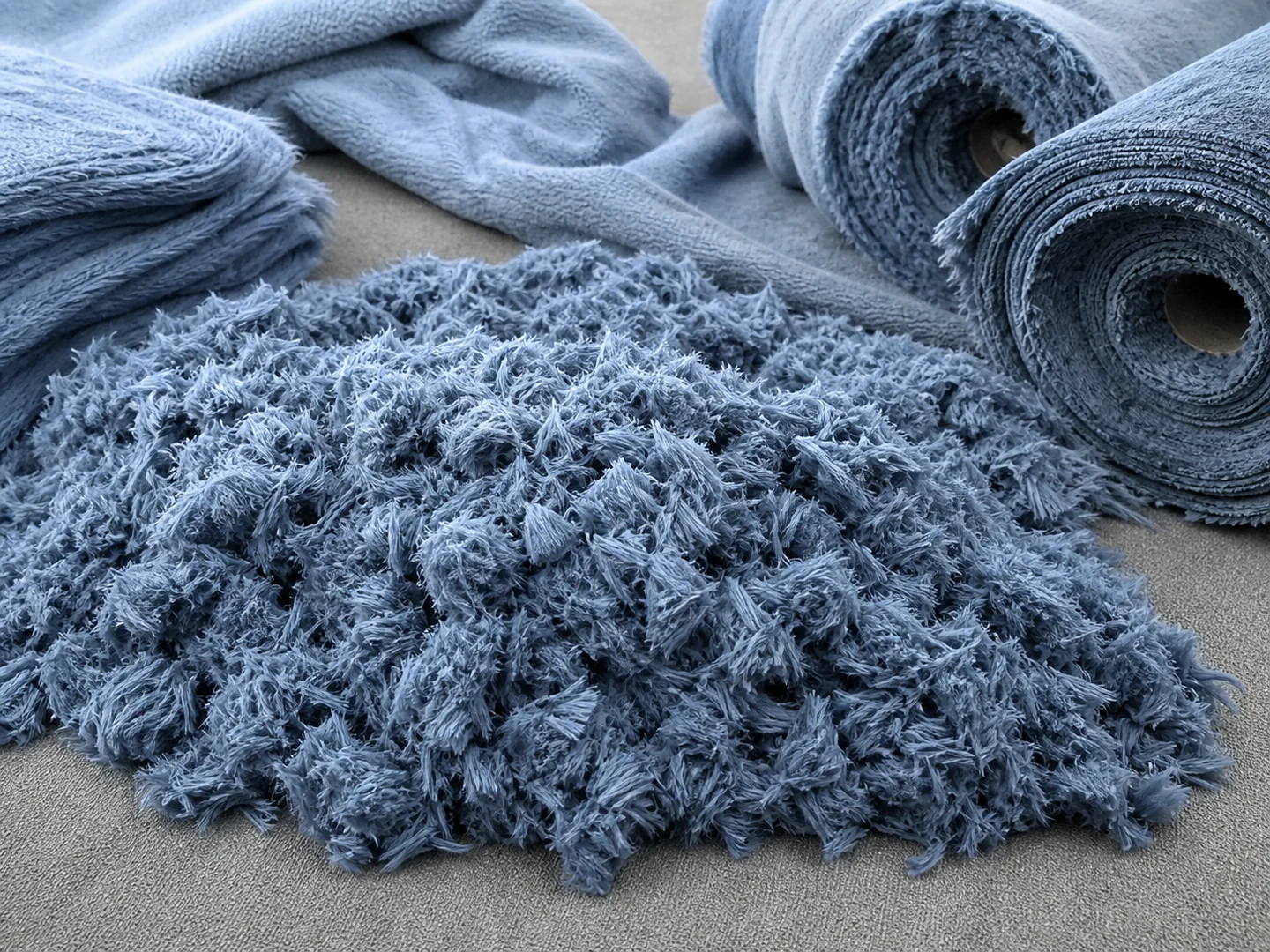
Microfiber and low-quality synthetic brushes sometimes shed. Rinse the new brush thoroughly with water before first use to remove loose fibers. If shedding persists, switch to a flagged, non-shedding nylon brush or a higher-quality boar’s hair brush. Stubborn lint can be removed with a gentle blast of compressed air or a detailing clay bar.
Is it safe to use a drill-attached wheel brush for lug nuts?
Only with extreme caution. Drill attachments that spin at high RPM can generate heat, sling chemical and dirt, and quickly abrade lug nut coatings. If you use a rotoscrub-style brush, set the drill to its lowest speed, keep the area heavily lubricated, and never let the spinning core touch the wheel paint. For most detailers, a hand brush offers more control and less risk.
How do I measure a lug nut hole before ordering a brush?
Use a digital caliper to measure the inside diameter of the recess at its widest point. Also measure the depth from the outer wheel face to the base of the lug nut seat. Compare these measurements to the brush’s stated core diameter and bristle length. When sampling brushes from a supplier, request a drawing or spec sheet that includes core diameter, bristle material, and overall length to ensure fit before buying in bulk.
Does the shape of the brush handle matter for lug nut cleaning?
Yes. A well-designed foam handle or rubberized grip prevents the hard plastic or metal core from striking the wheel if your hand slips. Look for brushes where the handle covering wraps fully around the core and does not come loose when wet. A handle that is too short may force you to angle the brush, increasing the chance of paint contact.