What Is an EZ Detail Wheel Brush?
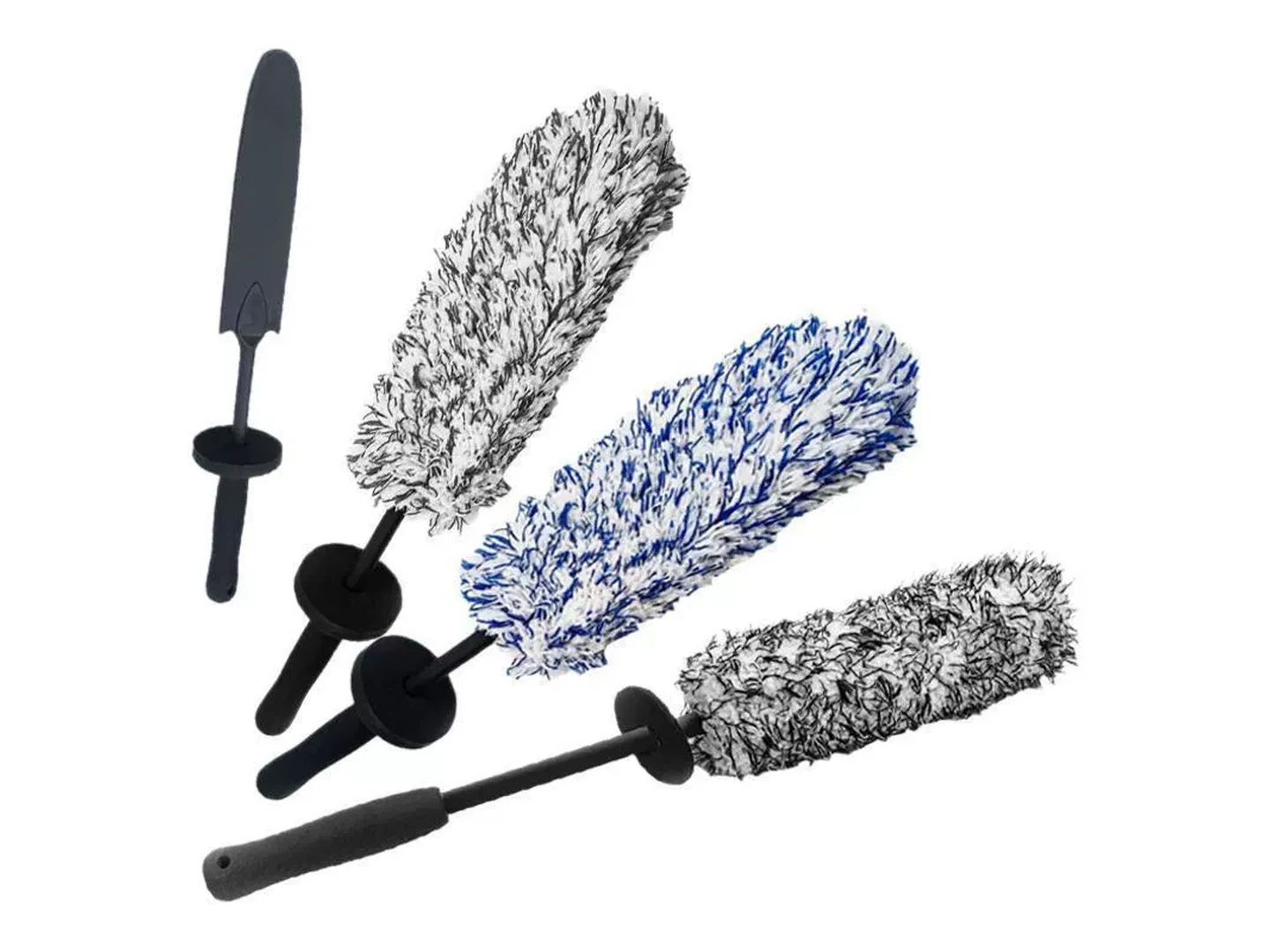
An EZ Detail Wheel Brush is a specialized detailing brush with a flexible, twisted-wire stem and a cylindrical head covered in soft, non-abrasive synthetic fibers. Its long, bendable shaft lets you reach deep into wheel barrels and around tight spokes without removing the wheel. The bristles are designed to agitate and lift brake dust and road film without scratching clear coats, chrome, or painted finishes.
Why Wheel Barrels Need a Specialized Brush
For the safety point in this section, the relevant OSHA reference is OSHA — 1910.242 Hand and Portable Powered Tools.
For the safety point in this section, the relevant OSHA reference is OSHA — 1910.215 Abrasive Wheel Machinery.
For the safety point in this section, the relevant OSHA reference is OSHA — Personal Protective Equipment.
For brush terminology and construction language, this section references ABMA — ANSI B165.1 Power Brush Safety Slips.
For tire, wheel, and vehicle-safety context, the relevant source is NHTSA — Tire Safety Ratings and Awareness.
Wheel barrels collect stubborn contaminants that a sponge or wash mitt can’t touch. Brake dust bonds to the metal or clear coat and, if ignored, can cause pitting or staining. The curved, narrow shape of a barrel demands a brush that conforms to the surface while remaining gentle. Standard stiff brushes or rags can mar delicate finishes or leave dirt in hard-to-reach corners.
Key Design Factors That Affect Performance
Before deciding whether an EZ Detail Wheel Brush fits your needs, compare how its design features stack up against the challenges you face. The table below breaks down the main variables and their practical impact.
| Feature | Typical Range / Option | What It Means for Barrel Cleaning |
|---|---|---|
| Bristle material | Soft synthetic wool, microfiber | Safe on clear coats, chrome, and painted barrels; minimal swirling risk. |
| Bristle stiffness | Low (plush) | Excellent for light to moderate dust; may struggle with hardened, caked-on deposits. |
| Head diameter | Typically 2–4 inches | Smaller heads access narrow spoke gaps; larger heads cover more area but can be tight in compact wheels. |
| Stem/core | Flexible twisted wire | Bends to reach behind spokes and deep barrels without dismounting the wheel. |
| Handle / mount | Handheld (no machine attachment) | Manual control; not designed for drill or rotary use. |
How to Decide If It’s Right for Your Wheels
Choosing the right brush comes down to several practical factors. Use the list below to evaluate your situation before you buy or reach for the brush.
- Residue type: Light dust and fresh road film? Ideal. Heavy, baked-on brake dust or iron deposits? The brush can help but may need chemical pre-treatment or more elbow grease.
- Surface sensitivity: Clear-coated alloys, polished lips, chrome, or painted barrels demand non-abrasive contact. The soft synthetic wool is a safe bet here.
- Wet or chemical exposure: The brush works well with wheel cleaners and soapy water. The synthetic fibers resist breakdown from most pH-neutral or mild alkaline cleaners.
- Hygiene expectations: For show cars or concours detailing, a soft brush that leaves no marring is preferred over stiffer alternatives.
- Maintenance frequency: Weekly washes? The brush holds up to regular use. Occasional deep cleaning? It still offers value but may be an unnecessary investment if you rarely clean barrels.
- Custom wheel size or shape: Deep, narrow barrels, multi-spoke designs, or small brake clearance all favor the flexible stem.
Common Mistakes When Using a Wheel Barrel Brush
- Scrubbing with excessive force, which can bend the stem permanently or push bristles past their safe pressure limit.
- Using the brush on hot wheels; this can degrade the synthetic fibers or cause chemical cleaner to dry too quickly.
- Applying harsh acidic cleaners that may attack the bristle material over time.
- Expecting one pass to remove heavily caked debris without letting the cleaner dwell or repeating the process.
- Forgetting to rinse and dry the brush after use, which leads to trapped grit that can scratch the next time.
When an EZ Detail Wheel Brush Is Not the Best Choice
An EZ Detail Wheel Brush excels at gentle cleaning in tight spots, but it has clear boundaries. Consider an alternative in these cases:
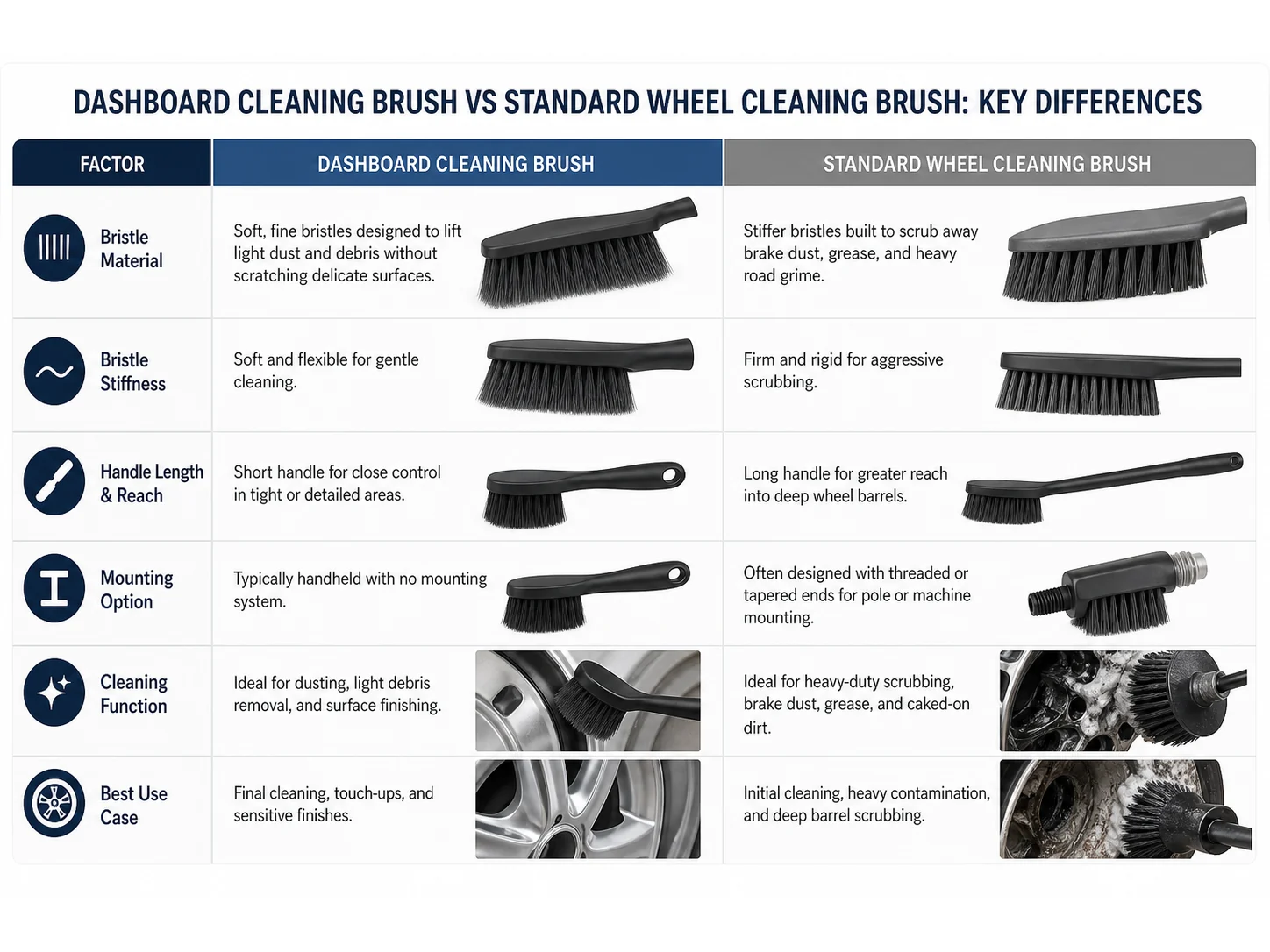
- Heavy, caked-on brake dust on uncoated steel or work wheels: A stiffer nylon brush will cut through the grime faster without the risk of marring since the surface is not sensitive.
- Drill-powered cleaning: If you want speed or have many wheels to clean, a drill brush attachment can dramatically reduce effort. The EZ Detail brush is strictly handheld.
- Wide, open-barrel designs with easy access: A larger wool wheel stick or a long-handled microfiber tool may clean the area more quickly.
- Corrosion, pitting, or heavy iron deposits: Mechanical removal, iron-removal chemicals, or professional restoration might be required before a soft brush can maintain the finish.
- Commercial or fleet washing: Durability and speed often outweigh the risk of fine marring; a heavy-duty brush is usually more practical.
Final Takeaway
Choose an EZ Detail Wheel Brush when your primary goal is safe, effective cleaning of coated or delicate wheel barrels that a standard wash mitt can’t reach. It shines on maintained wheels with light to moderate contamination. If you’re dealing with heavy neglect, unpainted steel, or need the speed of a power tool, pair it with a more aggressive method or opt for a different tool altogether.
Practical Use Note
In daily use, the practical test is simple: check whether the brush reaches the full contact area, removes the target residue, and leaves the surface in the required condition. Record what changes when surface finish, solvent exposure, access angle, scratch tolerance, and soil severity changes, because many brush failures are caused by the working condition shifting rather than by the brush body alone.
Frequently Asked Questions
What’s the difference between the regular and large EZ Detail Wheel Brush?
The large version has a wider diameter head, reaching about 4 inches, which covers more surface area per pass. It works well on spacious barrels or trucks. The regular size (around 2–3 inches) is better for tight spokes and smaller wheels. Both use the same flexible stem and soft synthetic wool.
Can I use an EZ Detail Wheel Brush with a drill?
No. The EZ Detail Wheel Brush is built with a handheld handle and is not designed to withstand the rotational force of a drill. Using it with a power tool can damage the stem, the head, or your wheel. For drill-powered cleaning, look for a brush specifically rated for rotary use.
Is the brush safe for painted, clear-coated, or chrome wheels?
Yes, the soft synthetic wool-like bristles are non-abrasive and safe for all factory finishes when used with common wheel cleaners or soap. Always test a hidden area first if you have a custom paint or aftermarket finish.
How do I clean and maintain the brush?
Rinse the head thoroughly with clean water after each use to remove dirt and chemical residue. Shake out excess water and hang to air dry. Every few washes, you can soak the bristles in a mild all-purpose cleaner solution to dissolve stubborn grime. Avoid machine washing or drying.
Will it remove heavy caked brake dust?
On its own, the brush is not aggressive enough to scrub off heavily baked or sintered brake dust quickly. It works best on wheels that receive regular maintenance. For neglected barrels, pre-treat with an iron remover or wheel cleaner and allow dwell time before using the brush to agitate and flush the loosened dirt.
Should I buy a single brush or a set?
A set often includes different sizes or shapes (e.g., regular, large, and a spoke brush). If you detail multiple vehicles with varying wheel designs, a set gives you more flexibility. For a single car with a consistent wheel type, one well-chosen brush is often enough.
Does the brush work on motorcycle wheels or deep-dish rims?
Yes, the flexible stem and compact head make it a good choice for motorcycle wheels, especially those with tight spoke patterns or limited clearance between the brake rotor and rim. Just ensure the head diameter fits the available space.
Can I use it to clean other tight areas of the car?
Many detailers also use the brush for engine bay crevices, exhaust tips, or hard-to-reach grille slats. However, to avoid cross-contamination, dedicate one brush to wheels and a separate one for paint or engine work.