
Custom Cleaning Brush
Drill Brush Attachment
Custom drill brush attachments with nylon PA filaments for powered cleaning, deburring, and surface finishing.
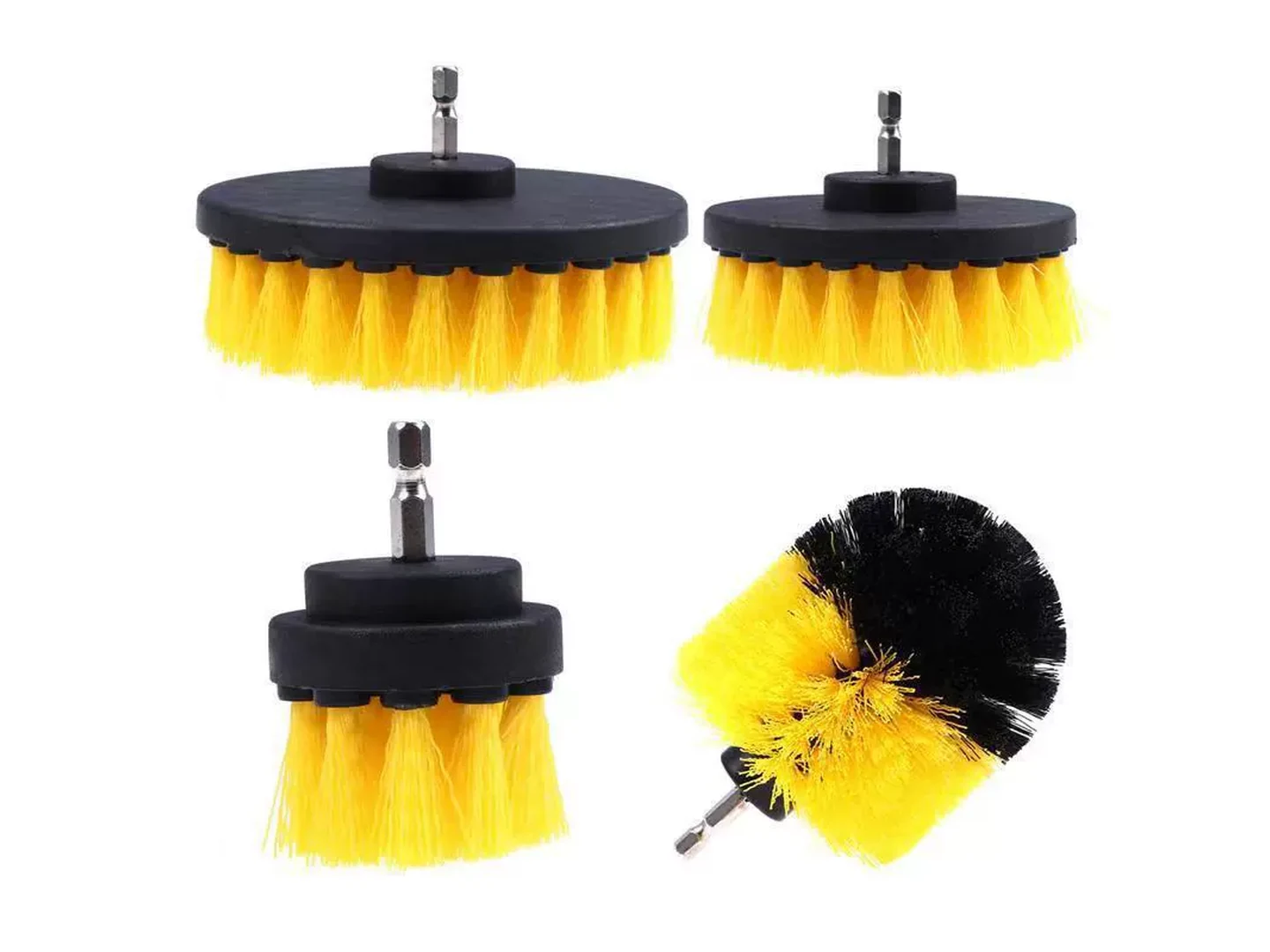
Small brush
500 pcs
Minimum order
Held in one hand: tube, bottle, detail and swab brushes — including long-handled ones with a small head.
Production lead time, once the specification is confirmed
- Up to 500 pcsWithin 7 days
- 501–50,000 pcsWithin 14 days
- Over 50,000 pcsWithin 21 days
Peak season can extend these times; the shipping date is confirmed in writing with your quotation. Sampling and shipping are quoted separately.
A drill brush attachment converts a standard power drill into a rotary cleaning and surface-finishing tool. With nylon PA filaments in cup, disc, or cylindrical form, it removes grease, scale, soap film, dust, oxides, and process residue from machine surfaces, floors, pipes, and recesses while protecting the underlying material from deep scratching.
What can this brush do for you?
Uses the drill you already have
The standard 6.35 mm (1/4″) hex shank seats directly in a drill chuck, so you do not need a dedicated cleaning machine or bench tool. The same drill that drives your fasteners can power a cup, disc, or cylindrical brush as the job changes.
Removes deposits without gouging the substrate
Nylon PA filaments flex under pressure and conform to the surface instead of digging in. They lift grease, oil, soap film, process dust, and light scale from painted housings, coated panels, aluminum, and stainless steel while leaving the base material intact. For more aggressive finishing, an abrasive-grit-impregnated nylon option increases cutting action without the deep scoring of wire.
Reaches flat, curved, and recessed areas from one tool
Cup brushes cover open flat panels and housing faces; disc brushes work edges, weld intersections, and narrow gaps; cylindrical or end brushes enter bores, pipes, and recesses around fasteners. One drill brush attachment family can cover most maintenance and finishing surfaces without switching to hand tools.
Adjustable contact through filament and trim selection
Filament diameter from 0.15 to 0.80 mm and trim length from 20 to 60 mm change how the brush contacts the workpiece. Finer, longer filaments create gentler, more conforming contact for coated or finished surfaces; coarser, shorter filaments press harder and release heavier deposits faster.
Delivers steady motion over large areas
The drill supplies continuous rotation at a controlled speed, so the brush applies consistent contact across a panel or deck. It removes residue more uniformly and with less operator fatigue than manual brushing on repeated maintenance tasks.
What is a Drill Brush Attachment?
A Drill Brush Attachment is a rotary brush built to be driven by a handheld power drill. Nylon PA filament is set into a metal, aluminum, or engineered polymer hub, cup, or core, and the assembly is fitted to a central shank that mounts in a drill chuck. The drill provides rotation while the operator controls pressure, angle, and dwell time against the surface.
Three working geometries are commonly used. A cup brush presents the filament face to flat, open surfaces. A disc or wheel brush concentrates contact around the rim for edges, grooves, and hard-to-reach joints. A cylindrical or end brush extends forward from the shank to clean inside bores, pipes, and recessed pockets. All three use the same mount and can be swapped in seconds.
During cleaning, the rotating filaments sweep the surface, flex, and release the loosened material. The same motion supports deburring, edge blending, and producing a uniform satin finish before coating or painting. The tool is intended for light to medium deposits and controlled surface finishing. For thick rust scale, weld spatter, or heavy material removal, a wire brush or abrasive disc is normally the better choice.
Always observe the maximum rated RPM listed for the selected head diameter. Inspect the shank, hub, and filament fill before use, secure the workpiece, and wear appropriate eye and hand protection.
Technical Specifications
The table below lists the standard configuration and the ranges available for custom builds. Final values are confirmed for each project.
| Parameter | Value / Options |
|---|---|
| Brush form | Cup, disc (wheel), or cylindrical / end brush |
| Mount / shank | 6.35 mm (1/4″) hex standard; round shank or threaded arbor available |
| Head diameter | 30–150 mm, selected to work area and drill power |
| Trim length | 20–60 mm, longer for conformability and recess reach, shorter for aggressive contact |
| Filament diameter | 0.15–0.80 mm; finer for finishing and blending, coarser for heavier deposits |
| Filament material | Nylon PA (PA6, PA66, PA612), optional silicon carbide or aluminum oxide abrasive impregnation |
| Fill density | Standard or high density; density affects contact and residue release |
| Hub / cup material | Steel, aluminum, or engineered polymer to match weight, corrosion resistance, and balance |
| Maximum operating RPM | Stated per configuration; always observe the maximum rated speed for the head diameter |
| Operating environment | Compatible with water, mild alkaline detergents, and light oil residue; verify chemical and temperature suitability for the selected PA grade |
| Continuous service temperature | Typically up to about 80–100°C for standard PA; higher-temperature grades available |
Where does this brush work best?
- Machinery enclosures, guards, and frame surfaces — remove grease, oil, process dust, and soap film from painted or coated steel before inspection, touch-up, or repaint.
- Floors, deck plates, and walkways — disc and cup brushes clean flat non-slip surfaces, open joints, corners, and edges without digging into the surface profile.
- Cast housings, valve bodies, flanges, and manifold recesses — cylindrical and end brushes enter bores and recessed pockets, cleaning around bolt heads, threads, and internal shoulders.
- Painted, anodized, or lightly coated components — fine nylon filament removes oxidation and film without breaking the coating; abrasive-impregnated nylon prepares the surface for new coating.
- Maintenance, deburring, and surface finishing — deburr drilled holes, blend edges, and create a uniform satin finish on aluminum, stainless steel, and other machined parts.
How do I choose the right one?
Start with the geometry you need to reach.
- Cup brush for open, flat surfaces and housing faces.
- Disc brush for edges, weld intersections, narrow gaps, and areas where the working face must be presented from the side.
- Cylindrical / end brush for bores, pipes, and recessed interiors.
Then match the filament to the surface and deposit.
- Fine filament (0.15–0.30 mm): painted, coated, anodized, or polished surfaces; light film and cosmetic finishing.
- Medium filament (0.30–0.50 mm): general cleaning of grease, oil, dust, and soap film on steel, aluminum, and plastic housings.
- Coarse filament (0.50–0.80 mm) or abrasive-impregnated nylon: stubborn residue, light scale, oxidation, deburring, and pre-coat preparation.
- Longer trim (40–60 mm) for reaching into recesses and preserving conformability; shorter trim (20–35 mm) for firmer contact and faster deposit removal.
Check the shank and speed constraints before ordering.
- Confirm the drill chuck accepts the 6.35 mm hex shank, or specify a round shank or threaded arbor.
- Know the drill’s no-load RPM and operating range. The selected head diameter must be rated for that speed.
| Job condition | Recommended configuration |
|---|---|
| Flat panels, open housing faces | Cup brush, 50–100 mm, medium nylon |
| Edges, corners, around fasteners | Disc or end brush, 30–60 mm |
| Bores, pipes, recessed interiors | Cylindrical brush, trim 40–60 mm |
| Painted or coated surfaces | Fine nylon, lower speed, no abrasive |
| Aluminum or stainless finishing | Fine or abrasive nylon, moderate speed |
When to use a different brush or method
- For thick rust scale, weld spatter, heavy mill scale, or hardened deposits, switch to a wire brush drill attachment or a grinder-driven abrasive wheel. Nylon will polish but not cut through hard, bonded material.
- For very deep bores or pipes beyond the reach of a fixed cylindrical brush, use an extended or flexible-shaft brush.
- For delicate, easily marked coatings, start with a non-abrasive nylon grade on a scrap area before committing to full-speed production.
Can I customize this brush?
Every drill brush attachment can be built to the shaft, surface, and deposit you are working with. We will need the surface material, residue type, drill or chuck details, operating RPM, desired finish, and the smallest access dimension you need to reach. A drawing, photo, or sample part helps us confirm the configuration.
We can adjust:
- Brush form — cup, disc, cylindrical, end, or custom profile
- Head diameter and trim length to match the work area and reach
- Filament diameter, material grade, color, and abrasive loading
- Fill density and cutting pattern for uniform wear or specific surface texture
- Shank type, diameter, length, and mounting feature
- Hub or cup material, coating, and balance configuration
- Color coding, marking, and packaging for your distribution or maintenance program
If your project requires material documentation, certification support, inspection, or third-party testing, we can assist with those requirements as part of the customization process.
Which filament survives the cleaning and still lasts on a drill brush attachment?
How do I know which speed to run the drill brush at?
Start at the drill’s lowest setting and increase only until the residue releases or the desired finish appears. Never exceed the maximum rated RPM for the selected head diameter. Abrasive-impregnated nylon normally runs at a lower speed than plain nylon, and visible filament flaring, vibration, or heat are signs to reduce speed or change configuration.
What should I check before the first use?
Confirm the shank is fully seated and tightened in the chuck, secure the workpiece, and inspect the brush for loose filaments, cracks in the hub, or a bent shank. Wear eye protection and gloves, run the brush briefly at low speed without load, and test on a hidden area of the part before starting the full surface.
How can I tell when the brush needs replacement?
Replace the brush when the trim length has worn down significantly, the filament tips become flattened or uneven, the hub shows cracks or deformation, or the brush no longer removes the same residue at the same speed and pressure. Increased vibration or an off-balance feel is also a replacement signal.
Can this brush be used wet or with cleaning chemicals?
Nylon PA handles water and mild alkaline detergent solutions, but the hub must be stainless steel or aluminum if the brush will run wet regularly. Avoid prolonged exposure to strong acids, chlorinated solvents, or high-temperature caustic solutions unless the PA grade and hub material are confirmed for that chemistry.
Will it remove paint or heavy rust?
A nylon drill brush attachment removes loose or flaking paint, light surface rust, and thin oxidation films. It will not cut through thick rust, mill scale, baked paint, or weld spatter. Use a wire brush drill attachment or an abrasive disc for those materials, and use nylon only for the finishing or light cleaning stage.
Is the nylon filament food-contact safe?
Standard industrial nylon PA is not automatically certified for food-contact service. If the brush will contact food, food processing surfaces, or packaging, state that requirement during customization. We can select suitable PA grades and provide material documentation to support the project.
Guides that go deeper on this
Car Wheel Brush vs Standard: Drill and Grinder Mounting
Read this guideGuideHow to Choose the Right Car Wheel Brush for Rust Removal
Read this guideGuideWheel Brush: Material and Size for Rust Removal
Read this guideGuideNylon Cup Brushes: Polishing or Cleaning, and What Fill?
Read this guideGuideSponge Cup Brushes: Cleaning, Absorbing or Polishing?
Read this guideCustom Manufacturing RFQ
Describe Your Application
To quote this brush accurately, send the size, material, cleaning target, residue, quantity, and any available drawing or sample photo.
Drawing or photo optional — it speeds things up, it does not gate the enquiry.
Custom Brush RFQ
Send Your Brush Project
Upload a drawing, product photo, or sample photo and provide the core dimensions and cleaning conditions.
“We need a brush to remove wet residue from a stainless steel conveyor, about 800mm wide. The current brush wears quickly. We can send photos.”
“We sell drinkware and need a cleaning brush to include with the product. Quantity around 5,000 pieces.”