What Is a Glass Polishing Brush?
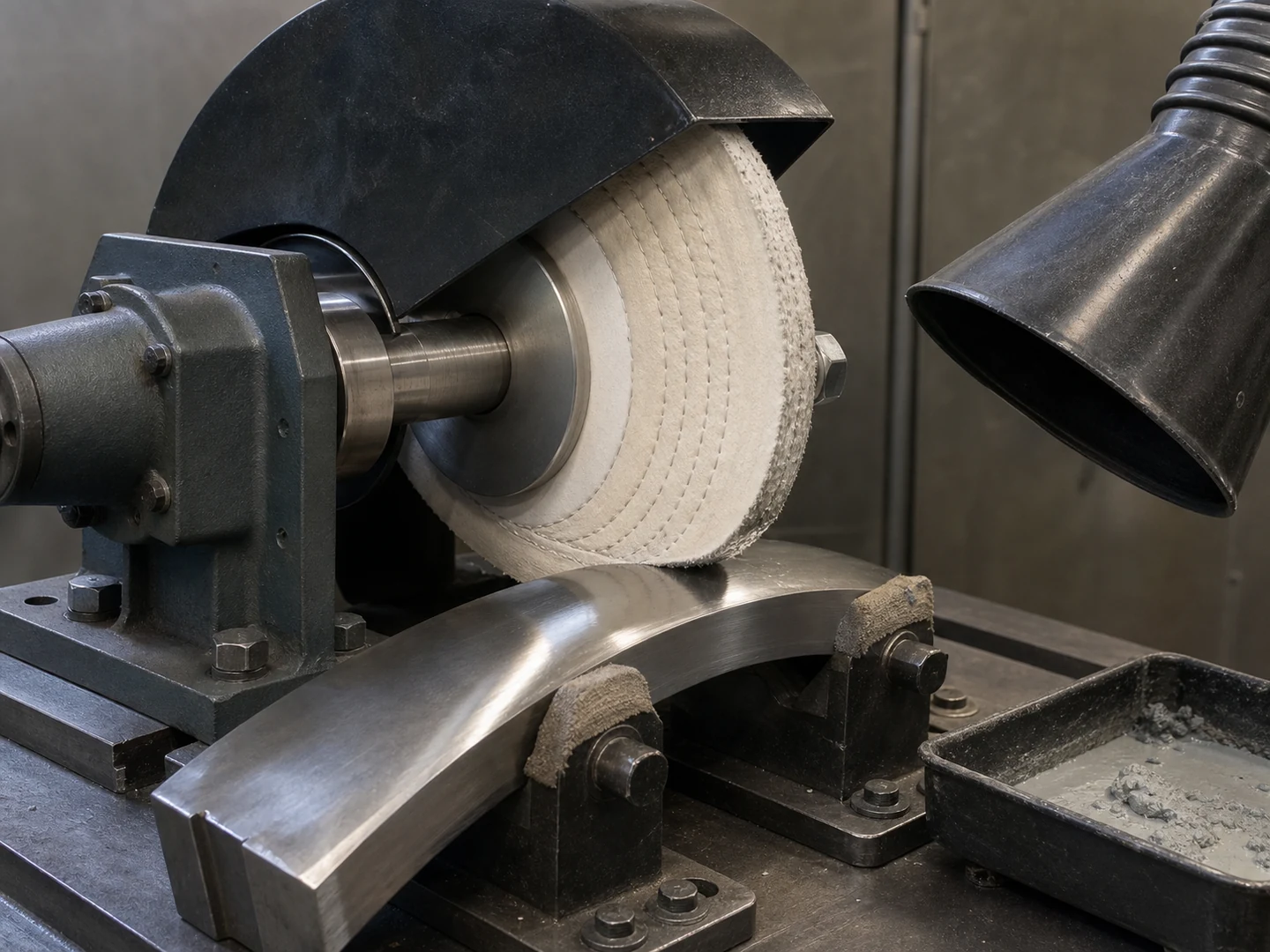
A glass polishing brush is a rotating or oscillating cylindrical brush installed in a flat glass washing or polishing machine. Its primary function is to remove polishing residues, glass fines, and light surface contaminants from flat glass surfaces after edging, grinding, or polishing operations. These brushes work in wet or semi-wet environments and often run at controlled speeds against freshly processed glass. The right brush applies even contact pressure, sheds debris without loading, and avoids leaving scratches or brush marks.
Common Material Options for Glass Polishing Brushes
For solar-panel and PV-glass context, the article references Department of Energy — Solar Photovoltaic Technology Basics.
For the environmental or chemical-safety point in this section, the supporting reference is EPA — Safer Choice.
For dimension and measurement language, NIST — Metric SI supports the use of consistent SI/metric specifications.
For brush terminology and construction language, this section references American Brush Manufacturers Association — Brush Lingo.
Brush material largely determines cleaning effectiveness, surface impact, and service life. The most common materials for flat glass polishing brushes are:
- Nylon (abrasive‑filled): Contains silicon carbide or aluminum oxide grit. Aggressive removal of heavy cerium oxide residues, stubborn polishing compounds, and glass fines. Best suited for first‑stage cleaning where surface scratch risk is acceptable.
- Natural bristle (tampico, horsehair): Softer, absorbent, and flexible. Ideal for delicate coated glass or low‑scratch applications. Holds water and mild detergents well, often used in final rinse or polishing stages.
- Foam (polyurethane or polyester): Non‑abrasive and very soft. Used for drying, light dusting, or ultra‑sensitive surfaces. Low debris removal, but won’t scratch.
- Polypropylene or polyester synthetic: Medium stiffness, good chemical resistance. A general‑purpose choice for moderate‑duty cleaning where cost and durability matter.
Material, Size, and Stiffness: A Comparison Table
| Brush Material | Typical Diameter Range | Stiffness | Best for Residue Type | Surface Sensitivity | Mounting Options |
|---|---|---|---|---|---|
| Nylon (abrasive‑filled) | 80–200 mm | Medium to hard | Heavy cerium oxide, glass fines | Low – may scratch | Shaft‑end, keyway, flange |
| Natural bristle | 60–180 mm | Soft to medium | Light polishing compounds, final cleaning | High – low scratch risk | Shaft, quick‑release hub |
| Foam | 80–250 mm | Very soft | Dust, drying, static removal | Extremely high | Snap‑on, roller shaft |
| Polypropylene | 80–200 mm | Medium | General cleaning, light residue | Moderate | Shaft, flange, blind hole |
Diameter, core type (shaft diameter, keyway dimensions), and overall length must match your machine’s brush chamber and drive interface. Off‑the‑shelf brushes often fail because one of these three dimensions is off by a few millimeters.
How to Choose a Glass Polishing Brush
Base your selection on these factors, in order of priority:
- Residue type and load: Identify the primary contaminant—cerium oxide slurry, glass fines, water‑soluble coolant residues, or light dust. Heavier, stuck‑on residues demand more aggressive material or denser fill.
- Surface sensitivity: Does the glass have a coating (Low‑E, anti‑reflective, ITO)? Any texture or pattern? Scratch‑sensitive surfaces rule out abrasive‑filled nylon and stiff synthetics.
- Equipment interface: Measure the shaft diameter, available brush length, and mounting method (keyway, set‑screw, quick‑change, flange). Many custom brushes must replicate the exact core pattern of the original.
- Wet or chemical exposure: Confirm the brush material’s resistance to the cleaning solution—some detergents, acids, or alkaline cleaners degrade natural bristles or certain synthetics. Polypropylene and nylon generally tolerate a wide pH range.
- Hygiene or cross‑contamination risk: In cleanroom or coated‑glass applications, choose materials with low particle shedding and ability to be washed frequently without losing shape.
- Maintenance frequency: A brush that loads quickly with residue will demand frequent cleaning or replacement. Consider fill density and trim length to balance cleaning and loading.
- Custom size requirements: If your machine uses a non‑standard diameter, non‑standard core bore, or requires a specific dynamic balance class, plan for a custom brush roll. Provide a dimensional drawing and target RPM in your inquiry.
Common Mistakes When Specifying a Glass Polishing Brush
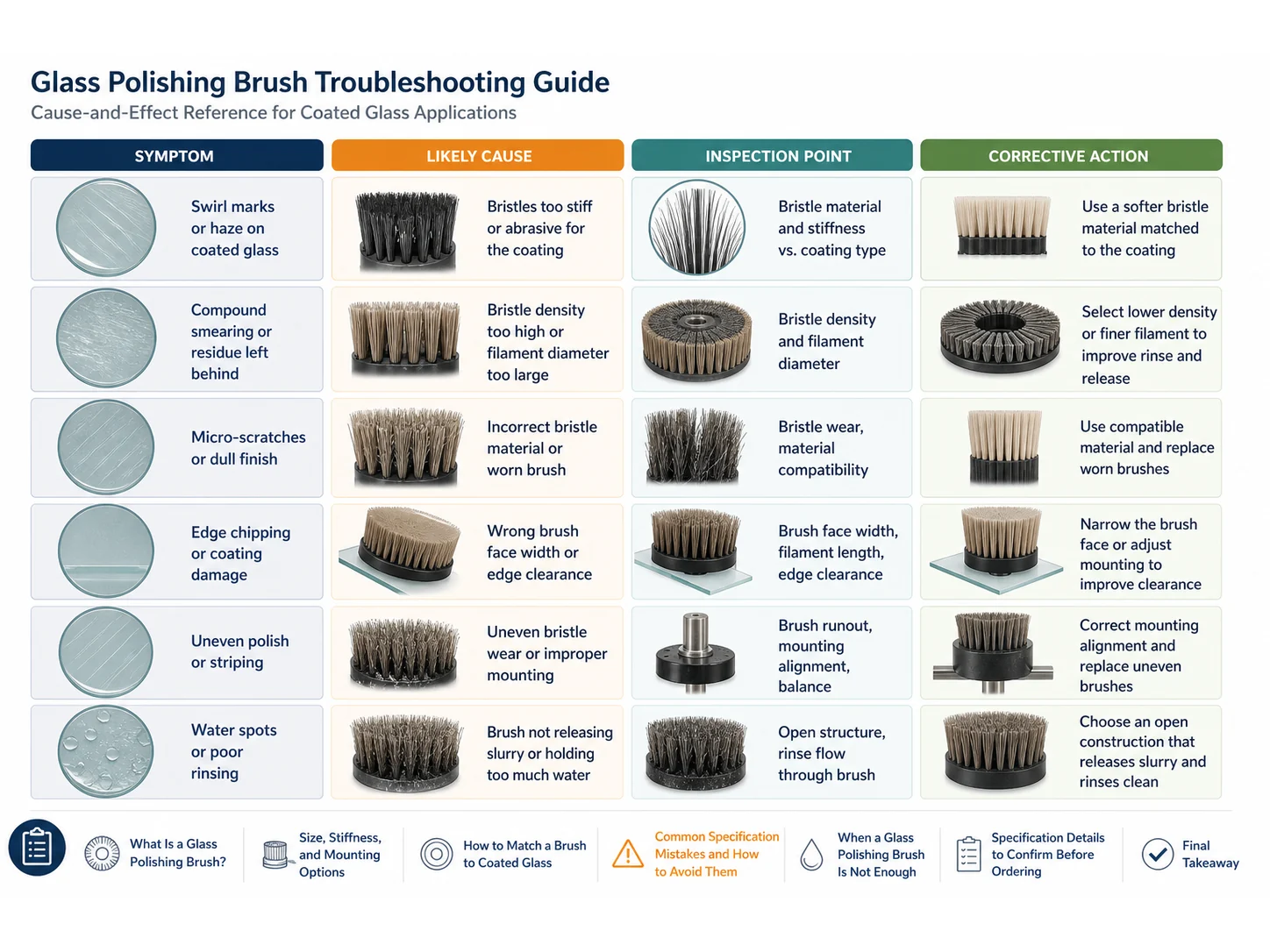
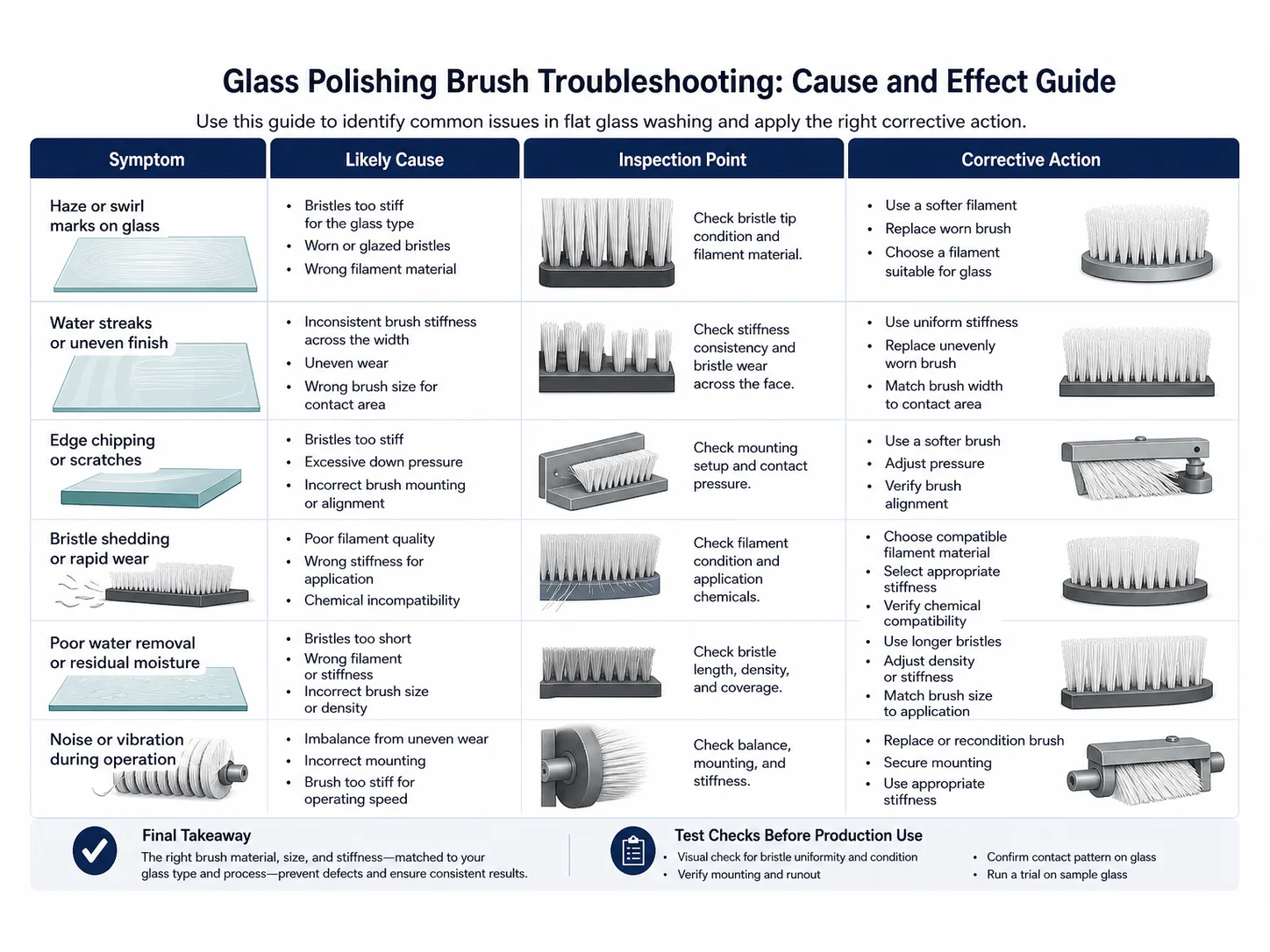
- Choosing by diameter alone: Diameter is only one dimension. Core bore, keyway size, trim length, and overall length all affect fit and contact pressure. One mismatch can cause vibration or poor cleaning.
- Ignoring stiffness requirements: A brush that is too stiff for a sensitive glass coating will create micro‑scratches that appear only after coating inspection.
- Assuming all nylon is the same: Nylon can be solid, crimped, abrasive‑filled, or heat‑set. Specify the required filament type and grit if needed.
- Overlooking chemical compatibility: Hard water, strong cleaners, or high pH can swell or embrittle certain bristles over time. Confirm material compatibility with your wash chemistry.
- Skipping the sample test: Even with correct specs, a sample brush may reveal issues with brush balance, bristle wear pattern, or cleaning uniformity. A pre‑production sample can prevent line‑down surprises.
- Waiting until the old brush fails completely: Running brushes past their effective trim length alters contact angle and may damage the glass or machine. Keep a spare on hand and schedule replacement based on measured wear.
When a Standard Glass Polishing Brush Is Not Enough
A catalog brush works well when your line, chemistry, and residue load are well‑understood. However, step back and consider a custom brush or expert review when:
- The contaminant is unusual (silicon‑based sealants, petroleum residues, heavy tin oxide from float glass side).
- Surface quality standards demand near‑zero scratch risk (high‑end architectural glass, touchscreen substrates).
- Machine interface dimensions do not match standard catalog sizes within tolerance.
- You need a brush that combines two functions (e.g., polishing brush with integrated water delivery channels) that no off‑the‑shelf design offers.
- The current brush life is unacceptably short, and you need a different fill material, density, or trim to improve durability.
In these cases, working from a supplier drawing that captures shaft details, flanges, dynamic balance requirements, and operating RPM is safer than guessing with standard part numbers.
Final Takeaway
A glass polishing brush is not a simple “sugar roll.” The right brush matches the specific residue, glass surface sensitivity, machine interface, and wash chemistry. Start with a clear definition of the cleaning problem, verify fit dimensions, and always test a sample before committing to volume. This approach protects glass quality, reduces downtime, and avoids the hidden cost of wrongly specified brushes.
Practical Use Note
In daily use, the practical test is simple: check whether the brush reaches the full contact area, removes the target residue, and leaves the surface in the required condition. Record what changes when base material, burr or oxide level, target finish, brush speed, pressure, and acceptable surface change changes, because many brush failures are caused by the working condition shifting rather than by the brush body alone.
Frequently Asked Questions
What is the difference between a glass polishing brush and a washing brush?
A polishing brush is designed to remove fine polishing residues and compounds using more aggressive but controlled contact, while a washing brush mainly rinses away loose particles with water and detergent. Polishing brushes often use abrasive‑filled filaments; washing brushes tend to be softer synthetics or natural bristles.
Can I use the same brush material for all flat glass types?
No. Coated glass, low‑iron solar glass, and patterned glass all react differently to brush stiffness and material. For example, an abrasive nylon brush that works on uncoated float glass may scratch a soft anti‑reflective coating. Match the material to the surface sensitivity.
How do I measure my existing brush for a replacement?
Measure overall length (end‑to‑end), brush diameter (across the bristle tips), core bore (inner diameter of the hub), keyway width and depth (if present), and the working trim length. Also note the mounting style and any flange dimensions. Provide these in a simple sketch to your supplier.
What causes bristles to fall out of the brush core?
Common causes include exceeding the brush’s rated RPM, exposure to chemicals that degrade the bristle anchor (epoxy or mechanical crimp), excessive compression during installation, or operating the brush when the trim length is too short. Check the manufacturer’s maximum speed and chemical resistance chart.
How do I know if I need a sample test?
If any of the following apply, ask for a sample: new glass coating or chemistry, ambiguous residue type, tight scratch standards, or a machine with unique speed/pressure profiles. A sample test on your actual line reveals issues that drawings alone cannot.
Is abrasive‑filled nylon always the most aggressive option?
Generally yes, but aggressiveness also depends on filament diameter, trim length, and fill density. A heavily filled, short‑trim nylon brush will be more aggressive than a sparsely filled one. Compare the specific product data: grit size, filament diameter, and fill pattern.
Can a glass polishing brush be re‑trimmed?
Some brushes can be re‑trimmed if the core and bristle base remain intact, but this is uncommon for production environments because it changes the dynamic balance and bristle flexibility. It is usually more reliable to replace the brush with one manufactured to the required trim length.