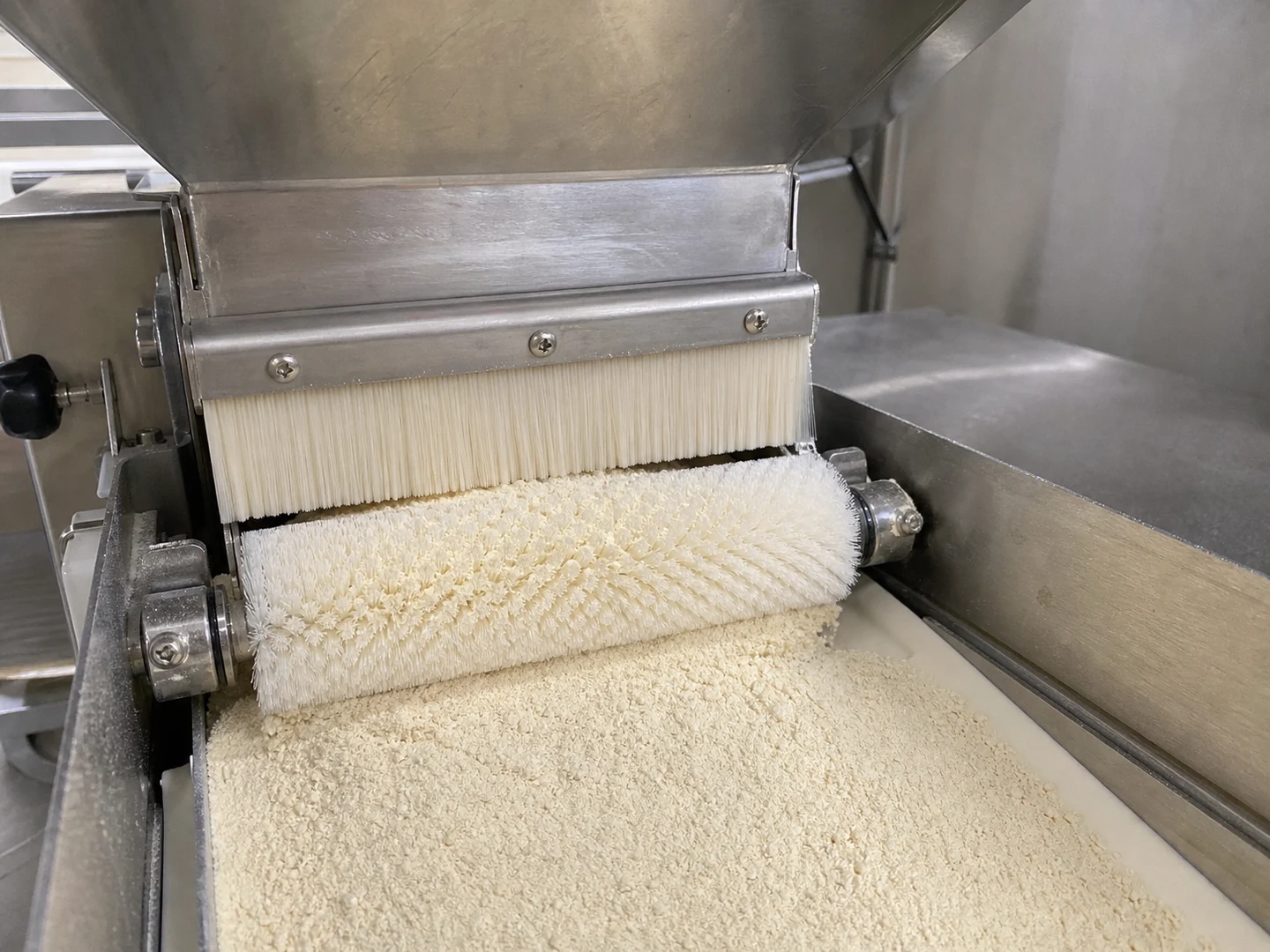
What Is a Powder Feeding Brush?
A powder feeding brush is a brush assembly that directly contacts or guides dry powders in manufacturing or processing machinery. Its primary functions include regulating material flow, cleaning surfaces such as screens or chutes, or moving powder through a controlled path. These brushes are often found in industries like food processing, pharmaceuticals, chemicals, and powder coating. The brush may be static or rotating, and it can be made from various bristle materials and mounting styles to suit different machine interfaces and powder characteristics.
Common Powder Feeding Brush Structures and Types
For the safety point in this section, the relevant OSHA reference is OSHA — Combustible Dust.
For the environmental or chemical-safety point in this section, the supporting reference is EPA — Particulate Matter Basics.
For brush terminology and construction language, this section references American Brush Manufacturers Association — Brush Lingo.
Powder feeding brushes come in several structural forms, each fit for a specific mechanical action:
- Strip Brushes: Straight lengths of bristle set in a metal or plastic channel. Used for sealing, wiping, or guiding powder along a flat surface.
- Coil (Helical) Brushes: Bristles wound around a central wire or rod, creating a spiral shape. Excellent for cleaning tubes, grooves, or threaded feeders.
- Roller Brushes: Bristles mounted around a cylindrical core. Powered rotation allows continuous powder distribution or surface cleaning.
- Cup Brushes: Circular brush with bristles arranged radially. Often used on end-of-arm tooling or for localized cleaning.
- Disc Brushes: Flat, wheel-like shape for face-contact applications like cleaning flat screens.
- Custom Profiles: Brushes built to irregular shapes or with multi‑density bristle patterns for unique machine geometries.
Bristle materials range from natural fibers (Tampico, horsehair) to synthetics (nylon, polypropylene, abrasive nylon) and metals (stainless steel, brass). Each material behaves differently with various powders.
Comparison of Powder Feeding Brush Options
The table below helps you narrow down the most common brush types by comparing their typical use, bristle material, and practical trade‑offs.
| Brush Type | Best For | Common Bristle Materials | Advantages | Considerations |
|---|---|---|---|---|
| Strip Brush | Sealing, wiping flat surfaces, static guides | Nylon, polypropylene, horsehair | Simple mounting, easy to cut to length | Limited dynamic action; not self‑cleaning |
| Coil / Helical Brush | Internal cleaning of tubes, auger grooves, screw conveyors | Abrasive nylon, stainless steel wire, Tampico | Conforms to irregular shapes, good for heavy residue | Can be difficult to replace; may trap powder if bristles are too stiff |
| Roller Brush | Rotary powder feeding, screen cleaning, deburring | Nylon, abrasive nylon, horsehair blends | Powered operation, even coverage, long service life | Requires bearings and drive; higher upfront cost |
| Cup Brush | Spot cleaning, end‑effector tooling | Brass wire, stainless steel wire, abrasive nylon | Aggressive cleaning action, compact | Short bristle life; risk of over‑aggression on soft surfaces |
| Disc Brush | Face‑cleaning flat screens, filter surfaces | Nylon, polypropylene, conductive fibers | Large contact area, gentle on screens | Limited to flat or gently curved surfaces |
How to Choose the Right Powder Feeding Brush
Match the brush to your specific equipment and powder, not just a catalog category. Work through these five factors:
- Equipment Interface: Measure the exact contact area – groove width, screen mesh size, shaft diameter. The brush must fit without excessive clearance or interference.
- Contact Surface Material and Shape: A screen requires a soft, non‑abrasive bristle to avoid damage. A steel chute can handle stiffer wire bristles.
- Powder Characteristics: Abrasive powders (silica, metal oxides) demand wear‑resistant bristles like abrasive nylon or stainless steel. Sticky powders (sugar, food mixes) need smooth, non‑friction bristles that release material easily. Corrosive materials require chemically inert synthetics.
- Operating Environment: High temperatures may rule out natural fibers or nylon. Wet or washdown areas need stainless steel cores and moisture‑resistant bristles. Dust‑controlled environments may require anti‑static bristle materials.
- Replacement Cycle and Maintenance Access: If downtime is costly, choose a brush with a proven longer wear life, even if the initial cost is higher. Quick‑change mounts can reduce labor during routine swaps.
Common Mistakes in Powder Feeding Brush Selection
- Ignoring Bristle‑Powder Chemical Compatibility: A common oversight. For example, natural fibers soak up oils and can degrade, while nylon softens in high‑moisture environments.
- Choosing the Wrong Bristle Density: Too dense, and powder packs between bristles, causing clogs. Too sparse, and cleaning or metering becomes ineffective.
- Overlooking Mounting Method: A bolt‑on brush that slips under vibration or a shaft‑mounted brush with the wrong bore tolerance will fail prematurely.
- One‑Size‑Fits‑All Thinking: Using the same brush for multiple powders risks cross‑contamination and inconsistent performance. Validate each material separately.
- Neglecting Wear Indicators: Without scheduled inspections, a worn‑out brush can damage contact surfaces or release bristle debris into the product stream.
When a Standard Powder Feeding Brush Is Not Enough
Off‑the‑shelf brushes solve many powder feeding challenges, but there are clear situations where a custom brush is necessary:
- Unusual Equipment Geometry: Non‑standard core diameters, curved channels, or complex multi‑axis mounting points.
- Extreme Temperatures: Processes above 250°C (482°F) or cryogenic conditions demand specialty materials and construction techniques.
- Aggressive Chemicals or Sanitary Demands: FDA‑compliant designs, CIP (clean‑in‑place) compatibility, or resistance to strong solvents often need custom‑engineered solutions.
- Very High Speeds or Loads: Rotational speeds beyond typical brush limits require reinforced cores and balanced construction to avoid vibration.
- Multi‑Stage or Combined Functions: A single brush that must wipe, meter, and clean in one pass may call for a custom bristle pattern or hybrid bristle materials.
In these cases, work with a custom industrial brush manufacturer. Provide detailed drawings, sample parts for test fitting, and a full powder specification sheet to get a brush that performs safely and lasts.
Final Takeaway
Selecting a powder feeding brush is about solving a machine‑powder interaction, not just buying a commodity. Start with your powder’s physical and chemical properties, then match the brush structure and bristle material to the equipment interface and operating conditions. A slightly more expensive brush that reduces downtime and product loss typically pays for itself quickly. When standard options fall short, a custom drawing and sample validation are the path to reliable long‑term performance.
Practical Use Note
In daily use, the practical test is simple: check whether the brush reaches the full contact area, removes the target residue, and leaves the surface in the required condition. Record what changes when access, residue type, surface sensitivity, brush stiffness, operating environment, and replacement routine changes, because many brush failures are caused by the working condition shifting rather than by the brush body alone.
Frequently Asked Questions
What bristle material is best for food‑grade powder handling?
Food‑grade applications usually require synthetic materials like FDA‑compliant nylon or polypropylene because they are non‑absorbent, easy to clean, and resistant to bacterial growth. Avoid natural fibers unless they are clearly documented for food contact.
How often should a powder feeding brush be replaced?
Replacement depends on the powder’s abrasiveness, operating hours, and maintenance schedule. In abrasive service, inspect weekly and replace when bristle length is reduced by 20–30% or when performance drops. For non‑abrasive powders, scheduled inspections are typical.
Can I use the same brush for different powders?
It is not recommended. Even after cleaning, bristles can trap small amounts of powder, leading to cross‑contamination. If you must switch, dedicate a brush to each powder group and validate cleanliness with a rinse test.
What bristle density is best for fine powders?
Fine powders (under 100 microns) often work best with medium‑density bristles. Too high a density can cause packing, while too low a density won’t move the powder effectively. Testing with a sample of the actual powder is the most reliable method.
How do I measure a brush for replacement?
Measure the overall length, core diameter, bristle diameter (or width), and bristle length exposed beyond the core. Also note the mounting style (bore diameter, keyway, flange pattern). Compare these to the original manufacturer’s drawing or sample.
What is the difference between a roller brush and a spiral brush for powder feeding?
A roller brush rotates on its central axis and is used for continuous surface cleaning or even powder distribution. A spiral (coil) brush is often static or used in a push‑pull manual action to clean internal grooves or threads. Choose a roller for powered rotary feeders, and a coil for internal tube or channel cleaning.
Can a powder feeding brush handle wet or sticky powders?
Standard dry‑powder brushes clog quickly with sticky material. For damp or oily powders, look for brushes with stiff, smooth synthetic bristles and an open face design to allow material to fall away. Stainless steel wire brushes can also work, but test for any chemical reaction first.
When should I consider a custom brush over a standard one?
Consider a custom brush when you have a unique machine interface, extreme temperature or chemical conditions, strict sanitary requirements, or a combination of functions that no single standard brush can handle. A custom solution often saves money by reducing trial‑and‑error downtime.