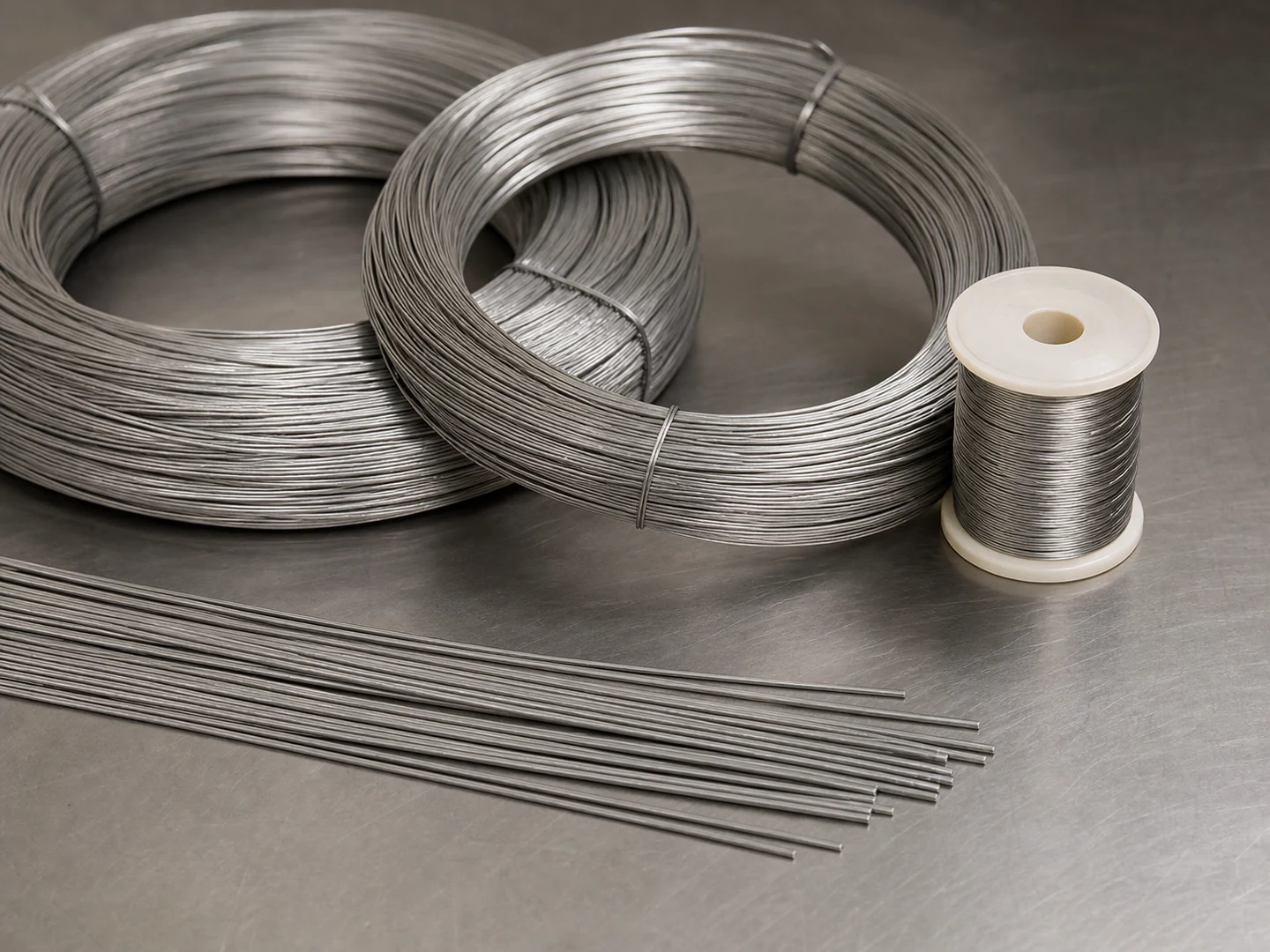
What Is a Stainless Steel Fastening Wire Brush Component?
A stainless steel fastening wire brush component is the brush head assembly that attaches to a handle, power tool, or automated system via a threaded stud, nut, quick‑connect, or other fastening feature. Unlike throwaway retail brushes, this component is often replaceable and must match specific torque, speed, and chemical exposure demands. The term “fastening wire component” emphasizes the mechanical interface—how the brush secures to the machine—which is usually the first thing a custom order addresses.
When Does a Standard Brush Fall Short?
For material-selection language, this section is supported by World Stainless — Corrosion Resistance of Stainless Steels.
For brush terminology and construction language, this section references American Brush Manufacturers Association — Brush Lingo.
Off‑the‑shelf wire brushes work for general surface prep, light weld cleaning, and simple rust removal on carbon steel. Customization becomes necessary when:
- The tool requires a non‑standard thread size, thread depth, or drive adapter.
- Operating speed or temperature exceeds the rating of stock brushes.
- The material being cleaned is sensitive to contamination (e.g., aluminum, titanium) and needs a dedicated stainless steel wire grade.
- The brush must reach into a narrow cavity, irregular profile, or automated fixture where standard trim lengths and cup diameters fail.
- Safety or process standards mandate traceable material certifications and specific packaging.
Essential Information for a Custom Brush RFQ
Suppliers cannot quote accurately without these details. Before sending an RFQ, collect the following:
- Brush type and function: Wheel, cup, end brush, internal brush, or tube brush.
- Drawing or sample: A dimensioned sketch with tolerances, or a physical sample for reverse engineering.
- Key dimensions: Overall diameter, trim length, wire gauge, face width, and any clearance constraints.
- Bristle material: Exact stainless steel alloy (e.g., 304, 316, 302), wire hardness, and whether wire is crimped or knotted.
- Core or holder material: Ferrule, cup back, or stem material—often steel, brass, or aluminum—and its corrosion resistance needs.
- Mounting interface: Thread type and size (metric or imperial), shank diameter, drive style, torque specifications.
- Quantity: Estimated annual usage and first order quantity to assess tooling and pricing.
- Application description: What is being cleaned or finished, line speed, pressure, and direction of force.
- Operating environment: Temperature range, chemicals, moisture, and whether the process is food‑grade or sterile.
- Packaging and documentation: Bulk pack vs. individual retail‑ready packaging, labeling, and any required certifications (e.g., RoHS, material test reports).
Material and Design Choices That Affect Performance
Even within “stainless steel wire brush” options, small variations change cost, life, and surface finish. Common decision factors:
- Alloy grade: Type 304 resists most atmospheric corrosion; Type 316 adds molybdenum for chlorides and marine environments; harder alloys like 302 keep their shape at higher RPM.
- Wire diameter: Thinner wire (0.005–0.008 in) for fine satin finishes; medium (0.010–0.014 in) for general cleaning; thick (0.016–0.020 in) for aggressive scale removal.
- Wire style: Crimped wire provides flexible, lighter action; knotted wire is more aggressive and better for heavy stock removal. Straight wire offers a compromise.
- Core material selection: Stainless steel cores eliminate galvanic corrosion risk; aluminum cores reduce weight for large cups but wear faster in abrasive environments.
- Fastening method: Threaded stud (common on small cup brushes), threaded arbor hole (wheel brushes), or twist‑lock quick‑change interfaces for high‑cycle automated systems.
Comparison of Common Fastening Wire Configurations
| Configuration | Typical Use | Mounting Style | Best For | Watch Out For |
|---|---|---|---|---|
| Small diameter knotted cup brush (2–3 in) | Angle grinder spot cleaning | 5/8‑11 UNC threaded nut or M14 | Tight areas, weld prep on stainless plate | Thread galling if both brush and spindle are stainless |
| Medium cup brush, crimped wire (4–5 in) | Deburring and light scale removal | 5/8‑11 or 1/2‑20 threaded arbor | Large flat surfaces, blending after grinding | Excessive speed throws wire tips; verify RPM rating |
| Wide face wheel brush (6–10 in) | Conveyorized strip cleaning | Keyed shaft or flange mount | Continuous coil or sheet line descaling | Requires precision hub boring to match line shaft |
| Internal/tube brush with threaded extension | Pipe I.D., hydraulic cylinder bores | Threaded end rod or quick‑connect | Cleaning inside diameters 1–6 in | Must specify brush length and stem material to avoid scratching |
| End brush with hex shank | Die grinder or drill small cavity work | 1/4 in hex quick‑change or set‑screw holder | Mold cleaning, intricate castings | Shank diameter tolerance critical for safe high‑speed use |
How to Evaluate a Custom Brush Quote
Once you receive a proposal, look beyond the unit cost:
- Tooling and setup costs: Are they amortized over the order quantity or charged separately?
- Sample policy: Will the supplier provide a pre‑production sample for approval before full production?
- project quantity requirement: Does it align with your consumption, or will excess inventory sit idle?
- production schedule and logistics: Factor in transit, customs, and potential delays into your project schedule.
- Supplier experience: Does the supplier have documented experience with similar fastening designs and stainless steel alloys?
- Post‑order support: What happens if the first batch fails due to a design miscommunication?
Common Mistakes in Custom Brush Orders
Even experienced buyers make these errors:
- Skipping the drawing: A verbal description or photo is not enough; missing a thread pitch or shoulder length leads to rejected parts.
- Ignoring RPM and balance: A custom cup brush designed for 6,000 RPM may fail dangerously on a 12,000 RPM grinder if speed rating is not specified.
- Mixing material grades: Using a standard 304 wire on a high‑chloride washdown line causes rapid rust spotting.
- Over‑specifying: Demanding aerospace tolerances for a general fabrication brush drives cost without benefit.
- No field test: Ordering thousands of units without a trial run risks the entire batch being unusable.
- Assuming the mounting is standard: “Threaded arbor” means different things in different industries; always call out the exact standard.
When Customization Is Not Necessary
For many tasks, a standard stainless steel wire brush from a reputable brand will do the job. Consider off‑the‑shelf options when:– The workpiece material is carbon steel and light surface contamination is acceptable.– The brush fits a common power tool with a standard arbor (e.g., 5/8‑11 cup brush on an angle grinder).– Production volumes are low, and one‑time cost is more important than optimized life.– Environmental demands are mild: no washdown, no food contact, no extreme temperatures.– production schedule is critical, and a standard brush can ship immediately.
Customization adds value when the cost of failure—field returns, line stoppage, or safety incidents—is higher than the added tooling and per‑unit expense.
Final Takeaway
Decide to customize a stainless steel fastening wire brush component when the physical interface, process speed, or environmental demands step outside what catalog products can deliver. Prepare a thorough RFQ that includes a dimensioned drawing, material callouts, and operating conditions. Request a pre‑production sample and test it under real conditions before committing to volume. By treating the brush as an engineered component rather than a commodity, you avoid costly mismatches and keep your operation running safely.
Frequently Asked Questions
Can I use the same stainless steel wire brush on stainless steel and carbon steel workpieces?
It is not recommended. Using a brush on carbon steel first picks up iron particles, which can then transfer to stainless steel surfaces and cause rust spots or contamination. Dedicate separate brushes for each material group.
What stainless steel alloy is best for a food‑grade brush?
Type 316 stainless steel is often preferred for its resistance to chloride‑based sanitizers and washdown chemicals. Always ask your supplier for material certifications when food contact is involved.
How do I prevent galling when threading a stainless steel brush onto a stainless steel spindle?
Apply an anti‑seize compound rated for the operating temperature, or specify that the brush hub or shaft have a different surface treatment to reduce friction. Some designs use a brass insert or a non‑stainless threaded adapter to avoid galling entirely.
What is the typical production schedule for a custom wire brush order?
production schedules vary widely based on complexity and factory loading. A simple custom cup brush with an off‑the‑shelf wire grade may take a project-specific schedule, while a fully engineered automated‑line brush with special tooling can take a project-specific schedule or more. Always confirm with the supplier before planning production.
Do I really need to send a physical sample, or is a drawing enough?
A well‑toleranced drawing is often sufficient, but a physical sample removes ambiguity for the supplier’s engineering team, especially on mounting features. If a sample exists, sending it along with the drawing speeds up quoting and reduces the risk of misinterpretation.
Can a custom brush improve surface finish on aluminum without scratching?
Yes, by selecting a fine‑gauge crimped stainless steel wire (e.g., 0.005–0.008 in) and properly controlling speed and pressure, you can achieve a satin finish on aluminum without deep scratching. Testing is essential to balance material removal with aesthetic requirements.
Is it possible to re‑trim or repair a custom fastening wire brush after wear?
While some heavy‑duty wheel brushes can be re‑trimmed in‑house, most cup and end brushes are designed as consumables. Re‑trimming changes balance and may expose operator risk. It is usually safer and more cost‑effective to order replacements to the original specification.