
Custom Cleaning Brush
Tire Brush
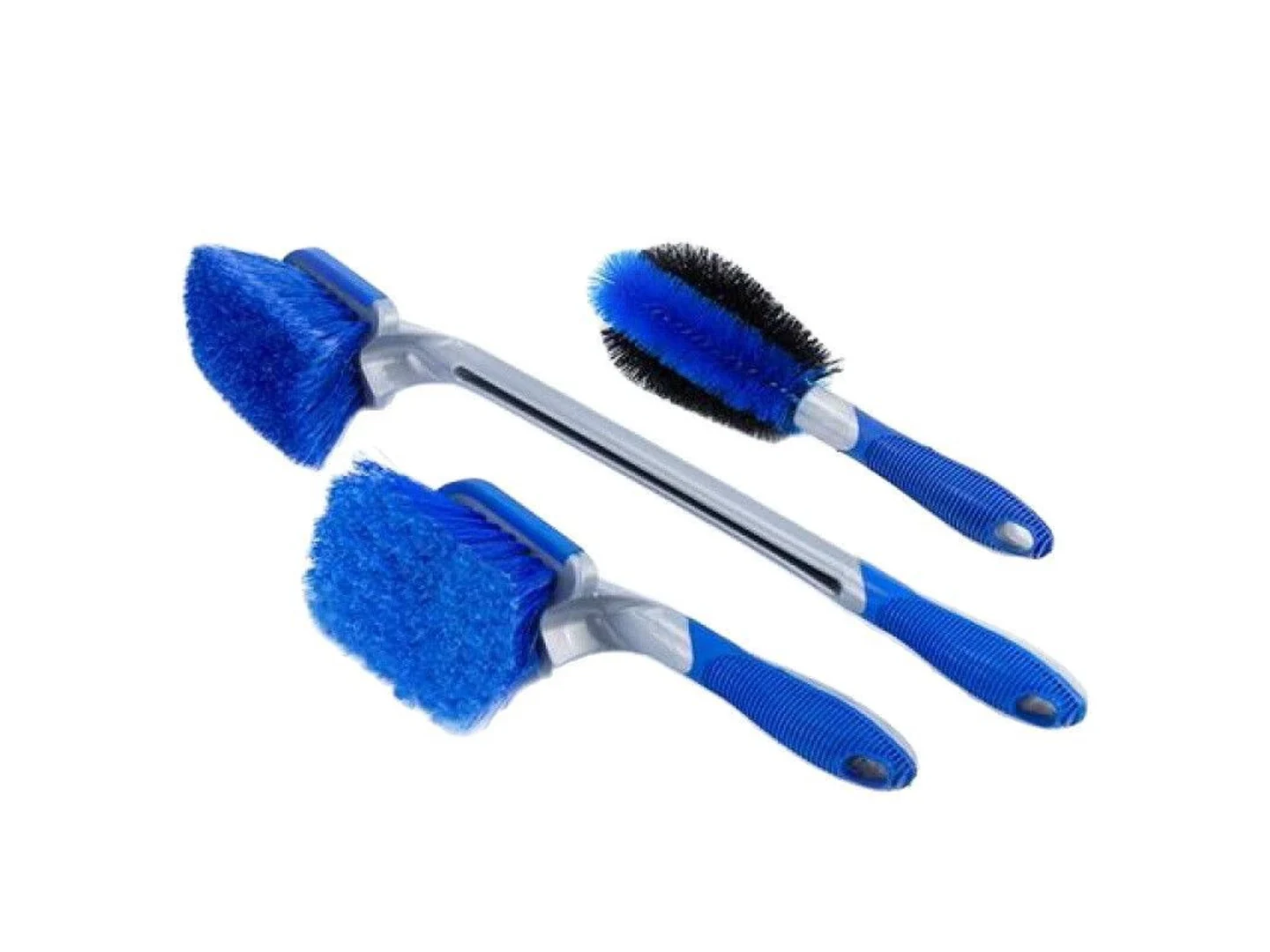
Tire Brush gives the operator controlled access to rubber tread, sidewalls, and rims for vehicle wheel, tire, and chain. Head shape, reach, handle form, and filament stiffness are matched to brake dust, road film, and grease and the available working space.
Product Features
Firm scrubbing for rubber surfaces — Short, dense bristles lift road film, browning, mud, and dressing residue from sidewalls.
Contoured head follows the tire — Curved blocks maintain contact around the sidewall instead of cleaning only with the edge.
High-leverage handle — Compact grips let the operator apply pressure without contacting the wheel or ground.
Nylon bristles tolerate repeated wet scrubbing with common tire-cleaning solutions and rinse clean after use.
Separate stiffness options — Softer versions suit routine washing, while firmer fill targets textured sidewalls and heavy soil.
Customized for hand or machine use — Head shape, trim, stiffness, handle, color, logo, and packaging can be specified.
Product Overview
Tire Brush starts with how the operator reaches and sees the cleaning zone. The brush should place the active tips on rubber tread, sidewalls, and rims, dislodge brake dust, road film, and grease, and keep the handle, ferrule, or rigid backing clear of nearby parts. The head must reach around spokes, tread, links, and recesses without marking coatings or soft metal.
Key dimensions start with Brush head diameter 60–180 mm, Brush head length 60–200 mm, and Handle length 150–400 mm. This configuration is based on a handheld detail brush, with the operator controlling angle and contact. The specified interface is fixed. Nylon PA are the principal material directions in the current specification. Handle and head dimensions should balance access, grip, and controlled bristle contact.
Technical Specifications
| Head width | 60–180 mm |
|---|---|
| Working length | 60–200 mm |
| Trim length | 20–60 mm |
| Overall length | 150–400 mm |
| Filament diameter | 0.30–1.00 mm |
| Contact setting | Use 1–5 mm filament deflection on painted surfaces and 3–10 mm on tires, chains, and textured plastics. |
| Fill materials | Nylon PA |
| Cleaning zone | vehicle wheel, tire, chain, and detail cleaning |
| Contact surface | rubber tread, sidewalls, rims, spokes, hubs, chains, gears, and narrow body gaps |
| Residue class | brake dust, road film, grease, mud |
| Access and motion | the head must reach around spokes, tread, links, and recesses without marking coatings or soft metal |
| Cleaning duty | vehicle wheel, tire, chain on rubber tread, sidewalls, rims, spokes |
| Variant configuration | Tire Brush: hand-held construction with Nylon PA fill for vehicle wheel, tire, chain, and detail cleaning on rubber tread, sidewalls, rims, spokes. |
Application Areas
Tire Brush is primarily mapped to Tire Cleaning. When adapting this brush to another job, confirm the workpiece surface, how debris will leave the area, and the required finish.
- Tire Brush is best suited to tire sidewall, tread, mold, bead, and rubber-surface cleaning.
- The hand-held, wheel, barrel, chain, or trim-detail brush follows sidewall lettering, tread groove, bead seat, mold surface, and rubber profile while the fill displaces road film, mud, dressing, rubber residue, release agent, and embedded grit.
- Use this configuration when the available access supports soft-to-firm contact around painted, coated, rubber, leather, and metal vehicle parts.
Selection Guidance
Structure fit
Match the handheld detail brush geometry to rubber tread, sidewalls, and rims, the available access, and manual operation. Confirm Brush head diameter 60–180 mm, Brush head length 60–200 mm, and Handle length 150–400 mm against the complete working envelope before finalizing the brush.
Contact material
Choose from Nylon PA according to the behavior of brake dust, road film, and grease, the surface sensitivity, and any wet, chemical, temperature, or hygiene requirements. The same material can feel very different depending on filament diameter, free trim, and fill density.
When to use another solution
For Tire Brush, use another cleaning method when brake dust, road film, and grease cannot be released by controlled filament contact, when rubber tread, sidewalls, and rims cannot tolerate the selected contact material, or when the access path prevents safe engagement and residue removal.
Customization Options
| Brush Head Diameter (mm) | 60–180 |
|---|---|
| Brush Head Length (mm) | 60–200 |
| Handle Length (mm) | 150–400 |
| Handle Grip Diameter (mm) | Not Applicable (No explicit grip or handle-diameter dimension in the product specification) |
| Bristle Material | Nylon PA |
| Handle Material | Polypropylene PP |
| Mounting / Interface | Fixed |
| Grip Style | Straight Handle / Angled Handle |
| Color | Custom PANTONE Color ([Industry Reference Range]) |
| Logo Process | Laser Engraving / Screen Printing / Pad Printing ([Industry Reference Range]) |
| Surface Treatment | Smooth / Textured / Overmolded / Coated (Depending on Substrate; [Industry Reference Range]) |
Frequently Asked Questions
How should Tire Brush be selected?
Start with tire sidewall, tread, mold, bead, and rubber-surface cleaning, sidewall lettering, tread groove, bead seat, mold surface, and rubber profile, and road film, mud, dressing, rubber residue, release agent, and embedded grit. Then set Head width, Working length, and Trim length, choose the fill from the material and residue table, and match the mounting interface and operating condition.
Which dimensions define Tire Brush?
The primary dimensions are Head width (60–180 mm), Working length (60–200 mm), and Trim length (20–60 mm). Also provide the minimum clearance, working envelope, trim or engagement, and the existing holder, shaft, stem, thread, or handle.
Which filament or contact material is used for Tire Brush?
The primary options are Nylon PA. The final choice follows surface sensitivity, residue adhesion, wet or dry use, temperature, chemicals, conductivity, and required cutting action.
When is Tire Brush not the best cleaning method?
Tire Brush is not the first choice for microfiber, foam, steam, or a non-contact rinse when loose abrasive particles could mark the finish.
What information is required to quote Tire Brush?
Send the part or machine drawing, photos of sidewall lettering, tread groove, bead seat, mold surface, and rubber profile, Head width, Working length, Trim length, and Overall length, the residue description, wet or dry conditions, motion or use method, temperature, preferred Nylon PA, quantity, and the existing interface or sample.
RELATED BRUSH RESOURCES
Recommended Reading & Related Brush Resources
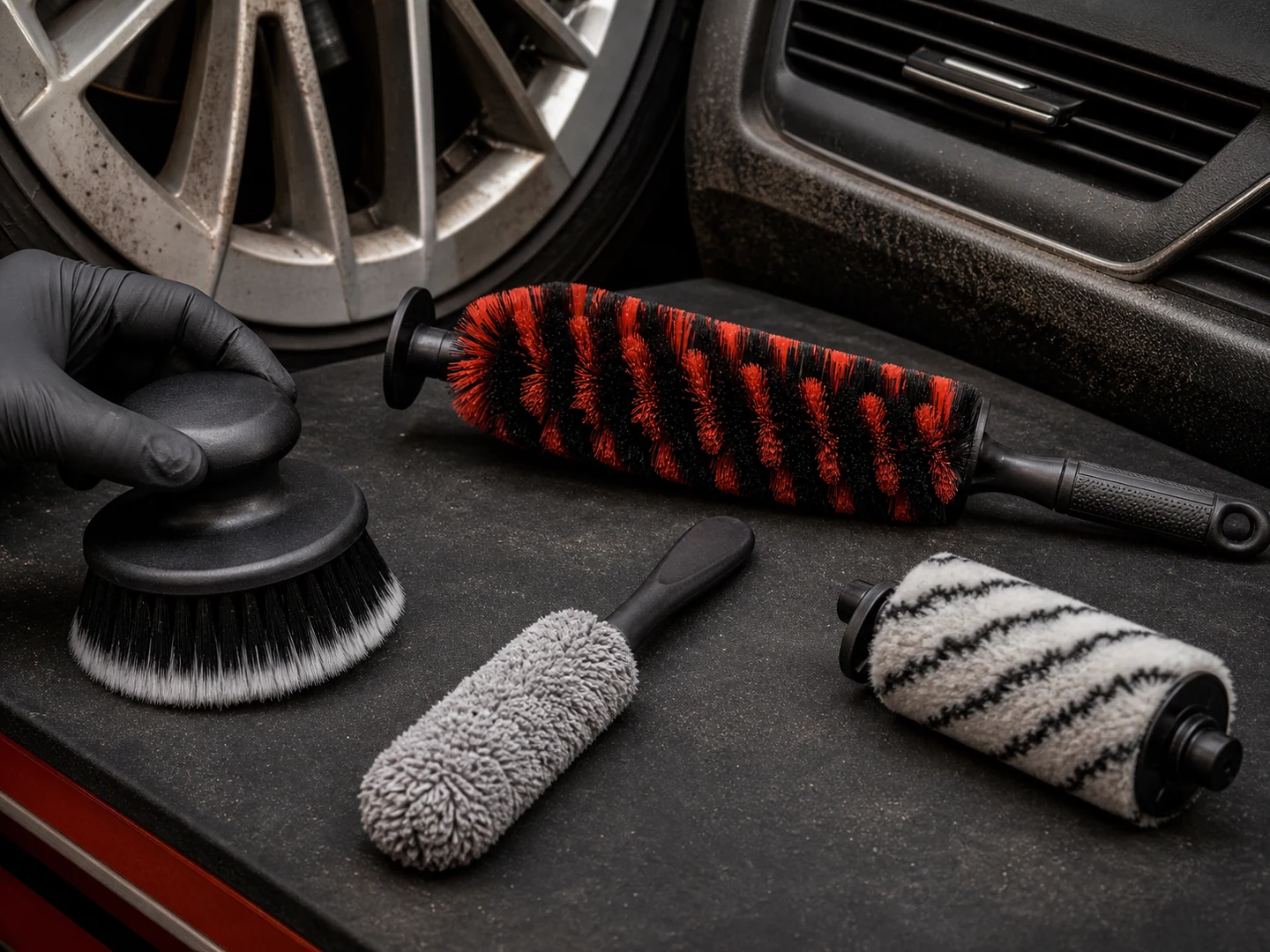
Custom Handheld Detail Brushes
Choose a handheld detail brush when the operator needs direct control in seams, recesses,…
Explore this brush type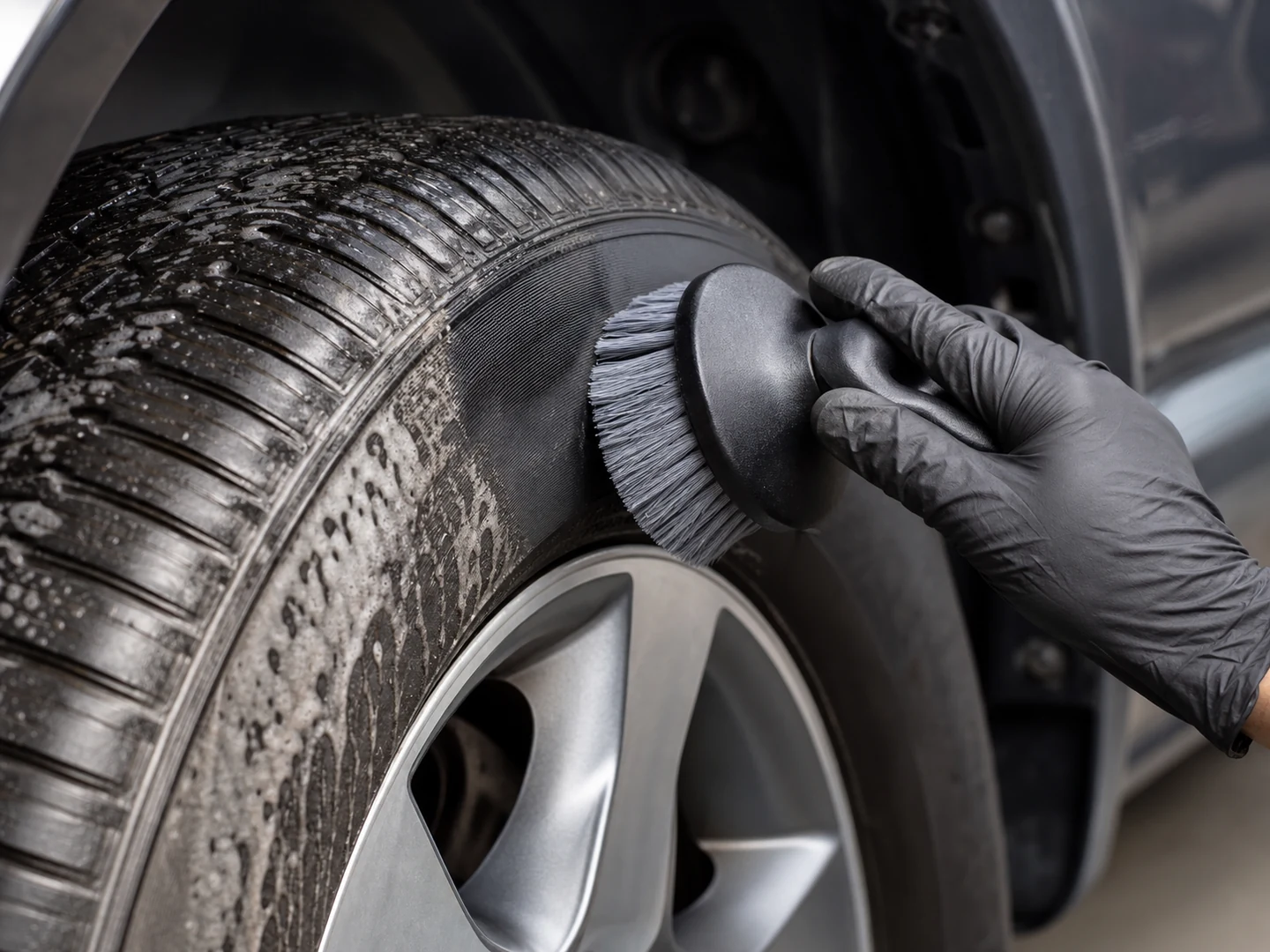
Tire Cleaning
For Tire Cleaning, the brush must reach the working area, disturb or collect silt…
Review application guidance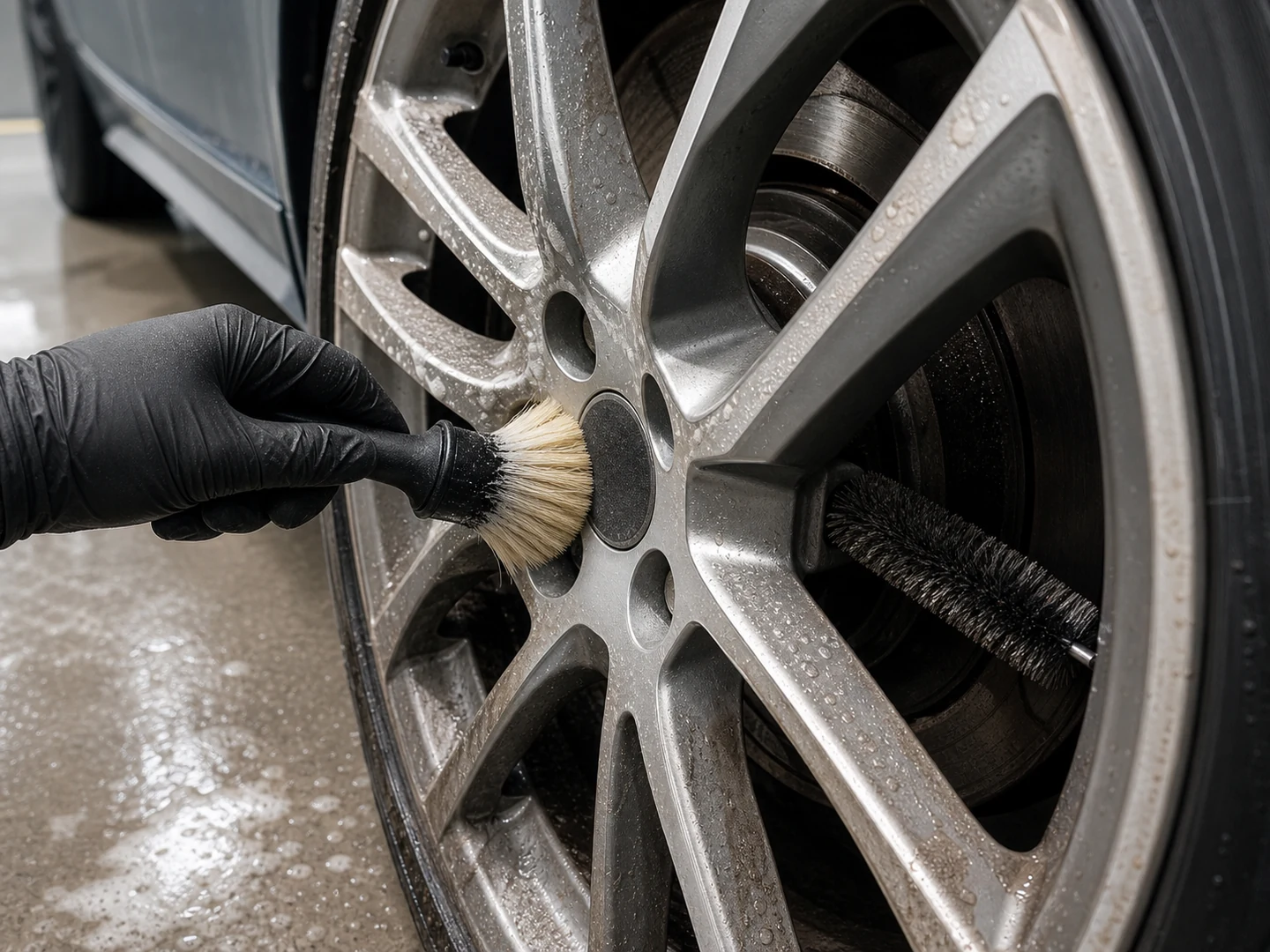
Wheel & Rim Cleaning
For Wheel & Rim Cleaning, the brush must reach the working area, disturb or…
Review application guidance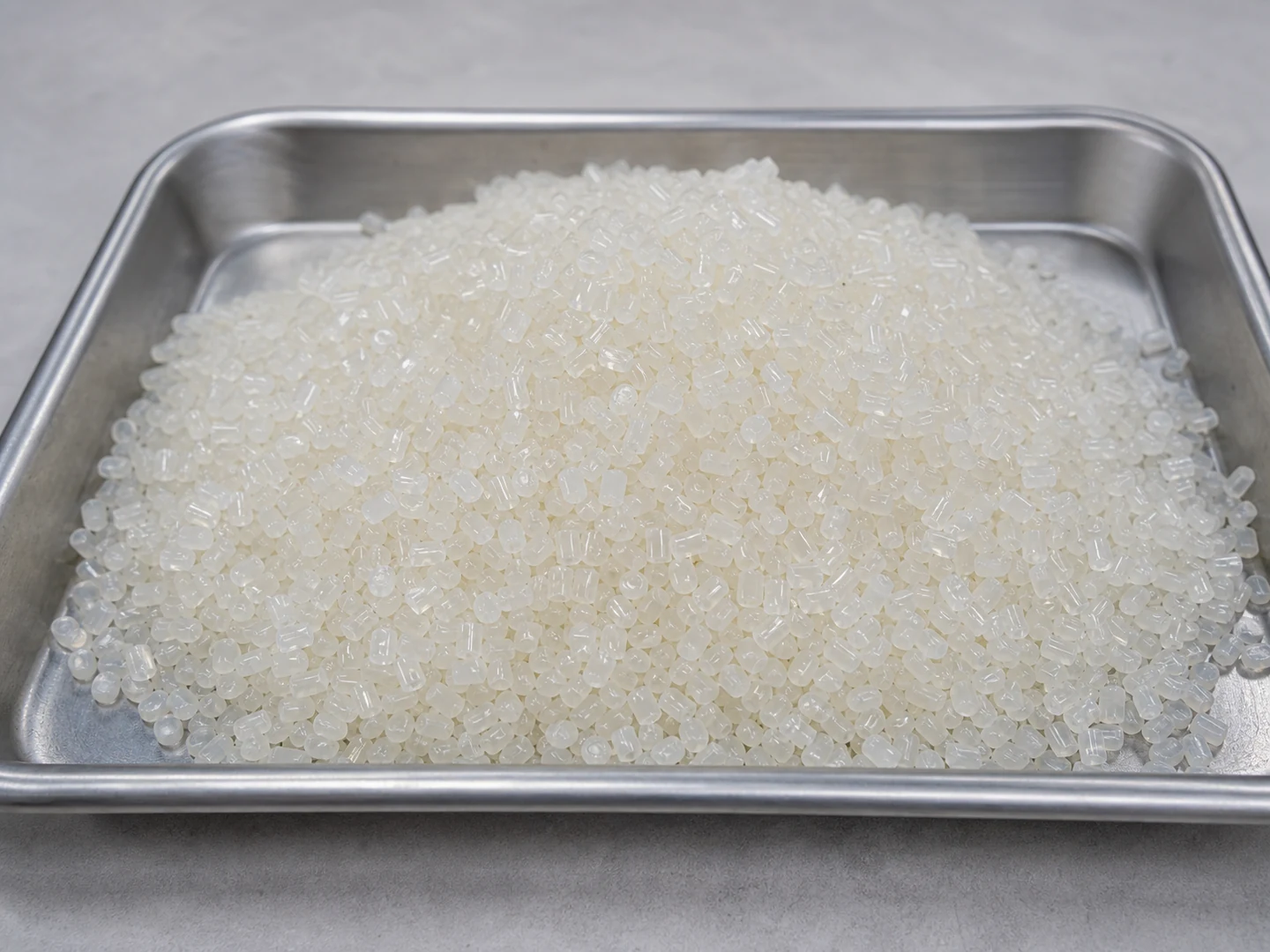
Nylon PA
Nylon PA is selected from its stiffness, recovery, wear, wet-service, chemical, and temperature behavior.
Compare material considerationsHow to Choose the Right Tire Brush for Mold Grooves
Learn how to choose the right tire brush for mold grooves by comparing material,…
Read related guideWhat Buyers Should Check Before Ordering a Custom Tire Brush for Sidewall Cleaning
Define your tire brush requirements with confidence.
Read related guideCustom Manufacturing RFQ
Upload the Brush Drawing, Product Photo or Sample Details
To prepare the correct quotation, provide the dimensions, cleaning task, residue, material, mounting details, quantity, and a drawing or photo.
Custom Brush RFQ
Send Your Brush Project
Upload a drawing, product photo, or sample photo and provide the core dimensions and cleaning conditions.